Kariye and Edirnekapı: The Stories Left on the Walls
From Tekfur Palace, walk toward Kariye’s mosaics and frescoes, then climb to Mihrimah Sultan Mosque beside Edirnekapı’s city walls.
 Burak ÇınarTurkTravelRadar Founder
September 27, 2026
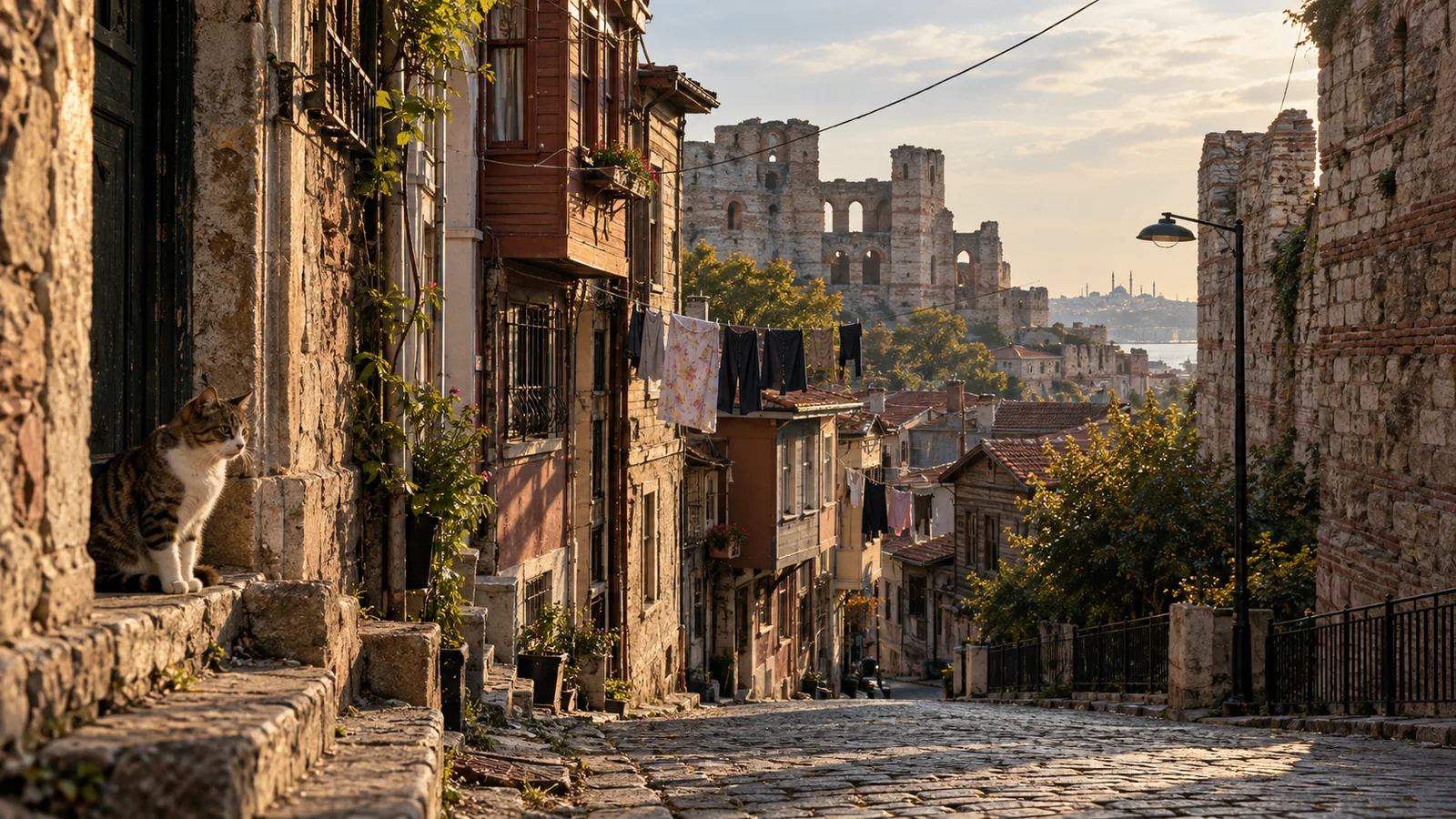
You left Ayvansaray looking for a palace that had almost disappeared.
At Tekfur Palace, you found one part of it still standing. Now leave the palace behind and follow the neighbourhood streets toward Kariye.
The distance is short enough to walk. The change in what survives is extraordinary.
In Ayvansaray, you needed to imagine rooms that were gone. At Kariye, people from another century are still telling stories across the walls.
Walking note — Physical effort: 3/5
This route links Tekfur Palace, Kariye and Mihrimah Sultan Mosque near Edirnekapı. Expect slopes and uneven pavement. Give Kariye time of its own rather than treating it as a quick stop between the two larger landmarks.
A Name That Remembers an Earlier Edge
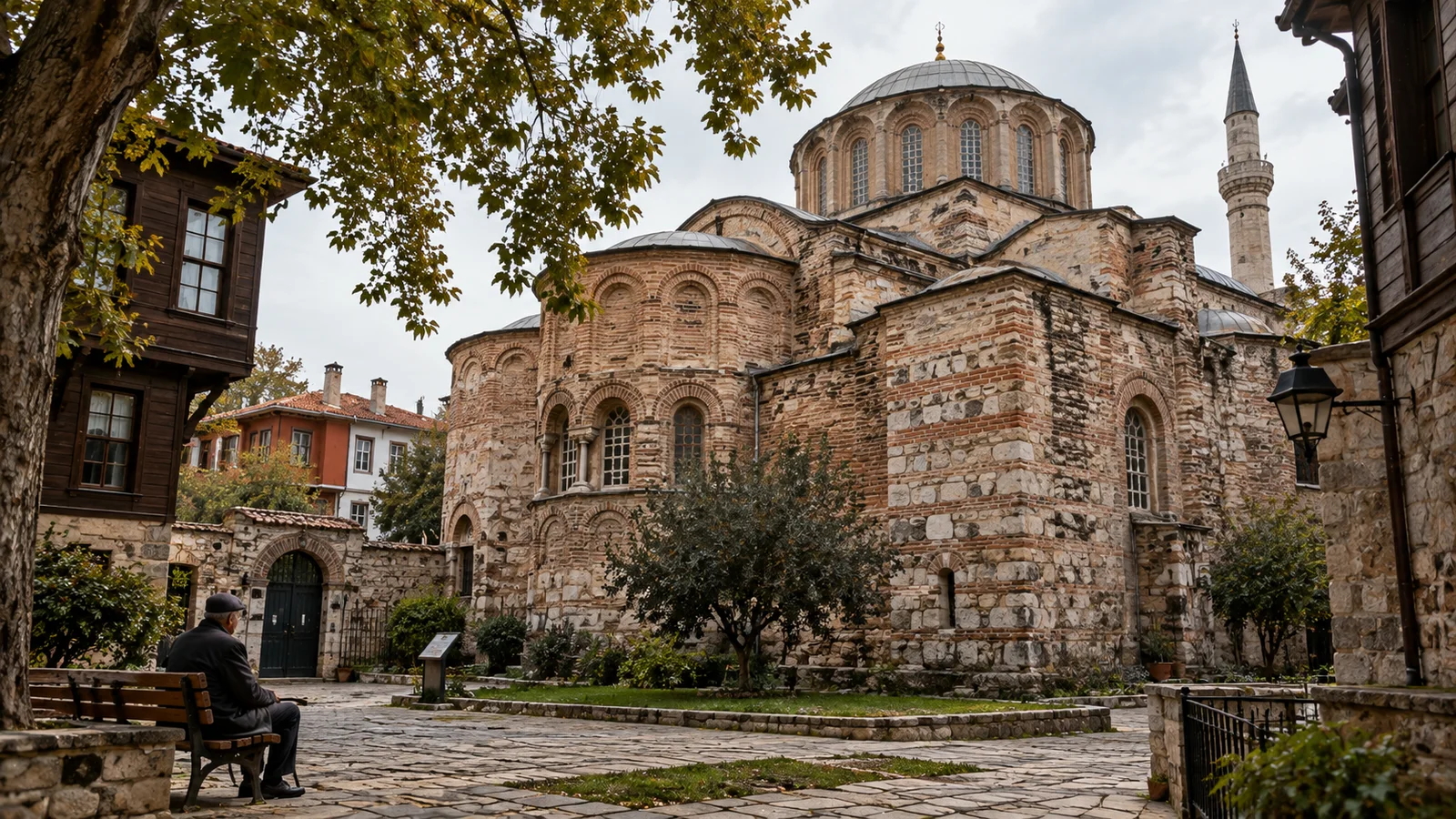
Kariye stands in the streets near Istanbul’s land walls. Before you enter, pause and look around.
Its earlier name was Chora, associated with the land beyond an older boundary of Constantinople. The city grew. Its walls and neighbourhoods changed. A name that once described a place outside the city survived inside it.
The building you see has changed, too. It began as a Byzantine church, later became a mosque, spent decades as a museum and is now Kariye Mosque.
Those changes matter. So does the fact that, through them, remarkable images survived on its walls and ceilings.
From the street, you cannot yet see how much is waiting inside.
Visiting note — Kariye Mosque:
Kariye is an active place of worship and a historic site. Visitor routes, access to particular images and arrangements during prayer can change. Check the current information before visiting and follow guidance at the entrance.
Look Up Before You Move On
Inside, resist the urge to walk directly toward the image you have seen most often in photographs.
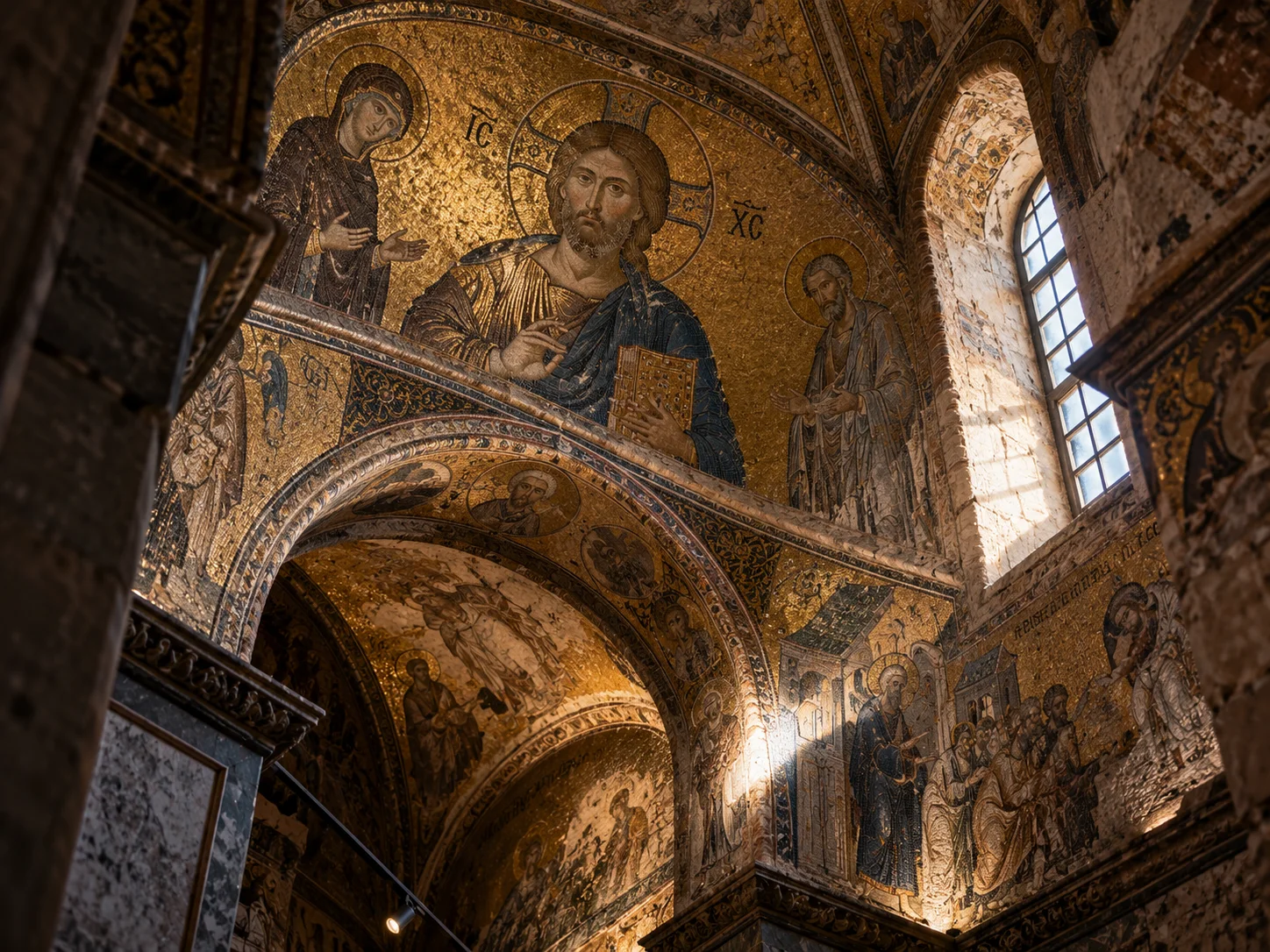
Begin near the entrance passages. Let your eyes follow the mosaics overhead. Figures appear in framed scenes. A gesture in one panel draws you toward the next. Gold catches the light, then falls back into shadow as you change position.
The scenes tell stories from the lives of Mary and Christ. They were made to be read by someone moving through the building, stopping, looking up and continuing.
Slow your own steps to match them.
Much of Kariye’s celebrated decoration belongs to the fourteenth century, when the statesman and scholar Theodore Metochites supported work on the building. In one mosaic, he is shown presenting a model of the church to Christ.
A man who helped make these images possible placed himself inside their story.
You may recognise him only after you have already walked past. Go back and look again.
The Image That Holds You Still
In the side chapel, or parekklesion, look for the fresco known as the Anastasis.
Christ stands at its centre, reaching for Adam and Eve. The movement in the image is immediate. Hands extend. Bodies rise. Even without knowing every figure or the theology behind the scene, you can see that the painter wanted your eyes to move.
Give yourself a minute without taking a photograph.
Then look at what surrounds the central figures. Kariye rewards a second look more than a hurried first one.
Not every image may be accessible or visible in the same way on every visit. Allow the building you encounter that day to guide you, rather than promising yourself a particular photograph before you arrive.
Look closer — Two kinds of image:
Kariye is known for both mosaics, made from small pieces set into a surface, and frescoes, painted onto plaster. Notice how differently colour and light behave in each.
Back Into the Street
When you leave Kariye, daylight may feel plain for a moment.
Stay in the neighbourhood instead of heading straight for the next famous building. A street turns between houses. The walls of a home meet the wall of a much older city. Someone passes carrying the ordinary business of the afternoon.
After the images inside Kariye, these details are easy to overlook. Keep looking.
The people who made those mosaics lived in a city of errands, work and neighbours, too. The art has survived more clearly than their daily routines.
Follow the streets uphill toward Mihrimah Sultan Mosque and the Edirnekapı gate area.
Route cue — Kariye to Edirnekapı:
Use Mihrimah Sultan Camii (Edirnekapı) as your next landmark. The mosque stands near the land walls and Edirnekapı; this is a different Mihrimah Sultan Mosque from the one in Üsküdar.
A Different Kind of Light
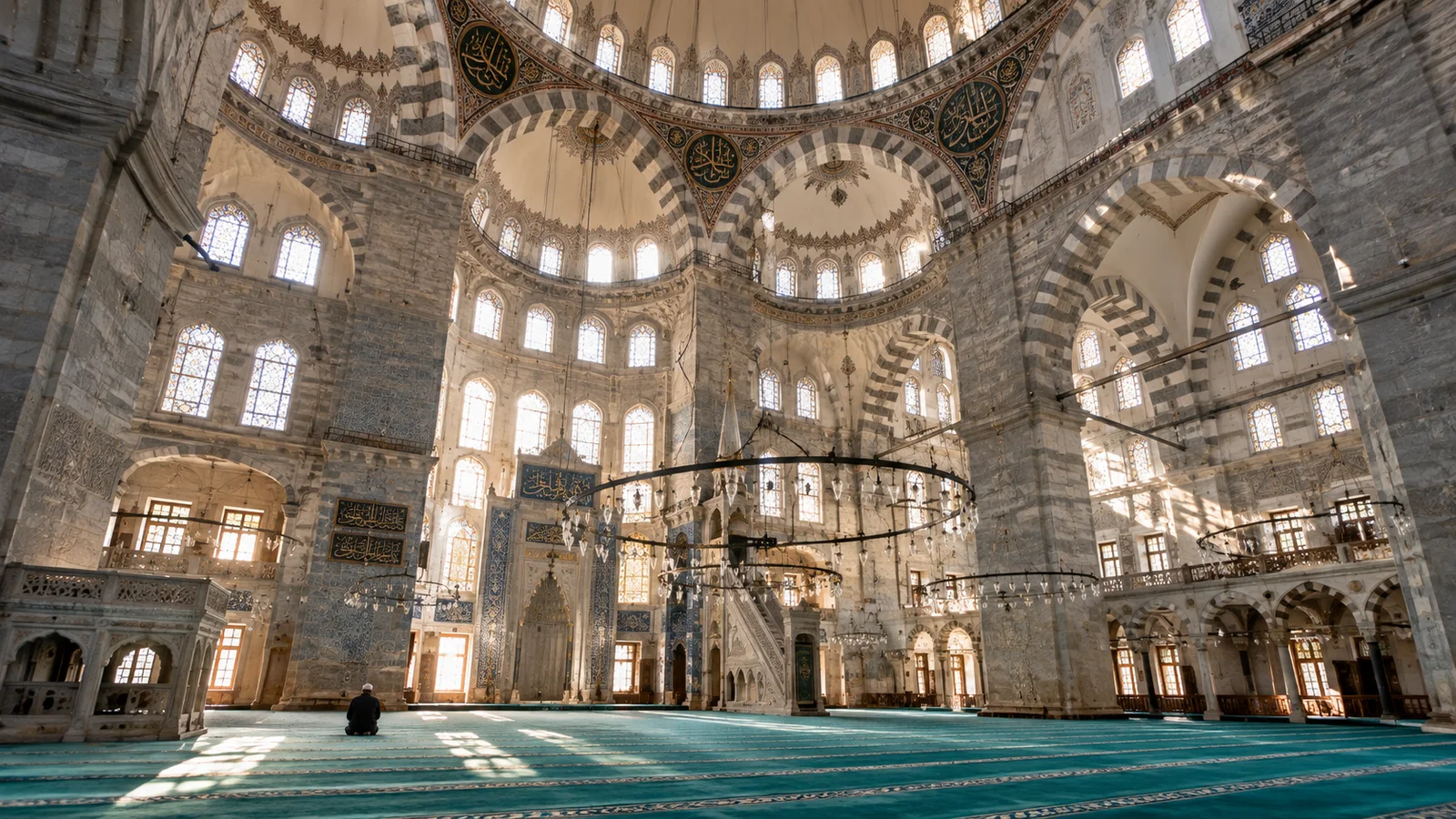
Mihrimah Sultan Mosque rises near the walls on one of the high points of historic Istanbul.
It was commissioned by Mihrimah Sultan, daughter of Süleyman the Magnificent, and designed by Mimar Sinan. You have met Sinan’s work earlier in this journey at Süleymaniye. Here, near the edge of the old city, the experience is different.
Step into the courtyard if it is open. Look at the windows and the space around the dome. After Kariye’s close, detailed images, your eyes have farther to travel.
One building held stories in small pieces of colour. This one uses height, structure and light.
Then turn toward Edirnekapı and the land walls. The gate reminds you that these streets once led people into and out of a defended city. What felt like the far edge of Constantinople became part of Istanbul’s everyday map.
Visiting note — Mihrimah Sultan Mosque:
This is an active mosque. Dress modestly, remove your shoes before entering and respect prayer times.
What to Carry Away
At Ayvansaray, you looked for what had vanished.
Here, you have seen what remained: a palace building near the walls, Byzantine stories across Kariye’s ceilings, and an Ottoman mosque standing close to an old city gate.
None of them belongs to a separate Istanbul.
Walk a little farther along the public streets beside the walls and look back. There are roofs on one side, roads on the other, and centuries of rebuilding between them.
Follow the walls into the next neighbourhood → Karagümrük and Hırka-i Şerif: The Neighbourhood That Keeps Its Stories Close
💬 Comments (0)
Traveler comments are shown in their original language.
No comments yet. Be the first to share your experience.
💬 Want to join the discussion?
Log in or create an account to leave a comment.