Karagümrük and Hırka-i Şerif: The Neighbourhood That Keeps Its Stories Close
Walk from Edirnekapı into Karagümrük, where a small square, surviving wooden houses and a mosque built to shelter a treasured relic reveal a quieter side of Fatih.
 Burak ÇınarTurkTravelRadar Founder
September 27, 2026
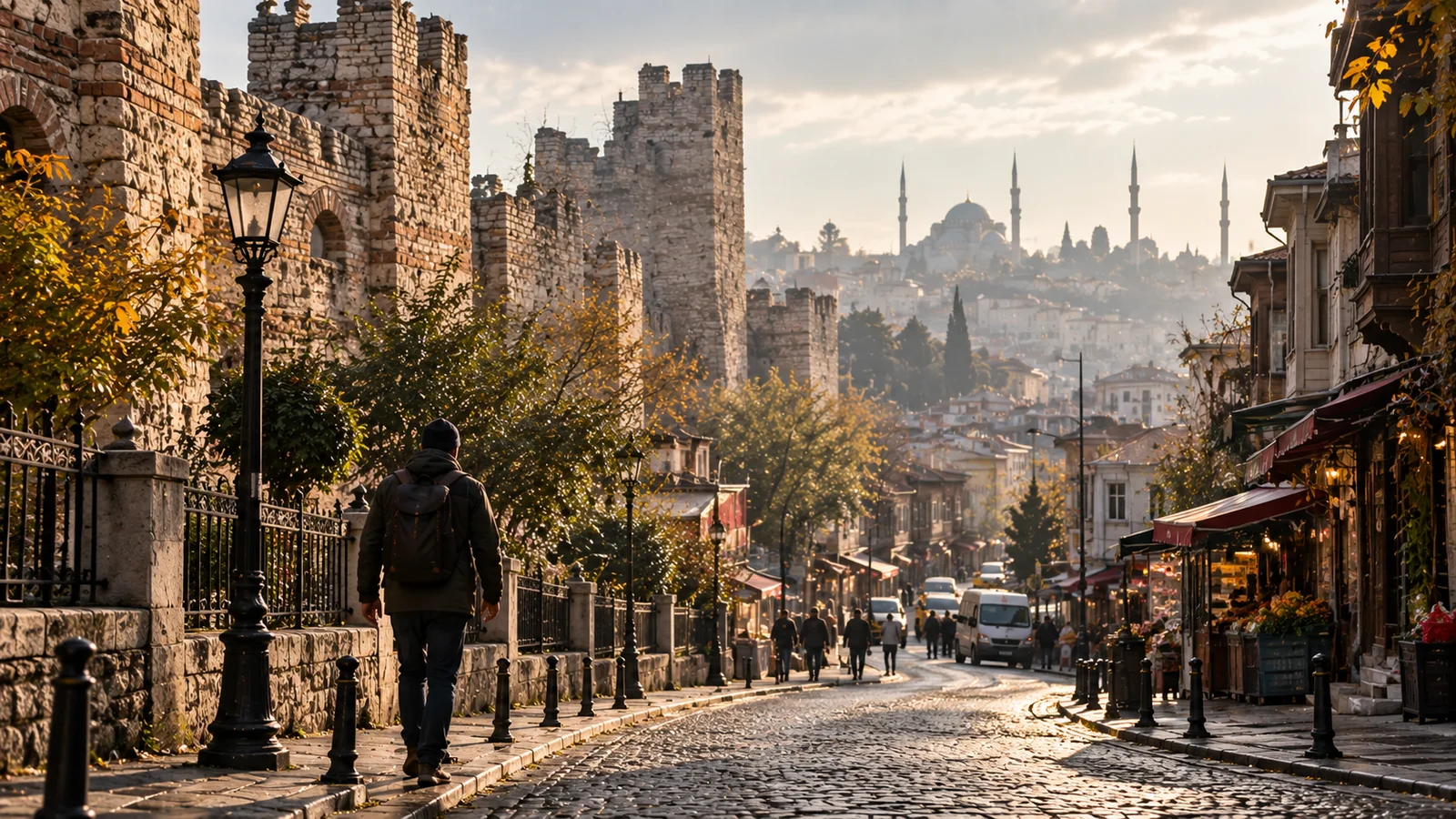 Leave the walls of Edirnekapı behind you.
For a moment, look back. The stonework belongs to a city that once measured its limits in gates and fortifications. Ahead, traffic moves along Fevzipaşa Caddesi. People wait to cross, shop doors open, and the ordinary business of the day takes over.
Walk toward Karagümrük.
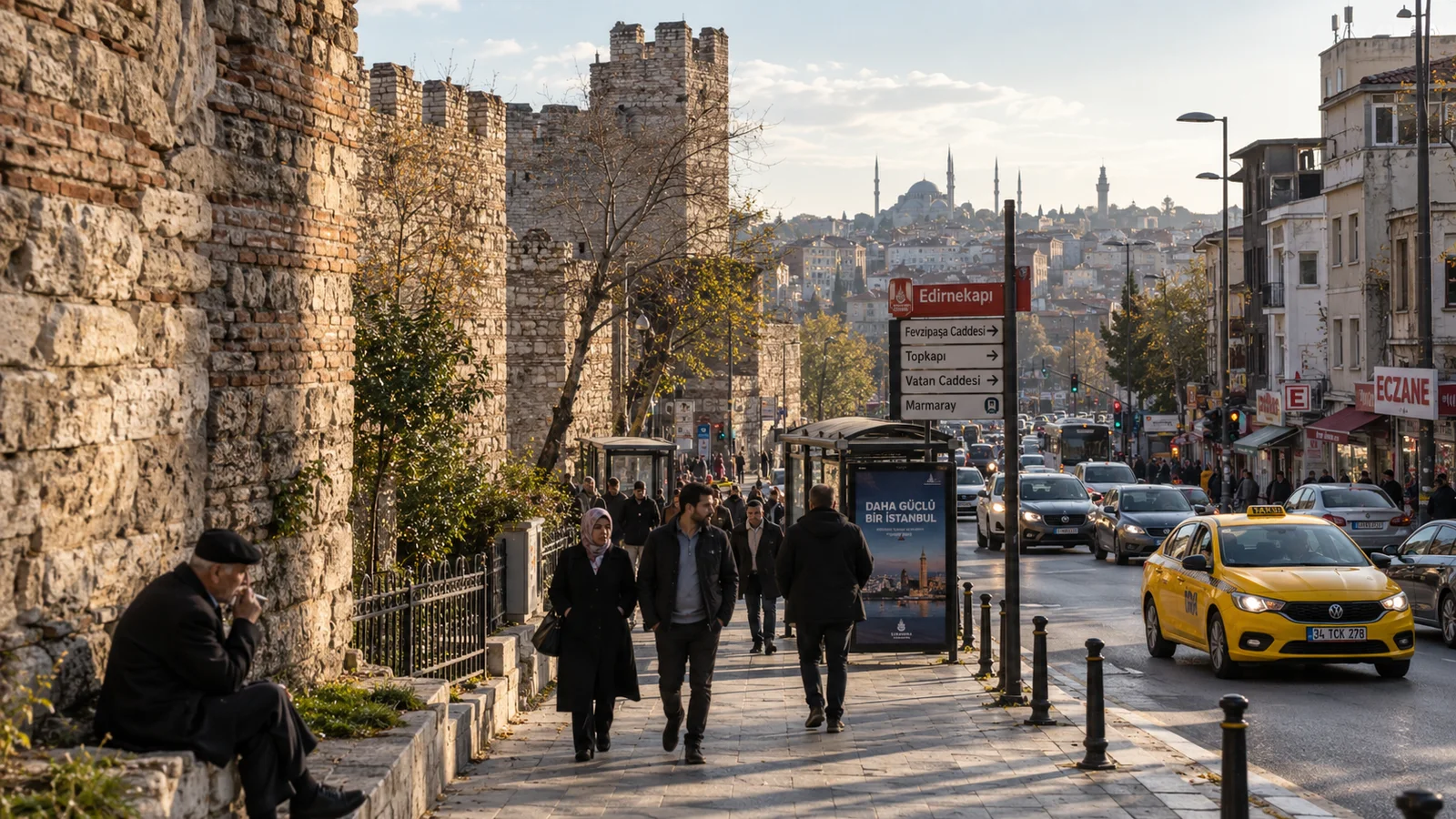
The change is quick. The walls do not disappear, but they stop being the centre of your attention. A bus passes. Someone calls across the pavement. If a bakery is working nearby, the smell of warm bread may reach you before you see its window.
This is one of the pleasures of walking through Fatih: history does not ask the neighbourhood to stand still.
Walking note — Physical effort: 2/5
From Edirnekapı, follow Fevzipaşa Caddesi toward Karagümrük, then turn into the local streets for Hırka-i Şerif Mosque. The main road is busy and crossings need attention. The side streets may have uneven pavements. Check your route before setting out, especially if you plan to continue toward Saraçhane afterward.
A Road Into the City
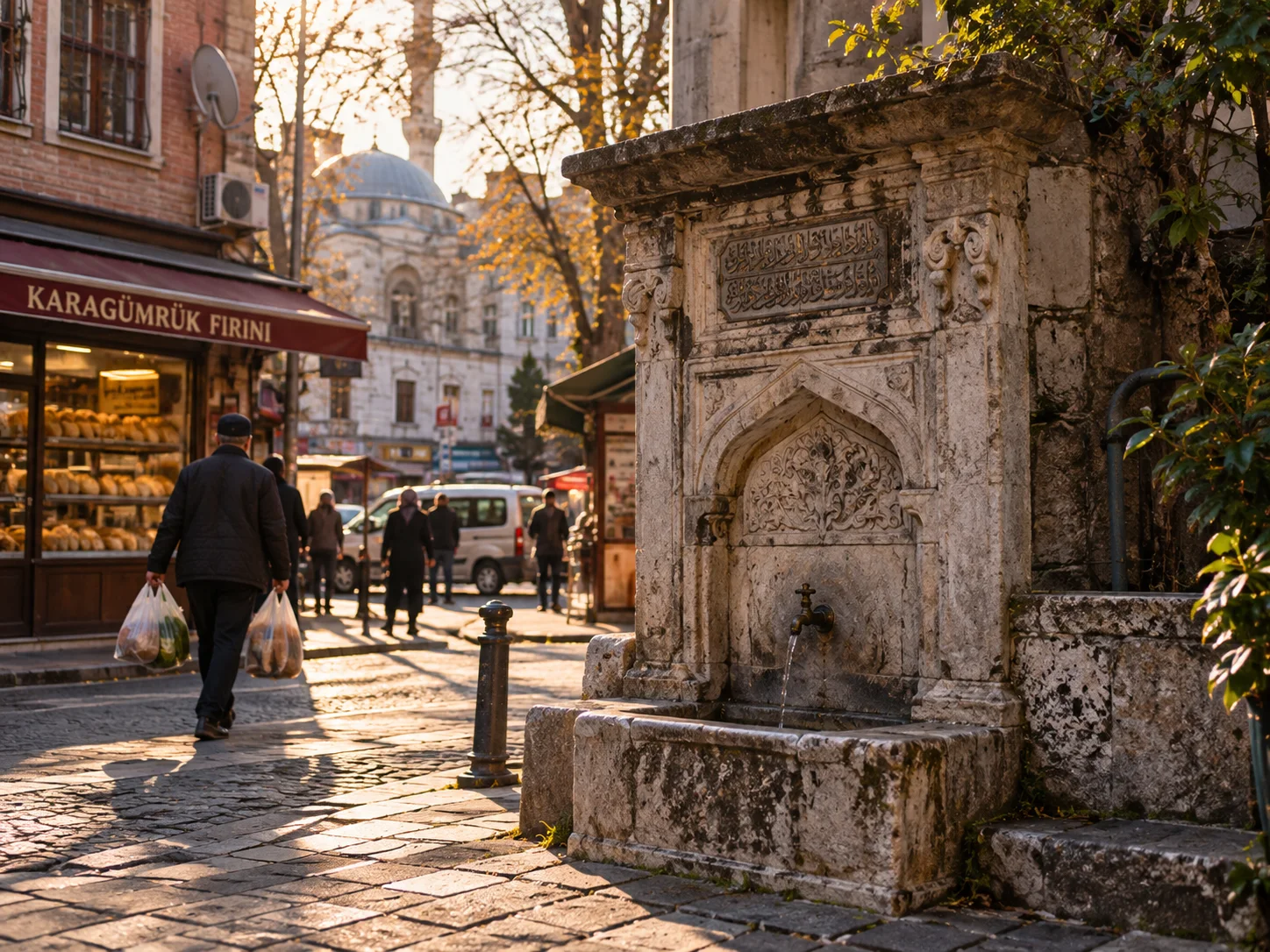
Edirnekapı was an entrance. Karagümrük grew along the way inward.
The old route from the gate toward the centre of the historic peninsula passed through this area. In Ottoman Istanbul, travellers entering through Edirnekapı could reach the Karagümrük market after passing the gate and the buildings around it. The neighbourhood’s connection to movement and trade is older than the traffic you hear today.
That does not mean you should expect to find an untouched Ottoman street.
Look at what is actually around you: a broad avenue, shopfronts, apartment buildings and people using the neighbourhood for their own reasons. At a smaller street, pause long enough to notice how the sound changes when you step away from Fevzipaşa Caddesi. The engine noise recedes; footsteps and nearby conversations become easier to hear.
Karagümrük is a place to walk through at street level, rather than view from a distant lookout.
Follow the Neighbourhood, Not Just the Avenue
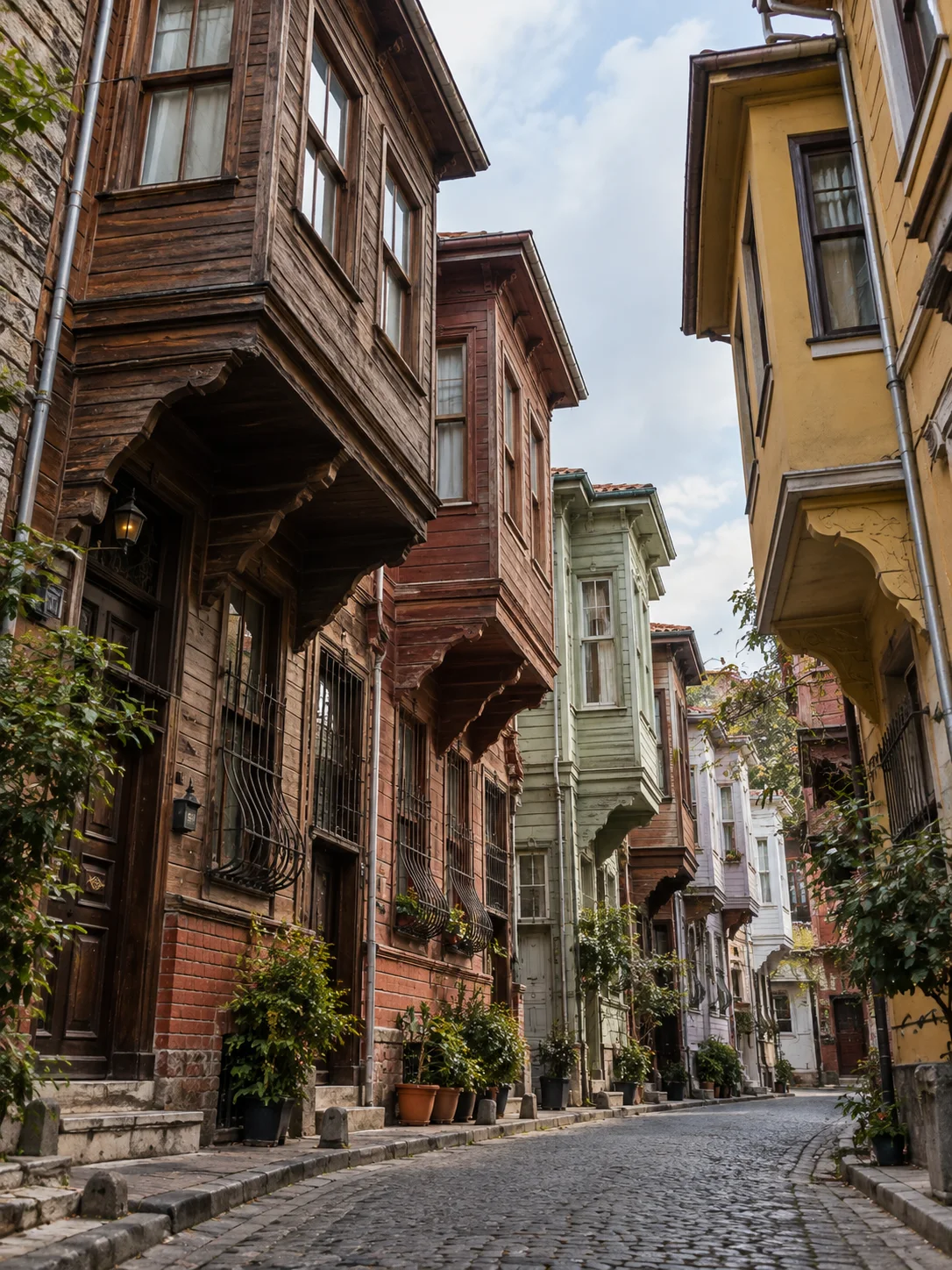
Make your way toward Karagümrük Square, then take the local streets toward Hırka-i Şerif Mosque.
Give yourself permission to slow down. On the main road, your attention goes to crossings and traffic. Here, it can return to smaller things: the rough edge of an old wall beside a smoother repaired surface, the sound of a metal shutter, a cat choosing a doorstep as its resting place.
The neighbourhood will feel different at different hours. A quiet side street in the morning may be busy later. A food shop may be open on one visit and closed on another. Let the walk tell you what is there that day.
If you want a short break, buy a tea or a small snack along the way. Take a sip while it is still warm. Taste belongs in a walking story too, but there is no particular shop you need to find for this route to make sense.
The Mosque Built for a Sacred Relic
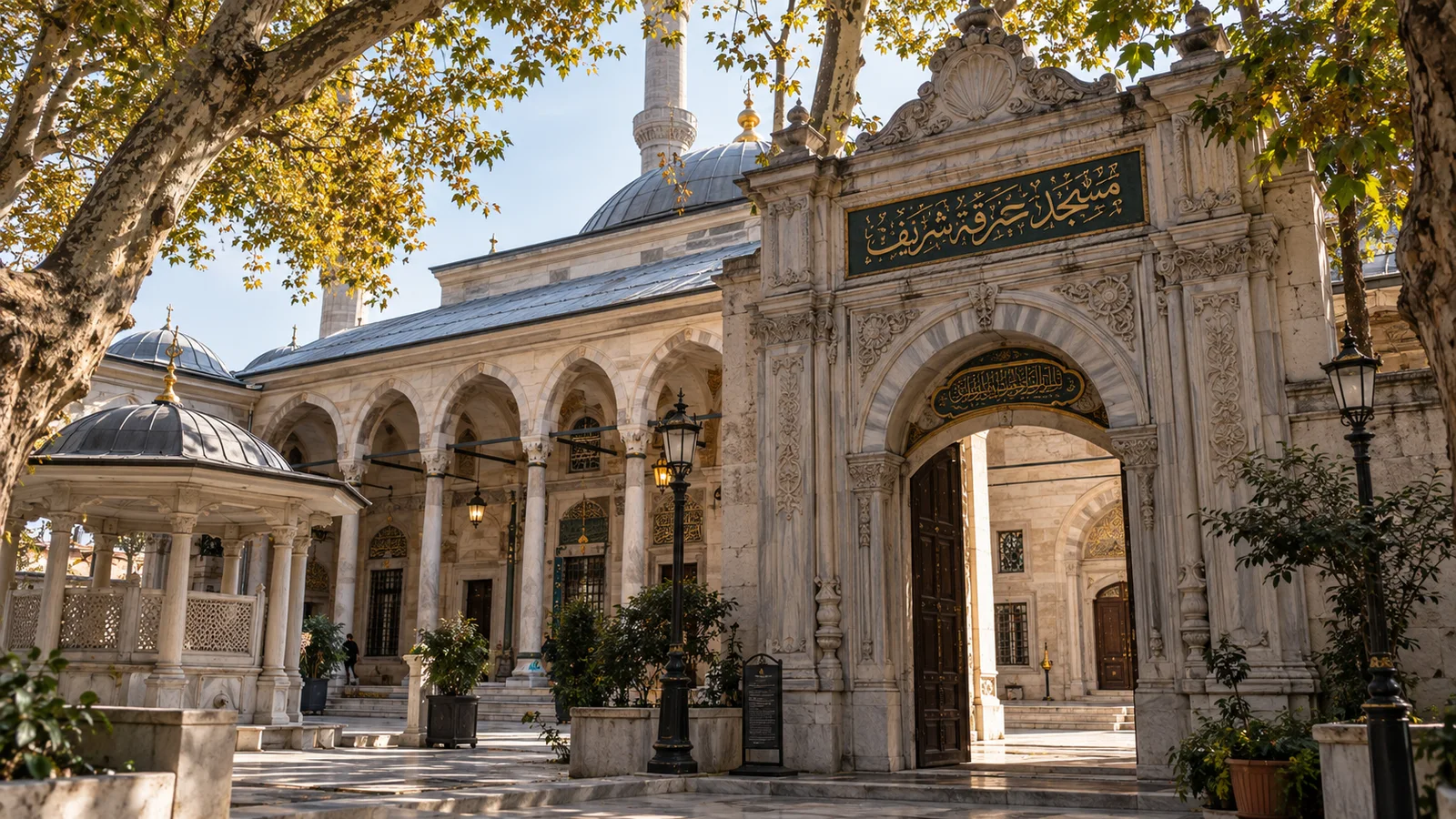
The name Hırka-i Şerif means “the Noble Cloak.”
According to the tradition associated with the site, the cloak was entrusted to Veysel Karani and preserved by his descendants. It was kept and visited in Fatih before the present mosque was built. Sultan Abdülmecid had the mosque completed in 1851 to provide a dedicated place for the relic and its visitors.
Approach the building with that purpose in mind.
This is not simply another historic mosque on a sightseeing route. For many visitors it is a place of prayer and deep personal meaning. Lower your voice as you enter the grounds. Notice the shift beneath your feet and the way the noise of the surrounding streets becomes less insistent.
If the mosque is open to visitors, dress respectfully and follow the instructions posted on site. Prayer times and access arrangements can affect a visit. Do not assume the cloak itself is on display: its public viewing has traditionally been organised during Ramadan, with dates and hours announced separately.
You can still visit the area outside that period. The story of the building, and its place in the neighbourhood, remain.
Stay a Little Longer
After the mosque, do not rush straight to the next landmark.
Stand at the edge of the courtyard or return to a nearby street. Listen for the layers of sound: perhaps birds above the roofs, a conversation passing by, and the distant traffic of Fevzipaşa Caddesi. If the air carries the smell of cooking or fresh bread, it will probably come and go as you move.
Look back at the mosque once more.
The walk began beside a wall built to control entry into a city. It brought you through a neighbourhood shaped by people arriving, trading, living and passing through. Now it has reached a place people have come to visit for generations for a very different reason.
That is the distance you have travelled, even if it does not look far on a map.
Next walk: Continue toward Vefa and Saraçhane, where the streets lead from this quieter stop back toward the busy heart of the historic peninsula.
Continue the walk toward Vefa → Vefa and Saraçhane: A Taste of the City Beneath the Aqueduct
💬 Comments (0)
Traveler comments are shown in their original language.
No comments yet. Be the first to share your experience.
💬 Want to join the discussion?
Log in or create an account to leave a comment.