Zonguldak Chestnuts: A Warm Taste of the Black Sea Forests
Peel back a warm shell and discover the gentle sweetness of Zonguldak chestnuts. Explore kuzu kestanesi, traditional cooking methods and the tree’s maritime history.
 Burak ÇınarTurkTravelRadar Founder
October 4, 2026
The shell has opened along the cut, revealing a pale golden chestnut beneath.
You pick it up, feel the heat and put it down again for a moment. Around you, the smell of roasting chestnuts hangs in the cool air: toasted shell, warm sweetness and, when they are cooked over embers, a faint trace of smoke.
Try again.
The brittle shell breaks beneath your thumb. A little of the thin inner skin comes away with it. You ease the rest free, turn the warm chestnut between your fingers and take a bite.
The browned edge gives way to a soft, floury centre. Its sweetness arrives gently, becoming clearer as you chew. A few crumbs remain in your palm.
Before reaching for the next one, you gather those too.
In Zonguldak, on Turkey’s western Black Sea coast, chestnuts belong to the region’s forest foods and local cooking traditions. The small chestnuts known as kuzu kestanesi are particularly associated with this stretch of northern Turkey.
Small Chestnuts with Plenty to Notice
Size is not the most interesting thing about a chestnut.
With a good roasted one, you notice how readily the shell separates, how the centre feels against your tongue and how long the sweetness remains after swallowing.
A North Anatolian Development Agency report describes kuzu kestanesi along the coastal belt from Ereğli towards Sinop as small-fruited chestnuts with thin shells, a shiny appearance and a distinctive flavour. The name therefore belongs to a wider regional tradition as well as Zonguldak’s local food culture.
For a visitor, provenance is worth asking about. A chestnut bought in Zonguldak is not necessarily one grown there.
When you find locally gathered fruit, try a few simply cooked. That gives you the clearest introduction to the chestnut itself.
Three Traditional Ways to Eat Them
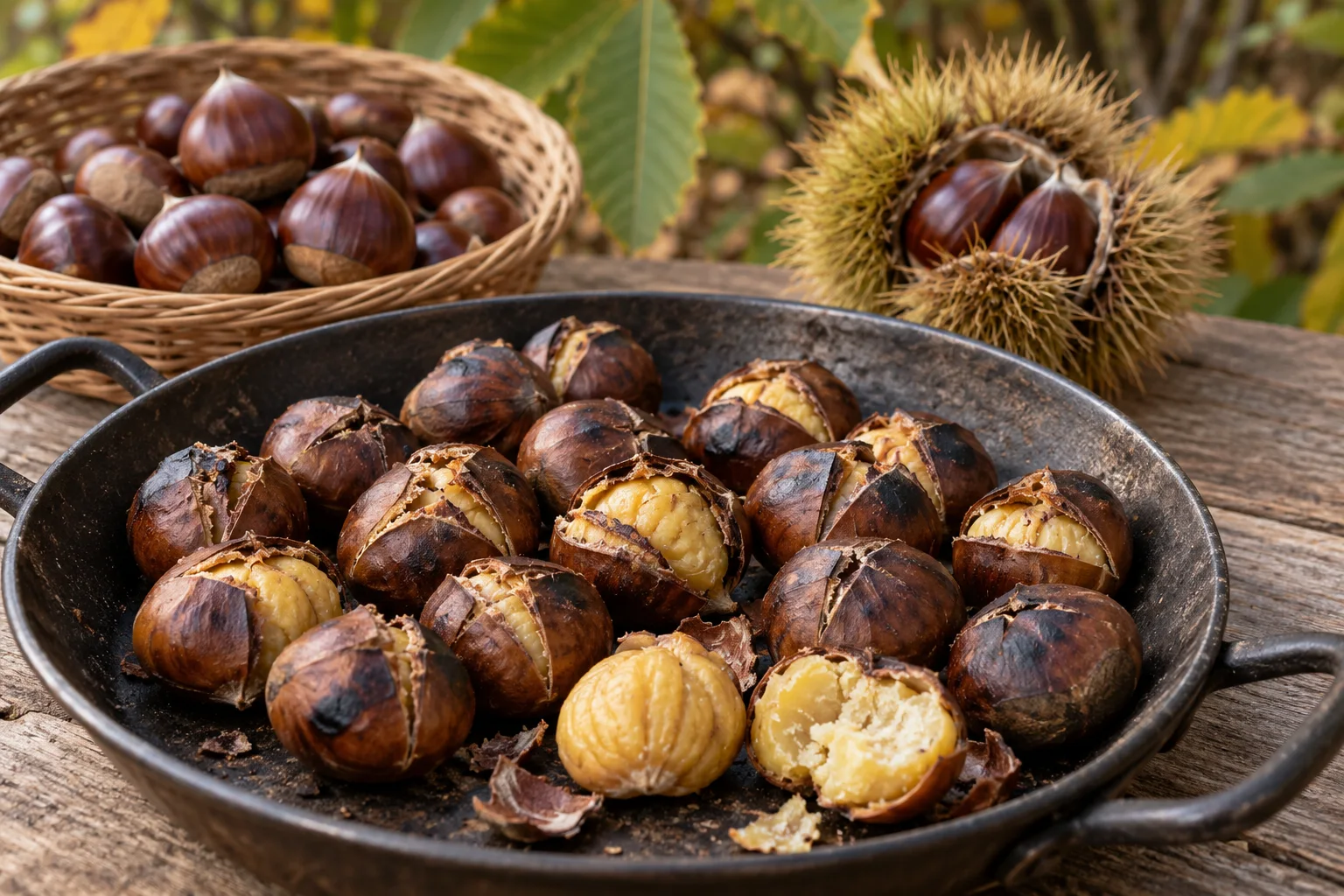
Ereğli’s municipality records several preparations: chestnuts boiled in water as tuzlama, oven-roasted as kavşak, and scored before cooking over fire as kebap, also called kömme or kömbe locally. Drying is another traditional way of preserving them.
Each preparation brings a different pleasure.
Tuzlama: Soft and Gently Sweet
Boiling gives you a moist, tender mouthful.
Without the roasted surface, the chestnut’s mild flavour becomes easier to follow. Bite slowly and notice its soft, starchy texture. It feels substantial, yet breaks down readily as you chew.
This is a good preparation for someone who enjoys the quieter taste of the fruit.
Kavşak: The Fragrance of the Oven
Roasting brings the shell and outer edges into the experience.
As you peel, the smell comes closer. The surface may be firmer than the centre, giving each bite a small change in texture.
A warm bowl on the table makes it easy to linger. One person peels while another talks. Shells gather on a plate, and hands keep returning to the bowl.
Kömme: Chestnuts Cooked over Fire
With fire-roasted chestnuts, anticipation begins with the smell.
The cut shell draws back as the fruit cooks. Dark patches mark the surface, and the warmth reaches your fingers before you have taken a bite.
Choose a chestnut with a well-cooked centre. The pleasure lies in the contrast between its toasted outer edge and the softer flesh inside.
Give it enough time to cool comfortably. You will taste more when heat is no longer the first thing you notice.
The Tree Has a History Beyond the Table
Chestnut trees also belong to Ereğli’s maritime history.
The municipality’s account connects chestnut timber with the construction of Ottoman naval galleons in Ereğli’s shipyards.
That connection gives the tree a place in two different parts of local life: its wood used in building, its fruit gathered for eating and keeping.
It is a useful detail to carry with you when travelling through the region. The forests around a coastal town can be part of its seafaring story too.
An Autumn Food Worth Seeking Out
Autumn is the natural time to ask about the new chestnut crop. Availability depends on the harvest and the seller, so enquire locally rather than planning around a fixed date.
If you find freshly cooked chestnuts, buy a small portion first. Eat them while gently warm, taking the time to remove both the shell and the thin skin beneath it.
A glass of unsweetened tea makes a pleasant companion. The tea’s slight bitterness brings the chestnut’s sweetness into sharper focus.
For raw chestnuts to cook later, ask when they were gathered and how to store them. Choose firm fruit without visible mould or holes, and follow the seller’s storage advice.
Chestnut Jam Offers Another Taste
Zonguldak’s regional food collection also includes kestane reçeli, or chestnut jam.
Here, the chestnut becomes part of a sweeter mouthful.
A spoon slips through syrup and lifts a soft piece of fruit. On bread, its tender texture meets the firmer crumb. Beside plain yoghurt, the sweetness gains a cool, tangy accompaniment.
Try a small amount first. Roasted chestnuts and chestnut jam offer different experiences, and there is room to enjoy both.
Useful Questions When Buying
“Bunlar Zonguldak’ta mı yetişti?”
“Were these grown in Zonguldak?”
“Kuzu kestanesi mi?”
“Are these kuzu chestnuts?”
“Bu yılın ürünü mü?”
“Are they from this year’s harvest?”
For cooked chestnuts:
“Bir küçük porsiyon alabilir miyim?”
“Could I have a small portion?”
When the last chestnut is gone, the shells may look like a surprising amount of work for such a small snack.
But that is part of the enjoyment: choosing one, peeling it, feeling the warmth and discovering the soft centre. Each chestnut asks for a little attention, then rewards it with another sweet mouthful.
Zonguldak Chestnuts at a Glance
| Question | What to know |
|---|---|
| What name should visitors look for? | Kuzu kestanesi, associated with Zonguldak and the wider western Black Sea region. |
| What are they like? | Small chestnuts known regionally for thin shells and distinctive flavour. |
| Which local preparations are recorded? | Tuzlama: boiled; kavşak: oven-roasted; kömme/kömbe: cooked over fire. |
| When should visitors ask about fresh harvests? | Autumn; confirm local availability. |
| What is their historical connection? | Ereğli’s municipal history links chestnut timber with Ottoman shipbuilding. |
| Is there a sweet preserve to try? | Kestane reçeli, chestnut jam. |
| What should you ask before buying? | Growing location, harvest year and storage instructions. |
Regional characteristics and preparation names follow the development agency report and Ereğli municipality’s description.
.
Turkish food, Traditional Turkish cuisine, What to eat in Turkey, Turkish culinary travel, Local Turkish dishes, Authentic Turkish recipes, Best regional food in Turkey, Turkish comfort food, Turkish food culture, Traditional Turkish cooking
💬 Comments (0)
Traveler comments are shown in their original language.
No comments yet. Be the first to share your experience.
💬 Want to join the discussion?
Log in or create an account to leave a comment.