Why Turkish Baklava Is Worth Travelling For: A Guide to the Golden Layers
Taste Turkish baklava through its crisp golden layers, butter and pistachios. Discover Gaziantep’s tradition, what to order, and established baklava stops in Gaziantep and Istanbul.
 Burak ÇınarTurkTravelRadar Founder
September 30, 2026
Your fork meets the surface, and the pastry answers with a small, delicate crack.
A few golden flakes fall onto the plate. Beneath them, thin layers give way to pistachios and syrup. Then comes the first bite: crisp pastry, the round richness of butter, a little sweetness, and the lingering flavour of the nuts.
At its best, Turkish baklava gives you time to notice each of these things. The syrup softens the lower layers while the top stays fragile. Butter carries the aroma towards you before you lift the fork. A green line of pistachio runs through the pastry, visible where the piece has been cut.
You might have walked into the shop intending to buy a box for someone else. Order a small plate for yourself first.
What Is Turkish Baklava?
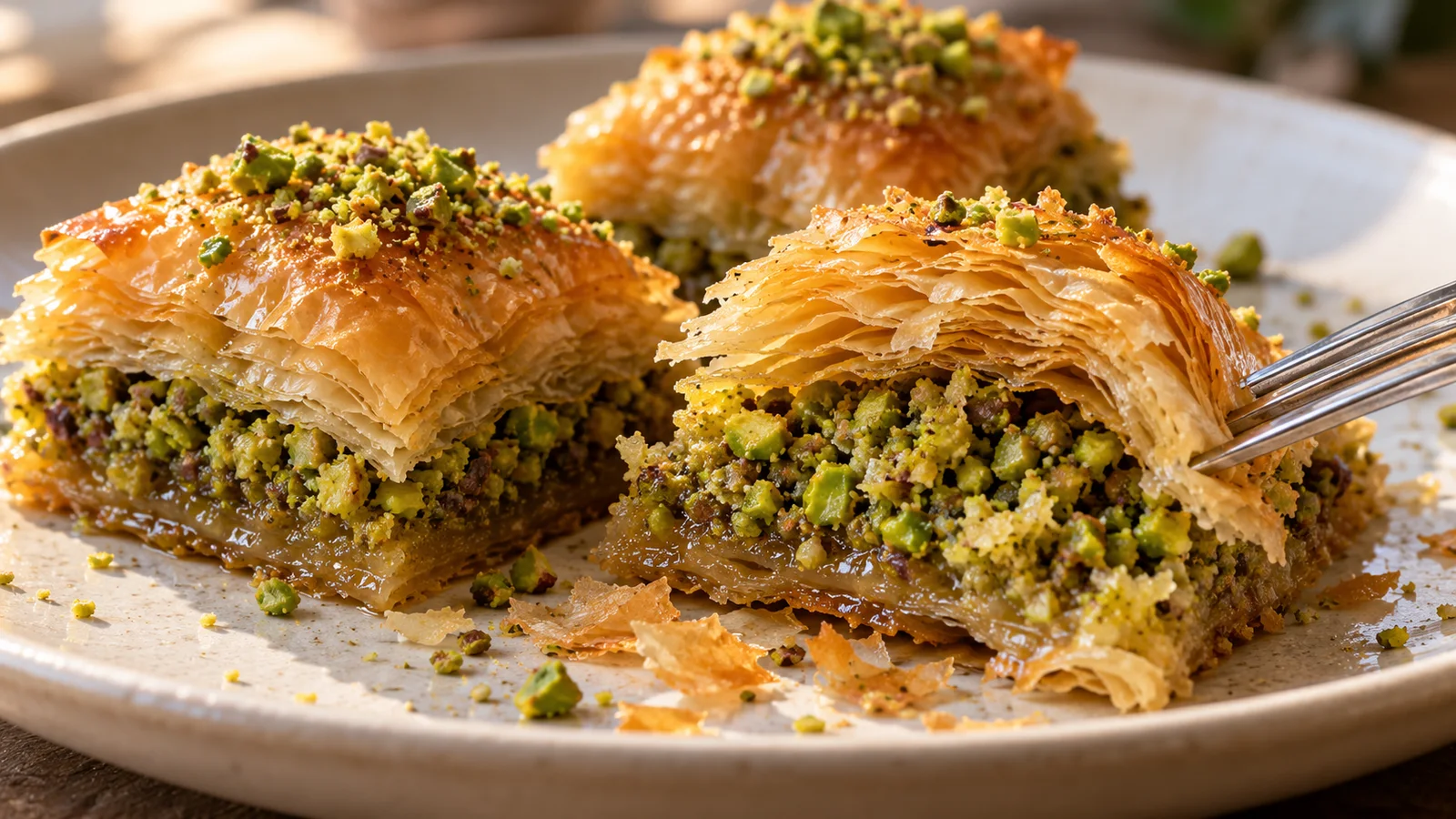
Baklava is made by layering thin sheets of pastry with fat and a nut filling, baking them until golden, then adding syrup. Pistachio and walnut are two familiar choices in Turkey, though the recipes and shapes vary between shops.
The finished piece should let you taste more than sugar. Notice the nuts, the butter and the baked pastry. Listen to the upper layers as your fork cuts through them. Feel how quickly those brittle sheets soften in your mouth.
That contrast takes work. The dough must be rolled thin, the layers assembled carefully, and the baking and syrup judged together. Too much moisture can flatten the texture; too little leaves a piece that never quite comes together.
A tray may look effortless behind the glass. It represents hours of preparation before you arrive.
Why Gaziantep Matters
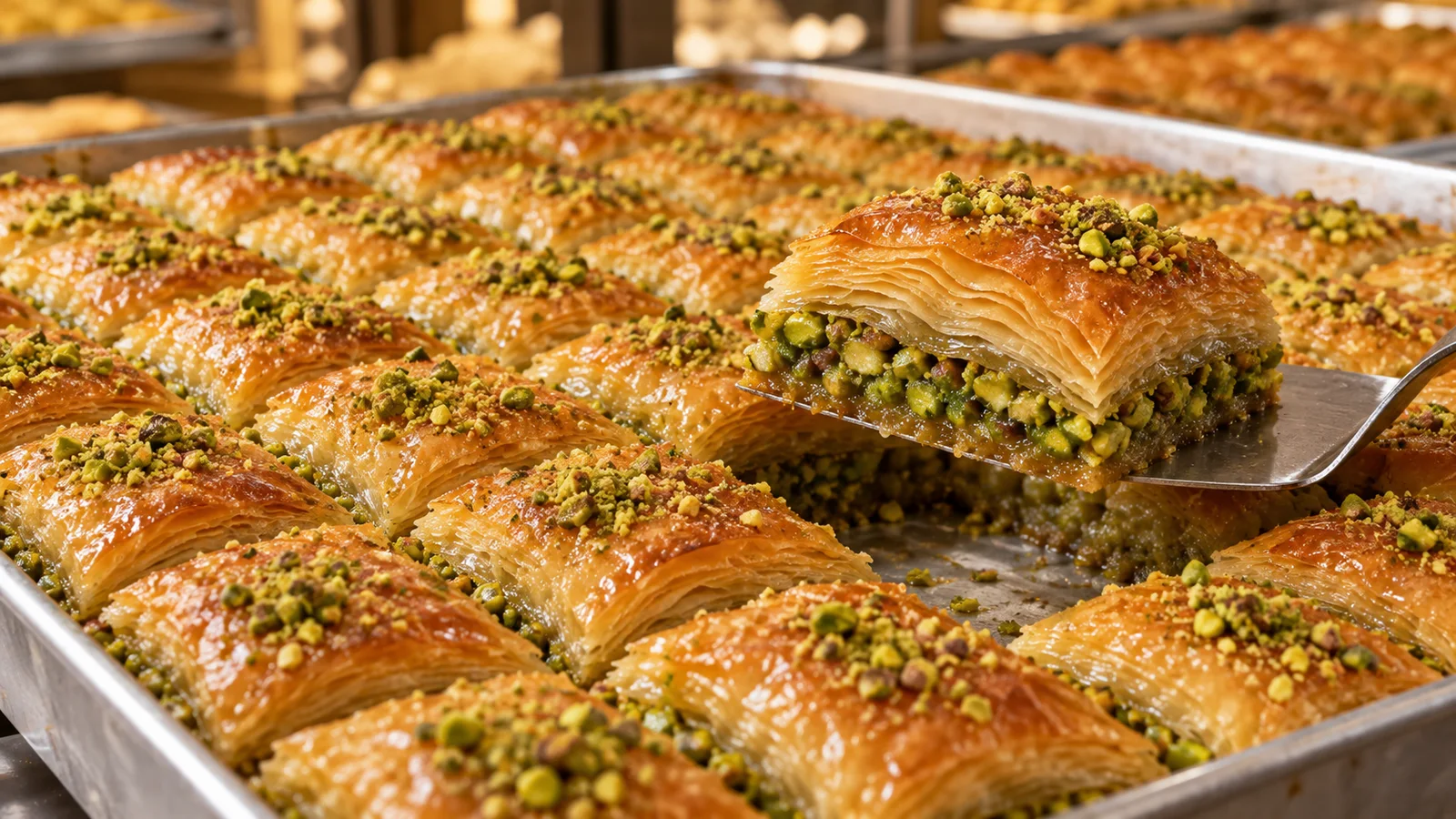
For a traveller exploring Turkish food, Gaziantep deserves a place on the map.
The city’s baklava tradition is recognised through Antep Baklavası / Gaziantep Baklavası, which received European Union Protected Geographical Indication status in 2013. That protection applies to a defined regional product, rather than every pastry sold under the general name baklava.
Here, pistachio baklava is an especially rewarding starting point. Take a small bite and let the sweetness settle before reaching for another. The flavour of the nuts should still be there.
Make the tasting part of your day in the city. Explore the old commercial streets, pause at a pastry counter, and sit down with a plate while your feet recover. Beyond the window, shoppers continue on their way. At your table, there is the quiet pleasure of a fork, a few scattered flakes and another piece waiting.
Which Baklava Should You Order?
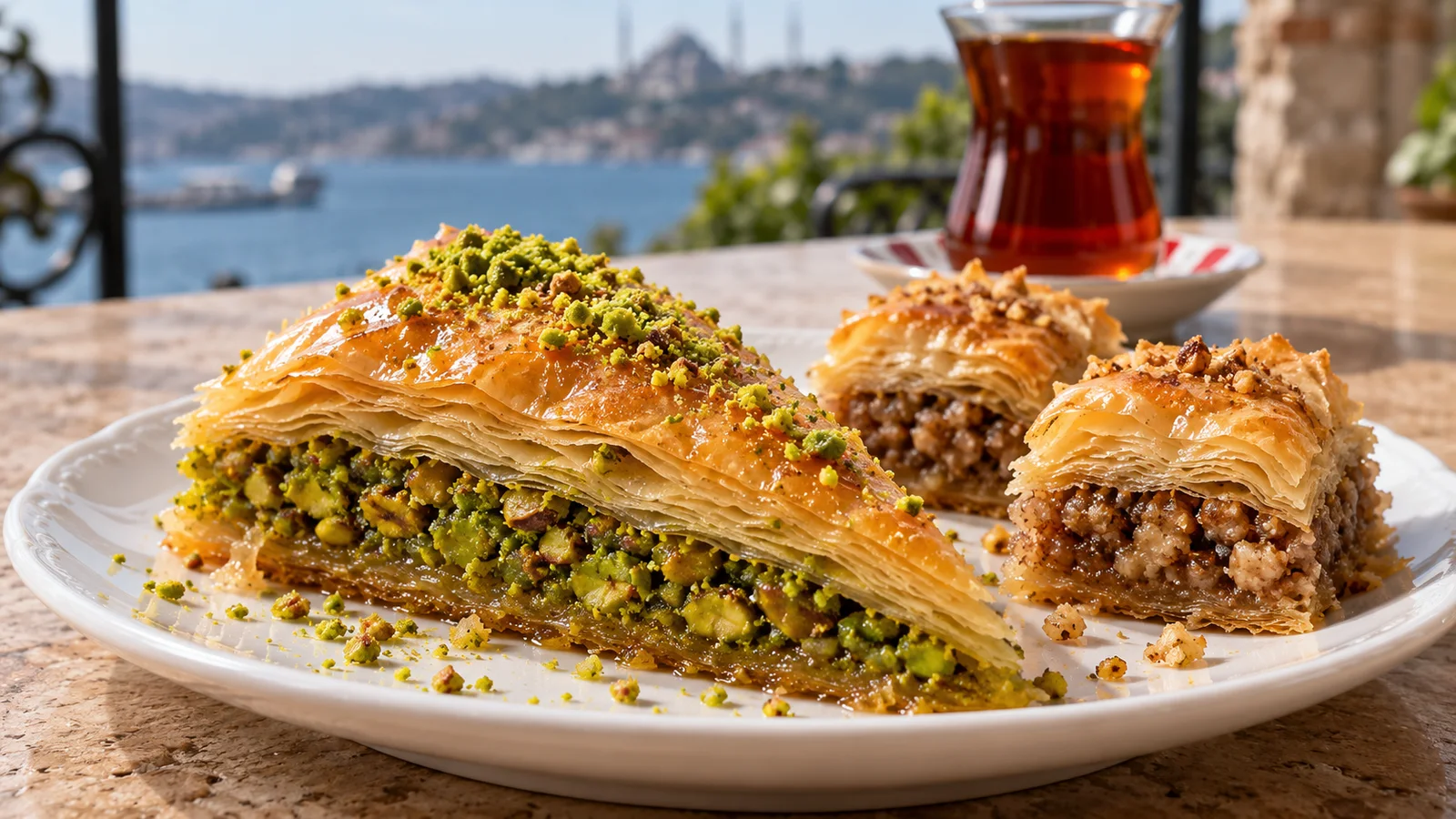
A crowded display can be wonderfully distracting. Start with a few varieties you can compare.
Fıstıklı baklava — pistachio baklava. Choose this for your first tasting, especially in Gaziantep. Look at the cut side of the piece, where the nuts sit between the pastry layers.
Cevizli baklava — walnut baklava. Walnuts bring a deeper, earthier flavour. Try it beside a pistachio piece and notice how the filling changes the whole mouthful.
Havuç dilimi — a large triangular slice. Its name means “carrot slice” and refers to its shape. It makes a generous serving, so check the size before adding several other desserts.
Şöbiyet. This related pastry commonly includes pistachios and a creamy filling made with milk and semolina. It offers a softer centre; ask the shop about its particular preparation.
For a first visit, a small mixed plate is often more satisfying than a large portion of one variety. You can taste slowly and discover what you would like to take away.
Where to Try Baklava in Turkey
İmam Çağdaş, Gaziantep
İmam Çağdaş traces its history to 1887 and remains a well-known name for Gaziantep food and baklava. Its official website lists the address as Kale Altı Uzun Çarşı No: 49.
Make it a food stop during your exploration of the old centre. The business lists classic baklava, walnut baklava, dry pistachio baklava and several other varieties. Start with a small serving of pistachio baklava, then compare it with another style if you have room.
If you are buying a box, explain when you plan to eat it. The staff can help you choose an appropriate variety and tell you how to store it.
Karaköy Güllüoğlu, Istanbul
For an Istanbul tasting, Karaköy Güllüoğlu — Nadir Güllü is an established choice. The business began operating in 1949 and currently lists its shop at Kemankeş Caddesi No: 67, Karaköy.
It fits naturally into a day around Karaköy and Galata. Come down through the streets towards the waterfront, then stop for a small plate before continuing your walk.
Choose pistachio and walnut pieces if you want a straightforward comparison. Notice which flavour stays with you after the syrup fades. That is a better guide to your preference than the colour of the tray.
Use the shop’s current address when planning your visit; older guides may point to its previous location.
Official website: Karaköy Güllüoğlu
How to Order Your First Plate
A useful request is:
“İki dilim fıstıklı baklava, lütfen.”
“Two pieces of pistachio baklava, please.”
For a mixed serving, ask:
“Karışık küçük bir porsiyon alabilir miyim?”
“Could I have a small mixed portion?”
Check how the serving is priced before ordering: shops may sell by portion, piece or weight.
Try the first bite on its own. Afterwards, water or an unsweetened drink gives your palate a pause between pieces. If ice cream is offered, taste the baklava first so you can appreciate the pastry’s texture before adding something cold.
Traditional versions commonly contain wheat, nuts and dairy, and the dough may contain egg. Ask about ingredients and preparation if you have an allergy.
The Piece You Take With You
Before leaving, look once more at the trays. Now the differences are easier to recognise: the green filling of pistachio pieces, the darker walnuts, the broad triangles and tightly arranged squares.
Choose a box of the kind you enjoyed most, and ask for storage instructions suited to your journey.
Outside, the air feels cooler after the warmth of the shop. The paper bag rests against your hand. Somewhere later—back at your hotel, beside an open window, or after a long afternoon of walking—you will open it.
A few flakes will fall onto the plate.
And that small crack of pastry will bring you straight back.
💬 Comments (0)
Traveler comments are shown in their original language.
No comments yet. Be the first to share your experience.
💬 Want to join the discussion?
Log in or create an account to leave a comment.