Vefa and Saraçhane: A Taste of the City Beneath the Aqueduct
Walk from Hırka-i Şerif through Şehzadebaşı and Vefa, taste traditional boza, and finish beneath the Valens Aqueduct in Saraçhane.
 Burak ÇınarTurkTravelRadar Founder
September 27, 2026
Leave Hırka-i Şerif and begin walking back toward the centre of Fatih.
The streets are familiar in one way: shops, apartments, people crossing between them. But this walk has a different destination. You are heading toward Şehzadebaşı and Vefa, then on to Saraçhane, where an ancient aqueduct still stands above the modern road.
For now, keep your attention at street level.
Listen to the change between a side street and a busy junction. Notice the smell from a bakery if its ovens are working, or the cooler air beside a shaded stone wall. Your feet will tell you where a pavement has been repaired before your eyes do.
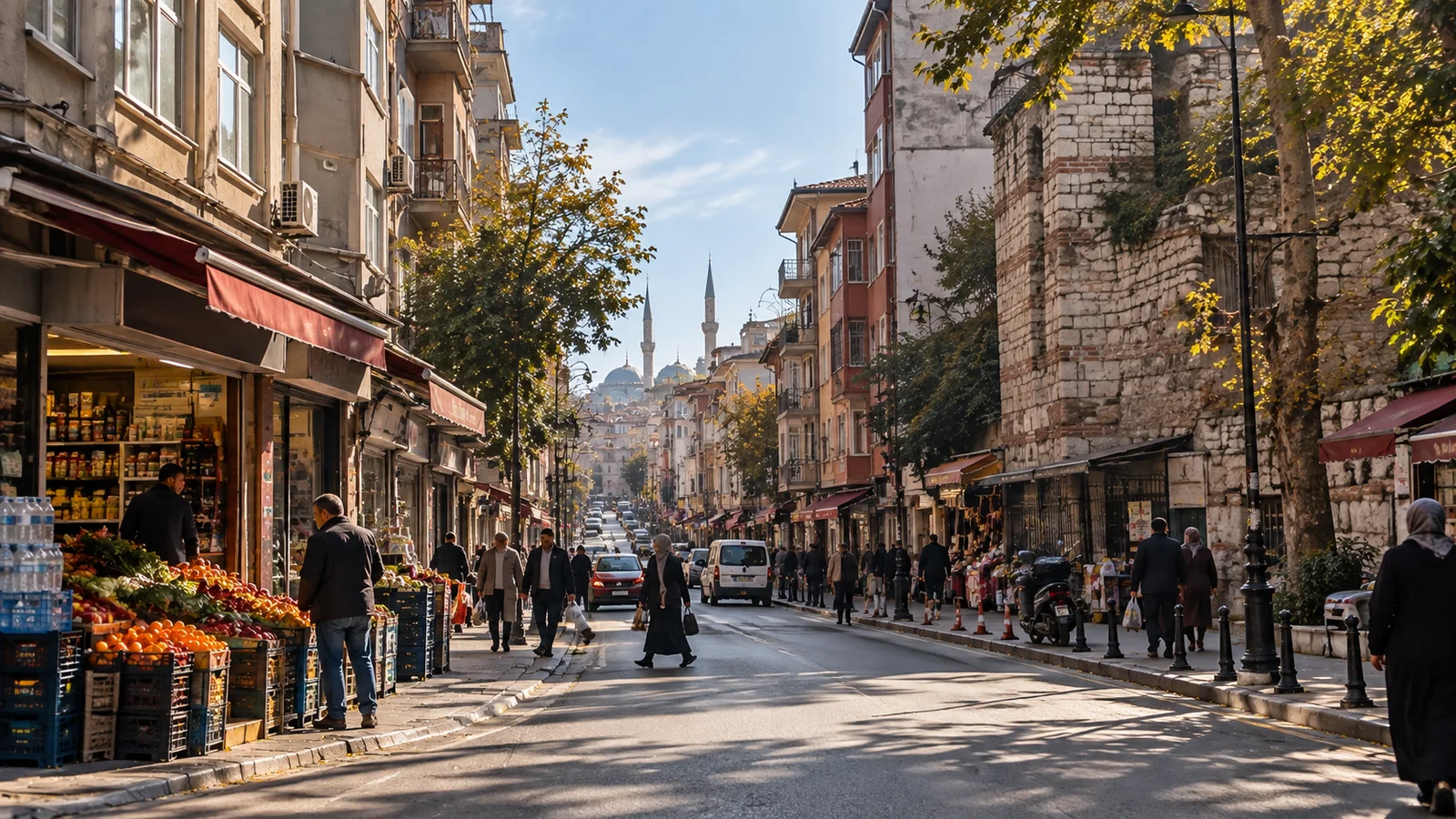
Walking note — Physical effort: 3/5
Walk from Hırka-i Şerif toward Şehzade Mosque, continue into Vefa, then finish at the Bozdoğan Aqueduct in Saraçhane. Allow extra time for crossings and for exploring the smaller streets. This is a neighbourhood walk rather than a straight route between monuments.
A Mosque Built for a Son
Make Şehzade Mosque your first major landmark.
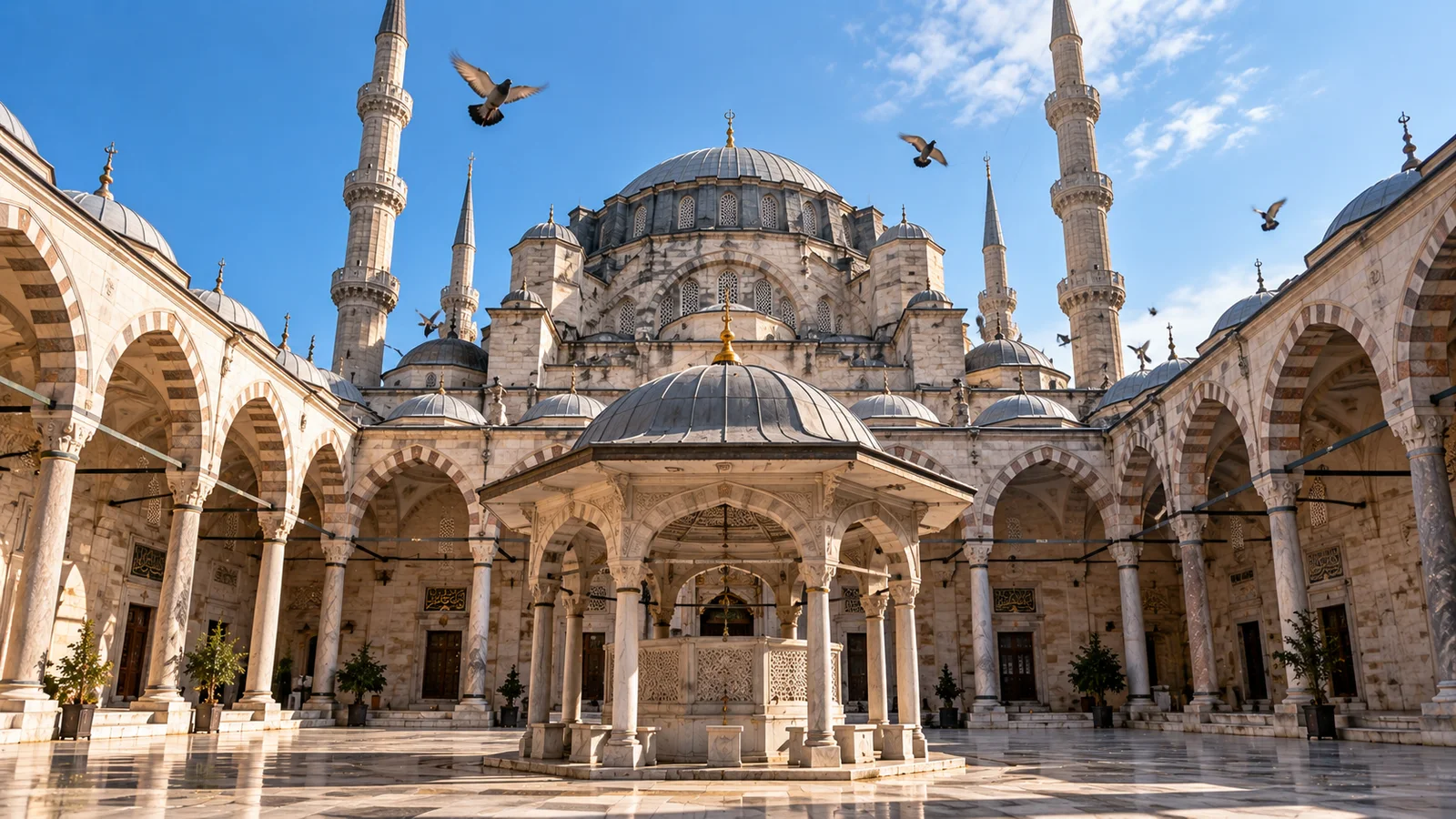
Sultan Süleyman commissioned it in memory of his son, Prince Mehmed. Mimar Sinan began the mosque in 1543 and completed it in 1548.
Those dates explain when it was built. They do not tell you what it feels like to arrive.
After the traffic and close-set streets, the mosque gives your eyes room to move. Look across the courtyard before looking up at the dome. Walk slowly enough to notice the repeated shapes of the arches and the way light falls across the stone.
Pause and listen. Depending on the hour, you may hear footsteps, birds or the distant road beyond the enclosure. The city is still there. The courtyard simply changes how you hear it.
If you enter, check the visiting arrangements and be mindful of prayer. This is an active place of worship.
Find Your Way Into Vefa
From Şehzade Mosque, continue toward Vefa.
Do not expect a dramatic entrance. The neighbourhood announces itself through smaller details: a turn into a narrower street, an older building among newer ones, a brief conversation at a shop counter.
Vefa’s name is associated with Şeyh Vefa, a 15th-century scholar and Sufi figure. Yet the streets are not an outdoor museum devoted to a single period. Students, residents and workers all use them. That living rhythm is part of the walk.
Here, give your senses a little more time. Look for differences in the stone and brick around you. Listen for the sound of a door closing behind someone. If food is being prepared nearby, notice how its smell follows you for a few steps and then disappears around a corner.
Stop for Boza, If You Find It
Vefa is closely associated with boza, a thick, mildly tangy fermented grain drink.
If you find a place serving it, this is a good moment to try a small glass. It may be topped with cinnamon. Feel the weight of the glass in your hand before you drink. Boza is thicker than you might expect, with a taste that sits somewhere between sweet and tart.
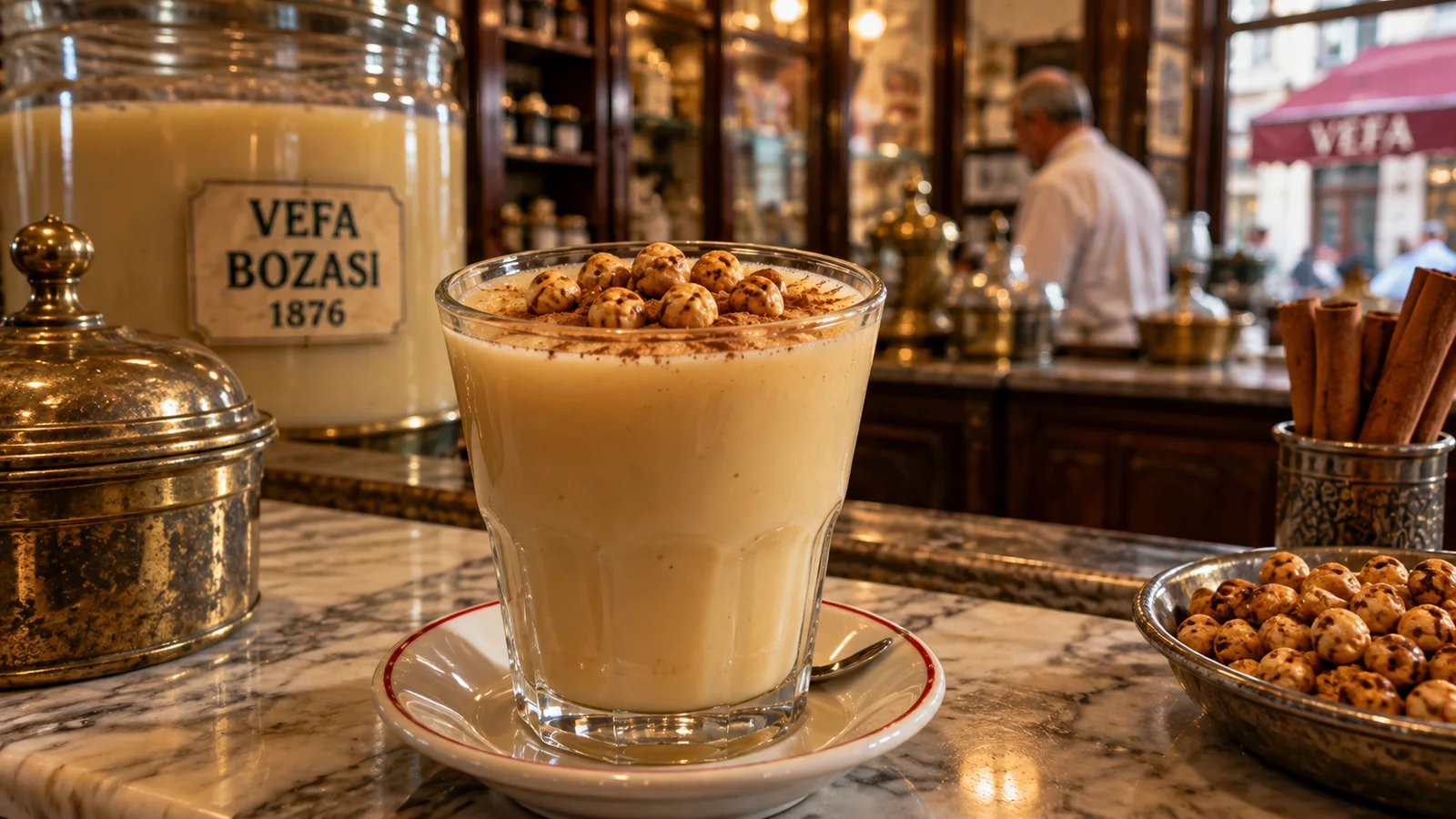
You do not have to like it for the stop to be worthwhile. Trying it gives you another way to remember the neighbourhood: by taste, rather than by a photograph.
Availability can vary with the shop and season, so treat it as an opportunity along the route, not a guaranteed stop.
The Stone Line Above Saraçhane
From Vefa, continue toward Saraçhane and the Bozdoğan Aqueduct, also known as the Valens Aqueduct.
As you approach the main road, the sound of traffic grows. Then look up.
The aqueduct rises above a city moving underneath it. Built in the fourth century to carry water to Constantinople, it continued to serve the city in the Ottoman period. Today, vehicles pass below its arches.
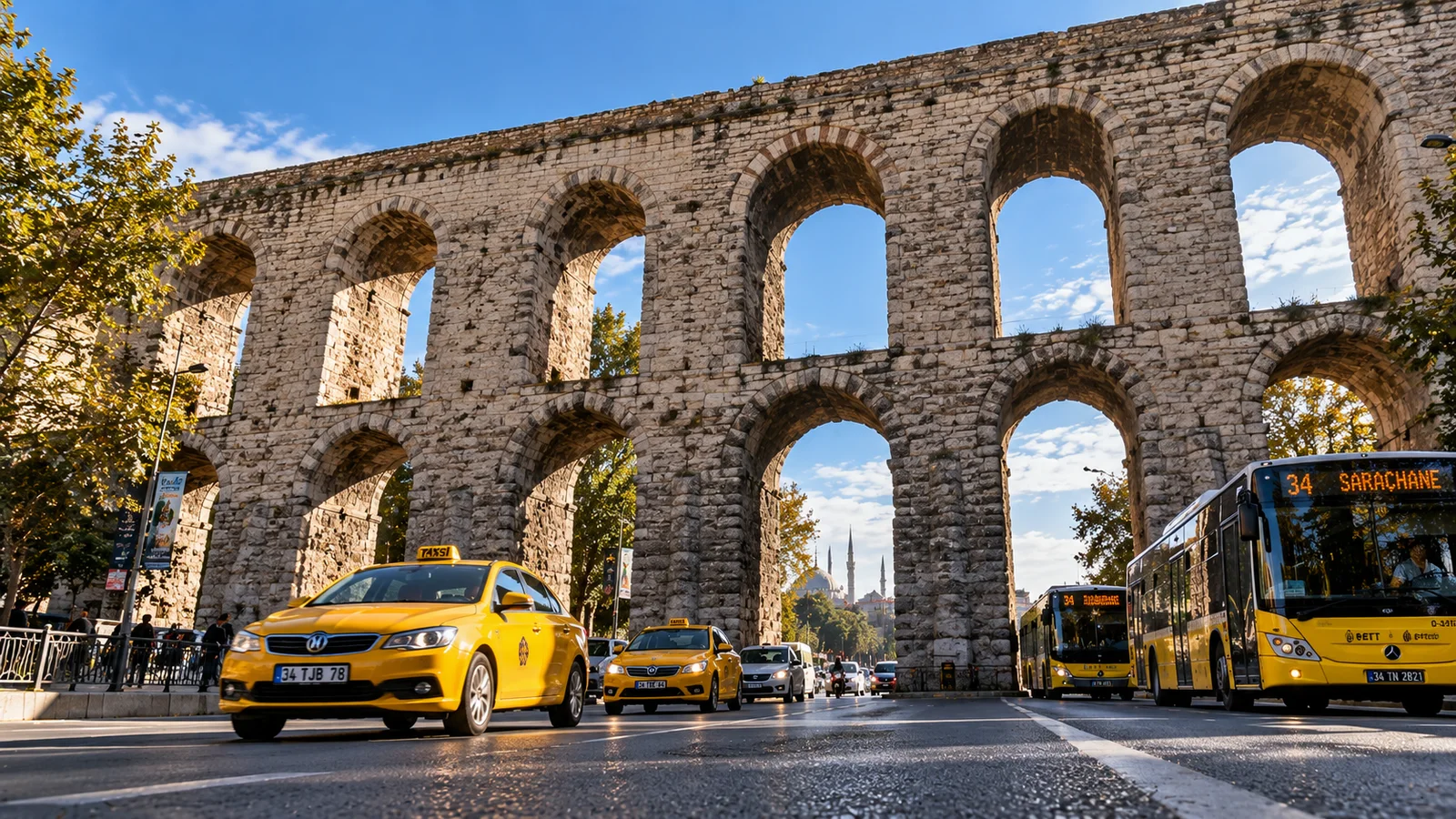
Stand where you can view it safely, away from traffic. Trace the line of the structure with your eyes. The stone appears solid and still; the road beneath it changes from moment to moment.
Think back to the water on earlier parts of this Istanbul walk. At the Golden Horn, you watched ferries cross it. Here, water once travelled high above the ground, carried toward the people living inside the city.
You cannot hear that water now. You hear engines, footsteps and voices instead.
That is Saraçhane: an old piece of the city performing a new role in the middle of an ordinary day.
Before You Leave
This walk began at a mosque built around a cherished relic. It passed a mosque built in memory of a prince, took you through streets where you might taste a neighbourhood tradition, and ended beneath the remains of an ancient water system.
Take one last look at the aqueduct before moving on. Notice the scale of its arches, then bring your gaze back down to the people finding their way across the junction.
Next walk: Follow the land downhill toward Unkapanı and Cibali, where the city meets the Golden Horn again.
Next walk: Unkapanı and Cibali: Down to the Golden Horn
💬 Comments (0)
Traveler comments are shown in their original language.
No comments yet. Be the first to share your experience.
💬 Want to join the discussion?
Log in or create an account to leave a comment.