Unkapanı and Cibali: Down to the Golden Horn
Walk from Saraçhane down to the Golden Horn. Discover the historic streets of Cibali and an 11th-century Byzantine cistern hidden beneath a former tobacco factory.
 Burak ÇınarTurkTravelRadar Founder
September 27, 2026
Leave the Bozdoğan Aqueduct behind and follow the ground downhill toward the Golden Horn.
At Saraçhane, you stood beneath a structure that once carried water above the city. Now you are going to meet the water at its edge.
The descent feels different from the walk through Vefa. Traffic grows louder along Atatürk Bulvarı. The air opens up as you approach Unkapanı, and between the buildings you begin to catch glimpses of the Golden Horn.
Do not hurry toward the view. This part of the walk is about noticing how the city changes on the way down.
Walking note — Physical effort: 3/5
Walk downhill from Saraçhane toward the Unkapanı end of Atatürk Bridge. Remain on the Fatih side, then follow the shore toward Cibali. Unkapanı has busy roads and junctions. Use marked pedestrian crossings; the most direct-looking path may not be the safest one.
Where the Road Meets the Water
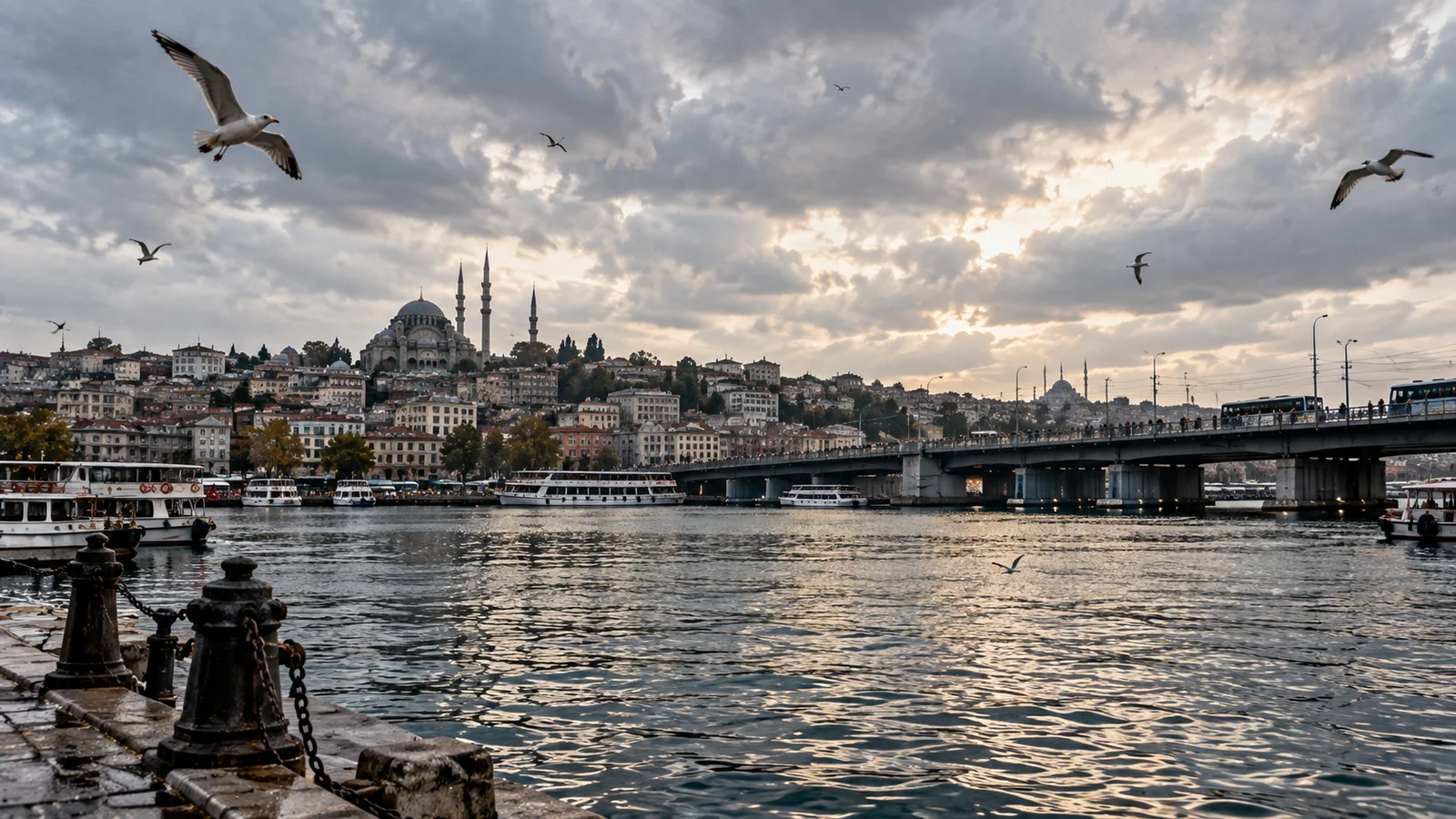
Near Atatürk Bridge, also called Unkapanı Bridge, stop somewhere safe and look across the Golden Horn.
The water is no longer a distant line between buildings. It is directly in front of you. On the opposite shore is Beyoğlu; behind you, the streets rise back toward the historic peninsula.
Listen for a moment. Traffic may be the loudest sound, but underneath it you might hear gulls, footsteps or the movement of a boat. If there is a breeze, you will feel the difference between the enclosed streets above and the open waterfront.
Unkapanı’s name recalls its commercial past. Un means flour, and kapan was associated with places where goods were brought and traded. The shore was tied to the work of supplying the city.
It is easy to look at a bridge and think only about crossing it. For this walk, stay on the Fatih side. The story continues along the water.
Follow the Shore Toward Cibali
Turn toward Cibali and continue along the Golden Horn.
Keep an eye on the walking route as the road, tram line and shoreline meet. Choose designated paths and crossings rather than trying to stay beside the water at every point.
This is a good place to slow your pace. Look across to the buildings on the opposite bank, then back toward the neighbourhood rising behind you. The view changes with a few steps: water, traffic, old walls and everyday apartment windows enter and leave the frame.
Watch the surface of the Golden Horn as you walk. On a still day it can hold a broken reflection of the opposite shore; when the wind rises, the image disappears into small ripples. Cibali is close to the waterfront, but its story extends inland.
The Factory That Became a University
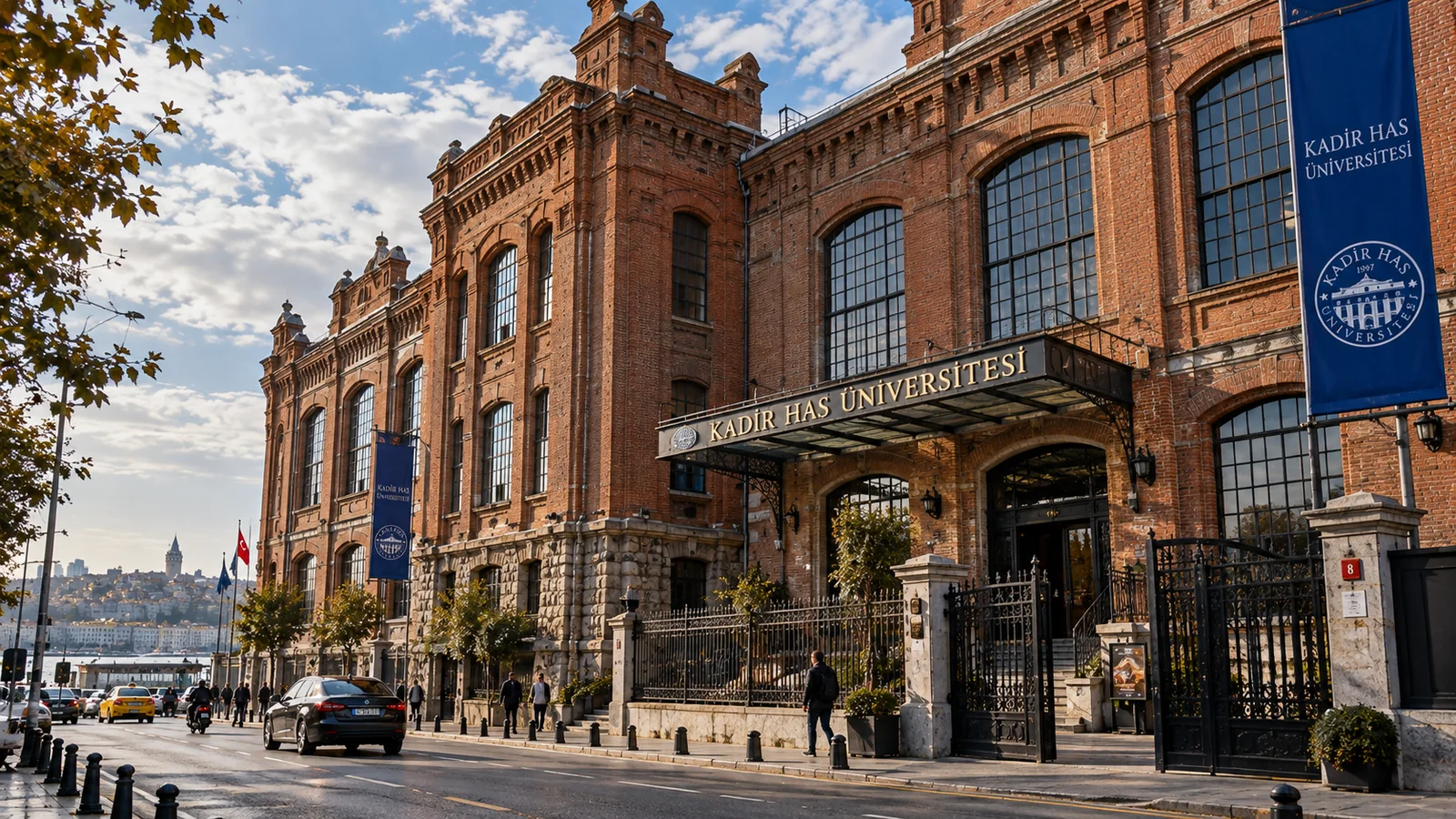
One of Cibali’s largest historic buildings is the former Cibali Tobacco Factory.
Founded in 1884, the factory became an important part of the neighbourhood’s working life. Tobacco was processed here, cigarettes were produced, and generations of workers passed through the building. Many of those workers were women. The factory was a place of long working days and wages carried home, not merely an imposing building on the shore. Today, the restored complex is part of Kadir Has University.
Look at its scale from the street. Imagine a different daily rhythm from the one you found around the mosques and markets earlier in this series: workers arriving for a shift, production continuing inside, and families whose lives were connected to the factory.
There is an older layer beneath that industrial story. On the lower level of the university building, Rezan Has Museum incorporates an 11th-century Byzantine cistern. Its arches and columns belonged to a system for storing water centuries before tobacco was processed above them. After the cistern lost its original purpose, it was used to store tobacco; during the Second World War, it served as a food depot. The same space has held water, goods and, now, museum visitors.
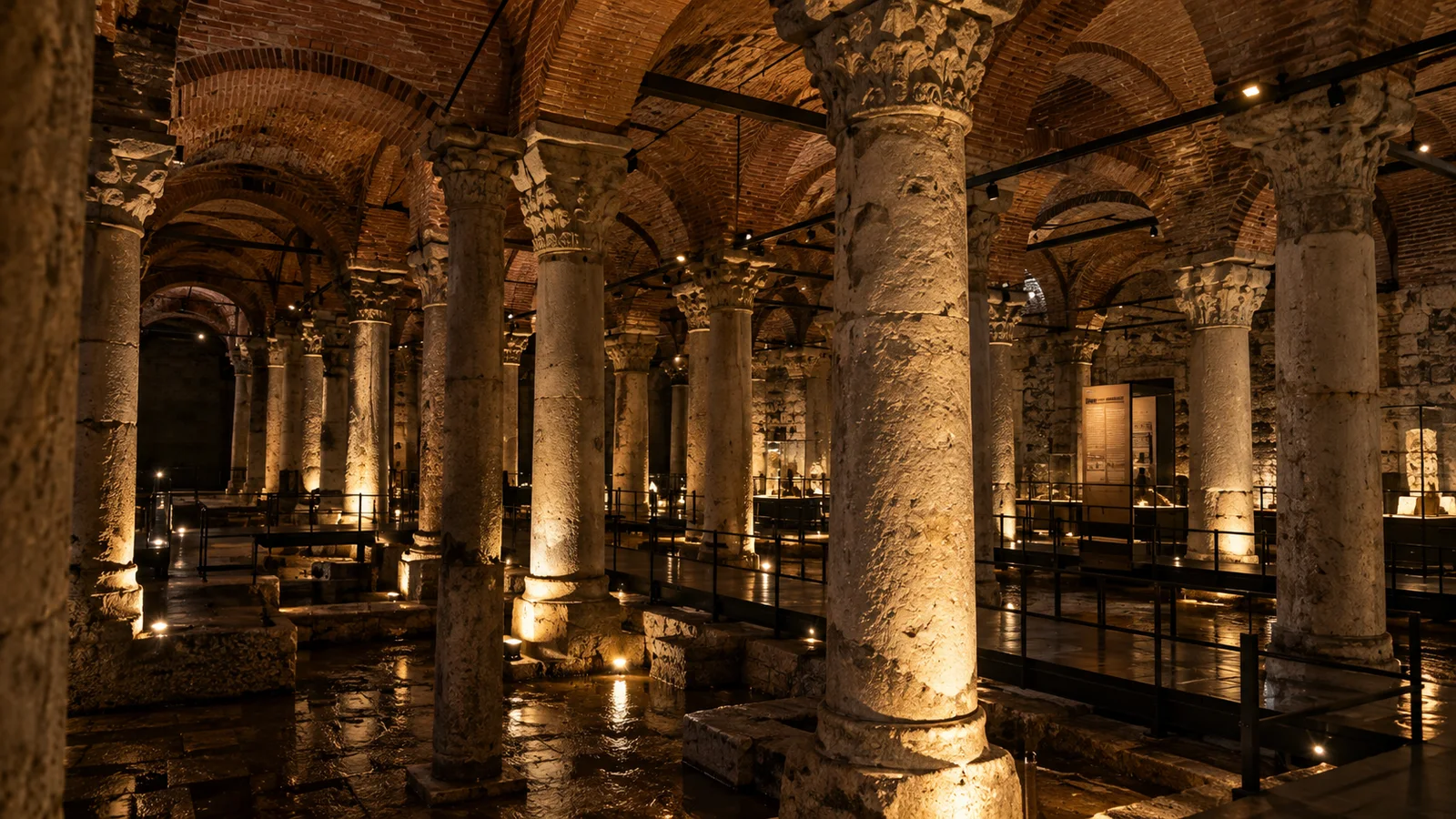
The building is a university now. Students and staff have replaced the factory workforce, but its earlier use remains part of Cibali’s history. Respect campus access rules if you want to explore beyond the public street.
Turn Back Toward the Neighbourhood
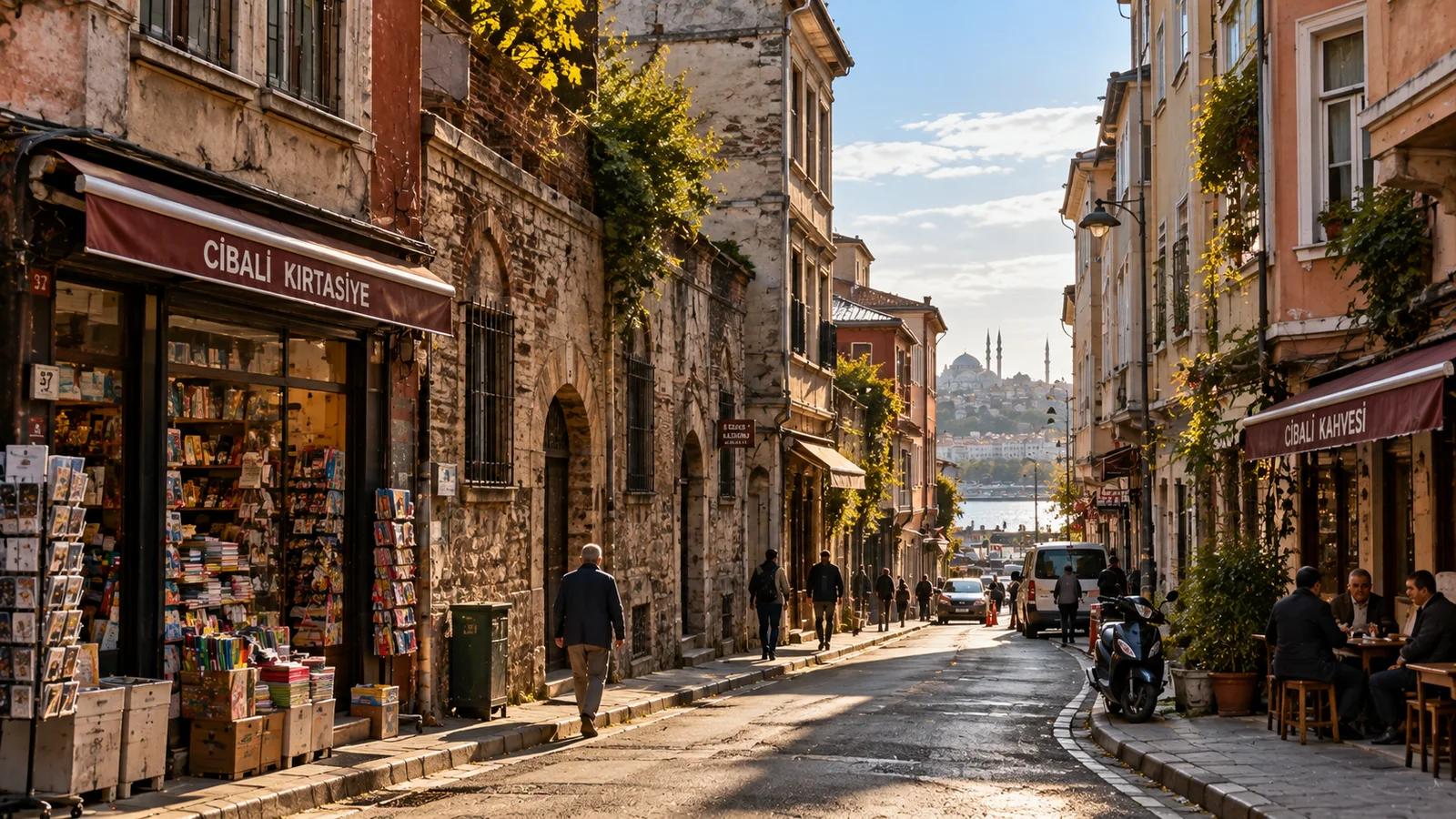
Before leaving Cibali, step away from the main waterfront route where it is safe to do so.
The change can be immediate. Behind the main road, the streets bring you closer to the buildings: repaired plaster, older masonry and newer shopfronts can stand within a short distance of each other. Follow their edges with your eyes rather than searching only for another landmark.
People live and work here now. Let the neighbourhood be present tense as well.
Before continuing, pause where the former factory comes into view again. From here it is one building in a working neighbourhood; beneath it is a much older place that once stored the city’s water.
Before the Next Walk
You began this chapter beneath an aqueduct and ended near a former factory.
Between them, you reached the Golden Horn: the water that has appeared repeatedly in this series, sometimes below a hill, sometimes at the end of a street, and now beside your walking route.
Look along the shore before you leave. The next stretch leads toward Küçük Mustafa Paşa, following Cibali’s neighbourhood streets and the continuing curve of the Golden Horn.
Continue along the Golden Horn → Küçük Mustafa Paşa: The Quiet Streets Behind the Golden Horn
💬 Comments (0)
Traveler comments are shown in their original language.
No comments yet. Be the first to share your experience.
💬 Want to join the discussion?
Log in or create an account to leave a comment.