Küçük Mustafa Paşa: The Quiet Streets Behind the Golden Horn
Leave the Golden Horn to explore the quiet streets of Küçük Mustafa Paşa. Discover a Byzantine church turned mosque and a historic Ottoman hamam breathing new life.
 Burak ÇınarTurkTravelRadar Founder
September 27, 2026
Leave the former Cibali Tobacco Factory and continue along the Fatih side of the Golden Horn.
You have seen this shore from several heights during the walk: from the hills above Fener, from streets descending toward the water, and finally from Unkapanı. Here, keep the water beside you for a little longer. Then turn inland toward Küçük Mustafa Paşa.
The neighbourhood sits close to the shore, but its most interesting details are a short walk back from it.
Walking note — Physical effort: 2/5
From Cibali, follow the shoreline in the direction of Fener, then explore the streets around Gül Mosque and Küçük Mustafa Paşa Hamamı. This is a short neighbourhood walk, but some pavements are narrow, raised and uneven. The inland streets are not reliably suitable for wheelchairs or pushchairs. Use marked crossings where the coastal road and tram line interrupt your route.
One Last Look from the Shore
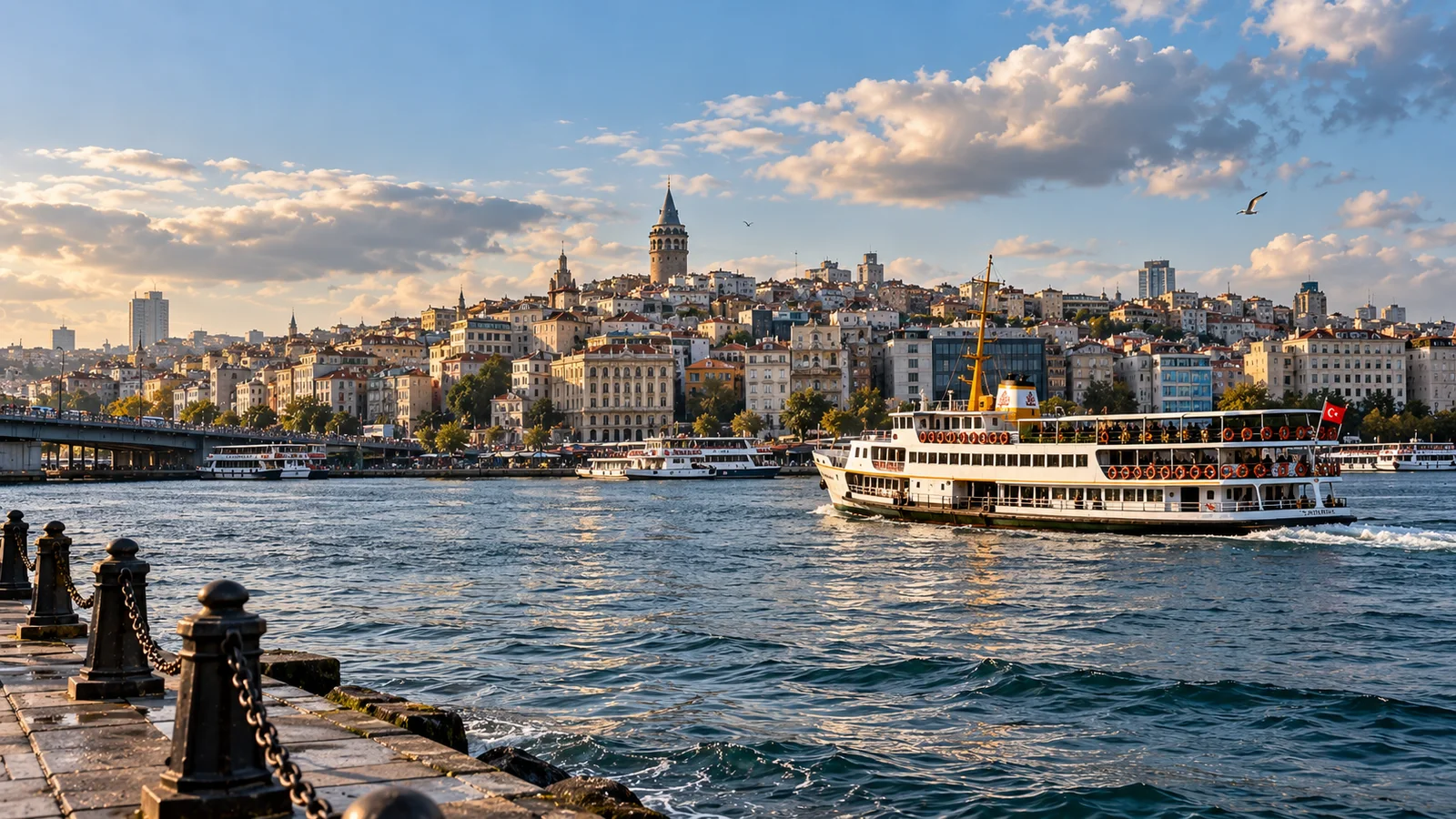
Before turning away from the Golden Horn, stop and look across it.
The far bank seems near enough to study building by building. Boats change the view as they pass. On the water, a moving wake briefly breaks the reflection of the opposite shore.
This is a useful moment to understand the route you have taken. The Golden Horn has been a landmark throughout these walks, but you have rarely followed it in a straight line. You climbed above it, lost sight of it behind houses, found it again between streets, and eventually reached its edge.
Now step away from the waterfront. Let the neighbourhood replace the wide view.
A Mosque with an Older Life
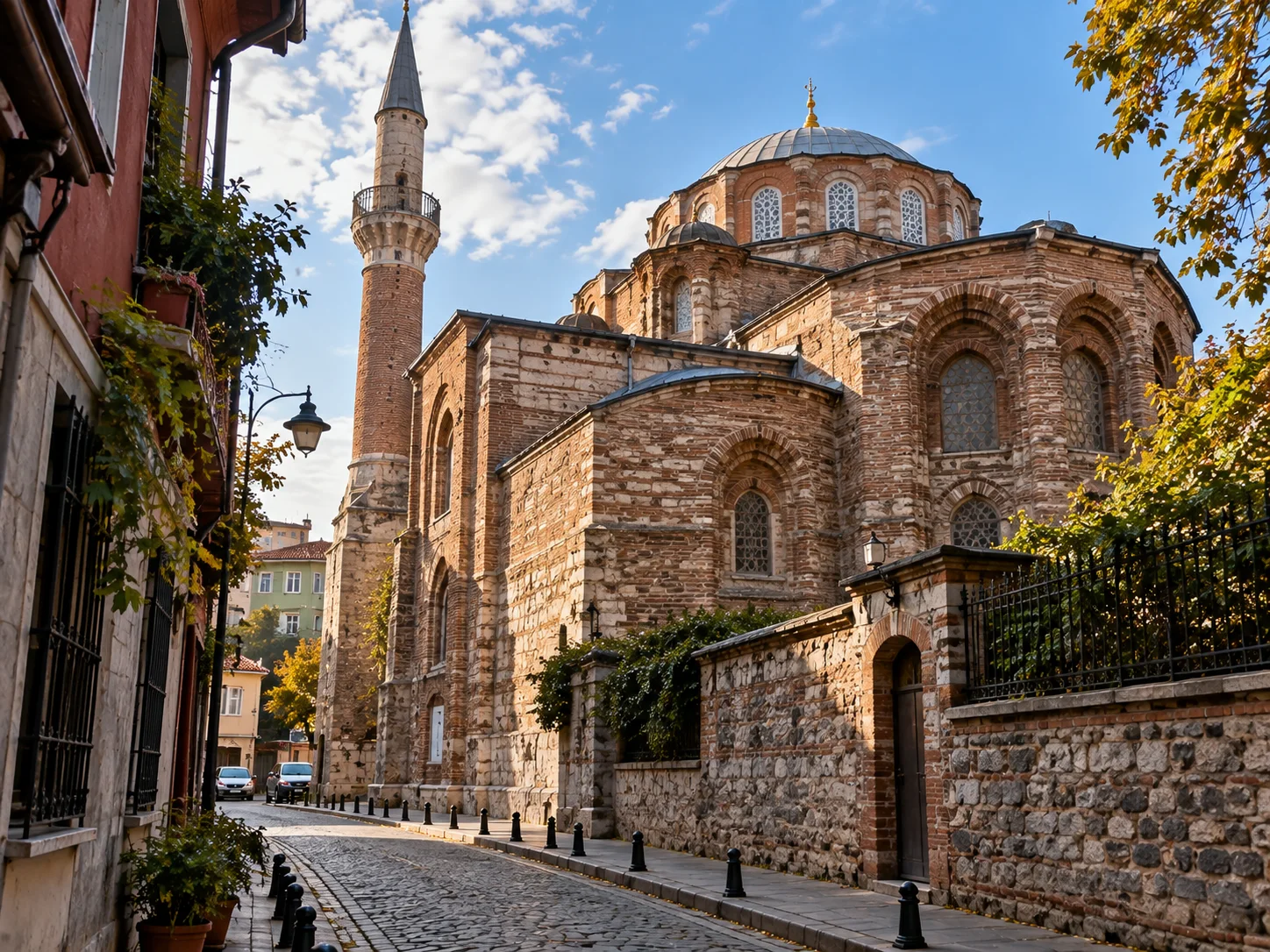
Look for Gül Mosque, or Gül Camii, among the streets behind the shore.
The building was once a Byzantine church. It was converted into a mosque after the Ottoman conquest, though the identity of the original church has long been debated. That uncertainty matters. It is better to see the structure that survives than to attach a confident name to a past that historians have not fully settled.
Approach from the street and notice how much of the building you can see at once. In a dense neighbourhood, a large historic structure does not always reveal itself in a single view. Walk around where public access allows. Its walls and proportions become clearer as your position changes.
Entry to the mosque is free. Non-worshippers can generally visit outside prayer times, subject to the arrangements on the day. Dress respectfully, remove your shoes before entering the prayer area and give worshippers space.
A breeze from the shore may still reach you here, but the waterfront no longer fills your field of vision. You are back among the buildings, reading the place a few metres at a time.
The Hamam in the Neighbourhood
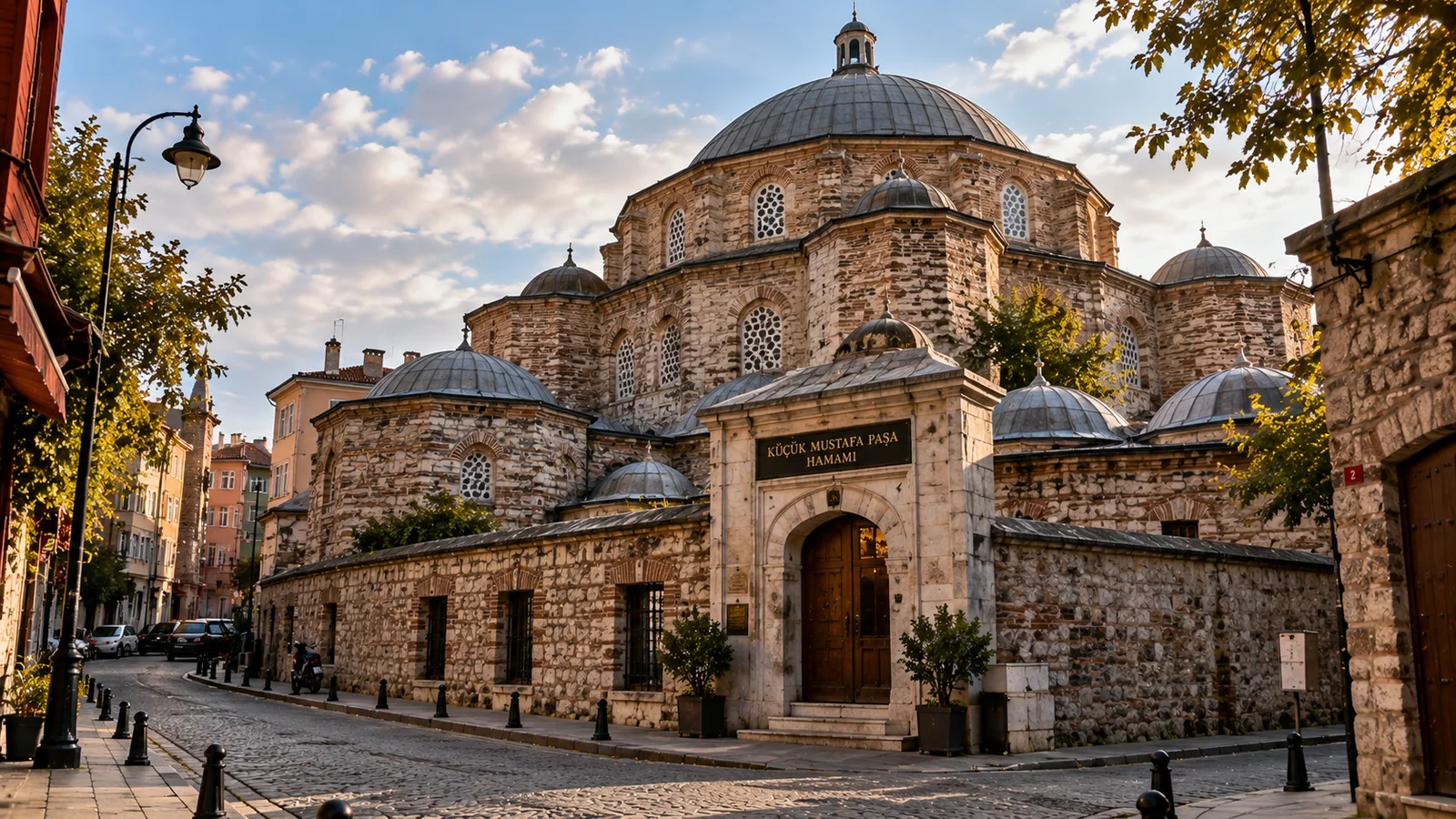
Continue toward Küçük Mustafa Paşa Hamamı.
A hamam is a reminder that a city’s history includes the routines of the body as well as its grand buildings: washing, warmth, conversation and time set aside from work. Look at the exterior as part of the street around it. A historic bathhouse belongs to its neighbourhood, even when its present-day use differs from its original purpose.
The building no longer operates as a public bath. It is used as a venue for exhibitions and special cultural events. You may be able to see inside when an event is scheduled, but do not count on walk-in access on an ordinary day.
Pause nearby. Instead of looking for a perfect photograph, notice the scale of the street. You have left the open shore and entered a place where the distance between buildings feels smaller. Your pace may change with it.
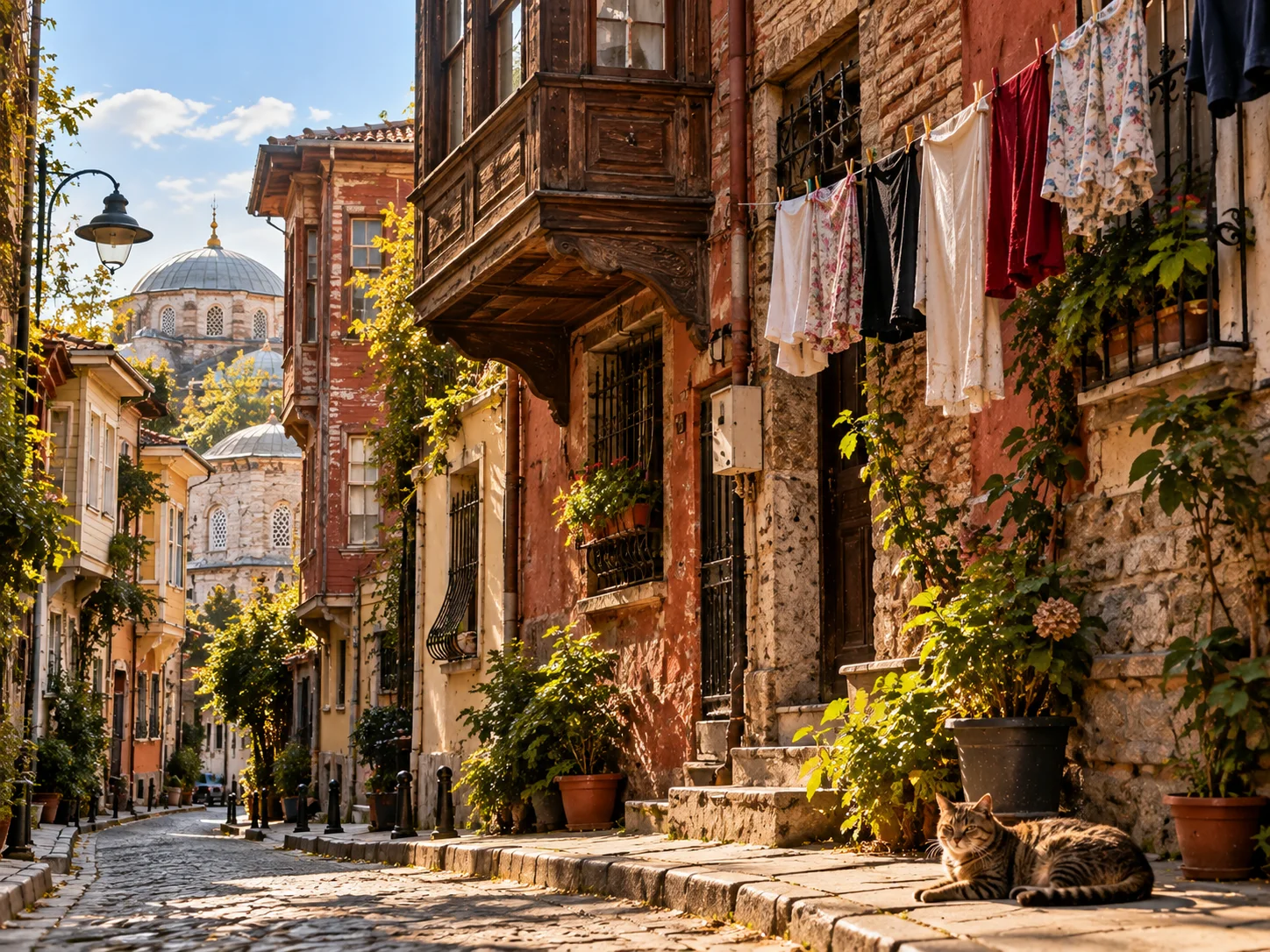
On the way, look up as well as ahead. You may spot an old wooden bay window above a newer shopfront, laundry hanging from a window, or a cat settled where the afternoon light reaches the pavement. If a bakery or coffee shop is working nearby, its smell can briefly fill a narrow street. At another hour, the most noticeable sound may be children talking as they head home. These are moments to notice if you encounter them, rather than stops marked on a map.
Where This Side of the Walk Ends
From Küçük Mustafa Paşa, you could keep following the Golden Horn toward Fener and Balat. Earlier chapters have already taken you through those neighbourhoods.
So this is a good place to close the walk on the historic peninsula.
Think of the different kinds of work and daily life you have encountered along this stretch: trade at Unkapanı, factory labour in Cibali, worship at Gül Mosque and the bathing tradition recalled by the hamam. They share a small piece of the city beside the same water.
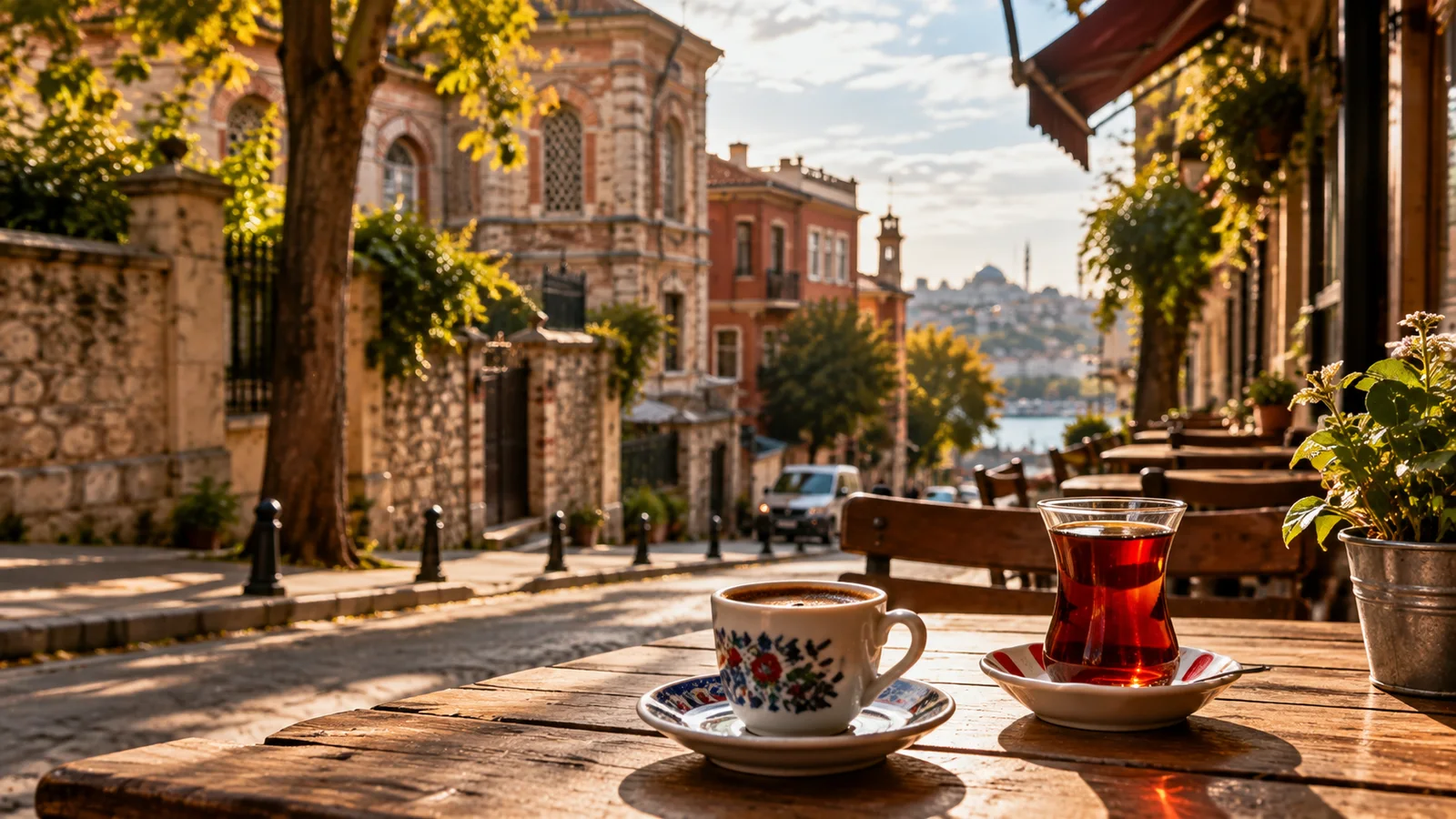
For a final coffee, Posa Coffee Roastery in Cibali is an option if you are walking back toward the university. Check that it is open before making the detour. If you would rather stay on your route, choose an open neighbourhood café for tea without turning the last part of the walk into another search for a landmark.
To reach the T5 tram: Return to the waterfront and follow the tram line toward Cibali station if you are heading back in the direction of Unkapanı and Eminönü. Follow it the other way toward Fener station if you are continuing along the Golden Horn. Use the marked crossing to reach the platform.
Return to the shoreline when you are ready. Look across the Golden Horn once more.
Next walk: Cross to the Beyoğlu side and begin a new route through Karaköy, Galata and Tophane.
💬 Comments (0)
Traveler comments are shown in their original language.
No comments yet. Be the first to share your experience.
💬 Want to join the discussion?
Log in or create an account to leave a comment.