The Hidden Star of Turkish Cuisine: Gaziantep-Style Ali Nazik Kebab
Discover Ali nazik, Gaziantep’s smoky roasted eggplant and garlic yogurt dish topped with savoury meat. Explore its flavours, different preparations, and useful Turkish ordering phrases.
 Burak ÇınarTurkTravelRadar Founder
September 30, 2026
A piece of warm bread bends between your fingers as you draw it through the eggplant beneath the meat.
The first mouthful brings a gentle smokiness, then the bright tang of yogurt. Garlic follows, fragrant and unmistakable. Finally, the meat adds its savoury richness, leaving you reaching for another piece of bread before you have quite finished the first.
On the plate, browned meat rests over a pale bed of roasted eggplant and yogurt. A little cooking juice slips into the base, colouring its surface.
Around you, forks touch porcelain and conversation moves between tables. Lean closer, and the aroma of roasted eggplant rises again.
This is Ali nazik, a speciality closely associated with Gaziantep, in southeastern Turkey—and a compelling reason to explore Turkish cooking beyond its most familiar grilled dishes.
What Is Ali Nazik?
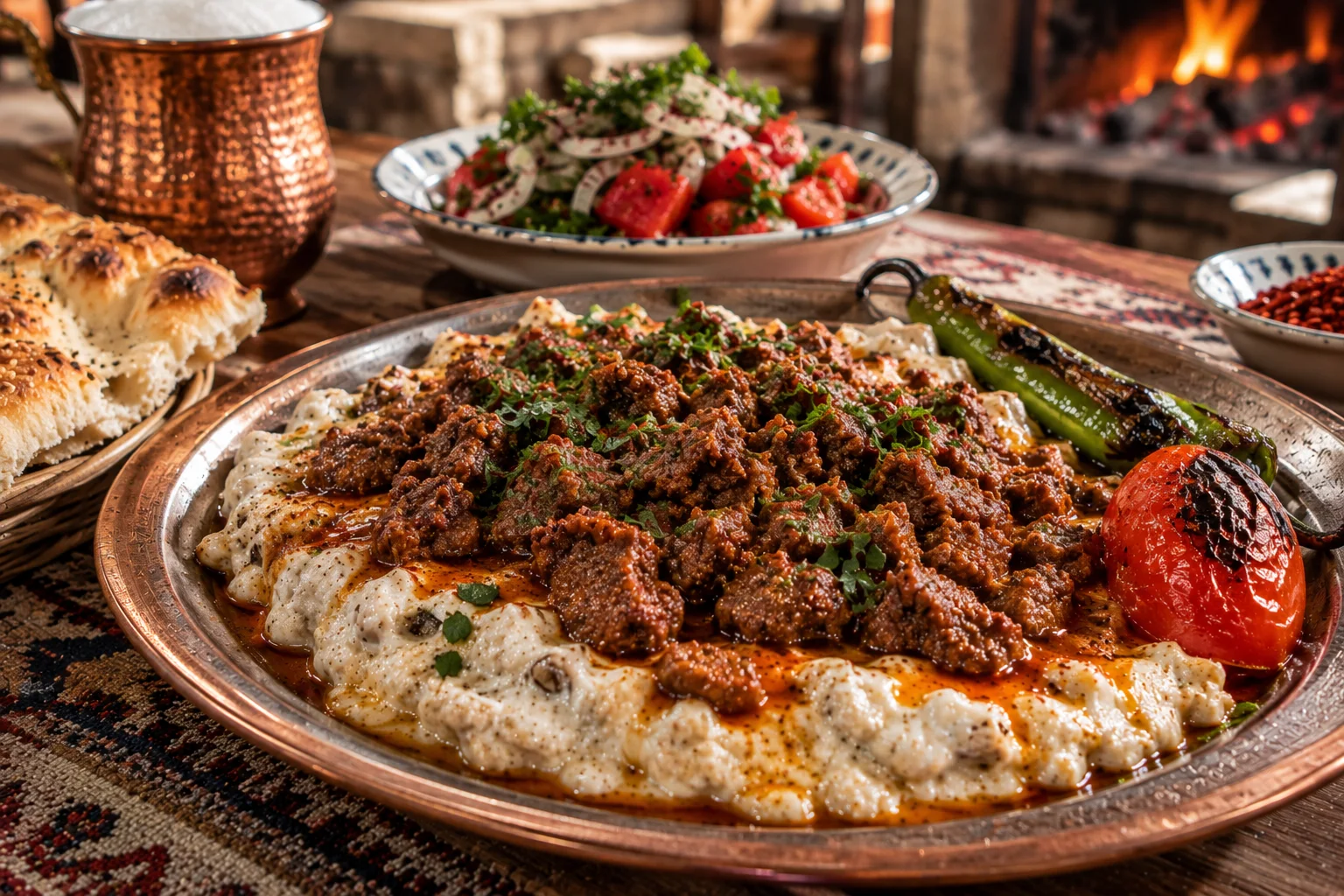
Ali nazik is a Turkish dish made with fire-roasted eggplant, garlic yogurt, and a topping of cooked meat.
You may encounter the name written as Ali nazik, Alinazik, or Ali nazik kebabı.
The meat can vary between kitchens. Some versions use minced meat, while others feature small cubes of lamb or beef. The regional Gaziantep recipe published by Türkiye’s Ministry of Culture and Tourism uses coarsely minced meat.
Beneath it, the eggplant and yogurt form the dish’s defining base.
The eggplant brings smoke and softness. The yogurt contributes acidity and a creamy texture. Garlic gives the mixture an aromatic lift, while the meat makes each mouthful substantial.
Take a forkful that reaches through both layers. That is where the dish comes together.
The Flavour Begins Before the Eggplant Is Peeled
An uncooked eggplant gives little indication of the transformation ahead.
Over the fire, its skin darkens and blisters. The flesh inside softens until the vegetable begins to collapse. Once the skin is removed, that tender centre is finely chopped or worked into a soft mixture.
In Gaziantep’s regional preparation, the roasting process is described using the terms partılama and söğürme.
The important thing for your appetite is the aroma it leaves behind.
Roasted eggplant has an earthy sweetness beneath its smoky character. In Ali nazik, that flavour should remain recognisable after the yogurt and garlic are added.
Before gathering any meat, taste a little of the base.
Notice how the smokiness lingers after the yogurt’s first bright impression has faded.
Garlic Yogurt Gives the Dish Its Character
The yogurt changes the direction of every bite.
Its tang brings freshness to the rich meat. Garlic adds a savoury sharpness, and the soft eggplant carries both flavours across your tongue.
Strained yogurt gives the base body. In the traditional Gaziantep preparation, it is gradually combined with gently warmed eggplant, then mixed with crushed garlic. The mixture is removed from the heat before it boils.
The finished base should feel cohesive and yielding, with the eggplant still contributing texture.
This makes Ali nazik especially appealing if you enjoy the combination of warm food and savoury yogurt. Each bite has richness, but the yogurt keeps your palate interested.
You return to the plate for the flavour as much as for the hunger.
Minced Meat or Cubed Meat?
Ali Nazik with Minced Meat
A minced-meat topping gives you small, savoury pieces that mingle easily with the eggplant.
The Gaziantep recipe emphasises keeping the meat juicy. A topping cooked until dry would lose the tenderness that makes it work so well with the softer base.
Gather a little meat, a little yogurt, and a little eggplant together. You should feel the contrast without any one element overwhelming the others.
Ali Nazik with Cubed Meat
A version made with kuşbaşı, or cubed meat, offers a more pronounced bite.
Here, the pleasure includes the texture of each piece of meat, followed by the creamy eggplant surrounding it. The cooking juices bring the layers together as you eat.
Ask which version is being prepared before ordering. The answer tells you something useful about the meal you are about to enjoy.
How Ali Nazik Differs from Hünkar Beğendi
Both dishes pair meat with roasted eggplant, so they can look similar at first glance.
Their bases create different experiences.
Ali nazik combines roasted eggplant with garlic yogurt. Its character is tangy, smoky, and aromatic.
Hünkar beğendi typically uses roasted eggplant blended with a butter, flour, and milk sauce, often finished with cheese. Its base has a fuller, more velvety richness.
For travellers exploring Turkish menus, this distinction is worth remembering. If smoky eggplant, yogurt, and garlic sound irresistible together, Ali nazik is the dish to look for.
Eat the First Bite Slowly
Begin with a forkful from the centre of the plate, reaching down into the eggplant.
Notice the meat first: its browned surface, seasoning, and savoury juices. Then pay attention to the yogurt’s tang and the faint texture of the roasted vegetable.
For the next bite, use bread.
Feel its warmth in your hand. Fold a small piece around some of the mixture and lift it carefully. The bread absorbs a little juice, creating a different mouthful from the one on your fork.
A pepper served alongside may add sweetness or heat; taste a small piece before combining it with everything else.
Give yourself time to discover the balance you like.
A Taste of Gaziantep’s Regional Cooking
Ali nazik offers a satisfying introduction to the way a regional dish can bring familiar ingredients into an unexpected relationship.
Eggplant, yogurt, garlic, and meat are easy to recognise individually. Together, their flavours become something distinctive.
For a visitor to Gaziantep, ordering it is one way to explore the city through the table. Ask how the kitchen prepares the eggplant, which meat it uses, and whether the topping is minced or cubed.
Those small questions make the meal more interesting.
Elsewhere in Turkey, the same curiosity helps you understand the version in front of you. Recipes and presentation vary, and discovering those differences is part of travelling with an appetite.
How to Order Ali Nazik in Turkish
For one portion:
“Bir porsiyon Ali nazik, lütfen.”
One portion of Ali nazik, please.
To ask about the topping:
“Kıymalı mı, kuşbaşı etli mi?”
Is it made with minced meat or cubed meat?
To check whether it contains lamb:
“Kuzu etiyle mi yapılıyor?”
Is it made with lamb?
If you prefer less garlic:
“Az sarımsaklı yapılabilir mi?”
Can it be made with less garlic?
The eggplant-and-yogurt mixture may already be prepared, so ask before ordering if the amount of garlic matters to you.
The base contains dairy, and bread served alongside usually contains wheat. Ask about the full preparation if you have dietary requirements.
Save a Little Bread for the End
As the meal progresses, the carefully arranged layers begin to merge.
Meat juices run into the yogurt. A little seasoning colours the eggplant. Your fork leaves trails through the mixture, and each piece of bread gathers another combination.
By the last few bites, you know the dish well enough to stop thinking about its ingredients.
There is simply the smokiness, the garlic, the tender meat, and the pleasure of finding a little more beneath your fork.
Save one small piece of bread.
Draw it through the last of the eggplant and yogurt, and enjoy what remains.
💬 Comments (0)
Traveler comments are shown in their original language.
No comments yet. Be the first to share your experience.
💬 Want to join the discussion?
Log in or create an account to leave a comment.