Taksim Square: Where Istanbul Meets Itself
A practical walking guide to Istanbul's Taksim Square. Discover its history, top landmarks, transport tips, and iconic local street food.
 Burak ÇınarTurkTravelRadar Founder
September 27, 2026
The tram tracks bring you out of İstiklal Caddesi. Ahead, the street opens into Taksim Square.
People arrive from every direction. Some are crossing to the metro. Some are meeting friends beside the monument. Others slow down at the edge, working out which way to go next. After the close movement of İstiklal, the open space can feel almost startling.
Start by walking to the Republic Monument. Then turn around. The avenue you followed is still there, but from the square it looks like just one of many routes through the city.
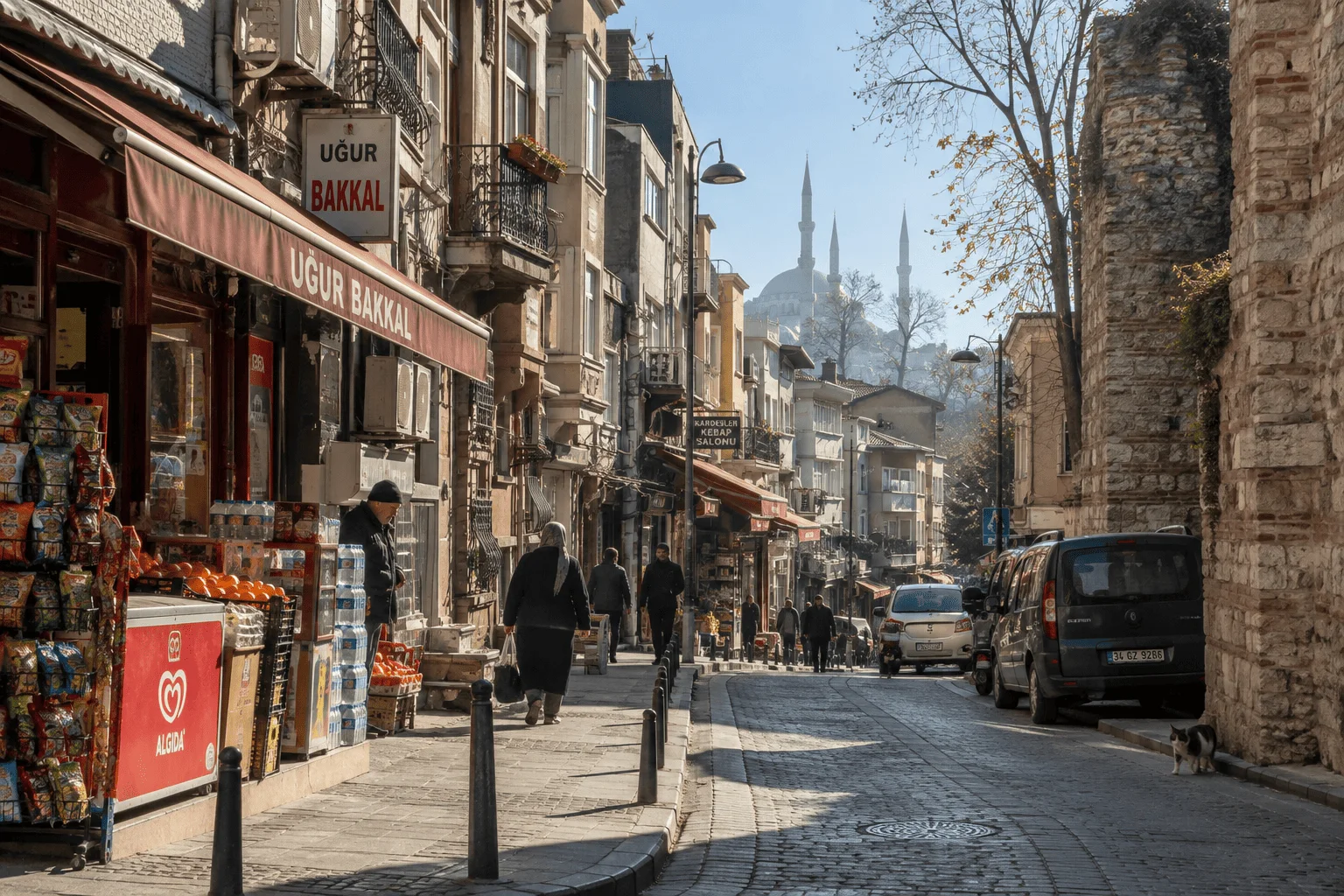
Walking note — Physical effort: 2/5
The walk around the square is short and mostly level, with broad paved areas. Allow 45–75 minutes for the monument, the old water distribution building, the Atatürk Cultural Centre and a food stop. Crowds can make the open space slower to cross than it looks. If you are tired, use M2 Taksim for the metro or F1 Taksim–Kabataş to descend toward the waterfront. The nostalgic T2 tram returns along İstiklal Caddesi.
Read the Monument From Both Sides
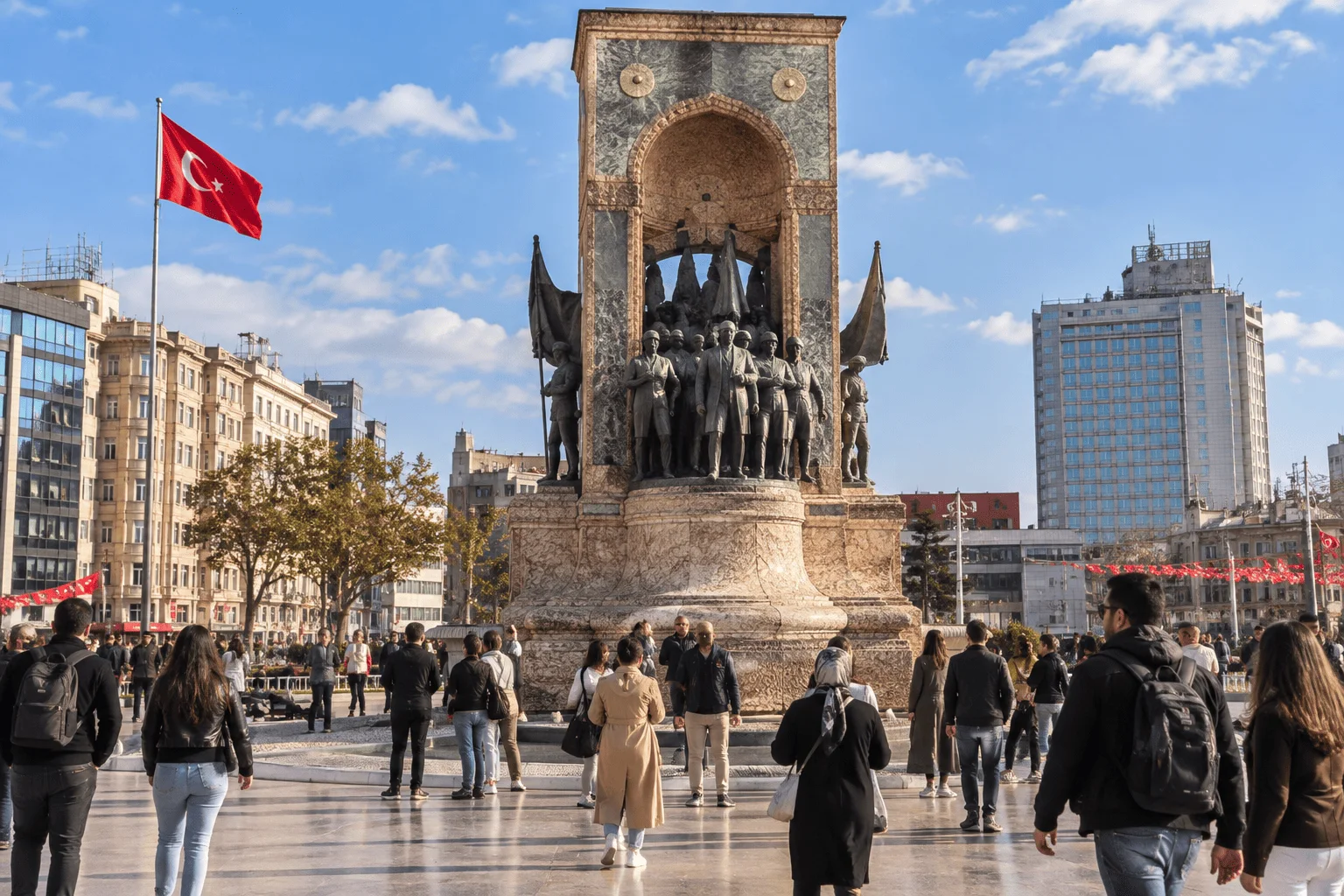
The Republic Monument, or Cumhuriyet Anıtı, has stood here since 1928. Walk around it rather than viewing it from a single spot. Its two faces tell different parts of the story of the Turkish Republic: the struggle that led to its founding and the new nation that followed.
The monument is also a meeting place. A friend waits beside it with a phone in hand. Another person scans the square for the group they have come to meet. Public history and an ordinary appointment occupy the same few metres.
For a photograph, move far enough back to include both the monument and the people passing around it. Their movement shows how the square is used today.
Why It Is Called Taksim
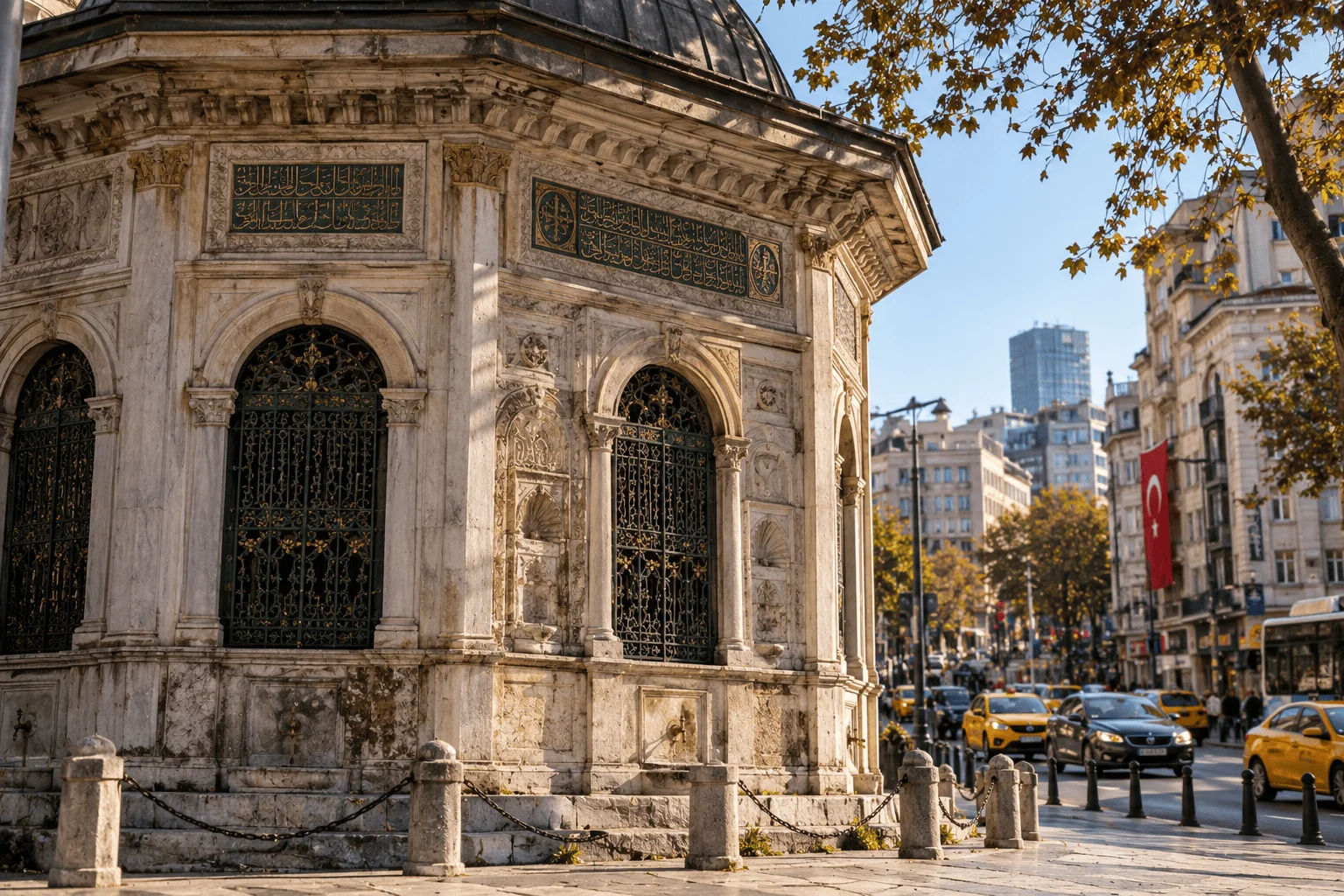
The name Taksim comes from water. In the Ottoman period, water brought to this area was distributed to other parts of the city. A maksem was a place where that distribution happened.
Find the Taksim Maksem near the square and look at its stonework. It is easy to overlook beside a busy road and a much larger modern square. Yet it holds a clue to what this place was before it became one of Istanbul’s best-known meeting points.
Imagine arriving here when the defining sound was water being directed through a system beneath the streets. You hear traffic, footsteps and the tram now. The name has stayed, even as the work of the square has changed.
Look Across to the Cultural Centre
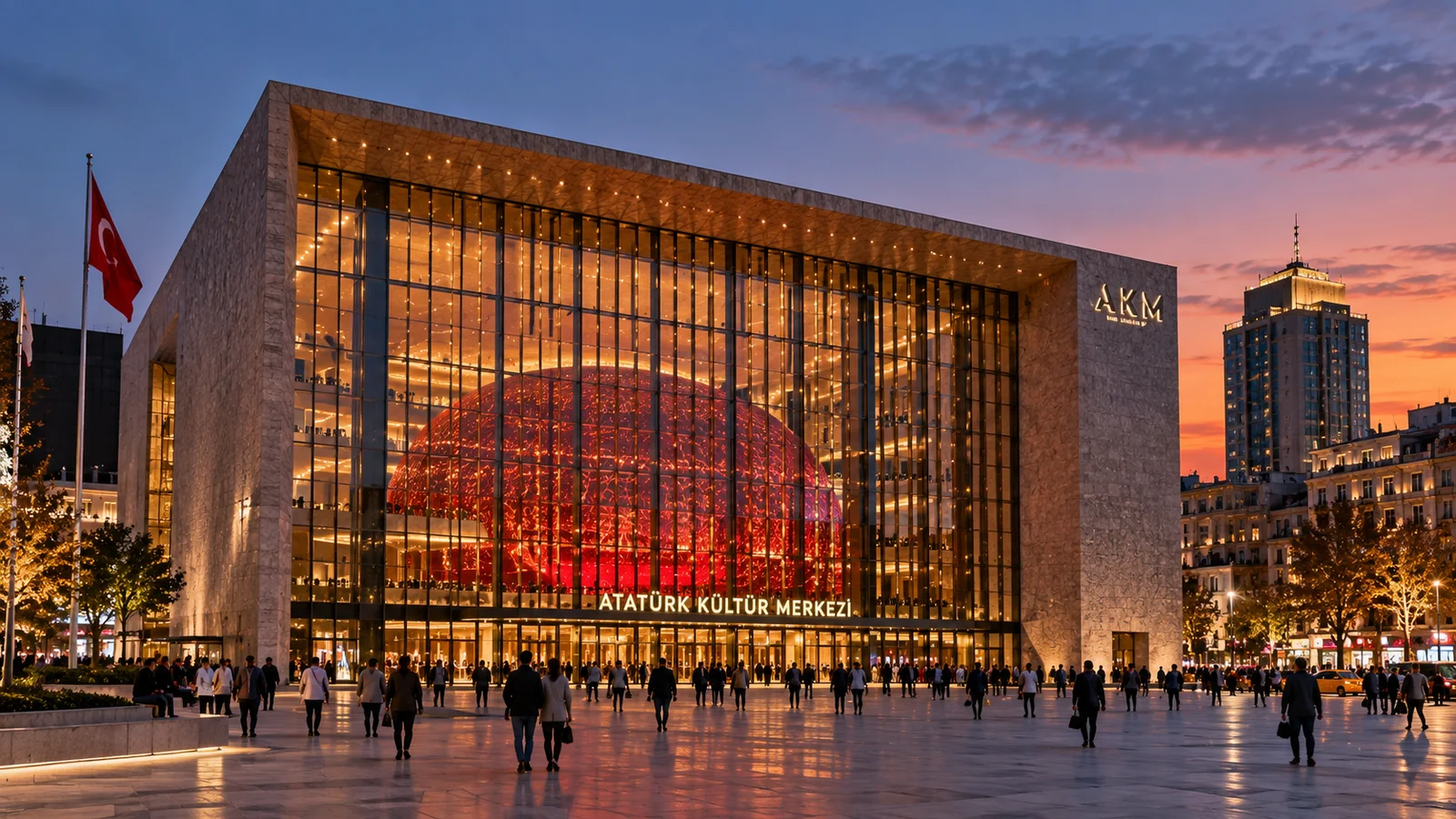
On one side of the square stands the Atatürk Cultural Centre, known as AKM. Its present building opened in 2021, with spaces for opera, theatre, exhibitions and other events.
From outside, look through its broad glass frontage toward the large red form of the opera hall. The building faces the square directly; its entrance belongs to the public space around it.
The square itself has no admission fee. AKM performances require tickets, while individual exhibitions may be free or ticketed according to their programme. You can enjoy the architecture from the square without arranging an event.
Follow the People, Then Stop for a Bite
Walk across the square toward the entrances that lead to Gezi Park, then look back. The paving, the monument, the cultural centre and the stream of people coming out of İstiklal fit into one wide view. The park offers a place to pause before you rejoin the crowd.
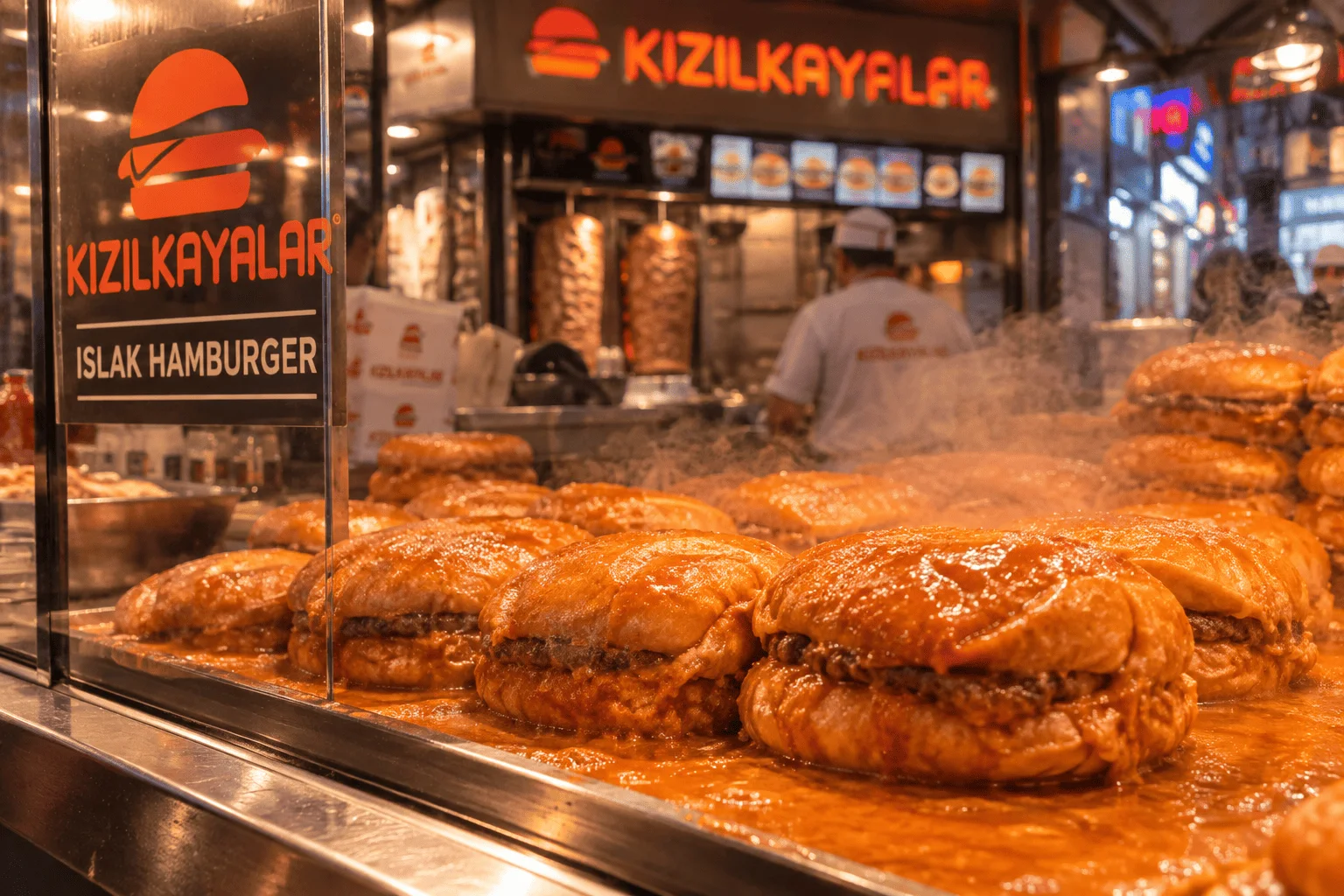
If you want a quick local food stop, head to Kızılkayalar by the square for an ıslak hamburger. Its soft bun is coated in a tomato and garlic sauce and kept warm behind the counter. It is small enough to eat while you decide where the rest of your day will take you.
Taksim is a place of arrivals and departures. The taste of that burger, the open air after İstiklal, and the sound of people calling to one another may stay with you longer than any single view of the square.
Before You Leave
Stand at the edge of Taksim once more. From here, you can descend toward Kabataş by funicular, ride the metro across the city, or walk back into Beyoğlu.
The square makes sense when you see people choosing among those directions. Istanbul keeps moving through it.
Next walk: Leave the square toward Harbiye and Nişantaşı, where Beyoğlu’s crowded centre gives way to a different rhythm.
💬 Comments (0)
Traveler comments are shown in their original language.
No comments yet. Be the first to share your experience.
💬 Want to join the discussion?
Log in or create an account to leave a comment.