Sultanahmet and Sarayburnu: A Walk Through the Heart of Empires
Begin in the square where Constantinople gathered, pass the monuments of Byzantine and Ottoman Istanbul, and follow the old city toward the water at Sarayburnu.
 Burak ÇınarTurkTravelRadar Founder
September 26, 2026
Stand in Sultanahmet Square for a moment before you choose a direction.
It is tempting to hurry. Hagia Sophia is close. The Blue Mosque is close. Topkapı Palace is only a short walk away. If this is your first morning in Istanbul, you may already have a list of places to enter and a limited number of hours to see them.
But this walk begins with something you cannot enter.
Look at the open space around you. People cross it to reach the monuments, pause for photographs, or sit down to decide where to go next. The square feels like a space between the important places.
For centuries, this space was one of the important places.
You are standing in the area of Constantinople’s Hippodrome. Much of the vast structure has disappeared from view, but its surviving monuments still offer a way into the city that once stood here. Before you walk toward the domes and minarets, give the square itself a few minutes.
It changes the rest of the day.
The Square Before the Photograph
Most visitors arrive in Sultanahmet with their eyes raised. That is understandable: the skyline gives them plenty to look at.
The Hippodrome asks you to look differently. Rather than imagining an ancient city somewhere far away, picture people gathering on this very ground. The Egyptian Obelisk and the Serpent Column are not decorative additions to a modern plaza. They are clues that the open space has had a life much longer than the one you see today.
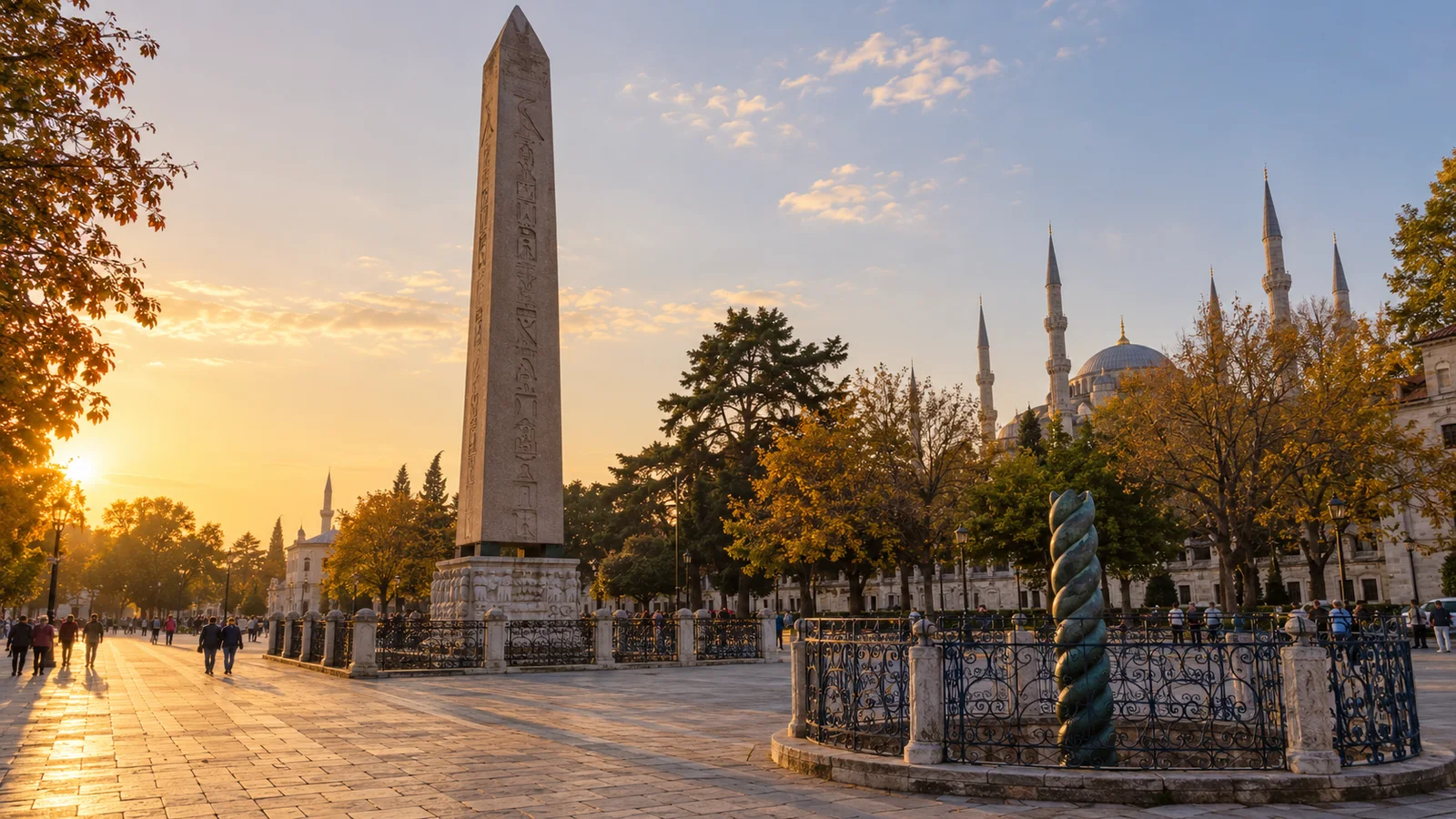
You do not need to reconstruct every wall to feel the shift. Walk slowly along the square. Notice the distance between its monuments. Then look back toward the buildings around it.
The city has changed its rulers, its buildings, and its ways of using this space. The ground has remained part of its public life.
That is Sultanahmet’s first surprise: the most important thing in front of you may be the space you nearly walked through without noticing.
Between Hagia Sophia and the Blue Mosque
Now turn toward Hagia Sophia.
It is difficult to see it for the first time without recognising that you are looking at something extraordinary. Yet its place in this walk is more interesting than a single view or photograph. Hagia Sophia has belonged to different chapters of the city’s religious and political life, and its sixth-century origins bring the story of Constantinople into the present skyline.
Across the square, the Sultan Ahmed Mosque tells another chapter. Visitors usually call it the Blue Mosque. Standing between the two, you can see why Istanbul resists a simple timeline: its periods do not sit neatly in separate parts of the city. They face one another across a walkable square.
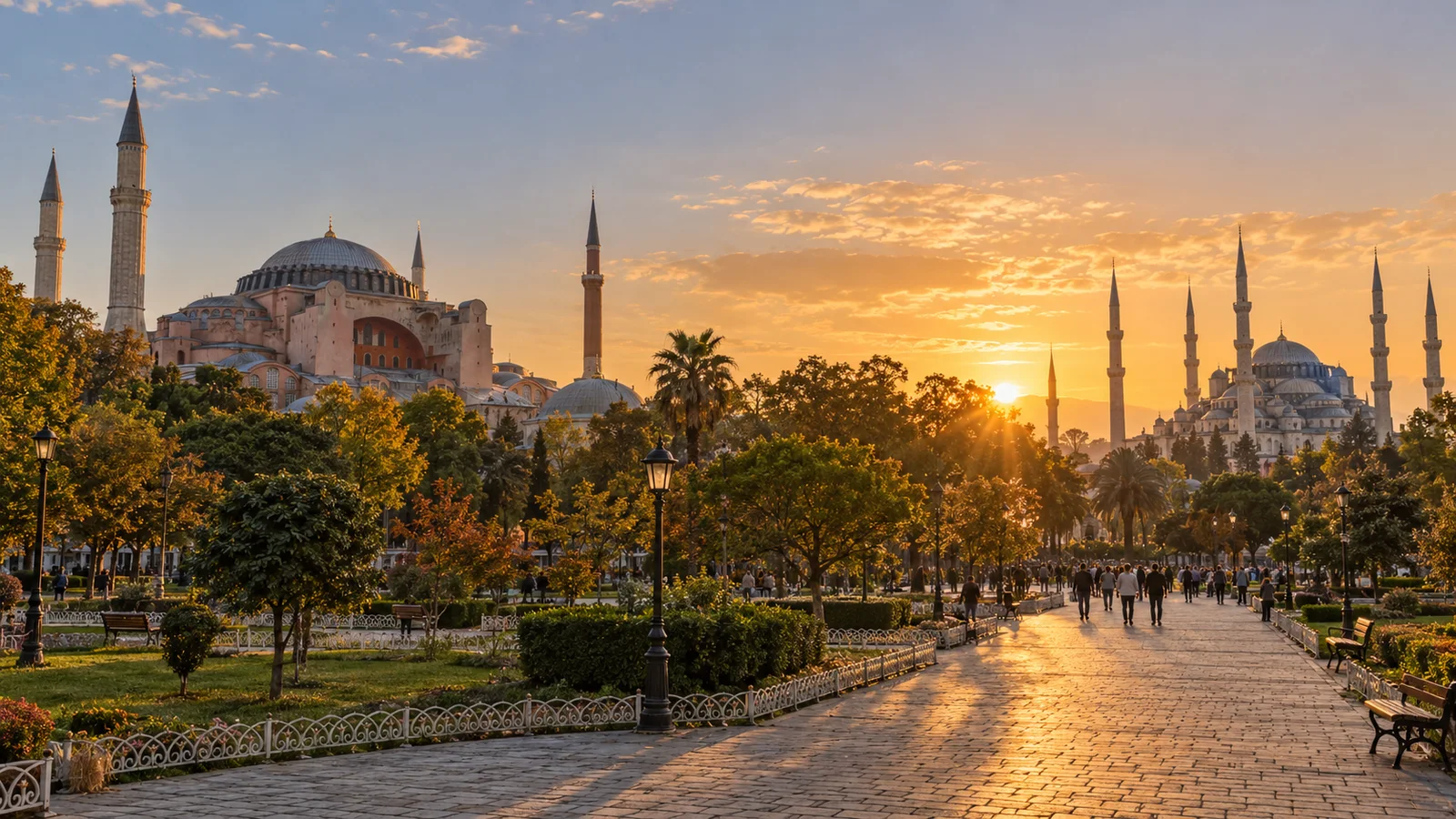
Stay outside for a moment, even if you plan to visit both. Move far enough to see how each building occupies the space around it. Where do people gather? How do the approaches feel? What changes when you turn around?
Entering a monument can reveal its details. Walking between monuments reveals their relationship.
If you do go inside a working mosque, allow for prayer times and follow the current visitor guidance. The experience is part of a living place, not a visit to an empty historic set.
Toward the Palace
From the square, continue toward the grounds of Topkapı Palace.
The mood changes as you approach. The great public space gives way to gateways, walls, courtyards, and trees. Sultanahmet has shown you the city gathered in the open; here, you begin to encounter the city organised around a court.
Topkapı Palace was built after the Ottoman conquest under Mehmed II and developed over time. It is easy to think of it as one immense building. In fact, its sequence of courtyards is central to understanding it. Moving inward meant moving through different degrees of access, ceremony, and power.
That idea matters even if you do not enter today.
Stand near the approach and consider how different this is from the square you have just left. There, the city spread out before you. Here, the route draws you through a series of thresholds. Architecture is doing more than providing a backdrop. It is shaping who may go where.
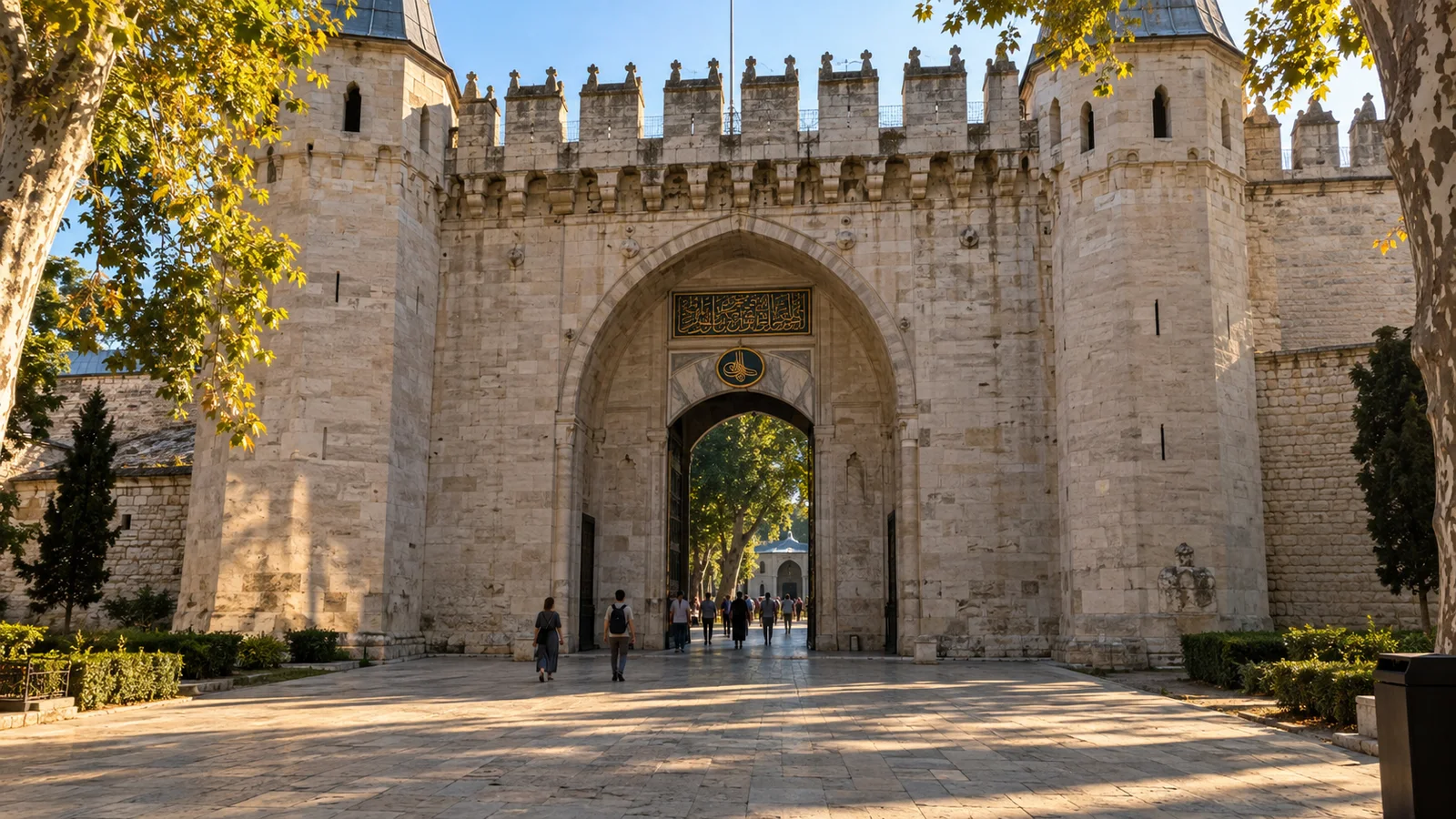
A full palace visit deserves its own time. Trying to see every section and finish this walk quickly would turn both experiences into a race. If the palace is your main reason for coming, make it the centre of your day and continue toward Sarayburnu afterward. If you are following the wider story of the neighbourhood, leave the detailed palace visit for another day.
Either choice is better than rushing past without understanding why it stands here.
Gülhane: A Change of Pace
Continue toward Gülhane Park.
After the density of Sultanahmet and the scale of the palace, the trees offer a pause. Paths lead you away from the square’s constant movement. You can stop walking with a destination in mind and simply notice how the neighbourhood feels.
This is a useful moment to look back on what you have crossed.
In a short distance, you have moved through the former Hippodrome area, stood between two of Istanbul’s most recognisable religious buildings, and reached the edge of an Ottoman palace complex. On an ordinary city map, those are nearby attractions. On foot, they become a sequence: a public gathering place, monumental places of worship, and the world of the court.
That sequence is the reason to walk here rather than travel from entrance to entrance.
Do not force the park into a checklist, either. Sit for a while if you need to. The walk’s final change is still ahead, and it makes more sense when you arrive without hurrying.
At Sarayburnu, the City Opens
Follow the peninsula toward Sarayburnu and the water.
Here the enclosed feeling of walls and streets gives way to a much larger view. The tip of the Historic Peninsula sits where the city meets the waterways that have shaped its position for centuries. You have spent the walk looking at what people built; now you can see part of the geography that made building a capital here so consequential.
Turn back toward the land. Somewhere behind the trees and palace walls are the square, the Hippodrome’s surviving monuments, Hagia Sophia, and the streets you have just crossed. From the water’s edge, they no longer feel like isolated stops on a sightseeing route.
They belong to one place.
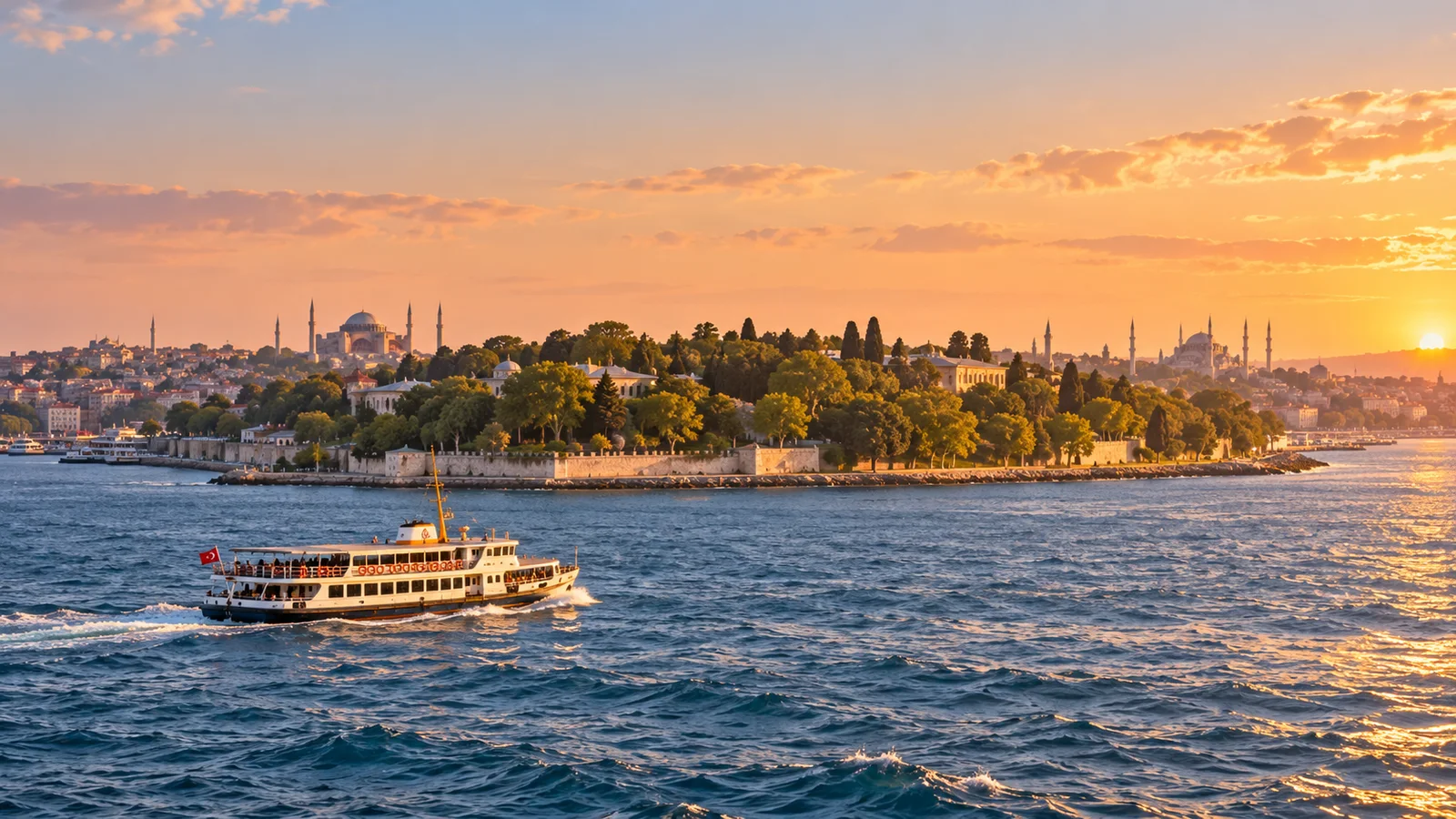
That is what this walk offers. It does not show you all of Sultanahmet, and it certainly does not finish the story of Fatih. It gives you a way to read the neighbourhood: begin with the ground where the city gathered, pass through the spaces where it worshipped and governed, and end where its geography comes into view.
When you return to Sultanahmet another day, you may notice different things. Perhaps a column you walked past too quickly. A gate you now understand as a threshold. A turn in the path that suddenly tells you where the sea lies.
And once you begin seeing the city this way, the next question is hard to resist:
What happens when you leave the imperial centre and follow Istanbul toward its markets?
That story begins on the way to Sirkeci and Eminönü.
The old imperial centre is behind you. Follow the streets toward the water, where Istanbul’s story turns from palaces and monuments to arrivals, departures and the people moving between them.
Continue the journey → Sirkeci and Eminönü: Istanbul’s Gateway to the World
💬 Comments (0)
Traveler comments are shown in their original language.
No comments yet. Be the first to share your experience.
💬 Want to join the discussion?
Log in or create an account to leave a comment.