Sarıyer and Rumelikavağı: Where the Bosphorus Opens North
Walk from Sarıyer’s wooden houses to Rumelikavağı’s seafood tables, with a börek stop and the wedding wish tradition at Telli Baba along the way.
 Burak ÇınarTurkTravelRadar Founder
September 29, 2026
Leave Tarabya behind and travel north to Sarıyer Centre.
You can follow the coast through Kireçburnu and Büyükdere if you want a long day on foot. For a more comfortable outing, take a coastal bus to Sarıyer and save your walking time for its streets, pier and northern shore.
At Sarıyer, the Bosphorus feels broader. The wind has more room to move. Fishing boats, ferries and the scent of the sea give the centre a rhythm of its own.
Walking note — Physical effort: 3/5
Begin at Sarıyer Pier and explore the centre on foot. Take the 25A bus north if you want to visit Telli Baba before continuing into Rumelikavağı. If you prefer to go directly to the village, use a ferry that calls at Rumelikavağı or stay on the bus. The road between Sarıyer and Rumelikavağı is long, traffic exposed and inconsistent for pedestrians. Side streets near both waterfronts have slopes and uneven kerbs.
The Streets Behind Sarıyer Pier
Start beside Sarıyer Pier, then turn away from the water for a while.
The shore is where visitors tend to linger, but the inner streets show you how Sarıyer lives. Shops open onto pavements shared by neighbours, delivery workers and people carrying groceries home. On some streets, older wooden houses appear between later buildings. Their weathered boards and projecting upper floors are reminders that the district has a history beyond its waterfront restaurants.
Walk slowly enough to notice the changes in texture: smooth shop windows, patched paving, painted timber. A greeting crosses the street between two shopkeepers. Around the market, the smell of food may give way to the sharper scent of fish.
Return toward the pier by a different street. You will have seen a little of the neighbourhood that keeps the waterfront busy.
A Börek Worth Naming
Stop at Tarihi Sarıyer Börekçisi and ask for kıymalı kol böreği.
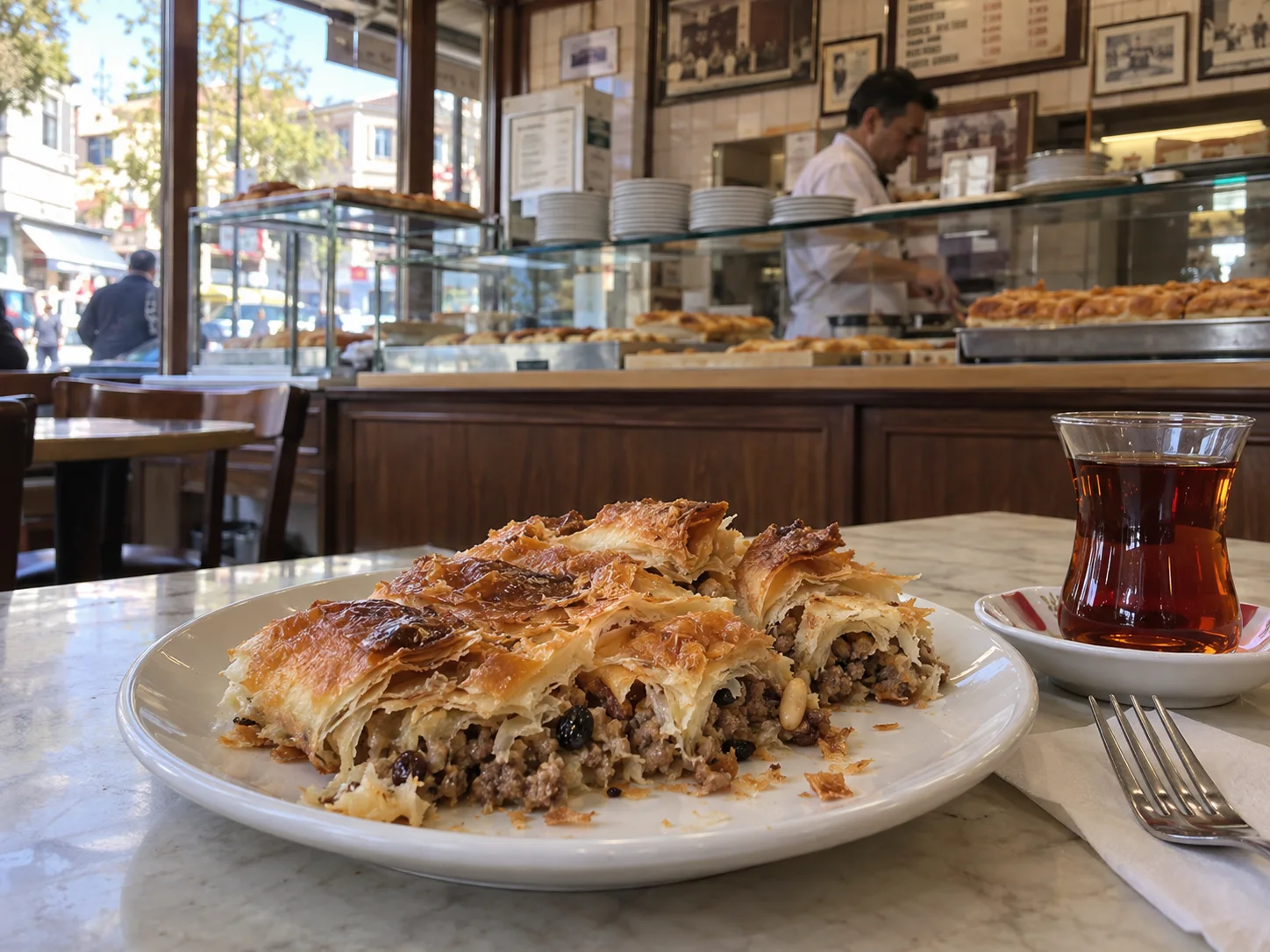
This version brings minced meat together with currants and pine nuts. The thin pastry gives way beneath your fork; then the savoury filling meets a brief sweetness from the currants. It is a particular taste of Sarıyer, worth choosing by name.
The business traces its history to 1895. Sit down with your portion if there is room, or take it away and find a suitable place to pause before continuing. Around you, people order quickly because they know exactly what they came for.
The Story Behind Telli Baba
For the most interesting stop between Sarıyer and Rumelikavağı, take the 25A bus and get off near Telli Baba Türbesi, before the village. The tomb stands above the shore, and reaching it involves an uphill approach.
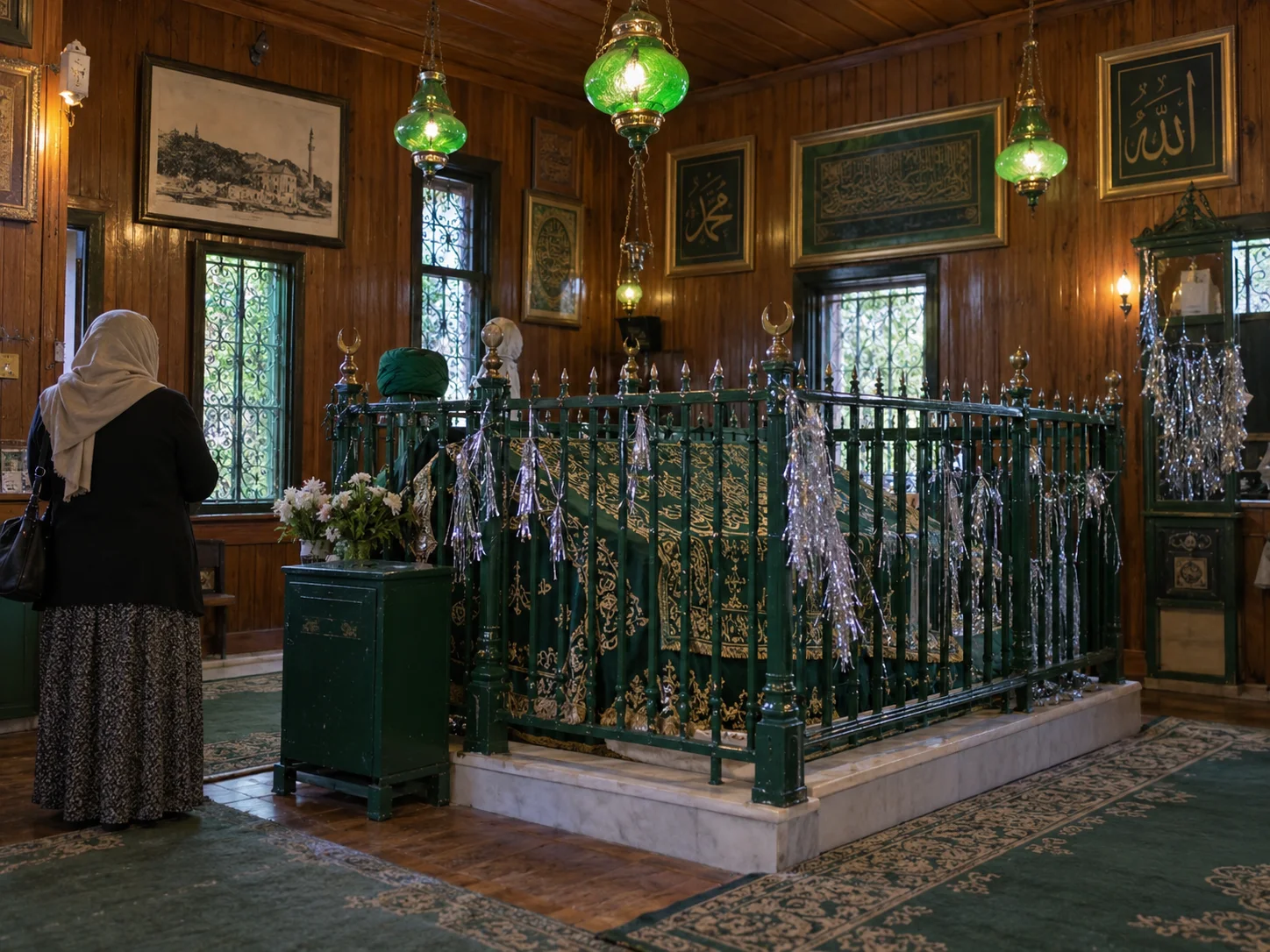
Why Telli Baba? In Turkish, tel means a fine strand or wire. Here it is associated in popular tradition with gelin teli: the glittering strands once worn with a bride’s veil. The identity of the person buried at the tomb is uncertain, and several stories are told about them. The association with weddings and wishes, however, is unmistakable.
Visitors come to pray or make a wish, often about marriage. Some leave bridal strands at the tomb; some take or cut a small piece from strands left there. Others return with a strand after a wish has come true. The custom has changed with time, and different visitors understand it in different ways.
Look at the strands and the people who have brought them. Each represents a private hope carried to a very public place. You do not need to perform the ritual to understand why it matters. If you enter, make room for those praying and photograph only where it is appropriate.
From here, continue by bus toward Rumelikavağı. The village and its food deserve their own unhurried stretch of the day.
Rumelikavağı Smells Like the Sea—and the Frying Pan
Arrive near Rumelikavağı Pier and walk along the waterfront.
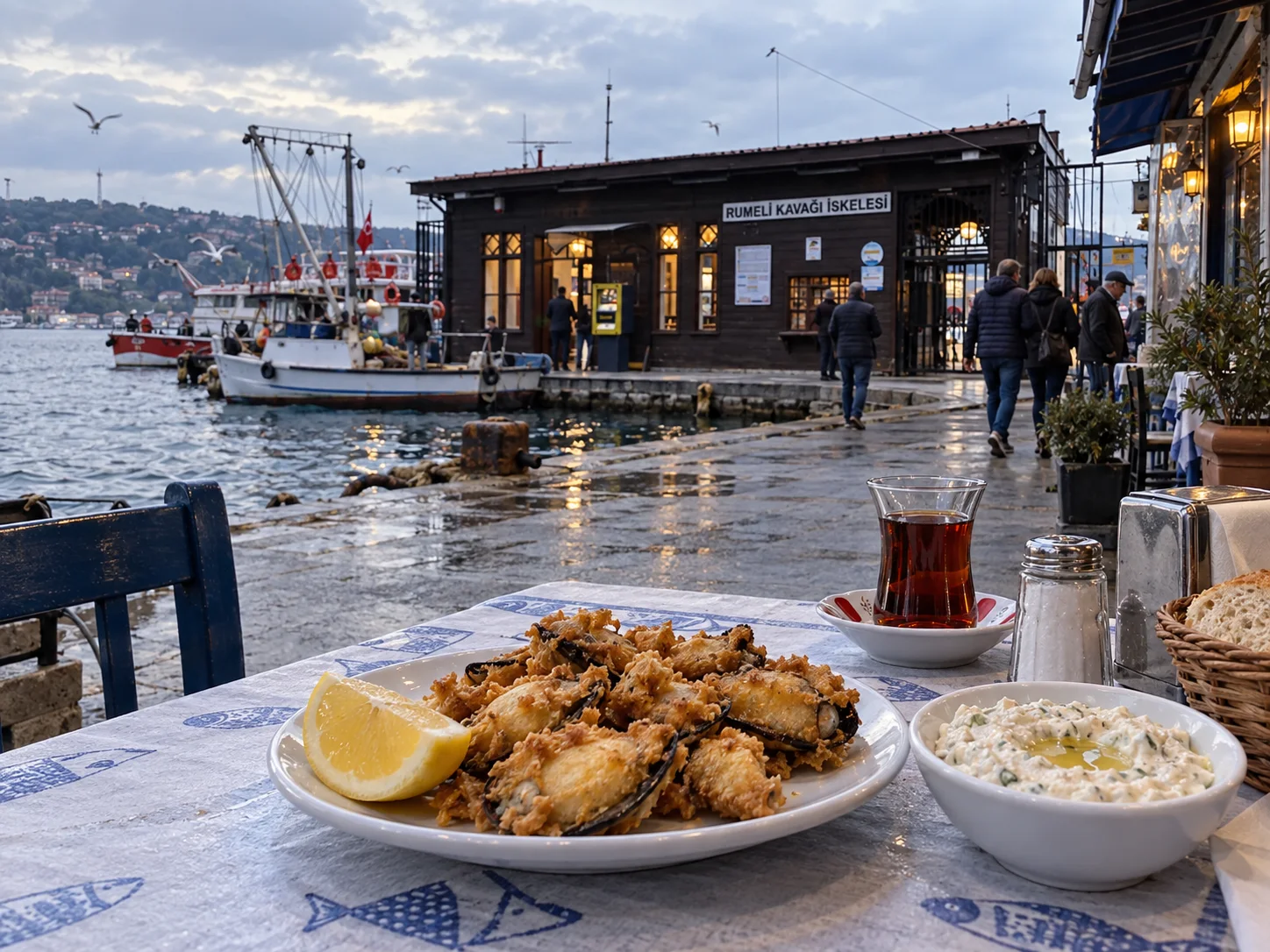
This is a fishing neighbourhood with an appetite. Boats come and go, and seafood restaurants occupy the streets near the shore. You may hear plates being set down while gulls call over the water. The smell changes as you move: salt and seaweed outside, then hot oil and cooking fish near a kitchen.
Make midye tava your second food stop. Mussels are coated and fried until the outside turns crisp, then commonly served with tarator, a garlicky sauce. Ask for a small portion first if you have already eaten börek in Sarıyer. If you would rather have a full meal, choose a waterfront fish restaurant and ask which fish is available that day, how it is prepared and its price before ordering.
Rumelikavağı’s connection to mussels goes deeper than a dish on a menu. Local families have worked with them, preparing and supplying mussels well beyond the village. Eating midye tava here places that everyday labour alongside the pleasure of a meal by the Bosphorus.
Look Back From the Hillside
After eating, turn into one of the public uphill streets behind the pier.
The climb is optional, but even a short rise changes your view. Boats that felt close enough to touch become small shapes against the water. The roofs of the village gather below you, with the strait opening behind them.
Choose a safe stopping place on the public pavement rather than stepping onto private property or blocking a narrow lane. A photograph from here can hold the village, its working waterfront and the wider Bosphorus in one frame.
Come back down at an easy pace. You have seen Rumelikavağı from its tables and from above; now give the shore a few quiet minutes.
Before You Leave
Stand near the pier and look north. The Bosphorus is still a strait, yet the Black Sea no longer feels like a distant idea.
This walk began among Sarıyer’s shops and wooden houses, paused for a pastry rooted in the district’s history, followed a wish-making tradition and ended where mussels and fish are part of the village’s daily work.
Return by bus or by a ferry that calls at Rumelikavağı.
Next walk: Sarıyer’s waterfront series ends here. Our next İstanbul route will begin in a new district.
📌 Practical Info for Travelers
Start: Sarıyer Pier. Finish: Rumelikavağı Pier.
Food stops: Try kıymalı kol böreği at Tarihi Sarıyer Börekçisi in the centre. In Rumelikavağı, order midye tava with tarator or ask a waterfront restaurant about its fish of the day and price.
Telli Baba: The tomb is above the coastal road, before Rumelikavağı. The uphill visit is optional; take the 25A for this version of the route.
Direct village connection: Ferries between Sarıyer and the northern villages do not all stop at Rumelikavağı. The 25A bus is another option.
Terrain: Mostly manageable within the two waterfront areas, with uneven kerbs and sloping side streets. The climb to Telli Baba and the viewpoint above the village add effort.
💬 Comments (0)
Traveler comments are shown in their original language.
No comments yet. Be the first to share your experience.
💬 Want to join the discussion?
Log in or create an account to leave a comment.