Prusias ad Hypium Ancient City: Uncovering the Past in Konuralp
Highlighting sophisticated Roman expansion, the continuously excavated site is famous for its well-preserved 10,000-seat monumental ancient theater, protective fortifications, structural aqueducts, and a historic stone Roman bridge.
 Burak ÇınarTurkTravelRadar Founder
October 20, 2026
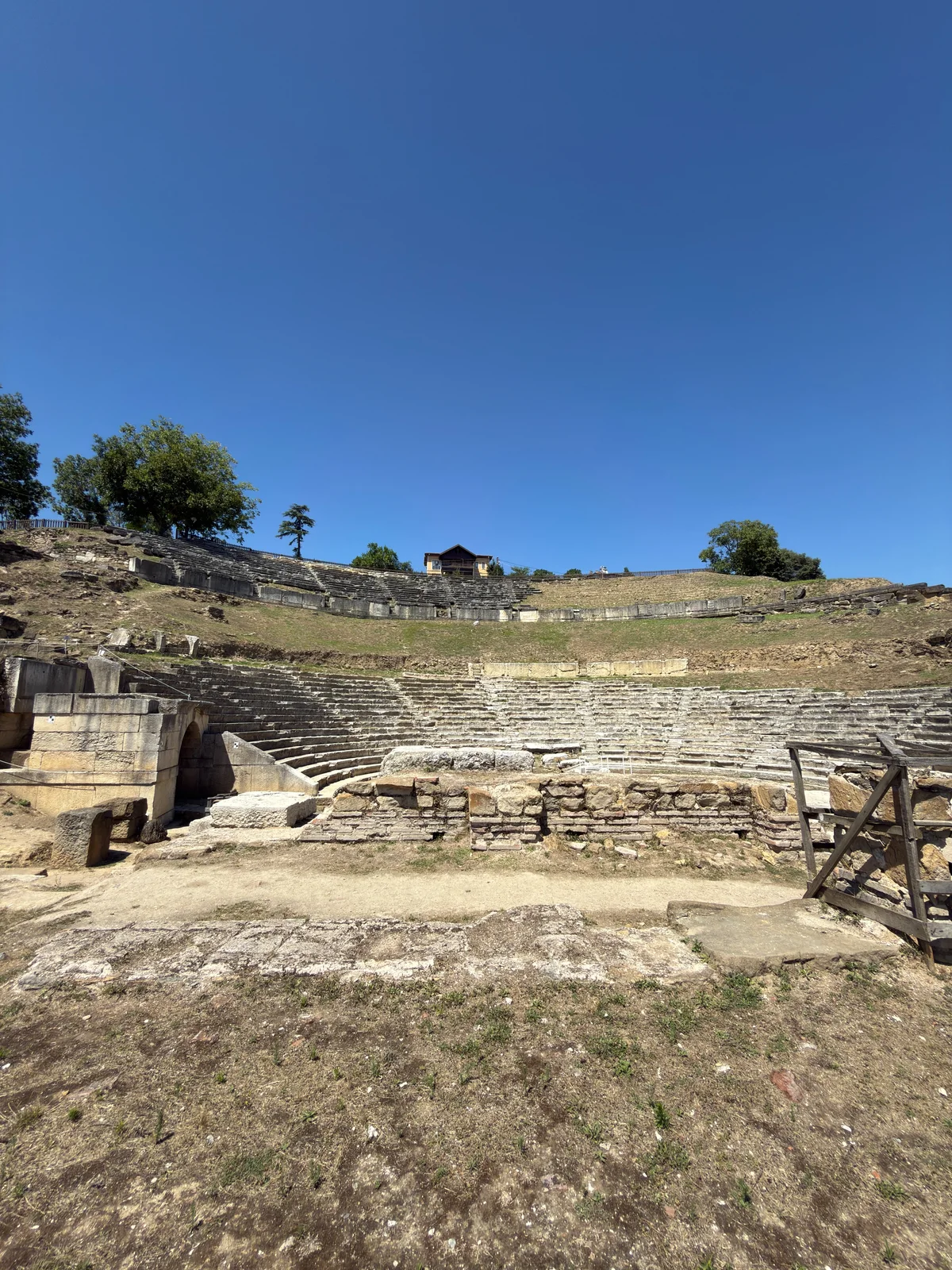
Looking across the theatre’s rows of seats, your eyes move down towards the stage. As the stone steps, passages and walls come together, the building’s layout begins to make sense. Then you notice the surroundings: everyday life continues close by.
That closeness is part of what makes Konuralp compelling. Much of the ancient city lies beneath the modern settlement.
Prusias ad Hypium is an important stop for anyone interested in Düzce’s ancient past. Here, the visible remains belong to a city that has yet to be fully uncovered.
Where Is Prusias ad Hypium?
Prusias ad Hypium Ancient City is in Konuralp, within Düzce’s central district.
The ancient theatre is its most prominent monument. Other surviving elements include the Horse Gate, sections of fortifications, water structures and a Roman bridge.
Do not expect every monument to stand within one continuous archaeological enclosure. Ancient remains and modern streets share the same setting. Identifying the places you want to see beforehand will help you plan your visit.
Where Does the Name Come From?
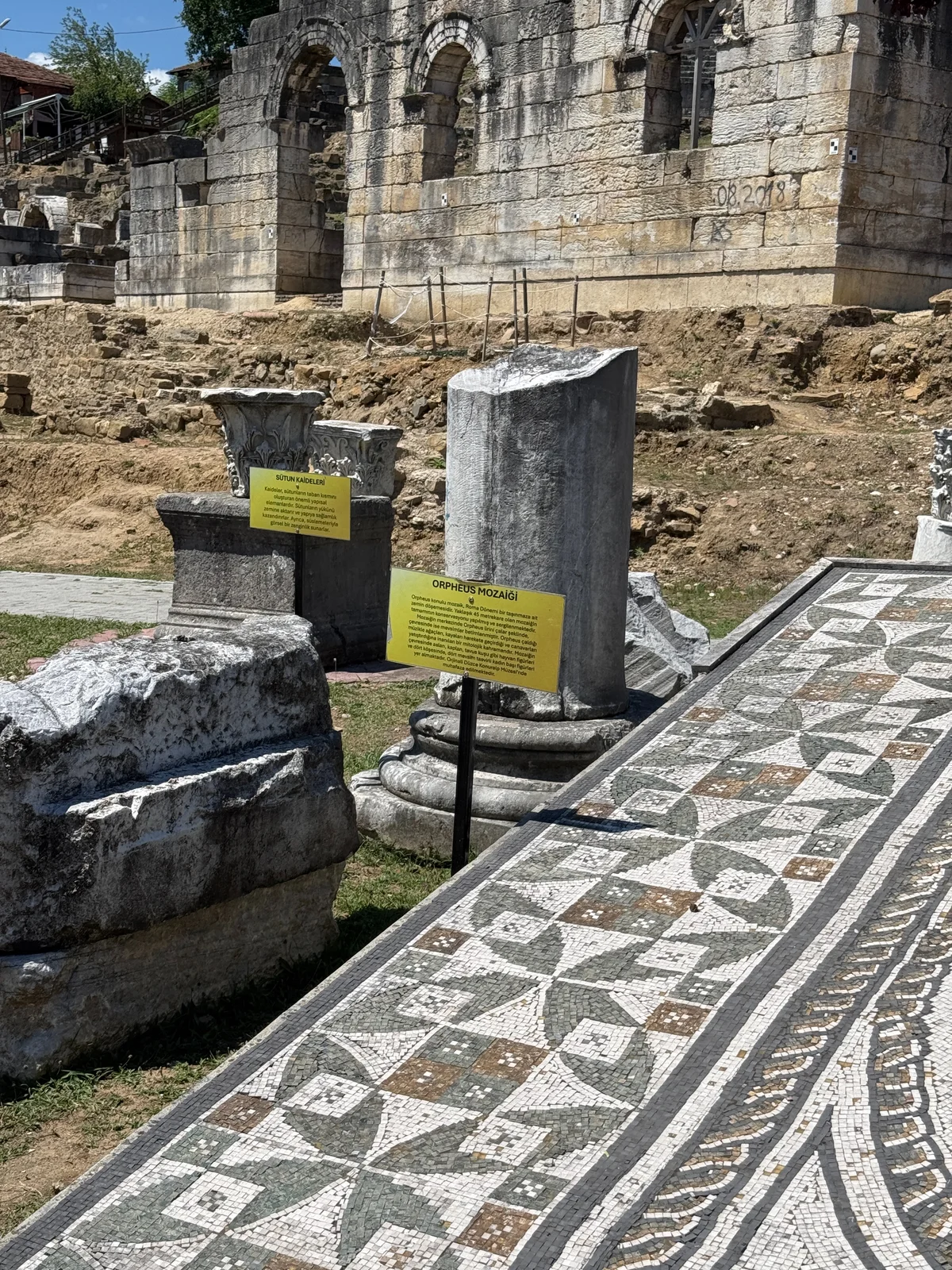
The settlement’s known history reaches back to the 3rd century BC. Its earlier names include Hypios; it later became known as Prusias ad Hypium.
This is the name of the ancient settlement at Konuralp, rather than a direct former name for modern Düzce city centre.
The city belonged to the Bithynian and Roman worlds at different stages of its history. Its surviving structures and excavated objects help reveal those chapters.
What Should You Look for in the Theatre?
Start by studying the arrangement of the seats and their relationship with the space below.
The seating area is called the cavea, while the open area beneath it is the orchestra. Together with the stage building and entrances, they form a place designed to accommodate an audience and a performance.
A passage suggests how people entered. Stairways between seating sections explain how they reached their places.
We cannot know who sat in a particular seat on a particular day. The architecture nevertheless offers tangible clues about how people gathered here.
The Alexander the Great Portrait Found during Excavations
One notable discovery from the theatre excavations is a portrait head depicting Alexander the Great, dated to the 2nd century AD.
The date matters: it was made centuries after Alexander’s lifetime. Its discovery should therefore not be treated as proof that he visited Konuralp.
It raises another intriguing question instead: why was his image still being produced and used in a Roman-period city? A small sculpture opens a window onto a cultural world extending far beyond the settlement itself.
An object featured in excavation news may not be displayed at the site today. Conservation, research and exhibition are separate stages.
A Mosaic-Floored Space Associated with Dionysus
Excavations above the theatre revealed a mosaic-floored space identified as associated with the cult of Dionysus.
Given Dionysus’s connection with theatre, the discovery adds another dimension to the building’s story. It encourages us to consider performance alongside the religious and cultural life of the period.
Ask locally whether the mosaic area can be viewed. The announcement of a discovery does not necessarily mean that its location is always open to visitors.
The Horse Gate and Fortifications
The Horse Gate and adjoining walls are among the remains associated with the ancient city’s entrance.
Look at the opening, the large stones and the way the gateway connects with the wall. After the theatre’s gathering spaces, this stop draws attention to the city’s boundaries and access.
Consider the two places together: one offers clues about public life within the settlement, the other about entering it.
Can You Combine It with Konuralp Museum?
Konuralp Museum’s collection is an important complement to the ancient city, preserving objects from the settlement and its surroundings.
However, check museum access and theatre visiting arrangements separately. The official museum list consulted previously marked Konuralp Museum as closed, so confirm its status before including it as a definite stop.
What Should You Know Before Visiting?
Excavation and conservation work may affect which areas are accessible. Check current visiting arrangements and follow signs on site.
Keep to designated routes rather than climbing stonework or entering restricted sections. Respect excavation boundaries when taking photographs.
Before leaving, look across the theatre once more. The steps have become seats, the openings entrances, and the walls parts of a recognisable building.
That gradual understanding is one of the pleasures of Konuralp: beginning to see the shape of a city among its stones.
💬 Comments (0)
Traveler comments are shown in their original language.
No comments yet. Be the first to share your experience.
💬 Want to join the discussion?
Log in or create an account to leave a comment.