One More Reason to Come to Turkey: Sivas Köfte
Discover Sivas köftesi, the distinctive Turkish meatballs rooted in Anatolia’s highland pastures. Explore their rich grilled flavour, traditional preparation, and our Istanbul recommendation: Sivas Etli Ekmek.
 Burak ÇınarTurkTravelRadar Founder
September 30, 2026
The first thing that reaches you is the scent of meat meeting hot embers. Then comes the soft hiss of juices touching the charcoal, a sound just loud enough to make you look toward the grill.
Small, flattened köfte are turning golden brown. Their surfaces glisten; their edges catch the heat. Nearby, tomatoes soften and green peppers blister, their skins darkening in patches.
When the plate arrives, warm bread waits beneath the meat.
Tear off a piece. Feel its softness between your fingers. Take your first bite while the köfte is still hot: a lightly browned exterior, a tender centre, and a deep, savoury richness that lingers.
This is Sivas köftesi, a regional Turkish speciality whose extraordinary character begins long before the grill—in the highland pastures of Sivas.
What Is Sivas Köftesi?
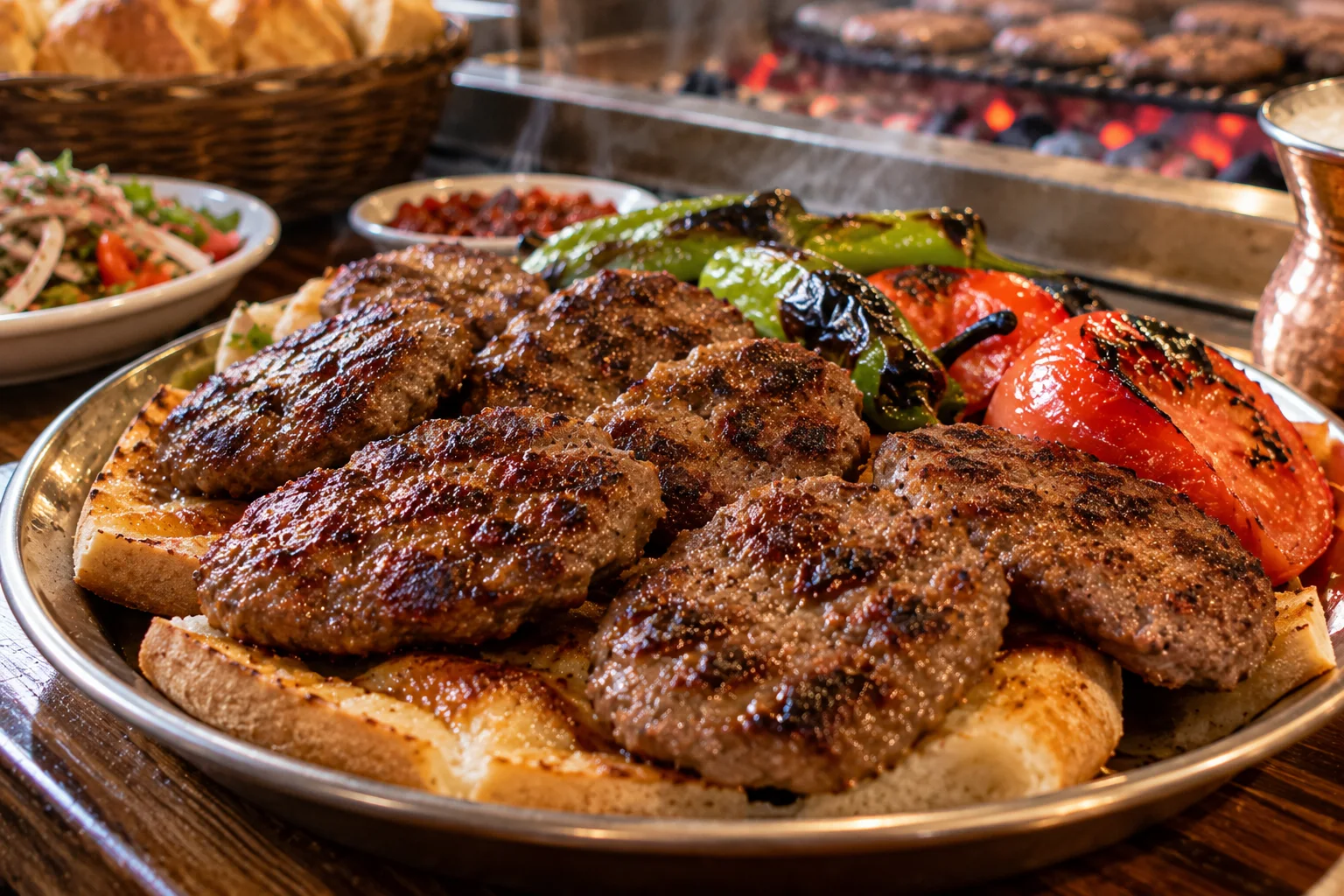
Sivas köftesi is a traditional grilled meat dish from Sivas, in Central Anatolia. Although the English translation is often “Sivas meatballs,” its thin, flattened shape is closer to a small oval patty.
Its defining quality is restraint.
In the registered regional tradition, the mixture contains meat and salt, allowing the quality of the meat to carry the dish. There is no elaborate spice blend competing for attention.
That simplicity makes every decision matter: the selection of the meat, the balance of its natural fat, the preparation, and the cook’s control of the fire.
For travellers discovering Turkish food, it offers a particularly rewarding lesson. A dish can have very few ingredients and still possess a character you remember long after the meal.
A Flavour That Begins in the Sivas Highlands
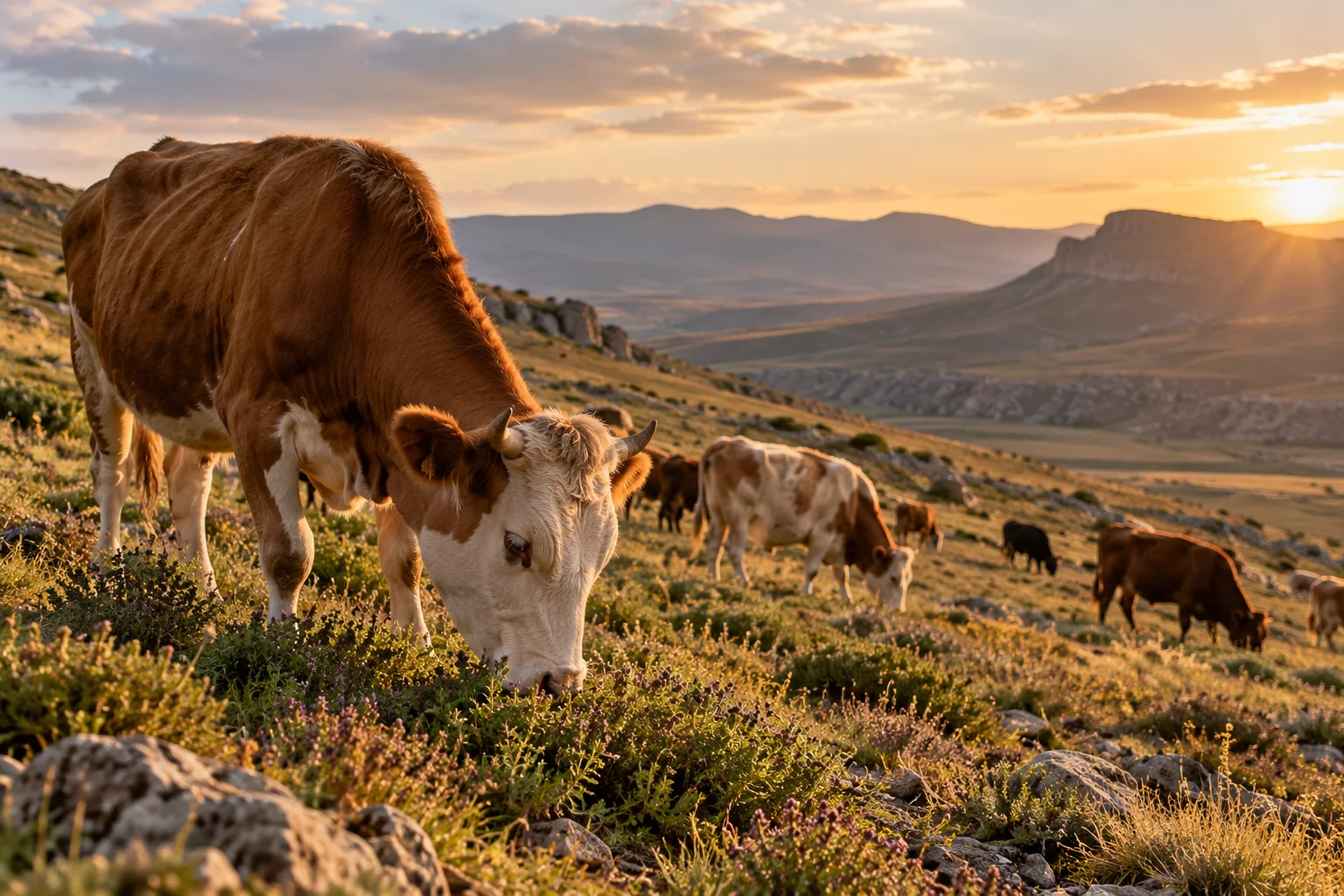
To understand Sivas köftesi, imagine the landscape behind it: open upland pastures, grazing animals, and vegetation shaped by the region’s climate and terrain.
The geographical indication specification connects the dish’s distinctive meat to cattle and sheep raised in the natural environment of the Sivas highlands, feeding on regional plants including alfalfa, vetch, and thyme.
These pastures form part of the food’s identity. The connection between local animal husbandry and the character of the meat is central to what makes the traditional dish distinctive.
You should not expect a mouthful that tastes explicitly of thyme. The pleasure is subtler: the rounded flavour of the meat itself, brought into focus by careful seasoning and grilling.
Here, the landscape belongs to the story of the meal.
The First Bite: Warmth, Smoke, and Tenderness
A well-made Sivas köftesi should invite a second bite almost immediately.
The browned surface gives way easily. Inside, the meat should remain tender and juicy, with enough texture to feel satisfying. Salt sharpens its savoury flavour, while the grill contributes a gentle smoky edge.
Take a little tomato next. Its warmth and softened sweetness change the rhythm of the mouthful. Follow it with a piece of pepper, then return to the meat.
Bread has its own role. Beneath the köfte, it catches the juices; in your hand, it becomes the easiest way to gather everything together.
The pleasure comes through each sense: the gleam of the freshly grilled meat, the scent rising from the plate, the sound of the cooking fire, the warmth of the bread, and finally that rich, lingering taste.
Give the first bite your full attention. There is more happening than the short ingredient list suggests.
Why the Cook’s Skill Matters
With so little added to the meat, technique becomes especially important.
Traditional preparation involves resting the salted meat, grinding it again, and shaping it into evenly flattened pieces. That consistency helps the köfte cook evenly.
At the grill, timing is everything. Enough heat creates a flavourful exterior; too much cooking costs the meat its tenderness.
This is the kind of food that makes you appreciate a practised hand. The finished plate may look straightforward, but its quality depends on dozens of small decisions made before it reaches your table.
Where to Eat Sivas Köftesi in Istanbul: Our Pick
For travellers looking for the best Sivas köftesi in Istanbul, our editorial recommendation is Sivas Etli Ekmek.
Put it on your itinerary when you want to explore the regional side of Turkish cooking. Istanbul’s food scene becomes far more interesting when you begin looking beyond the familiar dishes and following the names of individual Anatolian cities.
Here, make Sivas köftesi the reason for your visit.
Start with a portion of köfte and let the meat lead the meal. If you are dining with someone, ask whether etli ekmek is available to share alongside it—a chance to explore another regional speciality at the same table.
Use the Sivas Etli Ekmek listing on TurkTravelRadar when planning your visit, and confirm the current menu and opening hours before setting out.
How to Order Sivas Köftesi
A simple phrase will get you started:
“Bir porsiyon Sivas köftesi, lütfen.”
One portion of Sivas köftesi, please.
For a refreshing accompaniment, try ayran, the savoury yoghurt drink. Its cool, lightly tangy taste makes a pleasing pause between warm bites of grilled meat.
If you prefer mild peppers, ask:
“Biberler acı mı?”
Are the peppers hot?
And if you are interested in the story behind your food:
“Et Sivas’tan mı geliyor?”
Does the meat come from Sivas?
That question opens a useful conversation about sourcing. The highland origin described in the regional tradition should be distinguished from the supply arrangements of any individual restaurant.
A Taste Worth Making Room For
Travel often leaves you remembering something small: the warmth of a piece of bread, the smell of a grill as you enter a restaurant, the moment a dish exceeds your expectations.
Sivas köftesi has that potential.
Order it fresh from the grill. Break the bread while it is warm. Taste the köfte first, then add the tomato and pepper.
For a few mouthfuls, let the rest of your itinerary wait.
💬 Comments (0)
Traveler comments are shown in their original language.
No comments yet. Be the first to share your experience.
💬 Want to join the discussion?
Log in or create an account to leave a comment.