Must-Try Turkish Street Food: Kokoreç, Istanbul’s Smoky Sandwich Worth Seeking Out
Discover Turkish kokoreç, its rich roasted flavour, and the differences between common Istanbul and İzmir preparations—with two carefully researched Istanbul stops to try it.
 Burak ÇınarTurkTravelRadar Founder
October 1, 2026
The chopping begins just as you reach the counter.
A knife strikes the board in quick, rhythmic movements. Beside it, a portion of kokoreç meets the hot cooking surface with a hiss. The edges brown, the fat sizzles, and the smell of roasted meat and seasoning makes the wait feel longer than it is.
The cook opens a piece of bread and fills it.
For a moment, you simply hold the sandwich through its paper wrapping. The crust is warm beneath your fingers. Inside, the freshly cooked filling glistens.
Then comes the bite: crisp bread, browned edges, tender pieces, and a rich flavour that stays with you after you swallow.
This is kokoreç, one of Turkey’s most distinctive street foods. In Istanbul, it rewards a curious appetite—and choosing a specialist who gives the ingredients and cooking the attention they deserve.
What Is Kokoreç Made From?
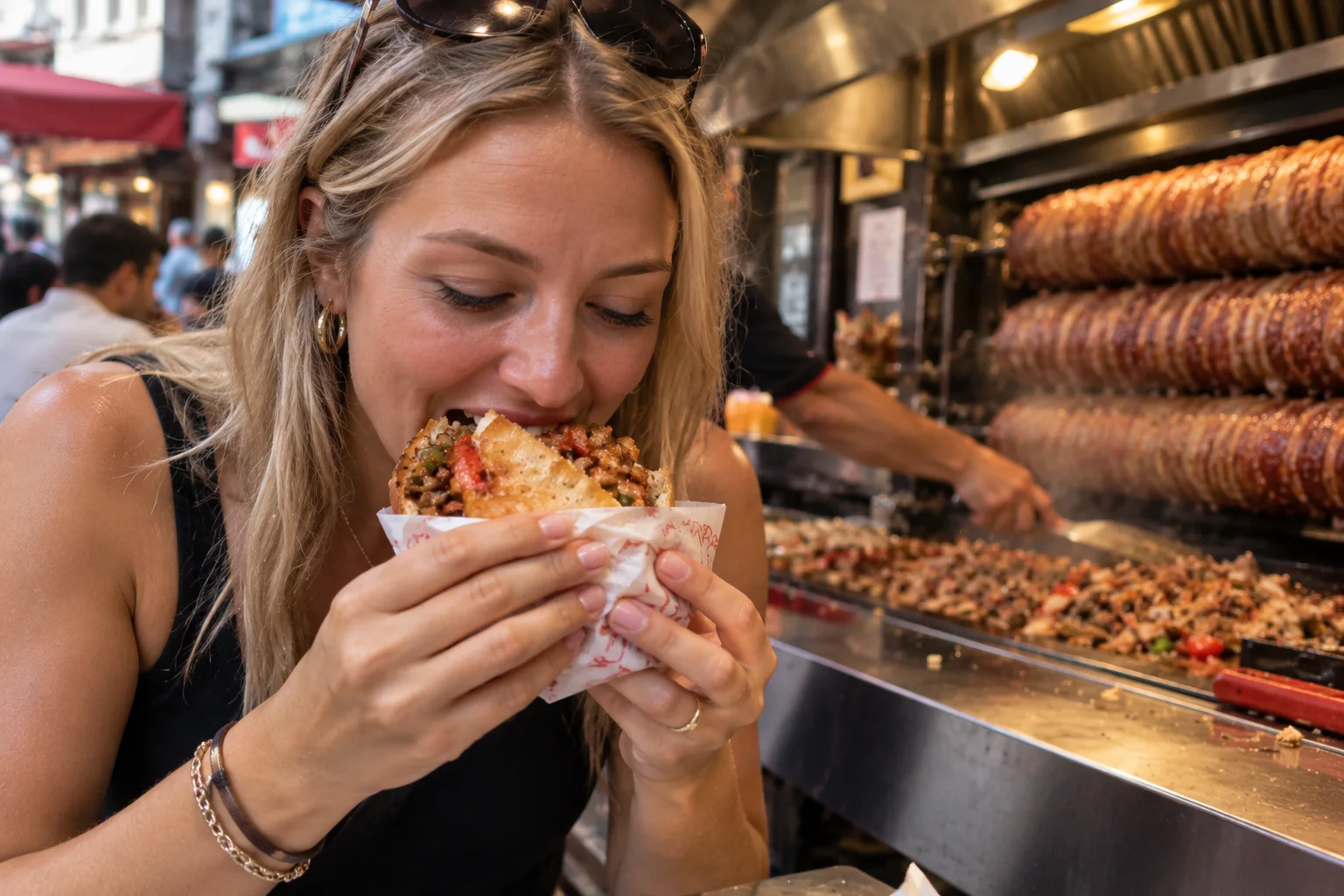
Kokoreç is an offal dish made with cleaned lamb or sheep intestines wrapped around a filling that can include other offal and fat. The precise composition varies between makers.
It is traditionally cooked on a horizontal spit, then portioned and finished for serving. Depending on the preparation, it may be chopped finely, cut into larger pieces, or served in slices.
A familiar street-food version comes inside bread.
It is worth understanding the ingredients before ordering. Kokoreç has a distinctive richness and texture; for travellers who enjoy offal or want to explore that side of Turkish cooking, it can be a particularly memorable discovery.
Why the Cooking Matters
Kokoreç asks a cook to manage several things at once.
The outside needs enough heat to develop browned, flavourful edges. The interior needs time to cook properly. When a portion is cut and finished, the aim is to preserve tenderness while adding another layer of texture.
That balance becomes obvious in the first bite.
The filling should have pleasing contrasts: some crispness, some softness, and a richness that works with the bread. Excessive cooking can make pieces tough; too much fat without enough texture can make a sandwich feel heavy.
A good preparation keeps you interested through the whole portion.
Watch the finishing stage if the counter allows it. The sound, aroma, and small movements of the cook are part of the pleasure.
Istanbul Style and İzmir Style
You will often hear kokoreç described as Istanbul-style or İzmir-style.
In a common Istanbul preparation, the kokoreç is chopped relatively finely and may be cooked with tomato and green pepper. Seasoning and the vegetables mingle with the filling, producing a juicy sandwich.
İzmir-style preparations often use larger pieces and fewer additions, allowing the kokoreç itself to lead.
These are useful descriptions, but individual shops interpret them differently.
Ask whether your order contains tomato and pepper, and whether the cut is fine or coarse. That gives you a clearer idea of what is coming than the regional label alone.
What Does Kokoreç Taste Like?
The flavour is deeply savoury, with a pronounced richness from the offal and fat.
Roasting contributes browned, sometimes smoky notes. Seasonings may include cumin, oregano, and chilli, depending on the kitchen.
Bread changes the experience.
Its crust gives a little resistance, while the softer crumb catches the juices. In a version with tomato, the vegetable brings moisture and a gentle acidity. A simpler preparation makes the texture and roasted flavour more apparent.
Take your first bite before adding extra chilli.
Notice what the cook has already put into the sandwich. You can always ask for more heat afterwards.
Where to Eat Kokoreç in Istanbul
These two recommendations offer different experiences: a specialist visit in Beyoğlu and a casual food stop in Kadıköy. Their preparations are described on their own websites, and both have received independent food-editorial coverage.
Ozzie’s 1968 — A Specialist Stop in Beyoğlu
Ozzie’s 1968 is worth considering when you want to make kokoreç the purpose of a meal.
Its speciality is uykuluklu kokoreç, incorporating lamb sweetbreads. Sweetbreads are glandular offal; the Turkish word uykuluk does not refer to bread.
The business describes its preparation as a Macedonian-style kokoreç and highlights the use of lamb sweetbreads in its filling. Independent food coverage has also singled out its distinctive preparation.
Why choose it? For an ingredient-focused introduction with a specialist’s own interpretation of the dish.
Its official address is Bülbül Mahallesi, Serdar Ömer Paşa Caddesi No. 44/A, Beyoğlu.
Book before visiting. Ozzie’s states that it works by reservation and produces limited quantities daily. Use its official contact page to arrange your visit and ask how the kokoreç will be served.
Treat this as a planned meal rather than assuming you can arrive for an impromptu late-night sandwich.
Reks Kokoreç — A Casual Stop in Kadıköy
Reks Kokoreç offers a more flexible introduction on Istanbul’s Asian side.
Its published menu includes İzmir-style coarse-cut kokoreç, versions with and without tomato, wraps, portions, and a casserole preparation.
That choice is useful for a first visit. You can decide whether you want a simple filling that emphasises the kokoreç or a version with tomato.
Why choose it? For the range of preparations and a location that fits naturally into an outing around Kadıköy.
Reks has also appeared in independent editorial recommendations for Istanbul kokoreç.
Its official address is Caferağa Mahallesi, Kadife Sokak No. 1, Kadıköy. Check the current menu and opening hours before heading over.
If you are sharing, ordering two different preparations can make an enjoyable comparison.
How to Order Kokoreç in Turkish
For a sandwich in half a loaf:
“Yarım ekmek kokoreç, lütfen.”
Kokoreç in half a loaf, please.
For a smaller sandwich, where available:
“Çeyrek ekmek kokoreç var mı?”
Do you have kokoreç in a quarter loaf?
For a preparation without tomato:
“Domatessiz olsun, lütfen.”
Without tomato, please.
For larger pieces:
“İri kıyım olsun, lütfen.”
Coarsely cut, please.
To keep the chilli gentle:
“Az acılı olsun, lütfen.”
Mildly spicy, please.
Portion names describe the bread size; the amount of filling can vary. Ask what is included before ordering if you are comparing options.
Make the First Portion Count
For your first experience, a modest portion lets you concentrate on the flavour without committing to a large meal.
Eat it freshly prepared. Keep the paper around the lower half of the sandwich and let the filling cool enough for a comfortable bite.
A cool glass of ayran can provide a tangy pause between mouthfuls. Pickles, if offered, bring another contrast through their crunch and acidity.
Between bites, look around.
At a casual counter, the next order may already be meeting the hot surface. At a specialist restaurant, you may have time to ask about the ingredients and preparation.
Either way, the food becomes more interesting when you understand a little of the work behind it.
The Sandwich You Remember by Its Sound
Later, you may remember the chopping before anything else.
The quick rhythm of the knife. The hiss as the filling touched the heat. The paper shifting in your hand as you found a better grip.
Then the flavour returns: warm bread, roasted richness, a little seasoning, and those crisp edges tucked inside.
That is a good reason to choose your kokoreç stop carefully.
A well-made sandwich can become one of the meals you tell people about when you get home.
💬 Comments (0)
Traveler comments are shown in their original language.
No comments yet. Be the first to share your experience.
💬 Want to join the discussion?
Log in or create an account to leave a comment.