Must-Try Turkish Foods: Yaprak Sarma, the Turkish Stuffed Grape Leaves That the World Admires
A grape leaf, a spoonful of rice and a great deal of patient work: discover how Turkish yaprak sarma is made, what makes the olive-oil and meat versions different, and where to try it in Istanbul.
 Burak ÇınarTurkTravelRadar Founder
September 29, 2026
One grape leaf, one small roll, and a great deal of patient work.
The plate reaches the table cool. Narrow rolls lie side by side, their olive-green leaves shining under a little oil. There is a lemon wedge at the edge.
Lift one and you feel how lightly it holds together. Bite through the tender leaf and the rice inside gives way, fragrant with onion and herbs. The lemon comes last, bright enough to make you reach for a second.
It looks like a small dish. Making it is anything but small.
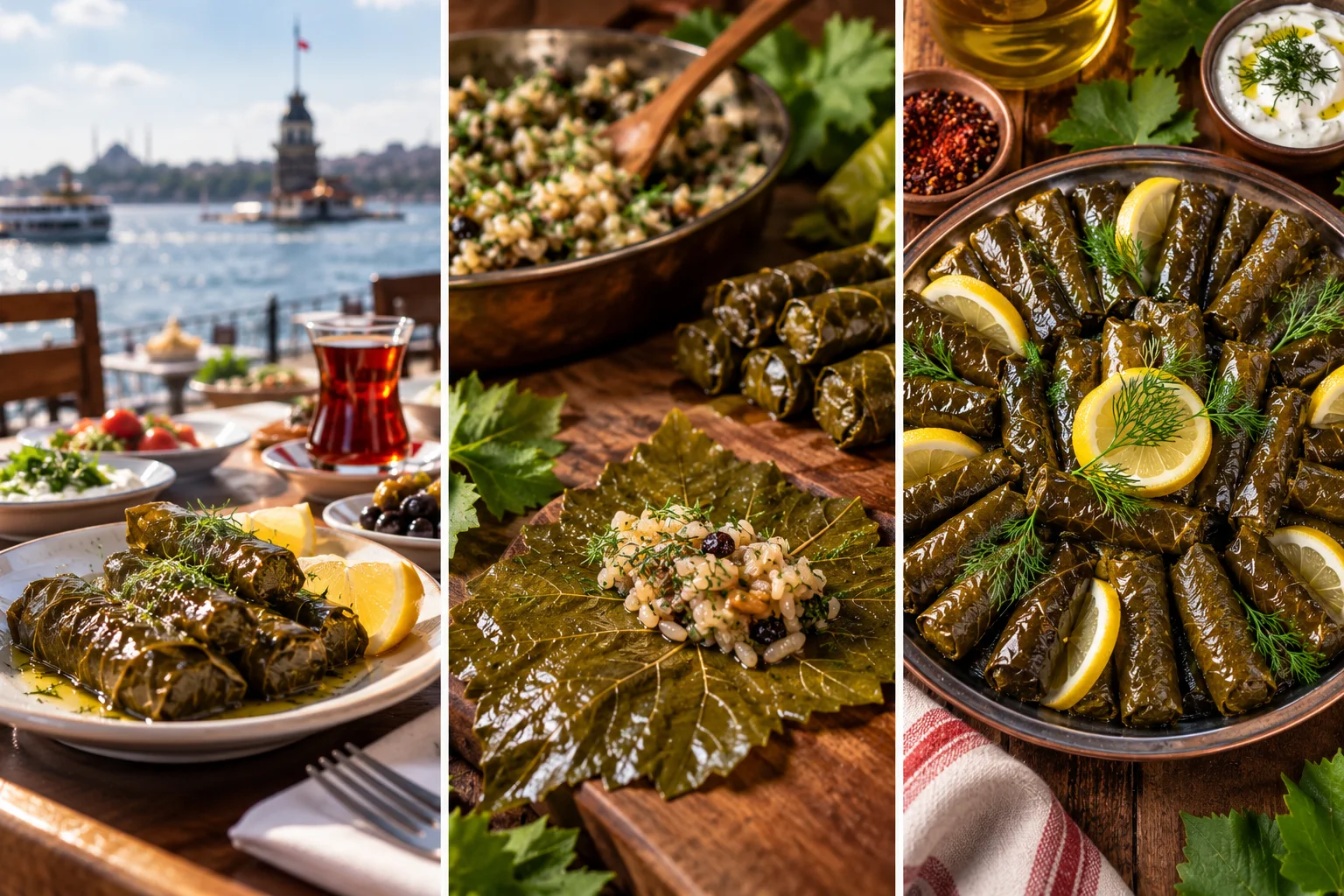
This is yaprak sarma: a grape leaf wrapped around a filling, cooked until leaf and filling become one mouthful. In Türkiye, it might arrive among the first plates at a restaurant, occupy a place of honour on a family table, or disappear from the platter while everyone is still deciding what else to eat.
A Name That Tells You What the Hands Do
Yaprak means “leaf”; sarma comes from the Turkish verb for wrapping. The name describes the work. A leaf is opened, a modest spoonful of filling is placed inside, the sides fold inward, and the roll is tucked firmly enough to stay closed as it cooks.
The version many visitors first meet is zeytinyağlı yaprak sarma. Rice, onion, herbs and seasonings are enclosed in grape leaves and cooked with olive oil. Depending on the cook, you may find a little sweetness from currants, warmth from spices or a sharper lemon finish. It is generally served cool or at room temperature. That pause after cooking matters: the leaf softens, the rice settles, and the oil carries the flavours through the roll.
There are other versions. Etli yaprak sarma contains meat and is commonly served warm; recipes, accompaniments and seasoning change from one region and kitchen to another. If you have eaten one kind, you have not exhausted the subject.
The distinction between sarma and dolma is useful at a Turkish table. Sarma is wrapped in a leaf; dolma is a filling placed inside something such as a pepper or aubergine. Menus and everyday speech are not always rigid about the terms, so ordering by the full dish name is easiest.
The Leaf Is More Than a Wrapper
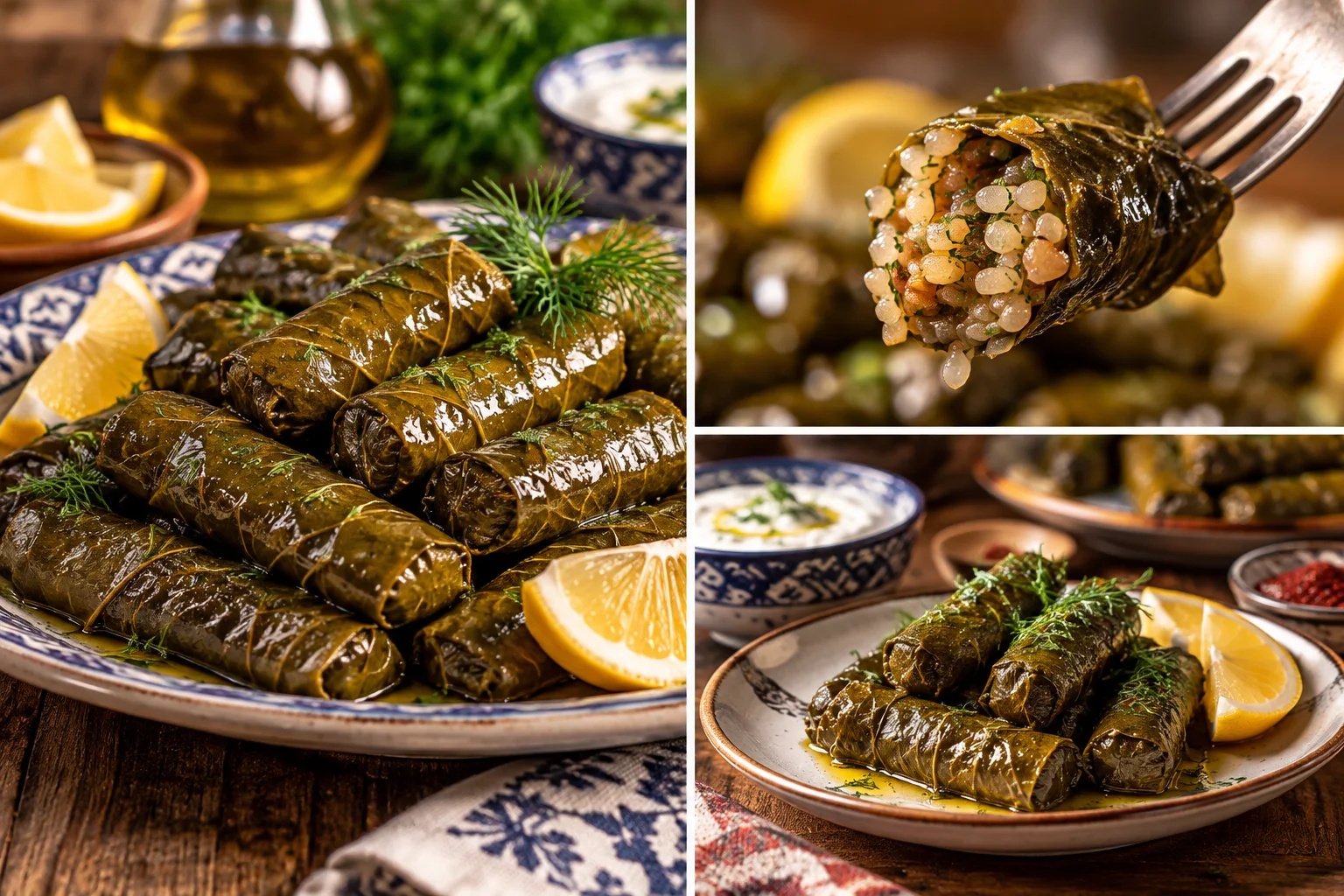
Watch how the roll yields when you bite it. A good leaf offers gentle resistance, then gives way before the rice becomes a separate mouthful. If it is too tough, you spend the bite working through the leaf. If the filling is packed too tightly, the rice has no room to expand.
Some cooks use fresh young leaves in season; others work with leaves preserved in brine, which makes sarma possible throughout the year. Tokat’s Narince grape leaves are particularly prized. Türkiye has registered geographical indications for specific Narince leaf products from Tokat and Erbaa. Those registrations concern the leaves; they do not mean that every plate of yaprak sarma carries a protected designation.
Then there is the labour. Each roll is an individual decision: enough filling to taste the rice, enough space for it to cook, enough pressure to hold its shape. A platter of thirty neat pieces represents thirty small acts of attention. This is why sarma appears so naturally at tables set for guests. It can be made ahead, served generously and passed from person to person.
How to Taste It
Start with one roll before adding lemon. Notice whether the first impression is the leaf’s mild tang, the softness of the rice, or the olive oil coating your tongue. Then squeeze a little lemon over the next one. The acidity changes the balance: a richer filling becomes lighter, and subtle herbs may come forward.
Do not expect every plate to have the same flavour. Some are almost entirely savoury; others carry currants or a touch of spice. A cool olive-oil sarma eaten beside other zeytinyağlılar—vegetables cooked in olive oil—is a different experience from warm, meat-filled sarma offered with yogurt.
This is a dish to share, but take time over the first piece. The leaf has travelled from a vine to a pot to your plate, and its character is still there in the bite.
Where to Try Yaprak Sarma in Istanbul
For a classic olive-oil version near İstiklal Avenue: Hacı Abdullah Lokantası lists yaprak sarma among its olive-oil dishes. Its address is Atıf Yılmaz Caddesi No: 9/A, Beyoğlu, close to the İstiklal corridor. Ask for “zeytinyağlı yaprak sarma” and make it part of a lunch after exploring Beyoğlu’s side streets. The restaurant also lists a warm sarma among its vegetable dishes; ask which version is available when you order.
For a home-style weekday lunch in Nişantaşı: Nezaf Ev Yemekleri lists a hand-rolled olive-oil sarma cooked with lemon and served after cooling. Find it at Ayla Algan Sokak No: 30/A, Şişli. The restaurant lists Monday to Friday, 09:00–18:00, with weekends closed. Its menu changes daily, so the listed dish is not a promise that a pot is ready at every hour. Pair this stop with a walk around Nişantaşı rather than treating it as a detour from the historic peninsula.
Order it: “Bir porsiyon zeytinyağlı yaprak sarma, lütfen.” — “One portion of olive-oil stuffed grape leaves, please.” For the meat version, ask: “Etli yaprak sarma var mı?” — “Do you have meat-filled sarma?” If you avoid meat, dairy or nuts, ask about the particular filling and accompaniments before ordering; recipes differ.
The next roll is rarely a careful decision. You take it while the trace of lemon from the previous one is still on your fingers.
💬 Comments (0)
Traveler comments are shown in their original language.
No comments yet. Be the first to share your experience.
💬 Want to join the discussion?
Log in or create an account to leave a comment.