Must-Try Turkish Foods: Lokum, the Sweet That Begins With a Dusting of Sugar
Lokum is more than a colourful box of Turkish delight. Discover its delicate chew, classic flavours, sweet-shop history and the places to taste it in Istanbul and Safranbolu.
 Burak ÇınarTurkTravelRadar Founder
September 29, 2026
A white trace of sugar stays on your fingertips.
The square of lokum looks firm in the box, but it gives when you lift it. Bite slowly. There is a brief resistance, then a soft, springy chew. If you chose rose, its fragrance arrives before the sweetness has finished spreading across your tongue. If you chose pistachio, a nut interrupts that softness with a small, satisfying crunch.
One piece is enough to understand why lokum is served in small portions. It is also just enough to make you curious about the next flavour.
Visitors often know it as Turkish delight. In Türkiye, ask for lokum. You will find it in confectionery shops, beside cups of Turkish coffee and in boxes carried home as gifts. Yet the prettiest box tells you very little about what is inside. To discover lokum, begin with the texture.
What Makes Lokum Feel Like Lokum?
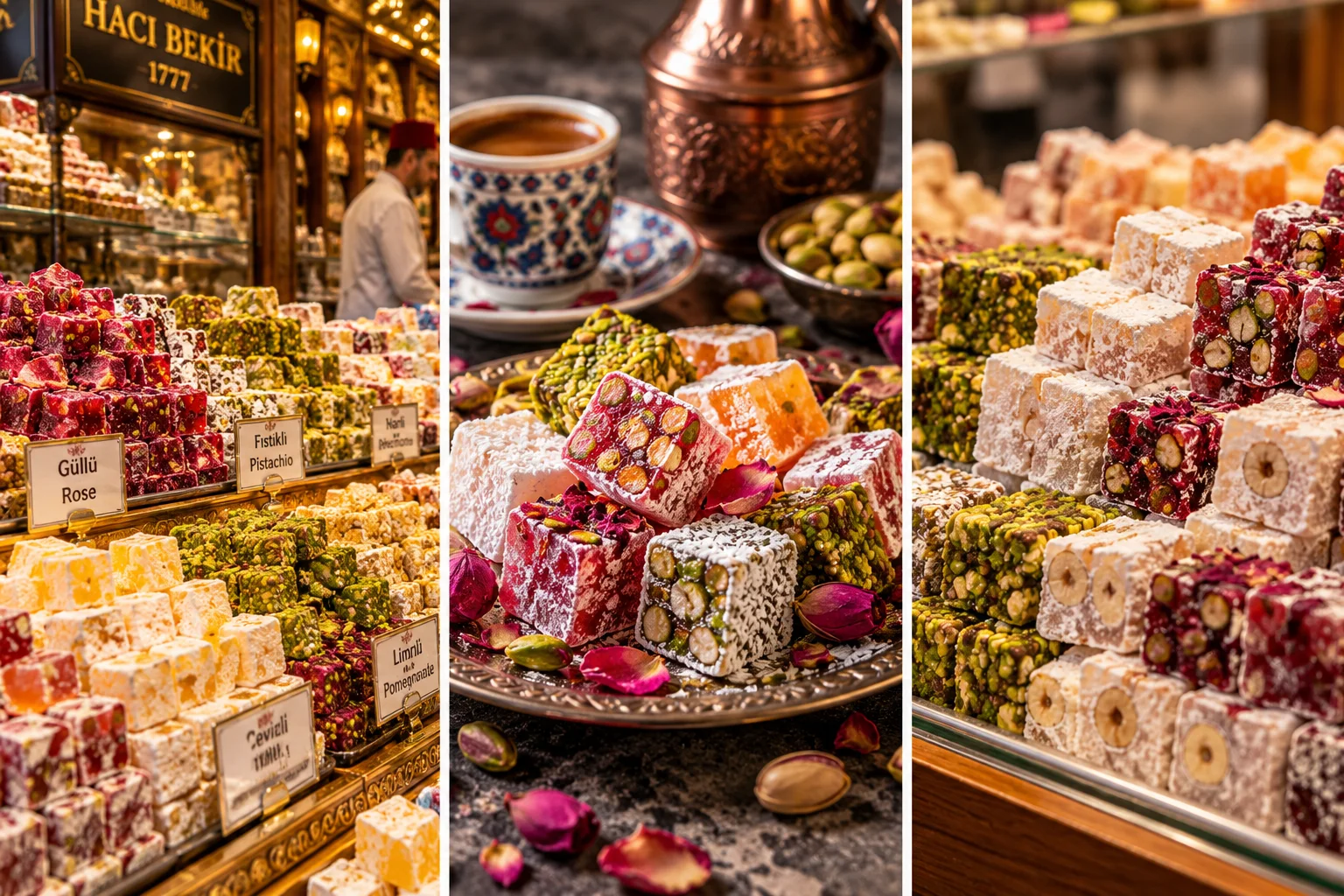
Traditional lokum is built around sugar, water and starch. These are cooked together until they form a smooth, elastic confection, then left to set before being cut. Flavour can come from rose, lemon or mastic; other pieces hold pistachios, hazelnuts or walnuts.
That simple description hides the difficult part. The cook needs a mixture that will hold its shape without turning stiff. A good piece bends slightly between your fingers. As you chew, it should soften rather than cling stubbornly to your teeth. The dusting on its surface keeps the pieces from sticking together; it should not be the most interesting thing you taste.
Try two contrasting pieces rather than starting with a large mixed box. Rose lokum lets you notice the fragrance and the smoothness of the sweet itself. Pistachio lokum adds a richer flavour and a crisp interruption to the chew. Lemon brings a brighter edge. Mastic has a distinctive resinous aroma that some people love immediately and others need time to discover.
There is no single flavour that represents every lokum maker. Part of the pleasure is finding the one you would choose again.
From a Sweet Shop to a Gift Box
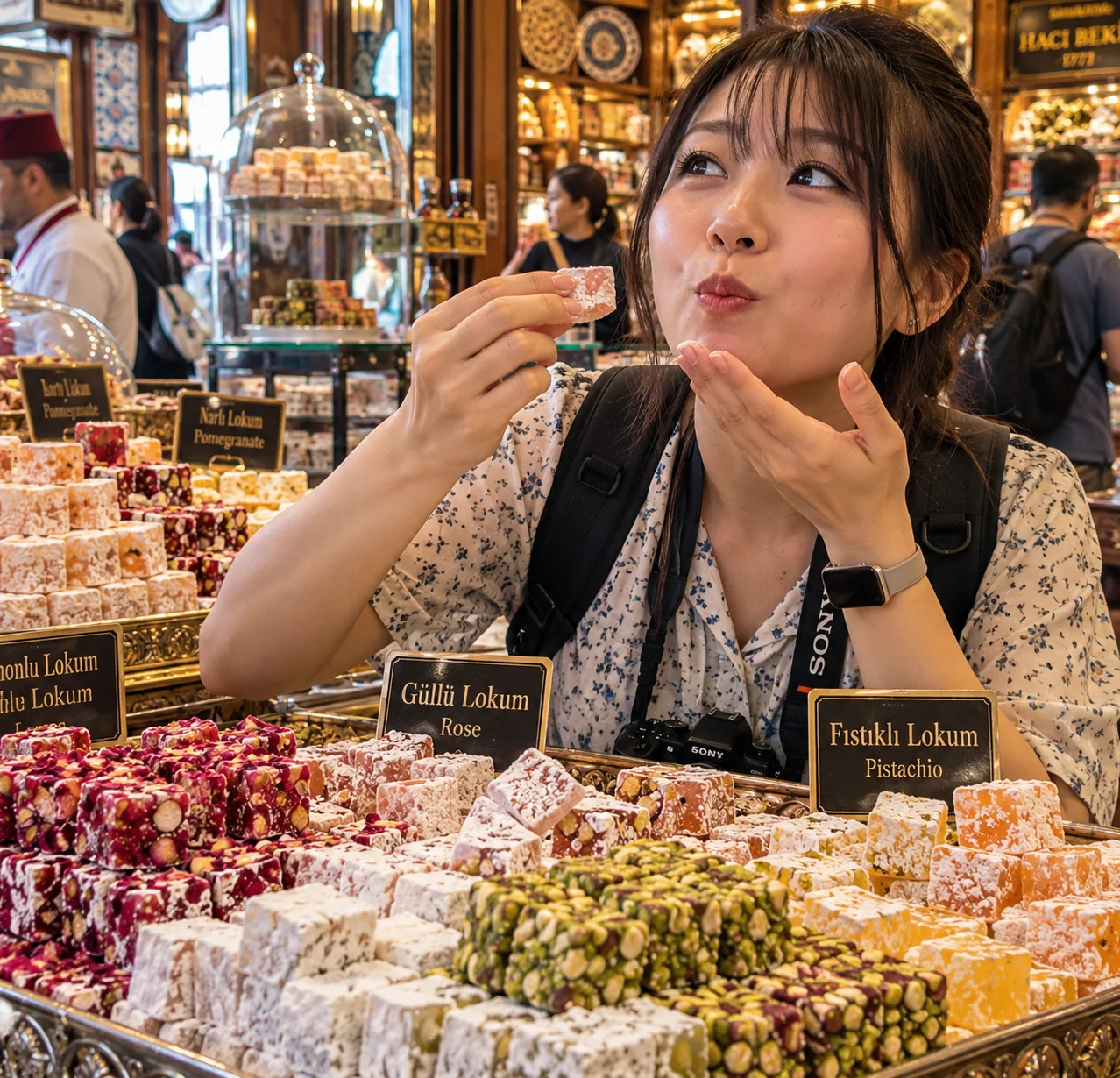
Lokum has been part of Istanbul’s confectionery trade for generations. One of its most familiar names, Ali Muhiddin Hacı Bekir, traces its first shop in Bahçekapı to 1777. According to the company’s own history, Hacı Bekir Efendi made and sold lokum and other sweets there himself.
The old trade still shapes a visitor’s experience. In a sweet shop, you can look across a counter of colours and coatings before making a choice. The smell may shift as you move: rose near one tray, citrus near another, toasted nuts when a box is opened. Paper rustles as pieces are arranged for someone taking a gift to a friend.
That last detail matters. Lokum is often offered to a guest or brought to someone rather than eaten as a large dessert after a meal. A small piece alongside unsweetened Turkish coffee makes sense: the coffee’s bitterness gives the sweetness somewhere to go.
Safranbolu Has Its Own Lokum Story
Travel north from Istanbul to Safranbolu, and lokum becomes part of a different day out. The town’s historic streets draw visitors for their architecture; its sweet shops give them a reason to stop, taste and carry something home.
Safranbolu Lokumu has a registered geographical indication with a defined production method. Its specification describes an elastic sweet that should not leave a raw starch taste or stick heavily to the teeth. The protected name applies to the specified Safranbolu product—not to every box of Turkish delight sold elsewhere.
You may also find saffron lokum, but do not assume that every piece of Safranbolu lokum contains saffron. They are different things. Ask what is in the piece you are tasting; the answer can make the difference between buying a flavour you love and buying a box because you liked its colour.
Where to Try Lokum
Istanbul: Start Where the Sweet Shop Has History
Visit Ali Muhiddin Hacı Bekir at Hamidiye Caddesi No: 33 or No: 31 in Eminönü. The company lists both shops on the same street, near the busy Bahçekapı and Eminönü shopping area.
Make this a short stop during a walk through Eminönü and the streets around the Spice Bazaar. Choose a few individual flavours before deciding on a gift box. Ask for a classic rose piece and a nut-filled one so you can feel how much the texture changes.
Say: “Güllü lokum ve fıstıklı lokum denemek istiyorum.” That means, “I’d like to try rose and pistachio lokum.”
Safranbolu: Take a Sweet Break in the Old Bazaar
İmren Lokumları lists a branch at Kazdağı Meydanı, Eski Çarşı No: 2. Its company history dates its lokum business to 1942, and it offers a Safranbolu stop that fits naturally into a visit to the old bazaar.
Try a local variety there, then compare it with the lokum you tasted in Istanbul. Notice the sweetness, how quickly the piece yields and whether the flavour remains after the sugar has faded. That comparison will tell you more than a shelf of souvenir boxes can.
Buying lokum to take home: Ask what each variety contains, especially if you have a nut allergy or avoid particular ingredients. Nut-filled pieces may be cut or packed near other varieties. Choose a properly packed box and follow the maker’s storage and best-before instructions. If your journey is long, tell the shop when you plan to eat it.
At the end of the day, you may still have a little powdered sugar on the corner of the box. Open it again and the aromas return before you touch a piece: rose, citrus, perhaps pistachio. A small square can bring back the sound of the shop paper, the counter full of choices and the street you stepped out of to make your decision.
💬 Comments (0)
Traveler comments are shown in their original language.
No comments yet. Be the first to share your experience.
💬 Want to join the discussion?
Log in or create an account to leave a comment.