Must-Try Turkish Foods: Kuru Fasulye, the Bean Stew That Turns Lunch into a Ritual
Discover kuru fasulye, Turkey’s comforting white bean stew. Follow its flavors from an Istanbul lokanta to Çayeli, Rize, with tips on what to order and where to eat.
 Burak ÇınarTurkTravelRadar Founder
September 29, 2026
You hear lunch before you see it: spoons touching plates, a chair pulled closer to the table, someone asking for one more portion of rice. Then comes the aroma of onions and tomato, followed by a bowl of kuru fasulye still giving off steam. Its name means “dried beans,” but that hardly prepares you for the comfort of the first spoonful.
The beans are tender without losing their shape. Their sauce is rich enough to cling to each one, warm with the sweetness of cooked onion and the depth of tomato paste. Take a bite with pilav, Turkish rice, and the grains catch the sauce. Follow it with a sharp, crunchy pickle. Suddenly, a simple lunch has a rhythm: warmth, softness, acidity, crunch. You reach for the spoon again before putting it down.
The plate that makes sense together
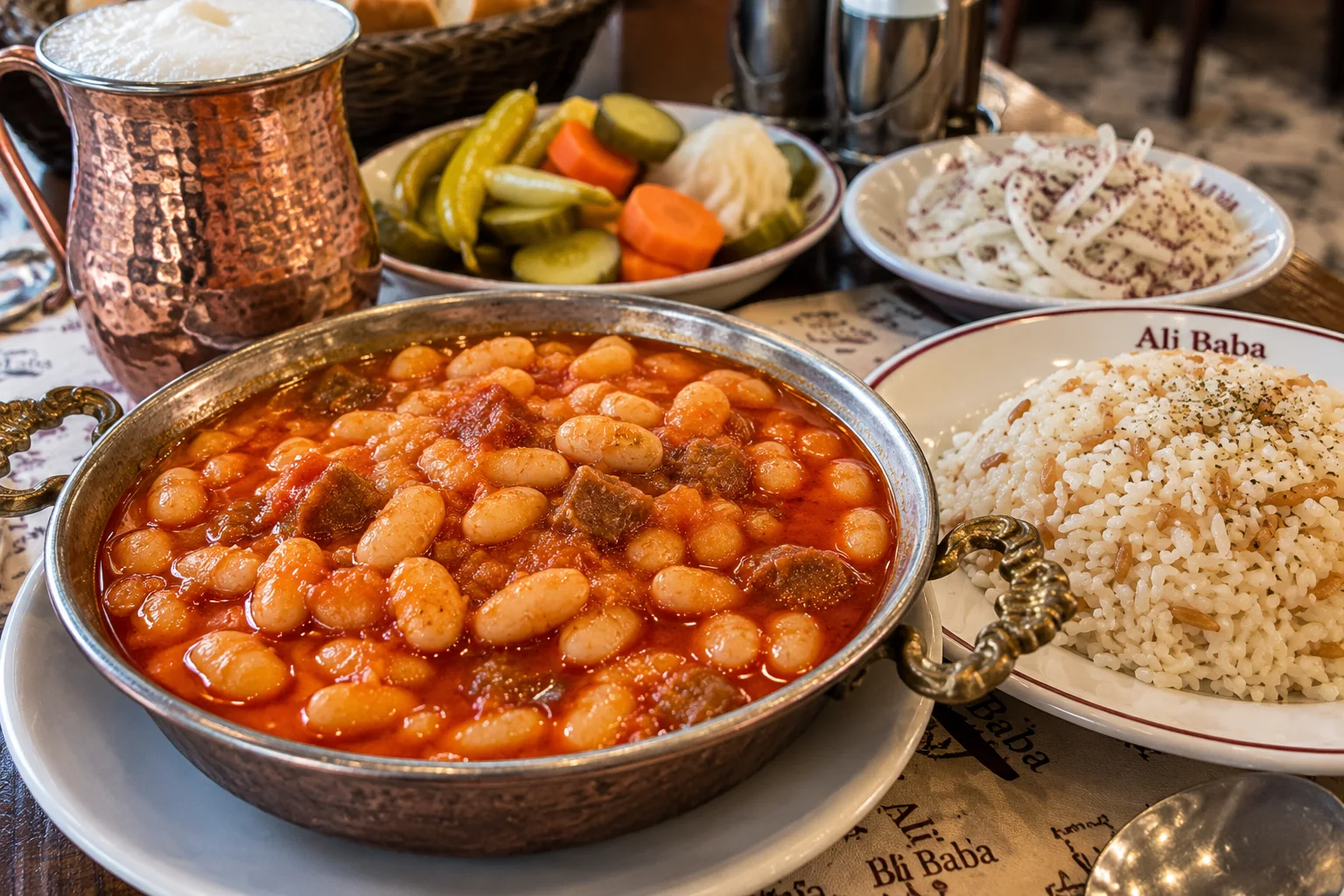
Kuru fasulye is commonly served with rice, but the side dishes deserve your attention. A little turşu—pickled vegetables—cuts through the richness. A spoonful of yogurt brings a cool, creamy pause. Some tables add raw onion for a crisp, peppery bite.
Listen to the room as you eat. A busy lokanta, a casual Turkish restaurant, has its own lunchtime soundtrack: cutlery against porcelain, conversation rising and falling, fresh plates arriving from the kitchen. Kuru fasulye belongs beautifully in that setting. It is food that invites you to sit down properly, even when you meant to stop only for a quick meal.
One name, many pots
There is no single recipe behind every bowl marked kuru fasulye. Some cooks make it without meat; others add beef or cured meat. The balance of tomato, onion, fat and seasoning changes from kitchen to kitchen. If you have dietary restrictions, ask what is in the pot rather than judging by its appearance.
One especially celebrated version comes from Çayeli, a district in the Black Sea province of Rize. Çayeli kuru fasulye yemeği has a registered geographical indication and a defined preparation using large white beans, beef, clarified butter, onion and tomato paste. It is served with accompaniments such as rice, yogurt, raw onion or pickles. That particular version contains meat and dairy.
This is part of the pleasure of tasting Turkish food as you travel: the familiar name on the menu can lead you to a distinctly local dish.
Where to try kuru fasulye
Erzincanlı Ali Baba, Süleymaniye, Istanbul. Make this your lunch stop while exploring the streets around Süleymaniye Mosque. The area has a long kuru fasulye tradition, and Ali Baba is a historic name associated with it. Find the restaurant opposite the mosque, order beans with rice, and leave room on the table for pickles.
Hüsrev, Çayeli, Rize. If your journey takes you along the eastern Black Sea coast, go to Çayeli for the regional version. Hüsrev lists its signature kuru fasulye alongside rice pilaf, mixed pickles and yogurt. Its Çayeli restaurant is on the road toward Hopa after the Çayeli exit.
Hüsrev, Esentepe, Istanbul. Staying in Istanbul? Hüsrev also lists a branch on Yıldız Posta Caddesi in Esentepe, giving you another place to seek out its beans without travelling to Rize.
Check current opening hours before setting off, especially when planning your day around one restaurant.
How to order
Ask for: “Bir kuru fasulye, bir pilav ve turşu, lütfen.”
That means: “One kuru fasulye, one rice pilaf and pickles, please.”
For a meat-free meal, ask “Etsiz mi?” (“Is it without meat?”). If needed, also ask whether it contains meat stock or butter. A meat-free pot may still contain dairy.
The last few spoonfuls are often the best. The rice has soaked up the sauce; the pickles still snap when you bite them; the bowl is warm beneath your hand. Outside, there is more of Istanbul—or Rize—to see. For another minute, though, there is lunch.
💬 Comments (0)
Traveler comments are shown in their original language.
No comments yet. Be the first to share your experience.
💬 Want to join the discussion?
Log in or create an account to leave a comment.