Munzur Valley National Park: Tunceli’s Wild River and Sacred Munzur Springs
Explore Munzur Valley National Park and Munzur Gözeleri in Tunceli, eastern Turkey. Discover mountain scenery, sacred springs, the Munzur Baba legend and practical travel tips.
 Burak ÇınarTurkTravelRadar Founder
October 1, 2026
You hear the water before you see where it begins.
It rushes between rocks, breaks into white foam and gathers again in clear channels. Cool air rises from the cascades. Beneath your shoes, the path changes texture; ahead, the mountains draw your eyes upwards.
At Munzur Gözeleri, the Munzur Springs, water emerges from several openings at the foot of the mountains. Each small current joins another, until the separate sounds become one continuous roar.
Stand for a moment and listen.
For visitors, this is a remarkable natural landscape. For many people in the region, it is also a sacred place, inseparable from memory, belief and the story of a humble shepherd.
To experience it fully, follow the valley from Tunceli towards Ovacık, then continue to the springs. The journey brings together the river, the mountains and the human stories that give Munzur its meaning.
Where Is Munzur Valley National Park?
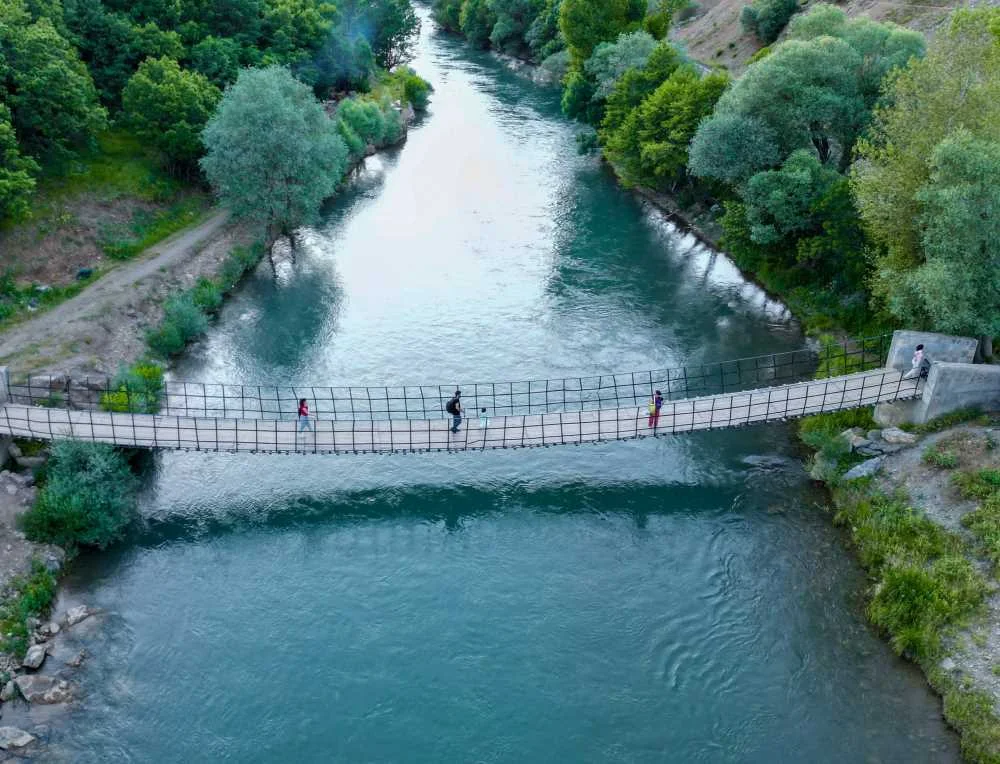
Munzur Valley National Park is in Tunceli province, in eastern Turkey, along the mountainous landscape between Tunceli and Ovacık.
Established on 21 December 1971, the park protects approximately 42,000 hectares of valleys, slopes, woodland and waterways.
This is a large landscape with several possible stopping points. Visiting means planning a route through it rather than arriving at a single entrance and seeing everything nearby.
The Tunceli–Ovacık road provides a practical introduction to the valley. Munzur Gözeleri is a separate destination near Ziyaret village, beyond Ovacık, and should be included deliberately in your itinerary.
Official tourism information places the springs approximately 80 kilometres from Tunceli city centre and 17 kilometres from Ovacık.
Follow the River Towards Ovacık
Let the journey become part of the visit.
Through the valley, the relationship between river and mountain changes. Steeper sections give way to more open views. Trees gather beside the water, while exposed rock draws lines across the slopes.
From a suitable stopping place, watch the current for a few minutes. Its colour changes with depth, light and the riverbed. White water catches the eye first; calmer sections reveal a different character.
The sound changes, too. A fast passage fills the air, while another reach lets you hear leaves moving and conversation nearby.
Stop only where parking is permitted and you can leave the road safely. A beautiful bend is not necessarily a suitable place to pull over.
Munzur Gözeleri: Where the Water Emerges
The Turkish word göze refers here to a spring or opening from which water rises.
At Munzur Gözeleri, cold water emerges from the rocky mountainside and flows down through small cascades. Official descriptions identify the springs as karstic, connected with the movement of water through soluble rock.
The experience is best appreciated close to the visitor paths.
Notice the contrast between still stone and restless water. Follow a narrow stream until it joins a larger one. Watch bubbles gather, dissolve and return.
Near the cascades, the air can feel cooler and carry the scent of wet rock and vegetation. The water’s movement gives the scene its energy; the mountains give it scale.
Allow time to look without immediately reaching for your camera.
The Legend of Munzur Baba
Local tradition connects the springs with Munzur Baba, a shepherd remembered for humility and spiritual gifts.
In one version recorded by Turkey’s Culture Portal, Munzur’s master discovers that the shepherd possesses extraordinary abilities. When the master returns from pilgrimage, he tells those welcoming him that Munzur deserves their reverence.
Munzur is uncomfortable with the attention and runs away.
He carries a bowl of milk, which spills as he reaches the place associated with the river’s source. Water rises where the milk falls. As he continues, more springs appear, and their waters form a river. Munzur disappears into the mountains.
Versions differ, but the connection between the shepherd, the spilled milk and the emerging water remains central.
This is a religious and cultural legend, passed down through local tradition. It offers a way to understand the springs’ meaning to the community, alongside the geological explanation of how they form.
Visiting a Sacred Landscape
For many members of the region’s Alevi communities, Munzur has deep spiritual significance.
You may encounter people praying or taking part in acts of devotion. Their presence is part of the living character of the site.
Move quietly around worshippers, give them space and ask before photographing anyone. If you are unsure about a practice or a particular area, seek guidance locally.
A thoughtful visit leaves room for both experiences: your appreciation of the landscape and another person’s relationship with a sacred place.
Wildlife and Plants in the National Park
Munzur Valley is recognised for its rich plant life, including endemic species, and its varied wildlife.
Official park accounts describe oak woodland, birch in the Ovacık area and habitats supporting animals such as wild goats and otters.
Wildlife sightings are a matter of chance. Look patiently from a distance and let animals continue their movements undisturbed.
Flowers can be especially rewarding subjects for photography. Photograph them where they grow, keeping to appropriate paths and leaving the plants in place.
The park’s interest lies as much in these smaller encounters as in its broad mountain views.
A Practical Route for Your First Visit
A manageable introduction is:
- Begin in Tunceli, checking road conditions and arranging transport.
- Travel towards Ovacık, allowing a few suitable valley stops.
- Pause in Ovacık for a meal and any supplies you need.
- Continue to Munzur Gözeleri near Ziyaret village.
- Return with daylight to spare, or stay overnight in accommodation arranged beforehand.
Allow a full day if starting and finishing in Tunceli. Add more time if you want a substantial hike rather than short walks and sightseeing stops.
Walking note — Physical effort: 2/5 for short visitor-area walks; potentially 3–5/5 for longer valley or mountain routes.
These are planning estimates. Wet surfaces around the springs can be slippery. Confirm the current paths, steps and accessible viewing areas if you use a wheelchair or have limited mobility.
Photography: Give the Water a Setting
At the springs, take one close photograph of water moving over rock and another that includes the mountains behind it.
The close view records texture; the wider image explains the setting.
Along the valley, look for compositions where the river leads the eye into the distance. Trees or rock in the foreground can help convey depth.
Use secure positions on the visitor route. You can make a compelling image without stepping onto wet rocks beside the current.
Make Time for a Local Meal
Before returning, sit down in Ovacık or Tunceli and ask what regional dishes the kitchen has prepared.
Look for zirafet, also encountered locally under related spellings such as zerfet, and ask how that establishment makes it.
Let the meal provide a slower part of the day: the warmth of the plate, the fragrance rising from the kitchen and the first satisfying mouthful after hours outdoors.
Daily availability varies. A conversation with the person serving you can reveal more than a long list of dishes copied from a guide.
Essential Visitor Information
Best season: Late spring through early autumn offers a useful planning window for general sightseeing, but snowmelt, weather and road conditions can change what is accessible.
Transport: A car or prearranged local driver makes multiple stops easier. If using public transport, confirm both the Tunceli–Ovacık journey and the separate connection to the springs.
Access and fees: Confirm current local arrangements before travelling. The valley, springs and any organised activities may have different access conditions.
What to bring: Shoes with good grip, drinking water, sun protection and a layer for cooler conditions.
River activities: Arrange rafting with an experienced operator who can assess current conditions. Do not treat the river or sacred spring area as an informal swimming destination.
Longer walks: Choose a defined route and obtain local advice about conditions, navigation and any access restrictions.
Overnight stays: Confirm accommodation or permitted camping arrangements in advance.
Stay Long Enough to Hear It
Before leaving the springs, find a comfortable place on the visitor route and pause.
Your attention may settle first on the foam, then on the darker channels beneath it. A gust moves through the vegetation. Someone speaks softly nearby, their voice briefly audible above the water.
You have followed the river through the valley and reached the place where its story begins.
Now give it a little more time.
The sound of Munzur is one of the things you can carry home without taking anything away.
💬 Comments (0)
Traveler comments are shown in their original language.
No comments yet. Be the first to share your experience.
💬 Want to join the discussion?
Log in or create an account to leave a comment.