Malay: Zonguldak’s Warming Cornmeal Dish with Butter and Walnuts
Warm spoonfuls of cornmeal dough, fragrant butter and toasted walnuts: discover malay, a traditional Zonguldak dish with roots in the region’s working life.
 Burak ÇınarTurkTravelRadar Founder
October 4, 2026
The walnuts meet the hot butter with a gentle hiss.
As they turn in the pan, their smell deepens. A warm, nutty fragrance rises above the stove, mingling with the softer scent of cooked cornmeal. On the serving plate, small spoon-shaped pieces of malay wait for their topping.
The butter runs over them first. Pieces of walnut follow, settling into the spaces between the pale golden mounds.
Take a spoonful while it is still warm.
The malay yields softly against your tongue, with enough body to make the mouthful feel substantial. Then a walnut breaks between your teeth. Its slight bitterness balances the butter, while the mild sweetness of corn stays underneath.
You draw the spoon through the plate again, catching a little of the melted butter that has gathered at the bottom.
Malay is a traditional dish from Zonguldak, on Turkey’s western Black Sea coast. Its cooked flour base can carry several toppings, giving the same comforting foundation very different flavours.
A Dish Shaped by Everyday Life
Malay belongs to a region where working life has left its mark on the kitchen.
Zonguldak’s Provincial Directorate of Culture and Tourism connects dishes such as malay with the need for practical, inexpensive meals among people whose days were occupied by mining, industry and other demanding work.
That background helps explain its appeal. A few basic ingredients become something warm and filling, with the topping bringing richness to the plate.
The geographical indication specification also records malay’s longstanding place in local food traditions, particularly on miners’ tables.
There is no need to attach an invented palace story or a precise ancient date to it. Its connection to the people of Zonguldak gives you something more tangible: a meal that belongs to the region’s daily life.
From the Pot to the Plate
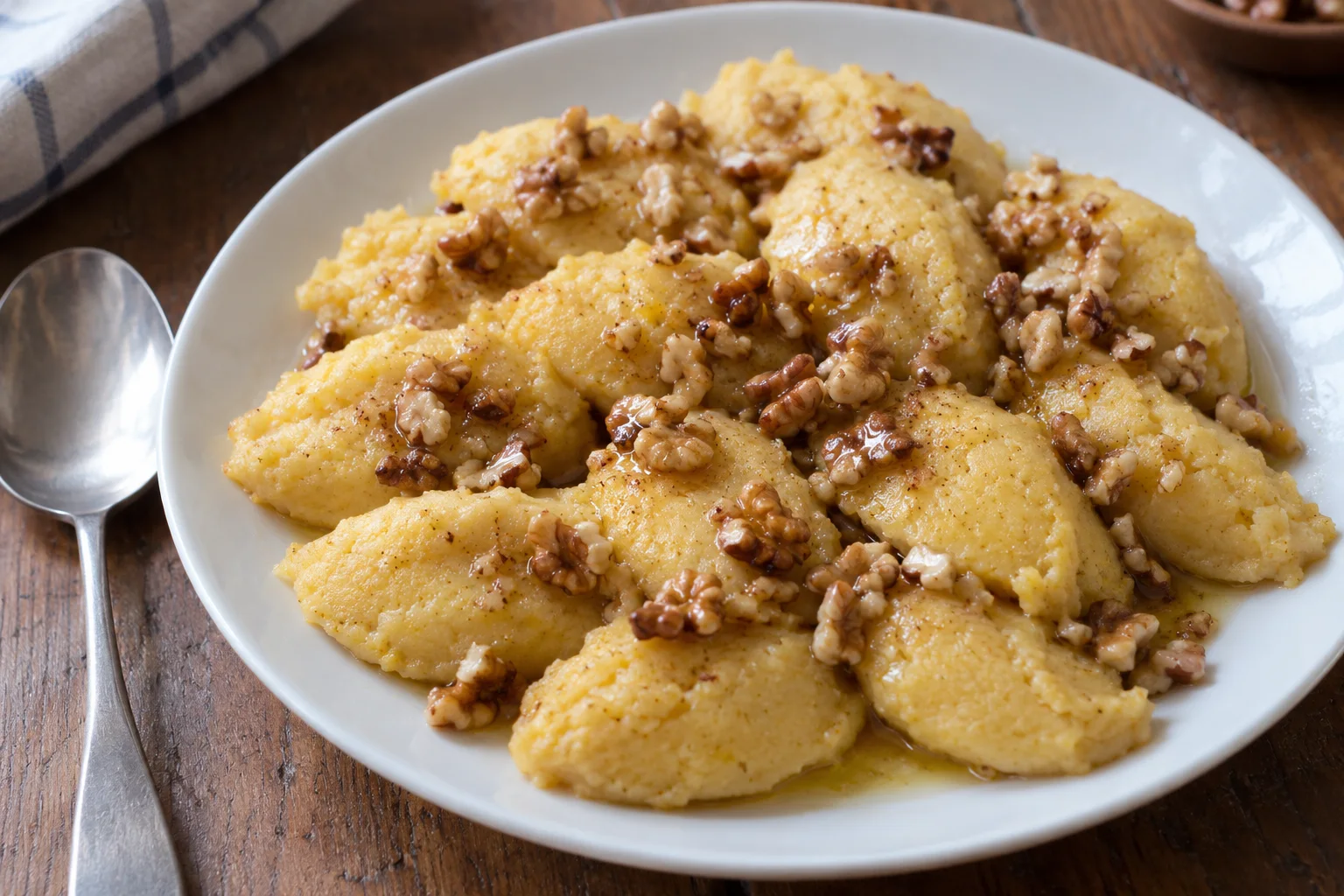
The documented preparation for Zonguldak Malay Yemeği combines cornmeal with wheat flour, salt and water. The flours are gradually stirred into boiling water until they form a smooth, thick dough. Two wet spoons shape portions for the serving plate.
Imagine the change inside the pot.
At first, the spoon moves easily through the water. As the flour thickens, each turn meets more resistance. The mixture gathers around the spoon, leaving a brief trail behind it before settling again.
On the plate, those shaped portions give you gentle curves and small hollows where the topping can collect.
The base has a quiet flavour. That makes the first spoonful worth taking slowly: warm grain, soft texture, then the stronger taste of whatever has been poured over it.
Three Savoury Ways to Taste Malay
The geographical indication specification describes three toppings: walnuts sautéed in butter; fried keş, a dried yoghurt product; and kakırdak, milk cream fried in its own fat.
Walnuts and Butter
This version offers a particularly pleasing contrast.
The malay is soft; the walnuts give your teeth something to work against. Butter brings the two together, coating the warm dough and carrying the toasted aroma of the nuts.
Try to collect both in each spoonful. A walnut alone tastes different from a walnut pressed into the buttery surface of the malay.
Fried Keş
Keş brings a more pronounced savoury character.
Its salty, tangy flavour gives the mild base a sharper edge. Take a small mouthful first to judge the balance, then gather a little more topping with the next.
For someone who enjoys assertive dairy flavours, this is a version worth asking about.
Kakırdak
The cream topping offers a richer dairy flavour.
Here, the pleasure lies in the contrast between the simply cooked base and the concentrated taste of the fried cream. A little topping can change an entire spoonful.
Malay Can Be Sweet, Too
The wider local tradition also includes sweet malay. The provincial food archive describes toppings such as sugar, crushed walnuts, hot butter and pekmez, a concentrated fruit syrup. It also records an older practice of serving malay with walnut oil and the crushed walnut material remaining after the oil was extracted.
With pekmez, the experience changes.
Dark syrup follows the contours of the pale dough, gathering in narrow pools. Its sweetness arrives first, then the grain beneath it. Add walnuts and the mouthful gains a little crunch and a pleasantly bitter finish.
It is worth asking which version is being served. The name alone does not tell you whether the plate will be sweet or savoury.
How to Ask for It
When enquiring at a place serving regional food, you can say:
“Malay var mı?”
“Do you have malay?”
Then ask:
“Üzerinde ne var?”
“What is the topping?”
For the walnut version:
“Cevizli malay var mı?”
“Do you have malay with walnuts?”
Try it warm enough for the butter to remain fluid, allowing each spoonful to cool comfortably before eating.
Towards the end, draw your spoon through the last pieces and the topping left beneath them. That final mouthful may hold a little more walnut, a little more butter, and all the flavour you have been gathering from the plate.
Malay at a Glance
| Question | What to know |
|---|---|
| Where is it from? | Zonguldak, on Turkey’s western Black Sea coast. |
| What is the base? | Cooked cornmeal; the geographical indication specification also includes wheat flour. |
| What is the texture? | A thick, soft cooked dough shaped into spoon-sized portions. |
| Which savoury toppings are documented? | Butter-sautéed walnuts, fried keş or fried milk cream called kakırdak. |
| Is there a sweet version? | Yes. Local traditions include sugar or pekmez, among other toppings. |
| What is its cultural connection? | Everyday regional cooking, including miners’ tables. |
| Dietary considerations | Ingredients vary. The specified recipe contains wheat; toppings may contain dairy or walnuts. |
Preparation and cultural details follow the official geographical indication specification and provincial food archive.
💬 Comments (0)
Traveler comments are shown in their original language.
No comments yet. Be the first to share your experience.
💬 Want to join the discussion?
Log in or create an account to leave a comment.