İçli Köfte: The Turkish Classic You Shouldn't Leave Without Tasting
Discover içli köfte, Turkey’s filled bulgur dumpling. Compare fried and boiled styles, explore regional variations and plan a tasting at Istanbul’s Sabırtaşı.
 Burak ÇınarTurkTravelRadar Founder
September 30, 2026
On the plate, it looks almost too neatly shaped to break.
The fried version is golden brown, often oval with tapered ends. Tiny grains of bulgur give its surface a fine, rough texture. Cut through the middle, and the shell opens around a filling of cooked minced meat, onion and seasoning.
A little steam escapes. The aroma arrives with it.
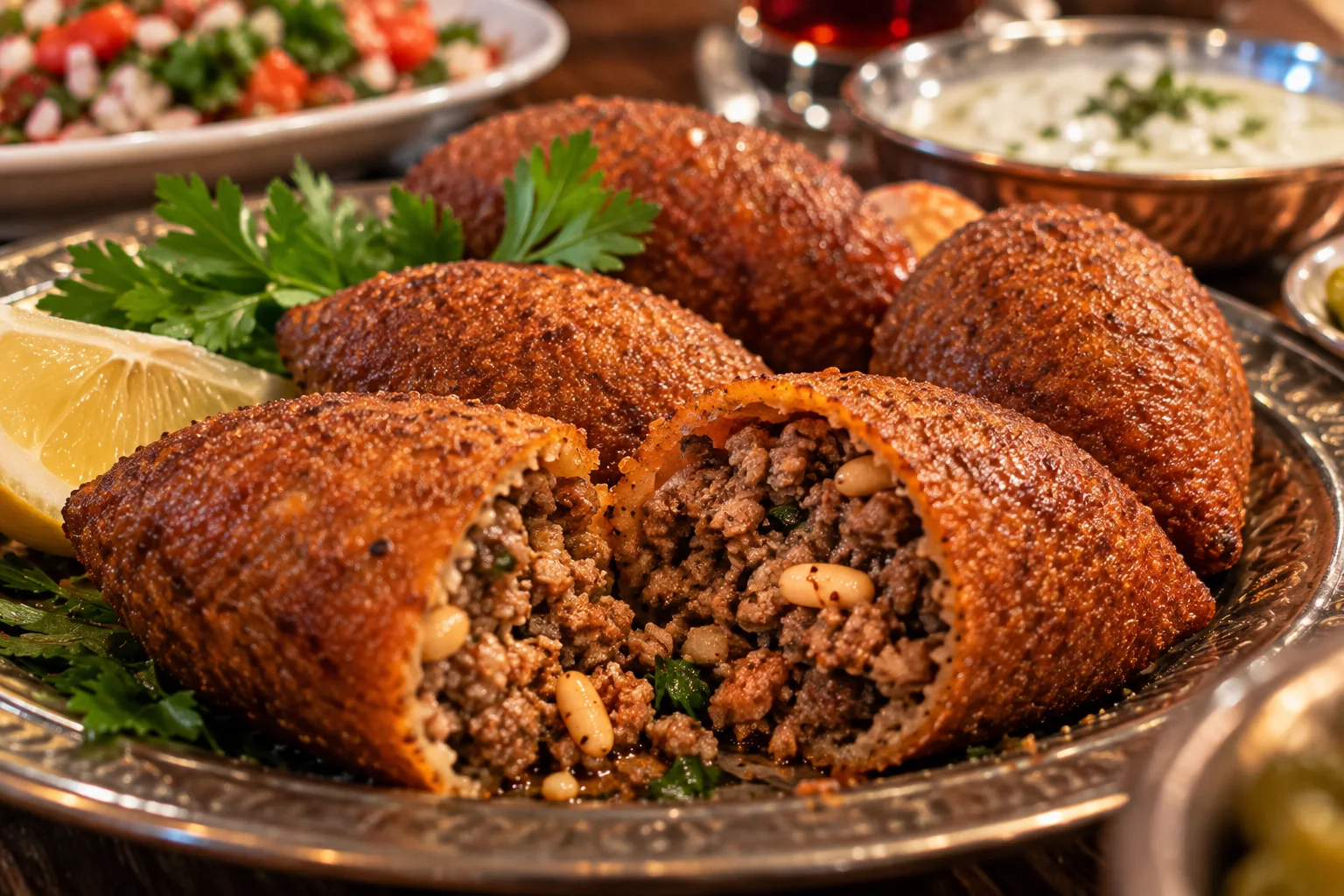
Your first bite begins with the crisp shell, followed by the softer filling. The onion brings sweetness; the meat gives depth. In recipes that include walnuts, small pieces add another texture just as the bulgur begins to soften in your mouth.
This is içli köfte—a dish whose name means “filled köfte,” and whose greatest pleasure is waiting inside.
What Is İçli Köfte?
İçli köfte is a filled dumpling commonly made with a fine bulgur shell and a savoury meat filling. It belongs to a wider family of bulgur-and-meat dishes found across the region, including those known as kibbeh.
Within Turkey, there are many local preparations. The shell may include semolina, flour or meat alongside bulgur. Fillings, seasoning, shapes and cooking methods change between regions and kitchens.
That variety makes it worth ordering more than once during your travels.
A golden fried version in Istanbul may be quite different from a softly boiled köfte served elsewhere. Even the familiar pointed shape is only one possibility: Bitlis içli köftesi, for example, is described in its regional specification as a slightly flattened sphere.
The shared pleasure is the moment you open the shell and discover how that kitchen has filled it.
The Work Hidden in the Shell
Before cooking, the bulgur mixture must become pliable enough to shape.
The cook opens a hollow in each portion, gradually thinning the walls while keeping them intact. Filling goes inside, and the opening is closed carefully.
This is where experience shows. The shell needs enough strength to survive cooking while leaving plenty of room for the filling. A clumsy, heavy casing can overwhelm the mouthful; a carefully formed one holds everything together until you cut it.
If you have the chance to watch the preparation, notice the hands. The repeated movements look simple because they have been practised.
By the time the köfte reaches your plate, most of that work is invisible.
Fried or Boiled? Try Both
Your most useful menu question is also the simplest: kızartma mı, haşlama mı? Fried or boiled?
Kızartma içli köfte develops a crisp exterior. The fried shell adds a toasted flavour and a clear contrast with the moist filling. Cut a piece with your fork, then taste it before adding lemon.
Haşlama içli köfte has a softer shell. The bulgur texture becomes easier to notice, and the transition from casing to filling is gentler. It offers a different kind of satisfaction, especially if you enjoy tender dumplings.
If both are available, order one of each. Compare the shell first, then the filling. You may discover that the method you expected to prefer is not the one you would order again.
A little lemon can brighten a rich mouthful, particularly with the fried version. Add it gradually so the seasoning remains clear.
A Dish That Changes as You Travel
İçli köfte has a place in the food traditions of Kahramanmaraş, Adıyaman, Şanlıurfa, Adana, Bitlis and other parts of Turkey.
Those names should invite curiosity rather than an expectation that every restaurant in a city serves an identical recipe. Ask which style the kitchen makes, how it is cooked and what goes inside.
Walnuts appear in some fillings, but they are not universal. Neither is a single spice mixture.
For a traveller, that gives a small plate surprising value. One köfte can introduce you to a regional preparation without requiring a large meal. Order it as part of lunch, or make it a tasting stop between places you want to explore.
Where to Try İçli Köfte in Istanbul
Sabırtaşı, Beyoğlu
Sabırtaşı is a particularly fitting stop for this dish because içli köfte is central to its identity.
The family’s own account begins with Ali Bey and Fatma Hanım moving from Kahramanmaraş to Istanbul with their children in 1987. They turned to a skill they knew well: preparing içli köfte. Their son Mustafa later continued the business.
Its official contact page lists:
İstiklal Caddesi No: 112, Galatasaray, Istanbul.
The menu explicitly lists both fried and boiled içli köfte, making it a useful place to compare the two preparations.
Build the stop into a walk along İstiklal Caddesi. After looking at shop windows and moving through the crowds, pause for a seated tasting. Confirm the entrance, current hours and availability through the restaurant before making a special journey.
Start with one fried and one boiled köfte if both are available that day. You can decide whether to order more after tasting them.
How to Order
For one fried piece:
“Bir adet kızartma içli köfte, lütfen.”
“One fried içli köfte, please.”
For one boiled piece:
“Bir adet haşlama içli köfte, lütfen.”
“One boiled içli köfte, please.”
To ask about walnuts:
“İçinde ceviz var mı?”
“Does it contain walnuts?”
To ask about the portion:
“Bir porsiyonda kaç tane var?”
“How many pieces are in a portion?”
Some restaurants price içli köfte individually; others serve several as a portion. Check before ordering, especially if you are adding it to a larger meal.
Bulgur is made from wheat, so traditional içli köfte is not gluten-free. Recipes may also contain nuts, egg or dairy, and meat can be present in both the filling and shell.
Open It Before You Add Anything
When the plate arrives, cut one köfte in half and give the hot filling a moment to cool.
Look at the thickness of the shell. Notice how the filling sits inside it, how the onion has softened and whether there are pieces of walnut among the meat.
Taste the first mouthful plain.
Then add a few drops of lemon to the next piece. The acidity changes the balance, bringing the filling into sharper focus. Your fork touches the plate as you gather a little bulgur and the last loose crumbs.
The intact köfte beside it no longer looks mysterious.
You know exactly why you want to open it.
💬 Comments (0)
Traveler comments are shown in their original language.
No comments yet. Be the first to share your experience.
💬 Want to join the discussion?
Log in or create an account to leave a comment.