Devrek Bastonu: A Walking Stick Carved with Patience and Pride
Feel the polished handle and follow the carved snake around a Devrek baston. Discover the history, wood and patient craftsmanship behind Zonguldak’s traditional walking stick.
 Burak ÇınarTurkTravelRadar Founder
October 4, 2026
Close your hand around the handle.
The polished wood feels cool at first, then warms beneath your palm. Turn the walking stick slowly. Light moves along the shaft, catching a carved ridge before slipping into the darker groove beside it.
A snake winds around the wood. Follow its body with your eyes and the pattern seems to move as you rotate the stick.
In a workshop, you might hear the dry rasp of a file or the soft scrape of sandpaper. Pale shavings gather on the bench. Nearby, an unfinished branch waits beside a piece already carved and polished.
The distance between the two is measured in work.
This is Devrek bastonu, the traditional walking stick associated with Devrek, a district of Zonguldak in Turkey’s western Black Sea region. It is one of the town’s defining crafts, bringing woodworking and decorative carving together in an object made to be held.
A Craft Documented in the Ottoman Period
Devrek’s reputation for woodworking has a written history.
The 1892 Kastamonu provincial yearbook mentions walking sticks among the wooden goods produced in Devrek, alongside furniture and other articles. This gives the craft a documented place in the town’s late Ottoman economy.
There is also a local account involving Ali Ziya Efendi, who is said to have developed his skills while held captive in Egypt and brought them back to Devrek.
The story deserves careful telling. Turkey’s Culture Portal notes that walking-stick production was already recorded before his reported return in 1908. He therefore belongs to the craft’s development rather than being confidently identified as its first maker.
Behind the familiar name are generations of makers who learned how to judge wood, shape a handle and carve a pattern into a narrow shaft.
Why Cornelian Cherry Wood Matters
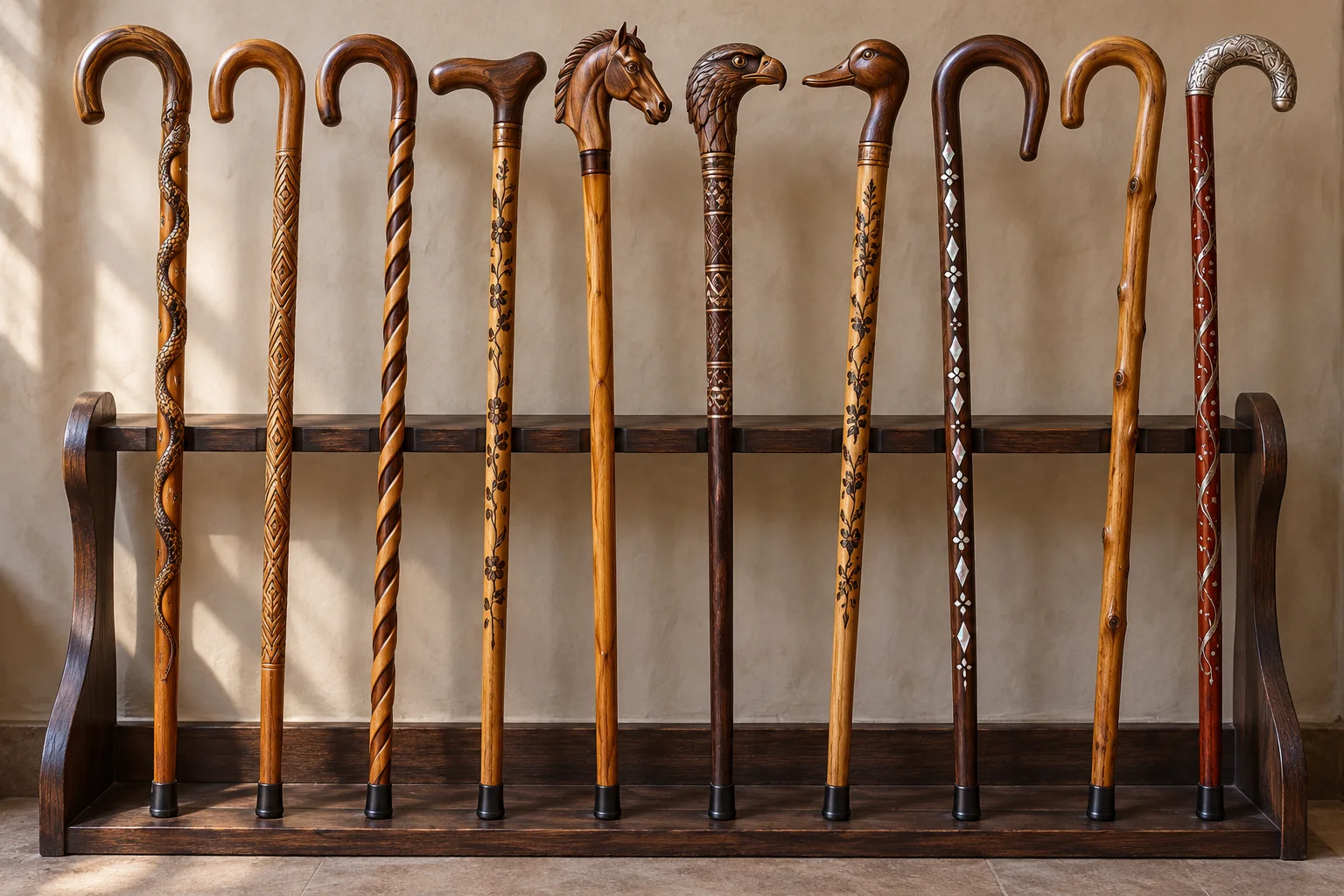
Cornelian cherry wood, known in Turkish as kızılcık, is central to the classic Devrek walking stick. The district governorate identifies local kızılcık as the characteristic material for its shaft.
Before carving begins, the wood must be prepared.
The Culture Portal describes a drying period of around a year, followed by heat treatment to straighten wood that has become distorted. Shaping, smoothing, decoration and finishing follow.
That waiting is easy to overlook when you see the finished piece.
You notice the shine and the carving immediately. The time spent preparing the material is less visible, yet it belongs to the same object. A maker has to work with the branch before turning it into the form you recognise.
If you can see unfinished examples, compare them with the completed sticks. Look at how the shaft has been straightened, how its surface has changed and where the handle meets the body.
The Snake Around the Shaft
The twisted form and snake motif are especially characteristic of traditional Devrek bastons. Other examples carry floral and geometric decoration, mother-of-pearl details or handles shaped as animal heads.
The snake pattern rewards a closer look.
From a distance, it may appear as a simple spiral. Nearer, the carving separates into details: the curve of the body, the treatment of the head, the depth of a groove and the way the design follows the narrow wood.
Rotate the stick a little more.
The light changes what you see. A ridge becomes bright; the cut beside it deepens into shadow. A pattern that seemed flat a moment ago gains volume.
Then bring your attention back to the handle. This is where the object meets the hand, and where comfort becomes as noticeable as decoration.
Look for the Maker’s Decisions
When choosing a Devrek baston, take time to examine the whole piece.
Does the handle sit comfortably in your palm? Are the carved details cleanly finished? How does the decoration continue around the shaft? Does the junction between handle and body look carefully worked?
A richly decorated stick can be striking. A quieter design can give you more space to appreciate the wood and its proportions.
Ask the maker to explain a detail that catches your eye. You may learn why a particular handle was chosen or how a pattern was formed.
Watching even a small part of the work can change your understanding. The file makes a rough surface more even. Sandpaper softens it further. Each pass removes something, bringing the final shape closer.
A Name with Geographical Protection
Devrek Bastonu was registered in Turkey as a geographical indication on 2 August 2005, under registration number 71, with menşe adı, or designation-of-origin, status.
For a visitor, this gives a useful starting point when asking about provenance.
Learn where the piece was made and who made it. If geographical indication labelling is displayed, ask the seller about it. A conversation with the workshop can tell you more than the decoration alone.
Useful Questions When Buying
“Bu bastonu kim yaptı?”
“Who made this walking stick?”
“Gövdesi hangi ağaçtan?”
“What wood is the shaft made from?”
“Devrek’te mi üretildi?”
“Was it made in Devrek?”
“Bu motifin bir hikâyesi var mı?”
“Does this motif have a story?”
“Nasıl bakım yapmalıyım?”
“How should I care for it?”
If you intend to use it for walking, explain that before choosing. Ask about a suitable length, the grip and the tip. If you are travelling by air, check your airline’s carriage arrangements before buying a full-length stick.
For photographs, ask permission inside the workshop. A close view of the maker’s hands, an unfinished shaft or fresh shavings can capture details that a photograph of the finished display misses.
Before you leave, hold your chosen piece once more.
Feel the handle settle into your palm. Turn the shaft and let the light travel around the carving. Later, that small movement may bring back the workshop more clearly than any photograph: the scrape of a tool, the smell of worked wood and the person who shaped it.
Devrek Bastonu at a Glance
| Question | What to know |
|---|---|
| Where is it from? | Devrek, in Zonguldak province, western Black Sea Turkey. |
| What is it? | A traditional wooden walking stick with carved and finished decoration. |
| What is the characteristic shaft material? | Cornelian cherry wood, called kızılcık in Turkish. |
| Which motif is particularly recognisable? | A snake following a twisted or spiral form. |
| How far back is the craft documented? | Walking-stick production is mentioned in the 1892 Kastamonu provincial yearbook. |
| Does it have geographical indication status? | Yes: registered on 2 August 2005, number 71, as a designation of origin. |
| What should you ask before buying? | Maker, production location, wood, care instructions and suitability for your intended use. |
Historical, material and registration details follow the Culture Portal, Devrek district governorate and TÜRKPATENT records.
💬 Comments (0)
Traveler comments are shown in their original language.
No comments yet. Be the first to share your experience.
💬 Want to join the discussion?
Log in or create an account to leave a comment.