Çubuklu, Istanbul: Silos, Hidiv Pavilion & Bosphorus Walking Guide
Explore Çubuklu’s waterfront and restored industrial silos, pause for Turkish coffee, then climb into Hidiv Grove to discover a historic pavilion among the trees.
 Burak ÇınarTurkTravelRadar Founder
September 30, 2026
Çubuklu: Between the Silos and the Trees
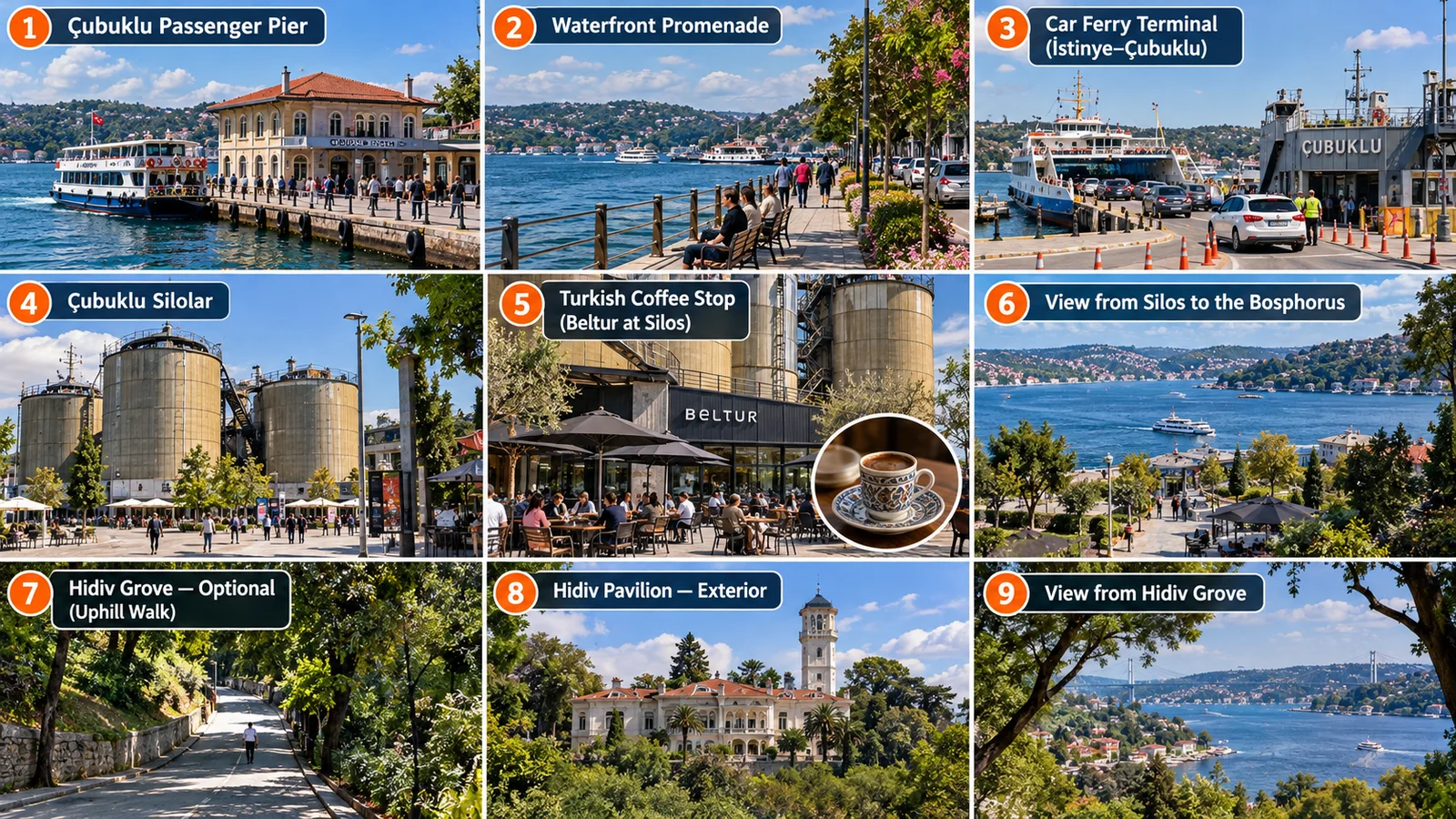
Begin at Çubuklu Pier and face the Bosphorus.
Across the water, İstinye sits on the European shore. Near you, passengers step off a ferry and separate into the neighbourhood. A bus pulls away from the coastal road; a gull calls above the landing. When the wind turns, it brings the smell of salt and wet seaweed from the edge of the water.
Walk toward Çubuklu Silolar, beside the İstinye–Çubuklu car ferry terminal. The large cylinders are easy to recognise. They belong to a different waterfront Istanbul: one shaped by storage, transport and the machinery of a working city.
Above the shore, trees conceal another story. Hidiv Pavilion stands on the wooded hillside, built for an Egyptian ruler who wanted a residence overlooking the strait.
Today, you can explore both settings: the industrial structures by the water, then the grove above them.
Walking note — Physical effort: 2/5 along the waterfront; 3/5 with Hidiv Grove
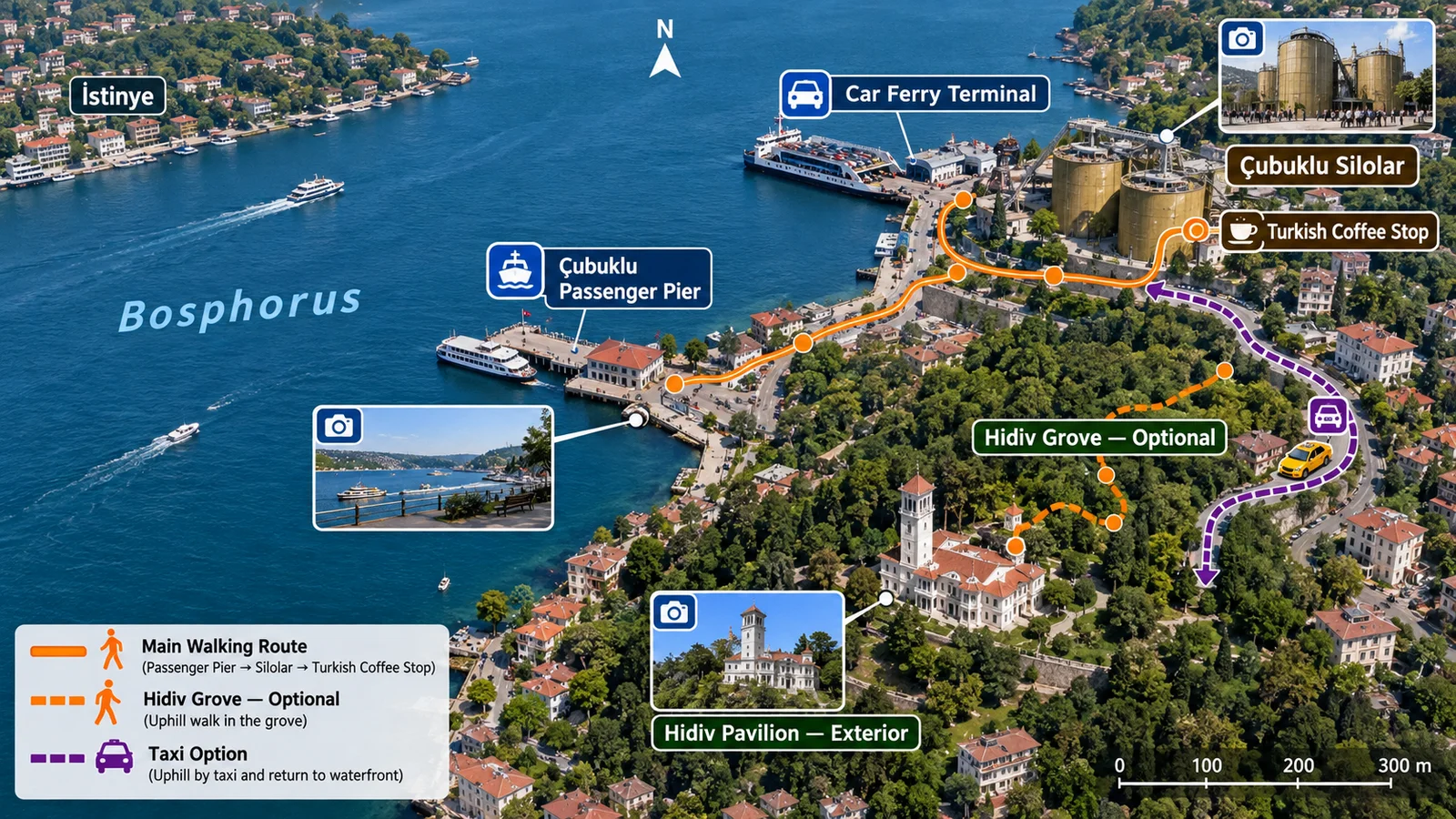
Start at Çubuklu passenger pier, visit Çubuklu Silolar, then add Hidiv Grove if you want a longer outing. The passenger pier and car ferry terminal are separate landmarks. The coastal section is relatively level, with busy crossings and occasional narrow pavements. The grove requires an uphill detour; use a taxi to its entrance if a steep climb would make the day uncomfortable. Finish back at the shore for a ferry or coastal bus. Keep strollers on surfaced paths; slopes and uneven kerbs can make parts of the route difficult for wheelchair users.
Find the Working Shore
Before entering the silos, spend a few minutes beside the water.
A ferry ramp lowers. Engines idle while vehicles wait to move. Further along, someone settles into a seat facing the strait. This part of Çubuklu brings together people crossing Istanbul and people who have nowhere else to be for the next half hour.
Look across toward İstinye, then bring your attention back to the buildings behind you. The scale of the silos changes the waterfront. Their rounded surfaces rise above a landscape otherwise made of windows, shopfronts and the lines of the road.
For your first photograph, stand safely within the public pedestrian area and include both the cylinders and a strip of the Bosphorus. It gives the structures their setting. A closer frame can concentrate on the curve of a tank against the straight lines of the walkways.
Step Inside Çubuklu Silolar
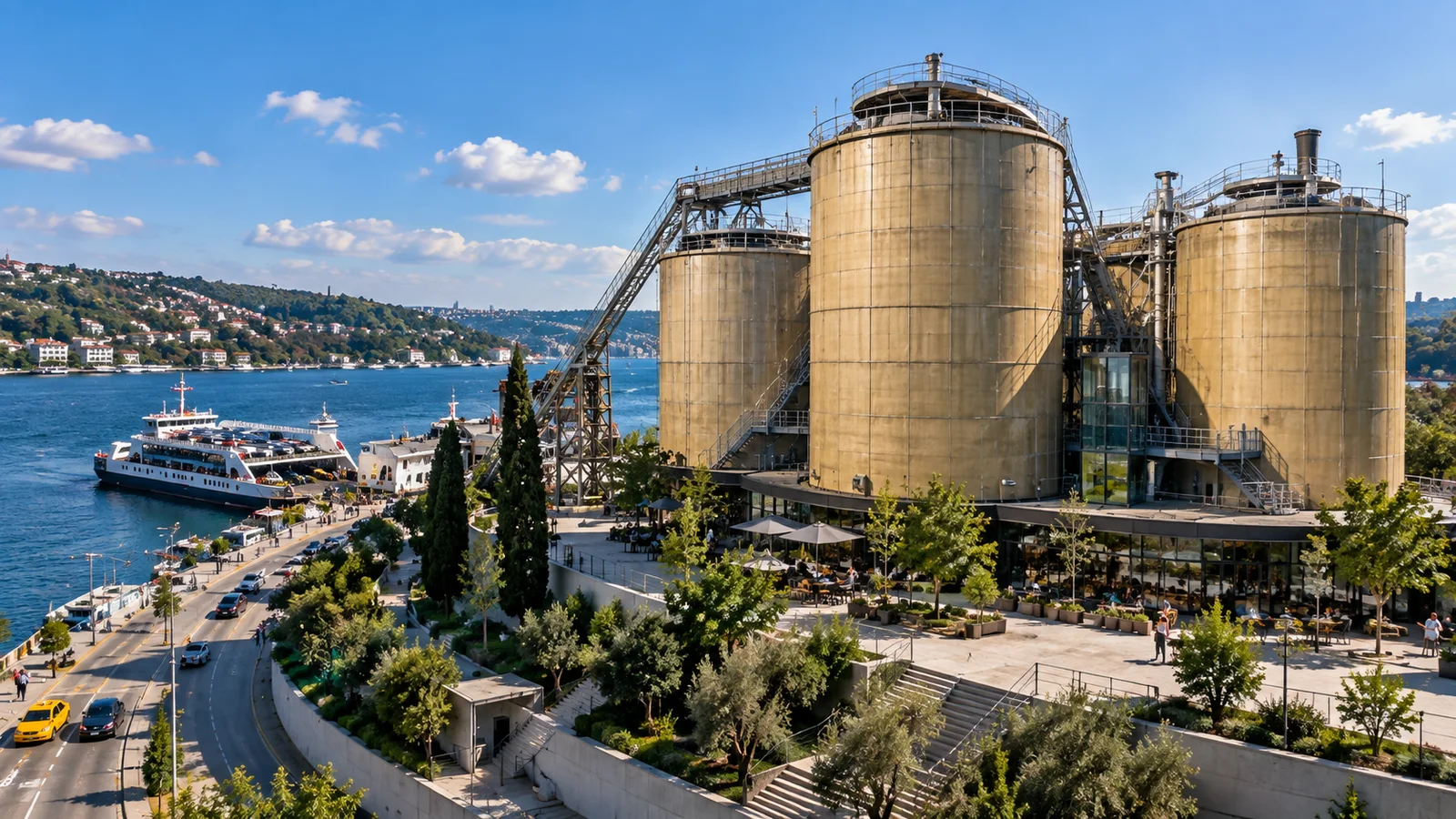
The former industrial storage structures reopened as Çubuklu Silolar in March 2024, following restoration by Istanbul Metropolitan Municipality.
Today, the site brings together exhibition spaces, a library and places to sit. Enter the Digital Arts Museum for a different kind of encounter with the buildings. Light and artworks occupy spaces once used for storage; the cylindrical forms still shape your experience of them.
Let your eyes adjust when you move between brighter and darker areas. Notice how the artwork meets the architecture around it. Outside, the water keeps moving. Inside, your attention may settle on a changing image, a reflection or the space between an installation and its audience.
The pleasure is partly social. Students, families and people stopping for coffee now share a place that once served a very different purpose.
A Turkish Coffee Beside the Cylinders
Take your food-and-drink break at the Beltur café within Çubuklu Silolar.
Make it a Turkish coffee stop. Ask for sade if you want it without sugar, az şekerli for a little sugar, or orta for medium sweetness. The sugar is added during preparation.
Wait a moment before drinking. The fine grounds need time to settle. Then take a small sip: the coffee is dense, its roasted bitterness lingering after you lower the cup.
This is a contemporary café in a historic industrial setting. The local taste comes from the preparation and the unhurried pause it invites. Look around while you drink. Someone may be reading nearby; another visitor is comparing photographs with a friend.
Give your legs a rest before deciding whether to climb into the trees.
Up to Hidiv Grove
For the second half of the outing, leave the shore and head toward Hidiv Grove.
This is an uphill excursion. A short taxi journey to the entrance is a sensible option, especially in summer heat or after a long morning on foot. Once inside, follow the surfaced paths through the wooded grounds.
The atmosphere changes gradually. Traffic becomes a lower, more distant sound. In damp weather, the ground smells of soil and fallen leaves; on a dry day, sunlight warms the paths and the shaded stretches feel cooler against your skin.
You share the grove with people taking their daily exercise, families accompanying children and couples looking for a place to sit. Let them help set your pace. There is more to see here if you move slowly enough to notice where the trees open.
The Residence Above the Bosphorus
Hidiv Pavilion, or Hidiv Kasrı, was built in 1907 for Abbas Hilmi II, the Egyptian khedive.
The title khedive belonged to Egypt’s rulers under Ottoman suzerainty. It explains the name of the residence and its connection to a world stretching beyond Istanbul.
Find a position where you can see the tower and the façade together. The pavilion’s Art Nouveau character rewards a closer look at its decorative details. Trees make a useful frame, giving the building the wooded setting that is part of its identity.
Beltur’s published visitor information identifies restoration restrictions at the pavilion and directs guests to Hidiv Yol Boyu Restaurant in the grounds. Plan this part of the route around the grove and the exterior; an interior tour or a climb up the tower is not included.
For photographs, take one wider view of the building among the trees, then a closer image of a detail that catches your eye. You do not need an empty scene. A visitor crossing a path can show the scale of the residence better than another tightly cropped architectural shot.
Return to the Water
Head back toward Çubuklu’s shore.
The descent brings the Bosphorus into the outing again. Voices, traffic and the ferry terminal become clearer as you approach the coast. If you used a taxi uphill, use one downhill too when your legs need the help.
Finish with a short pause near the passenger pier. Across the water, the European shore has changed with the light. A photograph taken now will have a different mood from the one you made on arrival.
Çubuklu has given you two ways to understand the same hillside: industrial buildings beside the crossing, and a ruler’s residence above the trees. Between them are the cafés, paths and everyday journeys through which the neighbourhood continues to live.
📌 Practical Info for Travelers
- Main route: Çubuklu passenger pier → waterfront → Çubuklu Silolar → optional transfer uphill to Hidiv Grove → return to Çubuklu shore.
- Çubuklu Silolar: On Şehit Ersin Güner Caddesi, beside the İstinye–Çubuklu car ferry terminal. The site is listed as open Tuesday–Sunday, 10:00–21:00, and closed on Mondays.
- Digital Arts Museum: Listed hours are Tuesday–Sunday, 10:00–18:00. Admission to the currently listed exhibition is free; a museum pass is unnecessary for that visit.
- Hidiv Pavilion: The operator’s published information identifies restoration restrictions and service at Hidiv Yol Boyu Restaurant in the grounds. This route includes the grove and exterior rather than a ticketed interior visit.
- Local taste: Stop at Beltur in Çubuklu Silolar for Turkish coffee. Order your preferred sugar level before it is prepared.
- Accessibility: The waterfront is the easier section. Vehicle entrances, crossings and kerbs need attention. Hidiv Grove adds slopes, and a taxi to the entrance reduces the climb.
- Transport exit: Return to Çubuklu passenger pier for a Şehir Hatları service, or use the coastal bus stops. The nearby İstinye–Çubuklu car ferry terminal is a separate departure point.
Next walk: Continue south to Kanlıca, where the pier, old streets and a bowl of the neighbourhood’s famous yogurt make a different kind of Bosphorus stop.
💬 Comments (0)
Traveler comments are shown in their original language.
No comments yet. Be the first to share your experience.
💬 Want to join the discussion?
Log in or create an account to leave a comment.