Cehennemağzı Caves: Where Ereğli’s Legends Lead Underground
In Karadeniz Ereğli, Cehennemağzı’s three caves bring together the legend of Herakles, a mosaic-floored church and holy water. Discover their stories and check the temporary closure before planning a visit.
 Burak ÇınarTurkTravelRadar Founder
October 3, 2026
The name reaches you before the darkness does.
Cehennemağzı. The Mouth of Hell.
Behind those words lies an entrance in the rock, in the Black Sea town of Karadeniz Ereğli. According to the local mythological tradition, Herakles passed through these caves into the realm of the dead and returned with Kerberos, its three-headed guardian.
Think about the task for a moment.
Entering the darkness was only half of it. He had to come back.
That is the story attached to this place. The physical caves hold a different, equally compelling history: a church with a mosaic floor, chambers shaped by human hands and water once used to supply the surrounding community.
Current visitor note: At the time of writing, 3 October 2026, the official Turkish Museums listing states that Cehennemağzı Caves are temporarily closed because of safety risks. Confirm reopening with Karadeniz Ereğli Museum before travelling specifically to enter them.
The Last Labour of Herakles
In Greek mythology, King Eurystheus imposed twelve labours on Herakles, known in Roman tradition as Hercules.
The final task took him beyond the world of the living. He was to bring back Kerberos, the dog guarding the entrance to the underworld ruled by Hades.
Ereğli’s local tradition identifies Cehennemağzı as the place of that descent. The university’s archaeology account recounts his return with the creature and its eventual release back into the underworld.
The story has an unusual source of tension.
A guardian prevents passage. A hero must overcome it. Yet his task requires him to cross the boundary in both directions.
The cave gives that idea a setting you can understand without believing the event occurred. Daylight has an edge here. Beyond an entrance, your sight becomes uncertain.
The association belongs to mythology, rather than archaeological proof. It is nevertheless part of the town’s cultural history.
Three Caves, Three Different Purposes
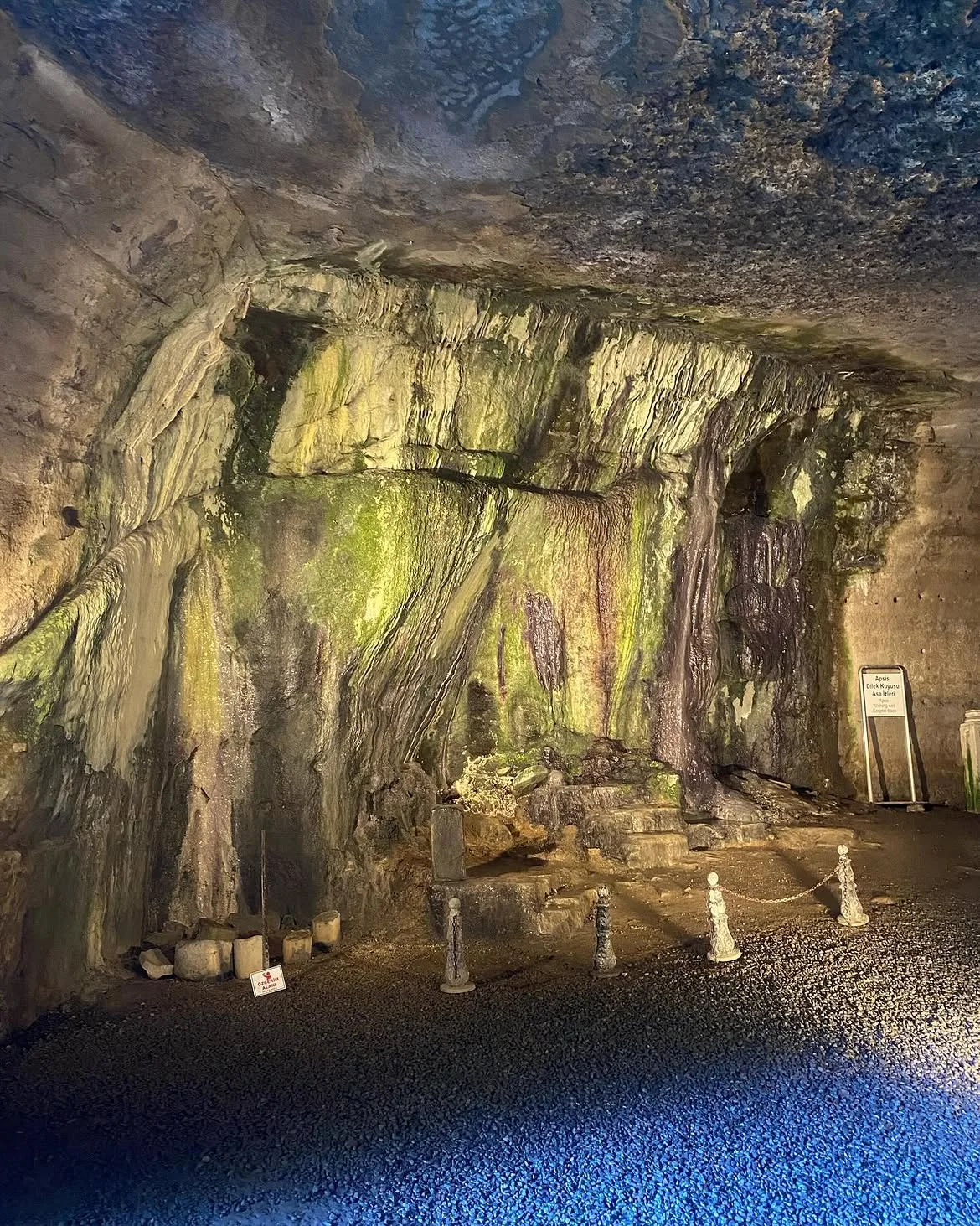
Cehennemağzı is the collective name for three neighbouring caves:
- Kilise Mağarası — Church Cave
- Herakles Mağarası — Heracles Cave, also called Koca Yusuf Cave
- Ayazma Mağarası — Holy Water Cave
Official descriptions record their use during the Roman and Byzantine periods. Natural cavities were modified by people to make usable spaces.
The names give you a useful way to read the complex.
One directs your attention towards worship. Another carries the underworld legend. The third introduces water, both sacred and practical.
Each preserves a different relationship between people and the rock.
Church Cave: Look Down First
The Church Cave contains a mosaic floor decorated with plant and geometric motifs. Its second section has a small apse cut into the eastern wall, with steps in front of it.
When access resumes, the floor deserves your attention before the ceiling.
A cave can seem rough and irregular from outside. A patterned mosaic reveals the care taken to organise the space within. Individual pieces were arranged into a surface people would see beneath their feet.
Then look towards the apse.
Its position establishes a focus for the room. The chamber becomes recognisable as a church, with architecture shaping where attention was directed.
Official accounts associate it with early Christian worship, including a tradition of concealed religious use. The mosaic, architectural features and surviving fittings provide the tangible part of that history.
We do not need to invent the prayers spoken here.
The space tells us that people gathered to worship.
Heracles Cave: A Narrow Entrance to a Large Chamber
The cave associated with Herakles has a narrow approach and a descent into a chamber supported by substantial rock pillars. The Culture Portal describes its principal area as approximately 400 square metres.
That contrast helps explain the force of the legend.
A small opening offers little indication of the space beyond it. You pass through a confined entrance, then discover that the rock contains more than you could see outside.
During any future authorised visit, allow your eyes to adjust. Watch your footing before looking around. A voice or footstep may sound different within the enclosed chamber; listen to the actual acoustics rather than expecting a theatrical echo.
The story supplies Kerberos.
The cave supplies the darkness.
Ayazma: Water Beneath the Rock
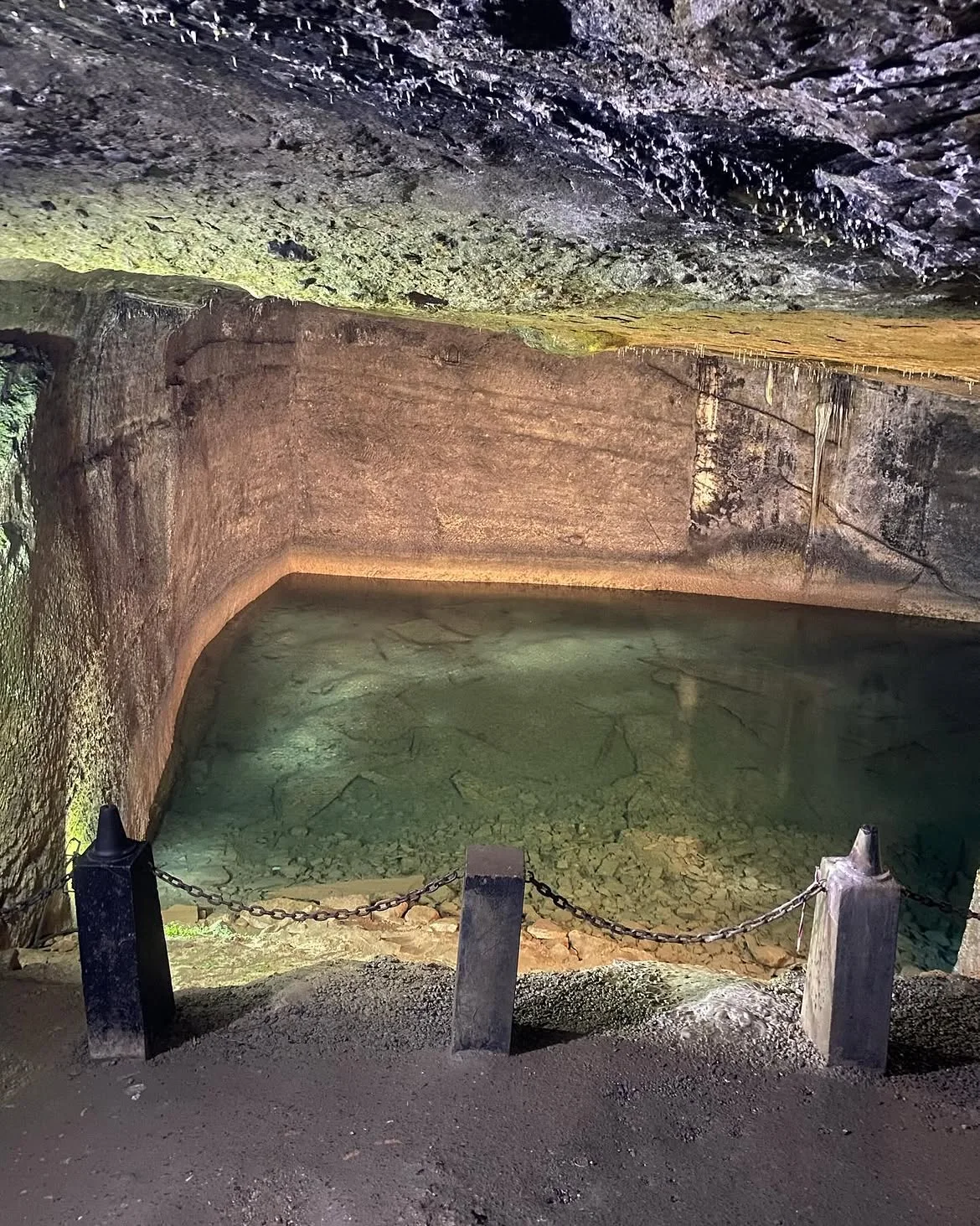
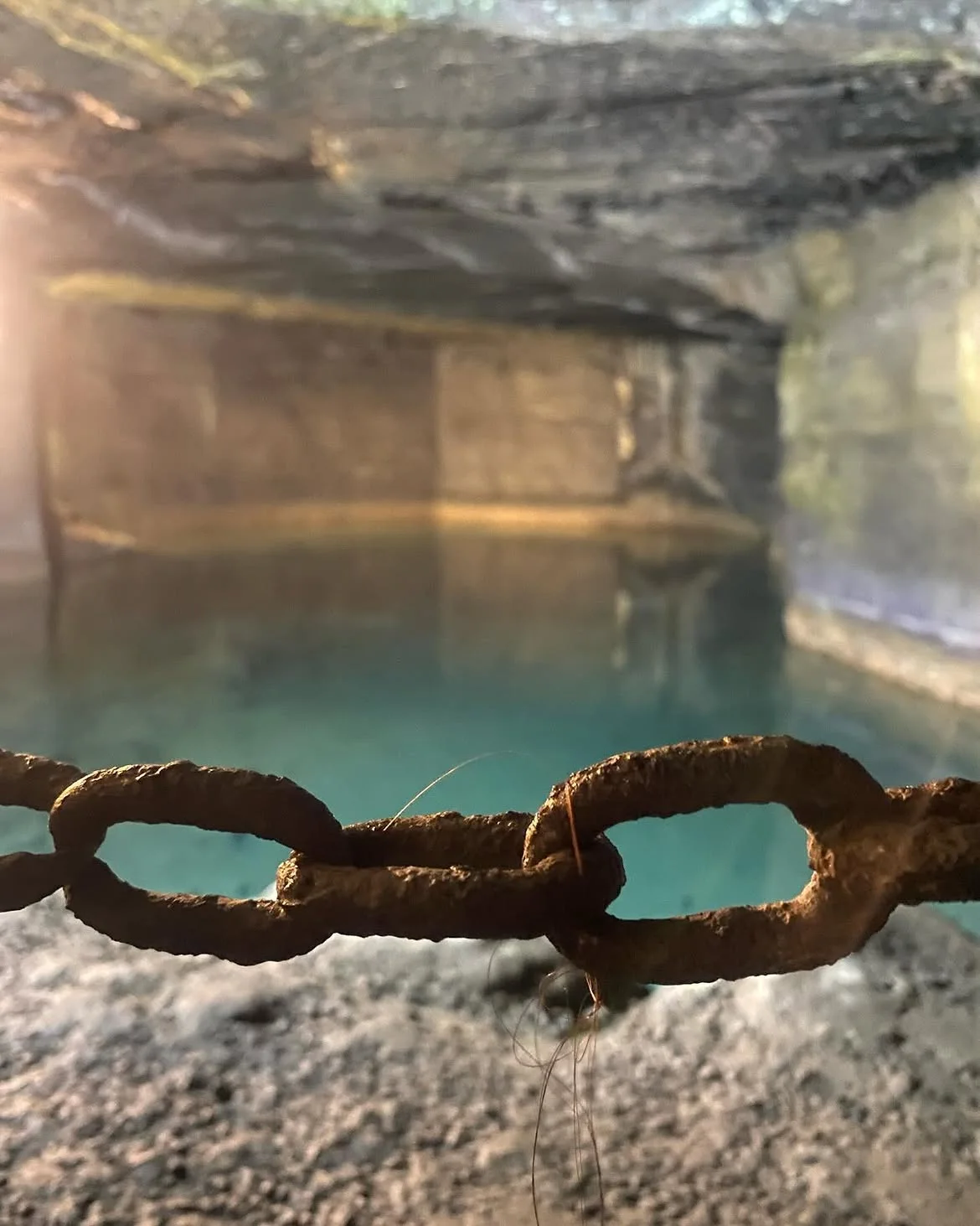
The Ayazma Cave contains standing groundwater and served as a cistern supplying the other caves and the surrounding area. Its name reflects an association with holy water.
Water brings a quieter dimension to the complex.
Beside a still surface, even a small movement can disturb a reflection. Artificial light, where provided, may reveal the chamber twice: once in the rock and once below it.
Its religious meaning and everyday usefulness belong together. Water could be revered while also being needed.
The caves were part of human life, not simply a setting for stories about death.
What a Cave Visit Can Feel Like
When the site reopens, let the transition from outdoors happen slowly.
On a warm day, shaded interiors may feel cooler against your skin. Depending on conditions, damp earth or wet stone may be noticeable in the air. Sounds can become enclosed, while your eyes take time to distinguish a wall from the space beyond it.
Keep your hands away from mosaics and historic surfaces. Use the light to examine their texture.
Afterwards, a pause in Ereğli gives the experience another rhythm. Hold a warm tea glass near its rim. Notice the slight bitterness of the first sip, the spoon against the glass, conversation around the table.
Those ordinary sensations make the legend’s central idea surprisingly immediate: returning from darkness to the familiar world outside.
Visiting After Reopening
The caves are in Karadeniz Ereğli, Zonguldak province. Be sure your transport arrangements refer to the Black Sea town.
Once the museum confirms reopening, allow approximately 45–60 minutes for the accessible parts of the complex. This is a planning estimate; restrictions may limit the route.
Wear shoes with grip and bring a light layer. Ask about stairs, narrow entrances and current access if you have limited mobility or are uncomfortable in confined spaces.
For photography, follow staff instructions and posted restrictions. Preserve the contrast between entrance light and the interior rather than trying to brighten every shadow. Never cross a barrier for a photograph.
While the closure remains in place, do not plan an interior visit or enter through an alternative opening.
The Meaning of the Entrance
Cehennemağzı draws much of its power from a simple boundary.
Outside is a town: streets, meals, errands, the Black Sea nearby.
Inside are chambers that people have used for worship, water storage and stories about the world beyond life.
The most memorable question in the Herakles legend is not how frightening the darkness might be.
It is whether someone who enters can return.
Here, that question has found a place in the rock.
Cehennemağzı Caves Visitor Summary
| Detail | What to know |
|---|---|
| Place | Cehennemağzı Mağaraları — Hell’s Mouth Caves |
| Location | Karadeniz Ereğli, Zonguldak province |
| Complex | Church Cave, Heracles Cave and Ayazma Cave |
| Historical use | Roman and Byzantine periods |
| Mythological association | Herakles’ descent to retrieve Kerberos |
| Church features | Mosaic floor, apse and surviving architectural fittings |
| Ayazma’s role | Holy-water association and historical cistern |
| Current status | Temporarily closed for safety reasons in the official listing checked on 3 October 2026 |
| Suggested future visit | 45–60 minutes after reopening, subject to restrictions |
| Physical effort | Route-dependent; narrow approaches and steps require care |
| Bring after reopening | Shoes with grip and a light layer |
| Museum contact | +90 372 323 45 57 |
| Before travelling | Confirm reopening and the accessible visitor route |
Historical descriptions follow the Culture Portal and Zonguldak Bülent Ecevit University; closure status and contact details follow Turkish Museums.
💬 Comments (0)
Traveler comments are shown in their original language.
No comments yet. Be the first to share your experience.
💬 Want to join the discussion?
Log in or create an account to leave a comment.