Anadolukavağı and Yoros Castle: Where the Bosphorus Meets the Black Sea
Cross the Bosphorus to Anadolukavağı, climb to Yoros Castle for a view toward the Black Sea, then return to the pier for a fish lunch.
 Burak ÇınarTurkTravelRadar Founder
September 29, 2026
The ferry leaves Rumelikavağı and crosses to the Asian shore.
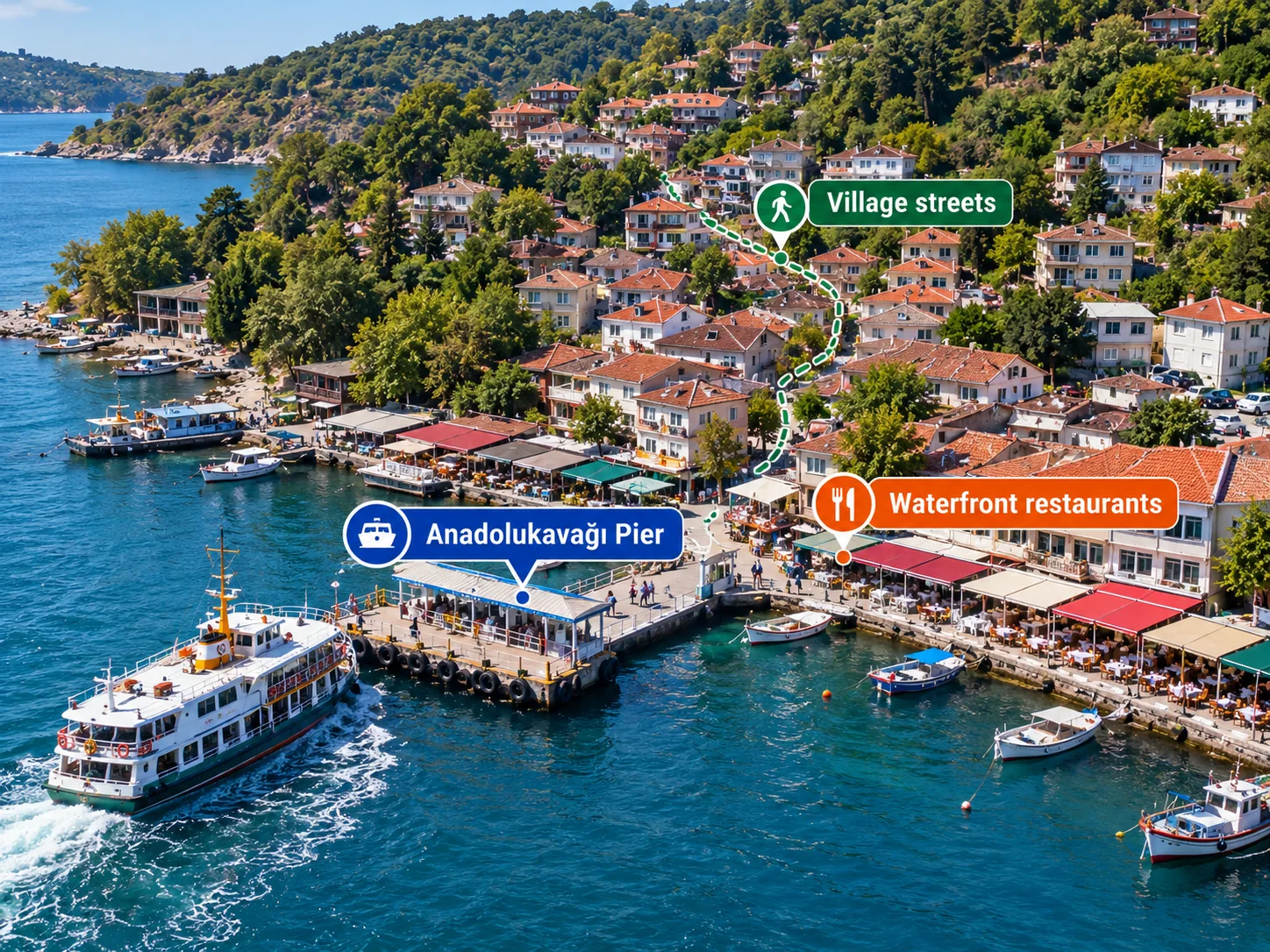
For a few minutes, you can see both sides of the Bosphorus at once. Behind you are the waterfront tables of Rumelikavağı; ahead, Anadolukavağı gathers around a small pier, with the walls of Yoros Castle standing high above the village.
Step ashore and let the ferry crowd move ahead. A waiter is setting tables, someone is carrying a box toward a shop, and the smell of frying fish slips out from a kitchen near the water. It is a working neighbourhood as well as a place people come to visit.
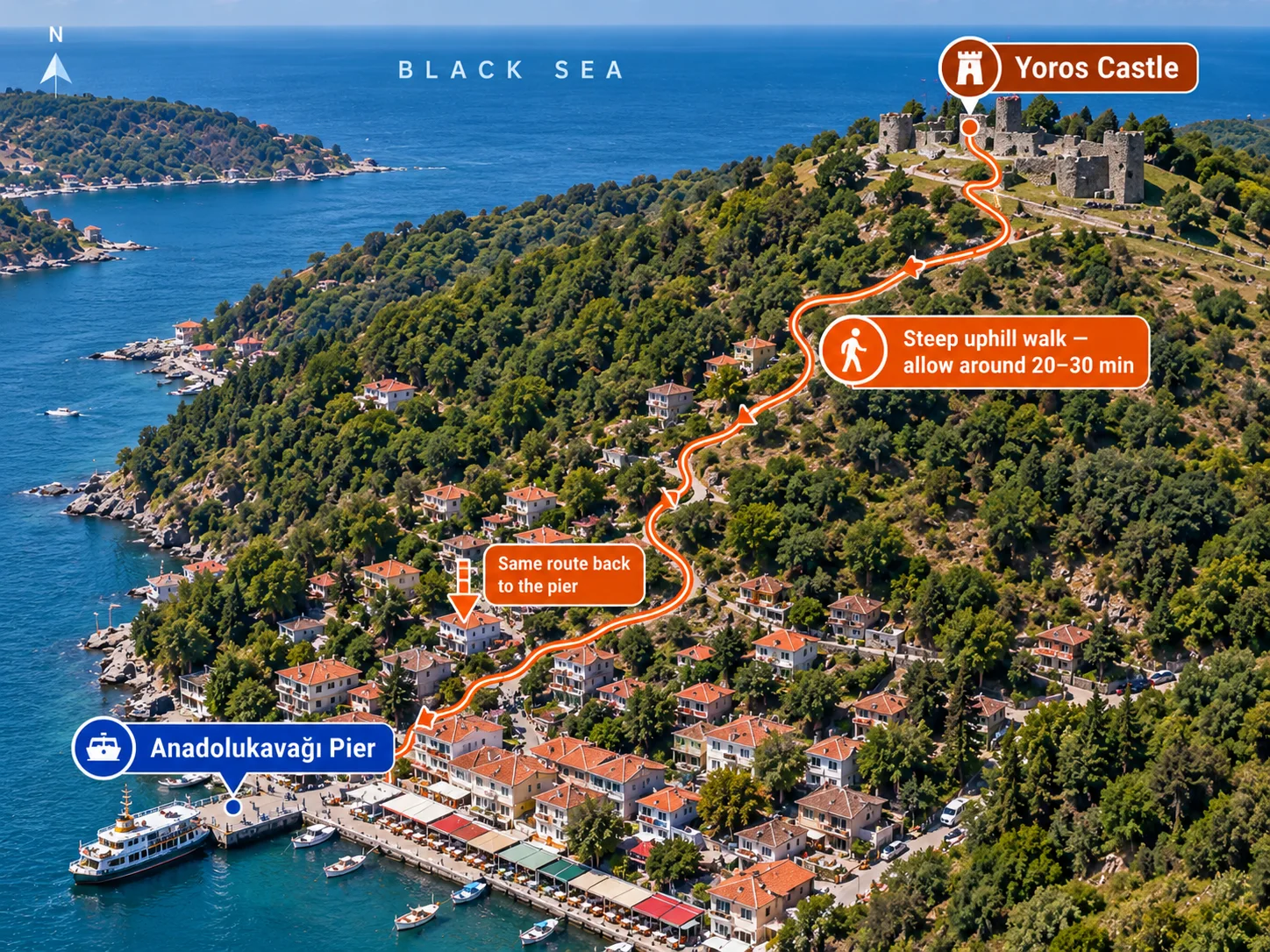
Today’s walk has a simple shape: explore the streets around the pier, climb toward the castle, then return to the waterfront for lunch.
Walking note — Physical effort: 3/5
Start and finish at Anadolukavağı Pier. The lanes near the shore are fairly easy to explore, but the climb to Yoros Castle is steep and can take around 20–30 minutes at a relaxed pace. Expect uneven surfaces and narrow sections. The castle climb is difficult with a stroller and unsuitable as an accessible wheelchair route. If the hill is too much, enjoy the village and waterfront instead. 15A buses serve Anadolukavağı and connect it with Kavacık; ferries provide another way out, with different routes calling at the pier during the day.
Begin at the Pier
Stand facing the water for a moment before entering the village.
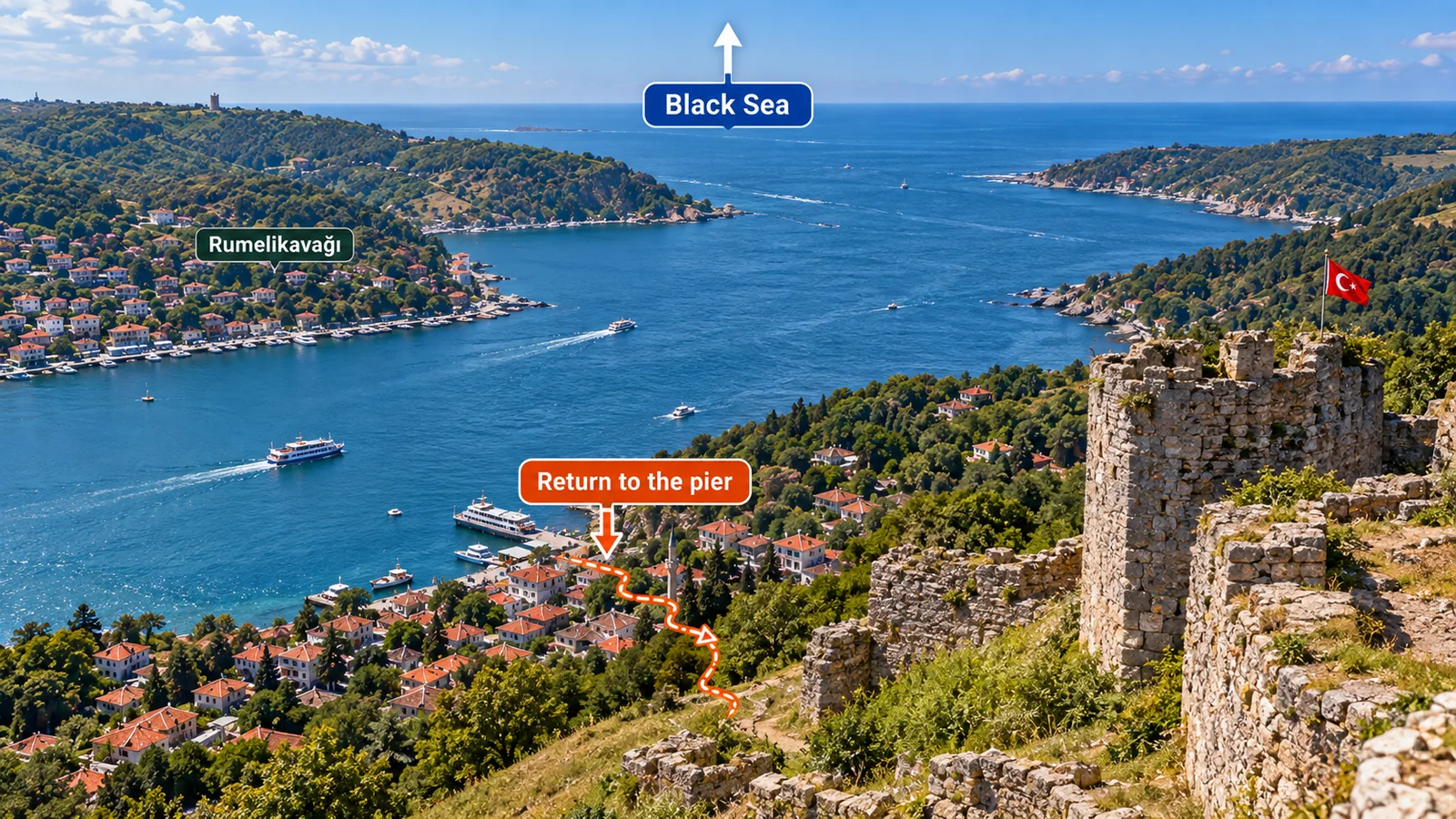
Across the strait is Rumelikavağı. From here, its buildings look close enough to pick out individually. The crossing makes Istanbul’s geography unusually clear: two shores, two districts, and a stretch of water that has shaped how both have lived.
Now turn toward the streets behind Anadolukavağı Pier. Restaurant signs compete for your attention, but look past them too. A resident carries groceries uphill. A cat waits beside a doorway. The conversation between neighbouring shopkeepers continues after the ferry passengers have gone.
The village has long been tied to the movement of ships through this northern entrance to the Bosphorus. Its fishing identity is still visible, though the tables around the pier also depend on visitors arriving by boat.
Walk a little beyond the busiest row of restaurants. The sound of plates and invitations to sit fades; the smell of the sea becomes stronger again. When you turn back, you can see how tightly the settlement sits between the shore and the rising ground.
Follow the Hill to Yoros Castle
From the village, take the uphill route toward Yoros Castle.
There is no need to race the people who have just stepped off the same ferry. The ascent changes the walk. Your breathing becomes part of its rhythm, and breaks between the buildings reveal more of the water below. The pavement and road surface vary, so pay attention to your footing, especially on the descent.
Near the top, the castle’s surviving walls begin to take up the skyline.
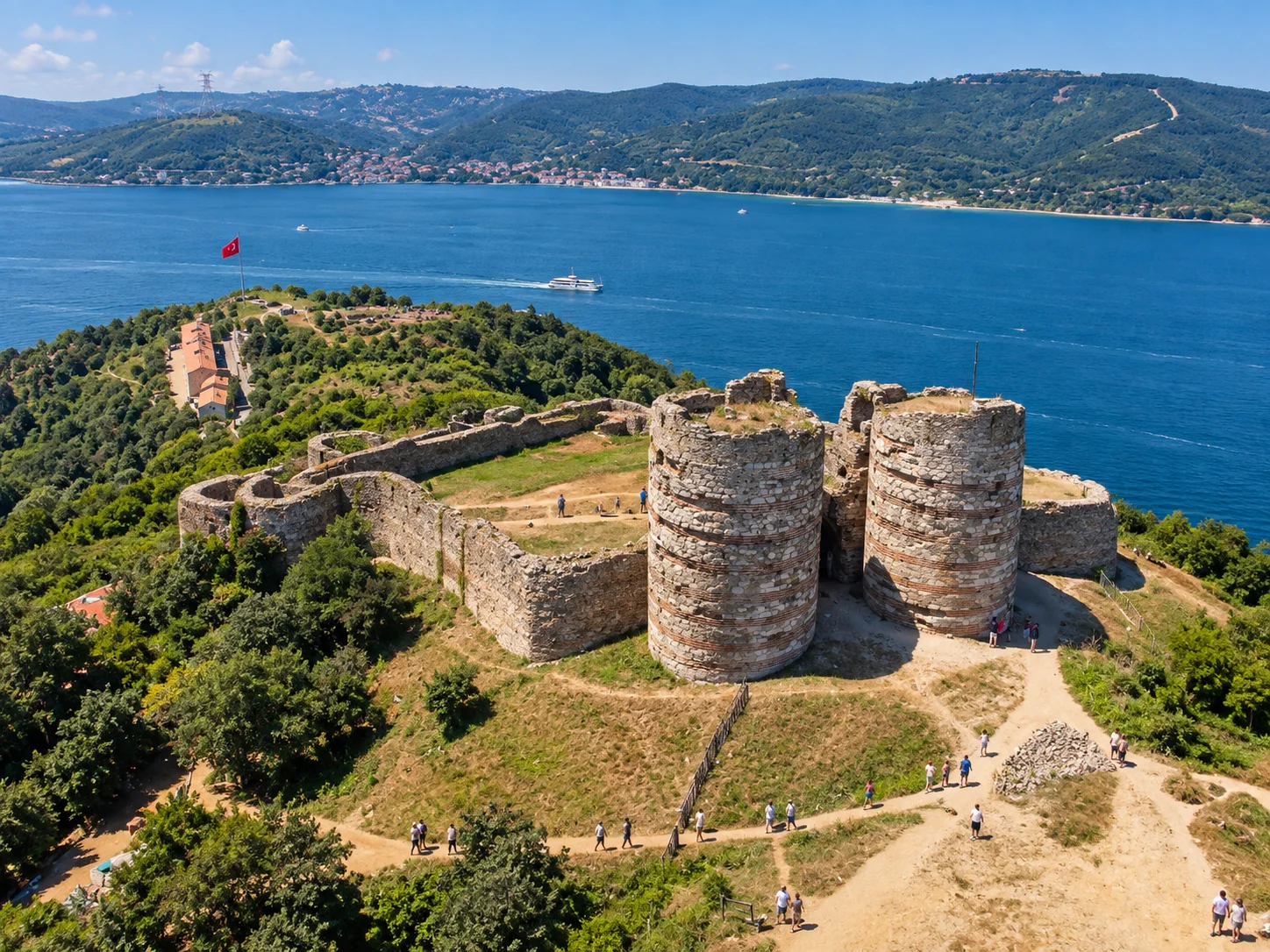
Yoros Castle guarded the Black Sea entrance to the Bosphorus. It was used and contested by different powers over the centuries, including the Byzantines, Genoese and Ottomans. Standing here, its purpose is easier to understand than it is on a page. From this height, anyone watching the water could see ships approaching the narrow passage.
Do not assume that every part of the ruins can be entered. Archaeological work and site access can affect which sections are open. The walk is rewarding even if you view the historic walls and the strait from publicly accessible ground nearby.
Look North
Find a safe place to pause near the castle and face the water.
South of you, the Bosphorus runs back toward Istanbul. To the north, it opens toward the Black Sea. The wind often feels stronger here than it did at the pier. You may hear leaves moving before you notice a vessel below; its engine reaches the hill a moment later.
For a photograph, include a section of the castle wall at one edge of the frame and leave room for the water beyond it. That small piece of stone gives the view its scale. A second photograph looking back toward Anadolukavağı shows the climb you have made: the roofs, the pier and the ferry route across to the European shore.
Then put the camera down for a minute. Watch one ship move through the strait. From this height, its progress looks slow. The people aboard are experiencing a very different Istanbul at the same moment.
Come Back Down for Fish
Return to the pier the way you came, taking care on the steep sections.
By now, a table near the waterfront will feel well earned. Yedigül Restaurant is one established option in Anadolukavağı; other fish restaurants line the same area. Ask which fish is available that day and how it will be prepared. If grilled sea bass is on the menu, order it with a simple salad and let the fish be the meal’s centre.
There is a different pleasure in eating here after the climb. The fork meets crisp skin; lemon sharpens the first bite; a ferry pulls alongside the pier while conversations continue at the next table. You can see the hill you have just descended without having to move from your chair.
Before ordering, confirm the fish’s price and whether it is charged per portion or by weight. That one question makes the meal easier to enjoy.
Before You Leave
Anadolukavağı gives you two views of the same place. At the pier, you see a village shaped by boats, restaurants and the daily arrival of passengers. On the hill, you see why this stretch of water mattered to the people who built a fortress above it.
Take a final look at the castle from the shore. It seems smaller from down here, but the climb has given it a story and a distance you can feel in your legs.
📌 Practical Info for Travelers
- Getting here: Şehir Hatları operates a route connecting Sarıyer, Rumelikavağı and Anadolukavağı. Anadolukavağı also has ferry service toward Üsküdar.
- Bus alternative: 15A serves Anadolukavağı and runs toward Kavacık. It is a useful exit if you finish after a convenient ferry departure.
- Castle access: The ruins are an archaeological site, and access to individual sections may be restricted. This route does not rely on entering the castle. A reliable current admission price and Museum Pass status could not be confirmed.
- Accessibility: The waterfront is the easier part of the outing. The steep ascent and uneven ground near the castle make the upper route unsuitable for wheelchair users and difficult with strollers.
- Food: Fish selection and prices vary. Ask for the day’s fish and its price before it is cooked.
Next walk: Follow Beykoz’s Asian shore south toward Beykoz Centre and Paşabahçe.
💬 Comments (0)
Traveler comments are shown in their original language.
No comments yet. Be the first to share your experience.
💬 Want to join the discussion?
Log in or create an account to leave a comment.