A Must-Try Flavor in Turkey: Turkish Lentil Soup (Mercimek Çorbası)
Discover mercimek çorbası, Turkey’s comforting lentil soup. Explore its mellow flavour, the pleasure of adding lemon, regional variations, and useful Turkish ordering phrases.
 Burak ÇınarTurkTravelRadar Founder
October 1, 2026
The lemon wedge arrives beside the bowl.
For a moment, leave it there. Watch the steam lift from the golden surface and breathe in the warm, savoury aroma. Your spoon slips through the soup, leaving a shallow trail that closes almost immediately.
The first mouthful is mellow and earthy, with the soft richness of lentils cooked until tender.
Now squeeze in a little lemon.
Stir once and taste again. The citrus brings the whole bowl into sharper focus. Tear off a piece of bread, dip its edge into the soup, and let it soak for a second before lifting it.
Outside, the city continues moving. At your table, there is warmth, a spoon, and something immediately comforting.
This is mercimek çorbası, Turkish lentil soup—one of the most rewarding everyday dishes to discover while travelling in Turkey.
What Is Mercimek Çorbası?
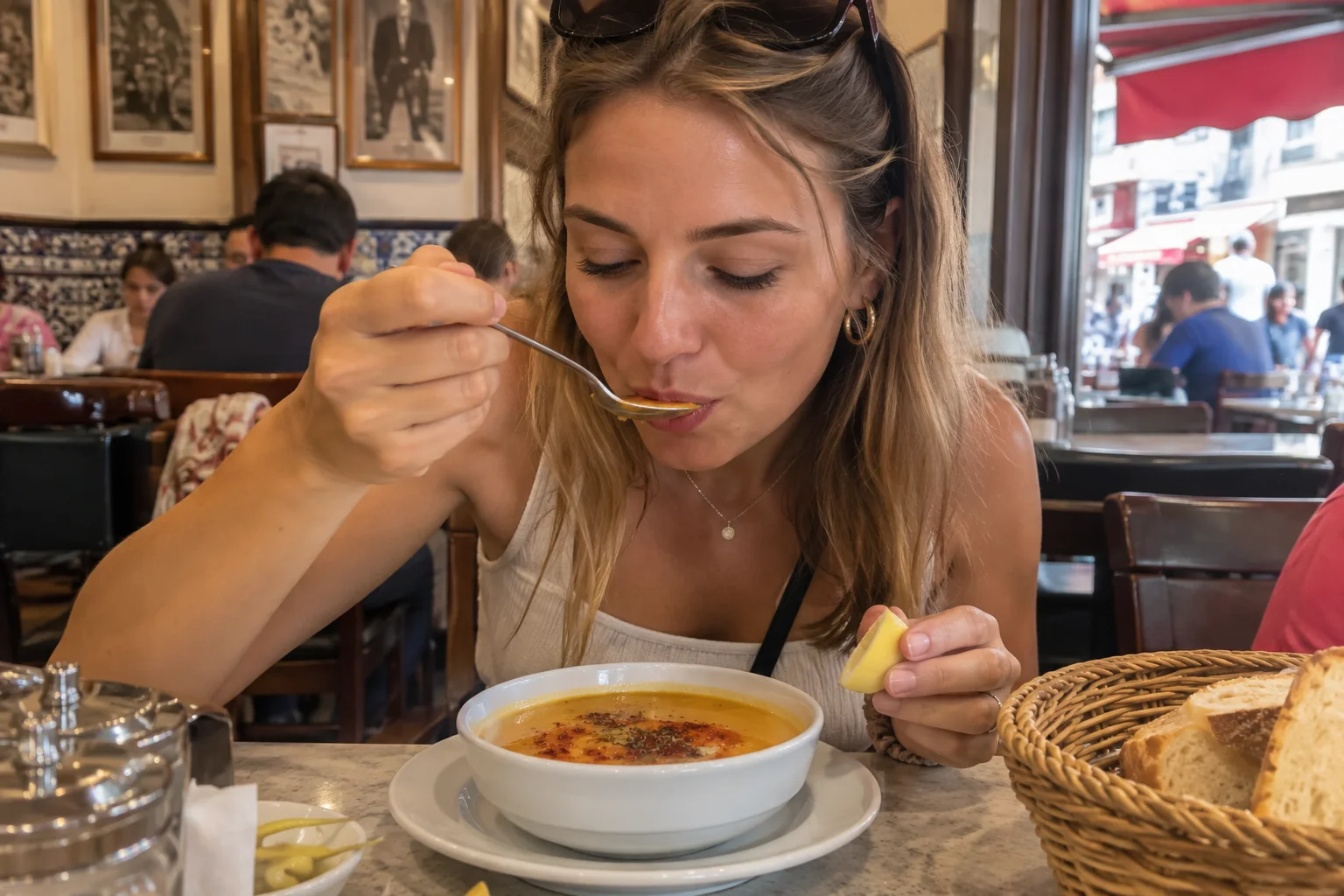
Mercimek çorbası is a traditional Turkish lentil soup. The familiar smooth version often served in restaurants is made with red lentils, which soften and break down during cooking.
Its colour can range from pale yellow to a deeper orange, depending on the ingredients.
Onion is a common part of the base. Some kitchens add carrot or potato; others use flour, tomato paste, or different seasonings. Butter or oil can contribute richness, and the cooking liquid may be water or stock.
There is no single recipe that describes every bowl.
What you are looking for is a satisfying lentil flavour and a texture that welcomes another spoonful: smooth or gently textured, substantial enough to feel nourishing, and fluid enough to eat comfortably.
Why the Lemon Matters
Taste the soup before reaching for the lemon.
Notice its earthy flavour, the sweetness of any cooked vegetables, and the richness left by the butter or oil.
Then add a small squeeze.
Lemon brings acidity that makes those flavours feel brighter. It is particularly pleasing in a thick, smooth soup, where each spoonful can otherwise have a similar weight.
Add it gradually. A little may be enough.
There is pleasure in adjusting the bowl to your own taste. One person wants plenty of lemon; another prefers only a few drops.
Neither choice needs an explanation. The wedge beside your bowl is an invitation.
A Golden Surface, a Warm Spoonful
Mercimek çorbası is quietly appealing to look at.
Steam softens the outline of the bowl. A drizzle of pepper-infused butter or oil, when used, leaves orange-red trails across the surface. Dried mint or chilli flakes may add another colour and aroma.
The spoon gives a small clink against the rim.
Lift it carefully. The soup should feel soft across your tongue, with enough body to carry the lentils’ flavour. A little pepper can leave a gentle warmth after you swallow.
Bread adds another texture. Its crust stays firmer while the crumb absorbs the soup, making a mouthful that is both yielding and satisfying.
Feel the warmth of the bread between your fingers. Take your time with the first spoonful—the bowl may be hotter than the rising steam suggests.
An Everyday Introduction to Turkish Food
Turkey’s food culture includes elaborate dishes and celebrated regional specialities. It also lives in meals people order without much ceremony.
Mercimek çorbası belongs to that everyday table.
A bowl can begin lunch before a main course or become a simple meal with bread. For a traveller, it offers an easy way to settle into a lokanta, a restaurant serving familiar cooked dishes, or a çorbacı, a soup specialist.
Look at the menu and ask whether mercimek is available.
You may have spent the morning walking through a market or moving between museums. Sitting down to soup gives that day a different pace: a chair, a little conversation, and enough time to notice what you are eating.
The dish does not require an occasion. That is part of its appeal.
Each Kitchen Has Its Own Bowl
You may love one version and find the next noticeably different.
Some are silky and pale. Others have more vegetable sweetness, a stronger seasoning, or a richer finish. Regional recipes can also depart from the smooth restaurant style.
The Ministry of Culture and Tourism’s account of Konya-style mercimek çorbası, for example, explicitly notes that it differs from versions found in many other parts of Turkey.
Approach those differences with curiosity.
Instead of expecting every bowl to match the first, notice what changes: its thickness, colour, seasoning, and the way the lentils have been prepared.
An ordinary order becomes a small comparison between kitchens.
Mercimek or Ezogelin?
You may see mercimek çorbası and ezogelin çorbası listed together.
Both can contain red lentils, but their textures and seasoning often differ.
The familiar restaurant version of mercimek is frequently blended smooth. Ezogelin commonly includes grains such as bulgur or rice alongside the lentils, with tomato or pepper paste and dried mint contributing to its character.
If you want a smooth introduction, ask for mercimek.
If you enjoy a more textured spoonful, ask how the kitchen prepares its ezogelin.
Recipes vary, so the server’s description is more useful than judging by the name alone.
How to Order Mercimek Çorbası in Turkish
For one bowl:
“Bir mercimek çorbası, lütfen.”
One lentil soup, please.
For extra lemon:
“Biraz daha limon alabilir miyim?”
Could I have a little more lemon?
To check the heat:
“Acılı mı?”
Is it spicy?
If you prefer no additional chilli:
“Üzerine acı biber koymayın, lütfen.”
Please don’t add hot pepper on top.
The soup itself may already contain seasoning, so ask before ordering if you are sensitive to heat.
Lentils do not tell you everything about the recipe. A bowl may contain meat stock, butter, or flour. If you need a vegetarian, vegan, or gluten-free preparation, check those ingredients directly.
To ask about stock:
“Et veya tavuk suyu var mı?”
Does it contain meat or chicken stock?
The Bowl You May Order Again Tomorrow
By the final spoonfuls, the lemon has found its way through the soup and the bread basket has become a little lighter.
You draw the spoon around the edge, gathering what remains.
Perhaps this was simply the first thing you recognised on the menu. Perhaps you ordered it because the day was cool, or because someone at the next table had a bowl that smelled good.
Now you know what to ask for.
Tomorrow, in another neighbourhood, you may find yourself sitting down and saying it without looking at the menu:
“Bir mercimek çorbası, lütfen.”
💬 Comments (0)
Traveler comments are shown in their original language.
No comments yet. Be the first to share your experience.
💬 Want to join the discussion?
Log in or create an account to leave a comment.