5 Turkish Desserts Beyond Baklava
Explore five Turkish desserts beyond baklava: crisp katmer, textured aşure, tender quince, syrup-soaked ekmek kadayıfı and chilled güllaç.
 Burak ÇınarTurkTravelRadar Founder
October 2, 2026
A thin piece of katmer breaks beneath your fork, scattering a few flakes across the plate.
Inside, pistachios meet warm cream. Another day, your spoon might pass through cool, milk-soaked güllaç or cut into a tender quince half beneath a mound of kaymak.
Baklava is a wonderful introduction to Turkish sweets. Once you have tried it, there is plenty more to discover.
These five Turkish desserts beyond baklava offer different textures, ingredients and traditions: Gaziantep-style katmer, aşure, ayva tatlısı, ekmek kadayıfı and güllaç.
Some belong naturally to a particular season or occasion. Others give you a reason to start the morning with something sweet.
1. Katmer: Crisp Pastry with Pistachios and Cream
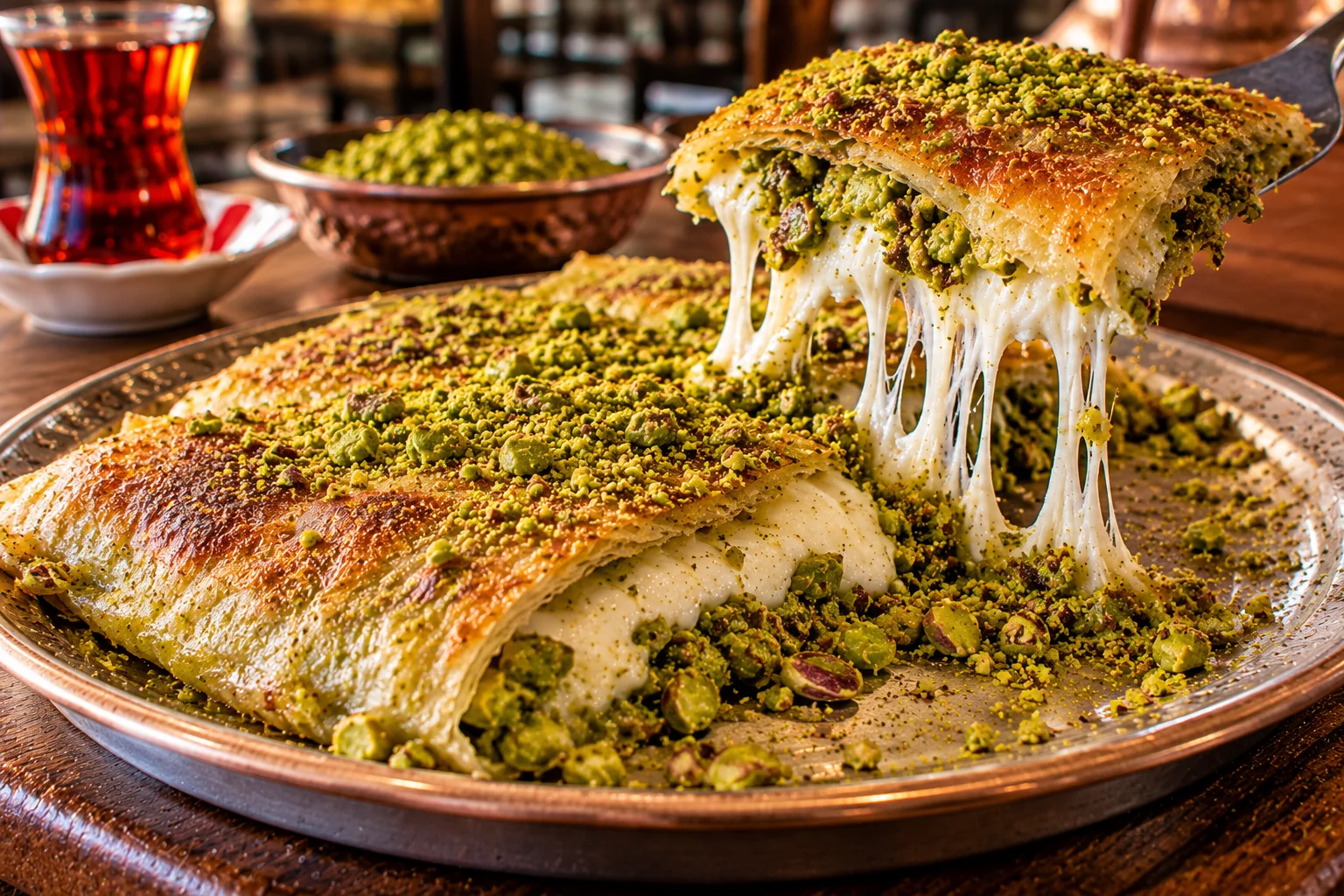
Your fork touches the pastry, and the edge gives a delicate crack.
The dough is thin, with a filling that brings the richness of cream and the unmistakable flavour of pistachios. Try a piece while it is warm, when the contrast between the crisp exterior and softer centre is easiest to notice.
Gaziantep-style katmer is a sweet pastry made with very thin dough, pistachios, sugar, dairy cream and clarified butter.
Katmer takes different forms across Turkey. For this particular version, look for Antep katmeri or Gaziantep katmeri.
In Gaziantep, it also has a place at breakfast. That makes it an interesting choice for visitors who usually save dessert until the end of dinner.
Choose it if you enjoy: Freshly cooked pastry, pistachios and a crisp-to-creamy contrast.
How to order:
“Bir katmer, lütfen.”
One katmer, please.
Practical tip: Ask about the size. A portion may be suitable for sharing.
Dietary details: Contains wheat, pistachios and dairy.
2. Aşure: Grains, Dried Fruit and a Tradition of Sharing
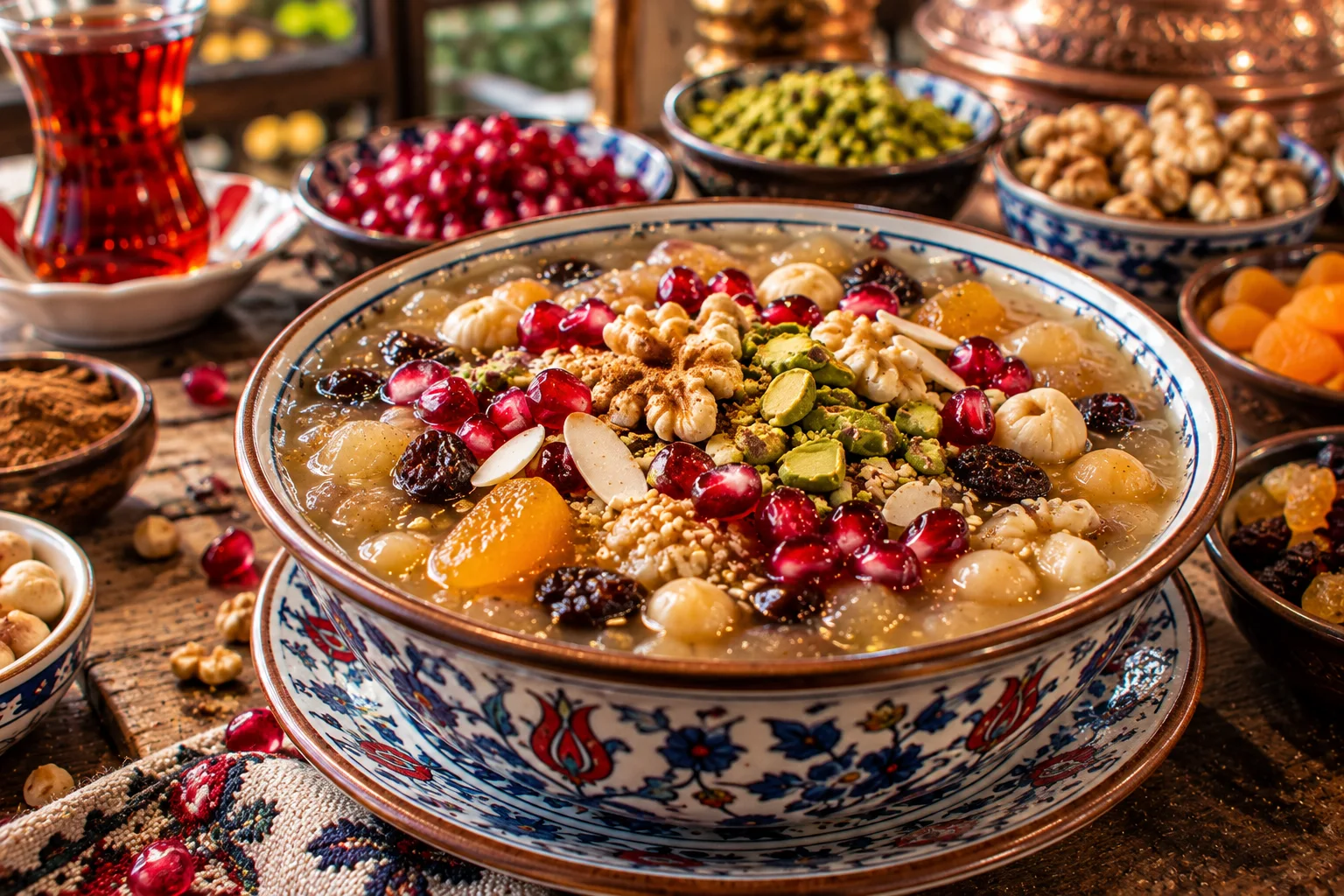
Your spoon slips beneath the topping and gathers a little of everything.
Soft wheat grains, a piece of dried apricot, a raisin and perhaps a chickpea meet in the same mouthful. Nuts add crunch, while pomegranate, when included, brings a small burst of tartness.
Aşure is a sweet pudding commonly made with grains, pulses, dried fruit and sugar. Recipes differ, but wheat, chickpeas, white beans, figs, apricots and raisins are familiar ingredients.
If beans in a dessert sound unfamiliar, try a small bowl. Their mild flavour and tender texture work alongside the fruit.
Aşure is often called Noah’s pudding in English, after a traditional story about food gathered and cooked aboard Noah’s Ark. The story is a cultural legend, rather than a documented account of its invention. Sharing portions with neighbours, relatives and guests is an important part of its tradition.
Choose it if you enjoy: Fruit, nuts and a dessert with several textures in each spoonful.
How to order:
“Bir porsiyon aşure, lütfen.”
One portion of aşure, please.
Practical tip: Ask whether it is available that day.
Dietary details: Commonly contains wheat and nuts. Many recipes are plant-based, but confirm the full preparation.
3. Ayva Tatlısı: Tender Quince with Kaymak
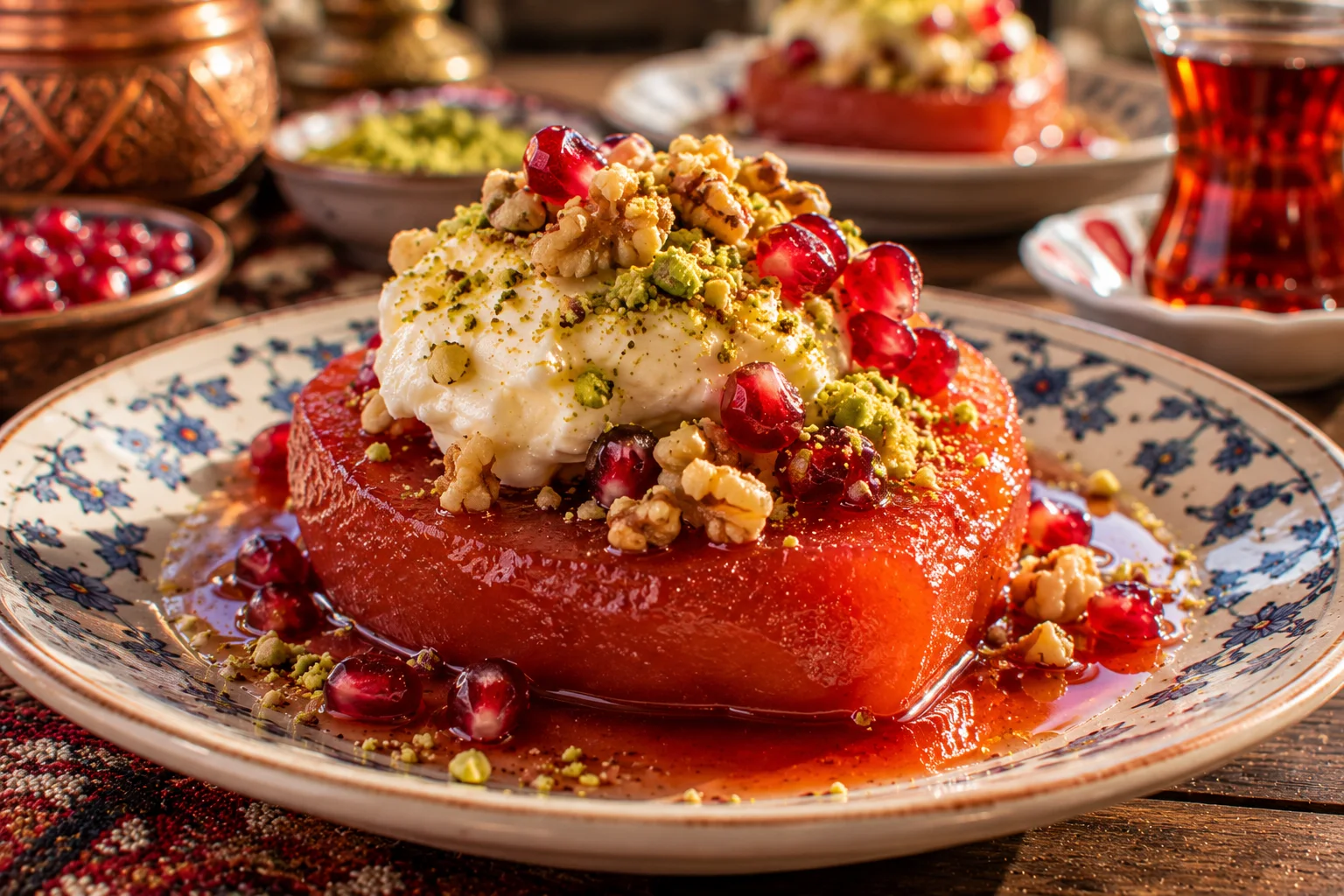
The spoon presses into the fruit, and a small piece gives way.
Syrup gathers beneath it. On top, white kaymak sits in the hollow where the core was removed. Taste the quince first, then add a little cream to the next bite.
Ayva tatlısı is a quince dessert prepared by cooking the fruit with sugar and water until tender. Cream and chopped pistachios are familiar accompaniments.
The fruit keeps its own fragrance beneath the sweetness. Depending on the preparation, the texture may be very soft or a little firmer.
It is particularly associated with the colder months, making it a useful dessert to ask about during an autumn or winter visit.
Kaymak is a thick dairy cream, often compared to clotted cream.
Choose it if you enjoy: Cooked fruit, syrup and rich cream.
How to order:
“Bir porsiyon kaymaklı ayva tatlısı, lütfen.”
One portion of quince dessert with kaymak, please.
Practical tip: Do not judge it by colour alone. Pale amber, pink and deeper red versions can differ in preparation.
Dietary details: Kaymak contains milk, and nut toppings may be added. Confirm the recipe if ordering without dairy.
4. Ekmek Kadayıfı: Syrup-Soaked Bread with a Creamy Finish
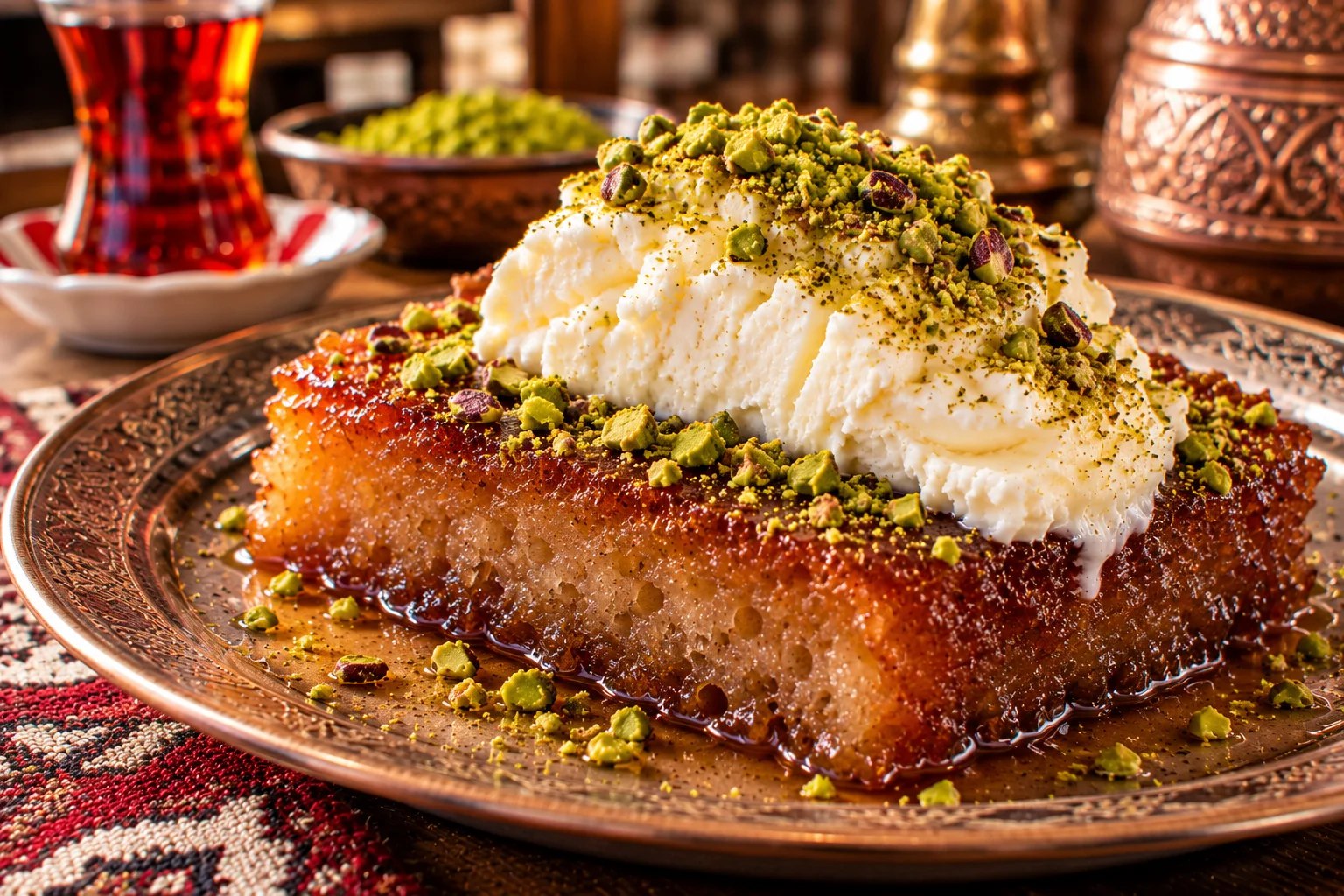
The cut edge reveals small pockets filled with syrup.
Lift a piece with your fork. It is soft and moist but still substantial, with a bread-like flavour beneath the pronounced sweetness. A little kaymak adds a smooth dairy contrast.
Ekmek kadayıfı uses a specially prepared bread-like base that absorbs sugar syrup. It is traditionally served with kaymak and differs from tel kadayıf, which uses fine pastry strands.
The cream-and-dessert pairing has a strong connection with Afyonkarahisar, a city known for its kaymak.
Start with a modest portion, especially after a substantial meal. Its appearance can make the richness easy to underestimate.
Choose it if you enjoy: Syrup-soaked desserts and the contrast of cream with a substantial crumb.
How to order:
“Bir porsiyon kaymaklı ekmek kadayıfı, lütfen.”
One portion of ekmek kadayıfı with kaymak, please.
Practical tip: Ask whether a smaller portion is available.
Dietary details: Generally contains wheat; kaymak adds milk. The base may contain eggs or other ingredients, depending on the recipe.
5. Güllaç: Soft Milk-Soaked Layers with Nuts
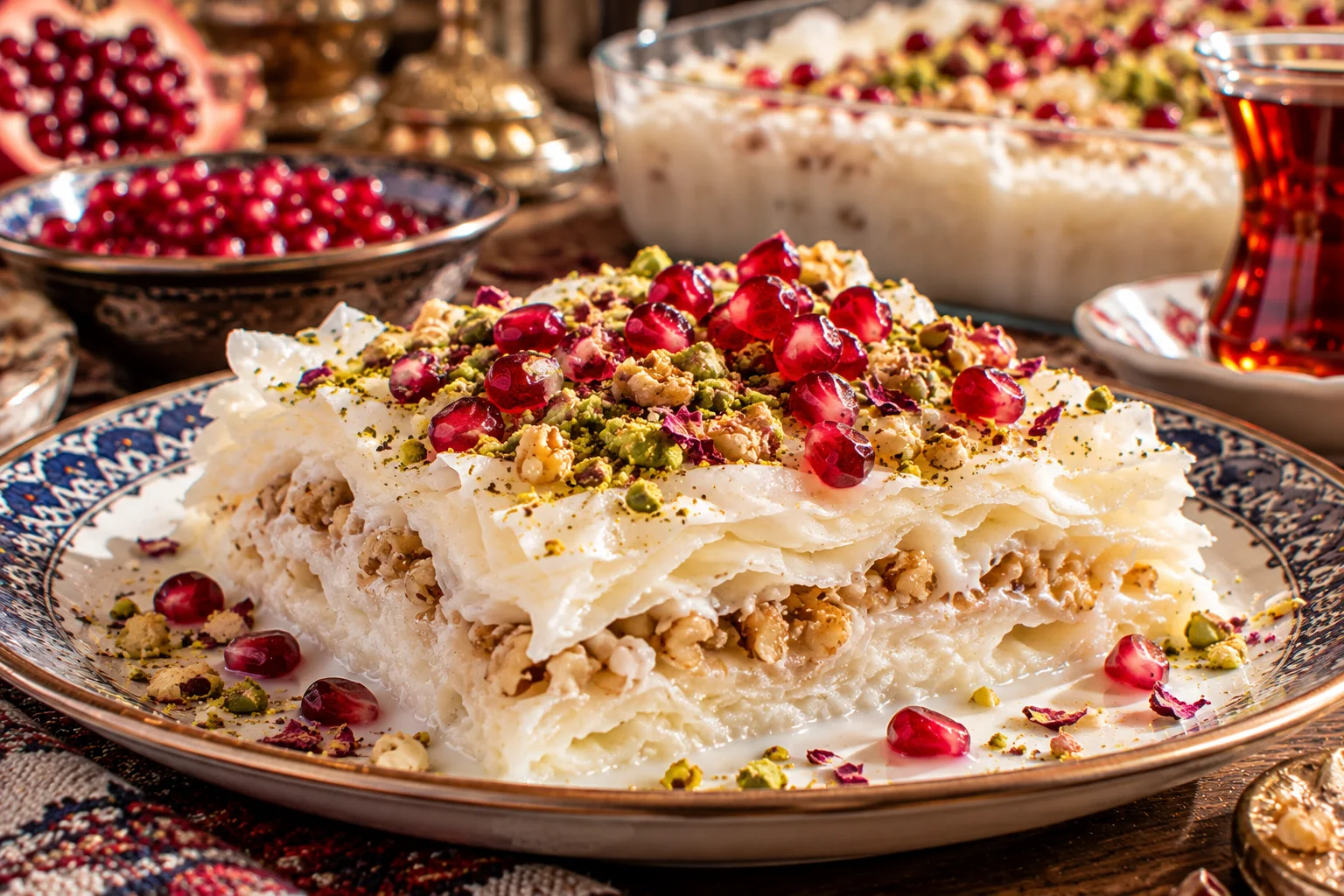
Your spoon moves through the white layers almost without resistance.
A little sweet milk remains beneath them. Nuts give you something to bite, and a pomegranate seed breaks with a sharp, juicy contrast.
Güllaç is made by soaking thin, starch-based sheets in sweetened milk and arranging them in layers, commonly with walnuts. Rose water may provide a floral fragrance, while nuts and fruit decorate the surface.
It is usually served chilled. The appeal is in the soft layers and the way they carry the milk, filling and flavourings.
Güllaç is especially associated with Ramadan. If you travel outside the month, check availability before planning a special visit for it.
Choose it if you enjoy: Chilled milk desserts, soft layers and nuts.
How to order:
“Bir porsiyon güllaç, lütfen.”
One portion of güllaç, please.
Practical tip: Ask whether rose water is included if you prefer desserts without floral flavours.
Dietary details: Contains milk and commonly nuts. The sheets may contain wheat flour or wheat starch.
Which Dessert Should You Choose?
| What You Feel Like Eating | Try | Main Attraction |
|---|---|---|
| Something warm and crisp | Katmer | Thin pastry with pistachios and cream |
| A pudding with varied ingredients | Aşure | Grains, pulses, fruit and nuts |
| A fruit-based dessert | Ayva tatlısı | Tender quince with syrup and kaymak |
| A rich, syrup-soaked slice | Ekmek kadayıfı | Porous crumb and thick cream |
| Something chilled and milky | Güllaç | Soft layers with nuts and optional floral fragrance |
For two people, choose contrasting textures. Katmer and aşure offer very different experiences, as do quince and güllaç.
Timing Your Dessert Stops
These five do not all follow the same rhythm.
Katmer gives you a reason to explore Gaziantep’s breakfast culture. Ayva tatlısı is particularly associated with the colder months. Güllaç is closely connected with Ramadan.
Aşure also has religious and sharing traditions associated with Muharram, with practices varying between communities.
Ask what the kitchen has prepared that day. A changing dessert display can introduce you to something you had not planned to try.
Practical Tips for Ordering
Check the portion size. A pastry designed for sharing and an individual pudding bowl are different commitments after dinner.
Ask about the topping. Kaymak, ice cream and extra nuts may change both the flavour and the price.
Confirm dietary requirements. Fruit-based does not automatically mean vegan, and starch-based does not automatically mean gluten-free.
Try the dessert before adding extras. The original combination gives you a useful starting point.
A simple question helps:
“Nasıl servis ediliyor?”
How is it served?
Frequently Asked Questions
Which of These Desserts Is Most Different from Baklava?
Aşure and güllaç provide particularly different experiences: one is a textured pudding of grains, pulses and fruit; the other uses soft sheets soaked in milk.
Are Any of Them Vegan?
Many aşure recipes are plant-based. Quince cooked in sugar syrup may also be suitable without dairy toppings. Confirm the complete recipe rather than assuming.
Is Katmer Always a Pistachio Dessert?
No. The pistachio-and-cream pastry described here is the Gaziantep-style version. The name katmer is used for other preparations elsewhere in Turkey.
Can I Find All Five Throughout the Year?
Not necessarily. Availability depends on the business, season and occasion. Ask ahead when a particular dessert is the reason for your visit.
Make Space for Something New
Your next dessert might begin with a sound: katmer breaking beneath a fork.
Or it might be the scent of cooked quince, the cool milk in güllaç or a spoonful of aşure that changes your idea of what belongs in a pudding.
Try a small portion. Notice the ingredients and textures. You may discover a dessert you want to seek out again before leaving Turkey.
Turkish Desserts Beyond Baklava at a Glance
| Dessert | Main Ingredients | Texture | Serving Style | Useful Dietary Check |
|---|---|---|---|---|
| Gaziantep-style katmer | Thin dough, pistachios, cream, sugar and clarified butter | Crisp outside, softer filling | Freshly cooked and warm | Wheat, pistachios and milk |
| Aşure | Grains, pulses, dried fruit and sugar | Soft, varied and spoonable | Often cooled or chilled | Wheat, nuts and recipe additions |
| Ayva tatlısı | Quince, sugar and water | Tender fruit in syrup | Commonly cooled, often with kaymak | Dairy toppings and nuts |
| Ekmek kadayıfı | Special bread-like base and sugar syrup | Porous and syrup-soaked | Commonly with kaymak | Wheat, milk and possible eggs |
| Güllaç | Special sheets, milk, sugar and nuts | Soft, moist layers | Chilled | Milk, nuts and possible wheat |
💬 Comments (0)
Traveler comments are shown in their original language.
No comments yet. Be the first to share your experience.
💬 Want to join the discussion?
Log in or create an account to leave a comment.