Zonguldak Varagel Tunnel: A Stunning Photo Awaits Beyond This Dark Passage
The historic Varagel Tunnel in central Zonguldak is a 200-meter industrial heritage site once used for transporting coal mining waste. Now serving as a popular walking path, this unique passage frames a spectacular Black Sea view at the end of its dark rock corridor.
 Burak ÇınarTurkTravelRadar Founder
October 22, 2026
A passage opens into the rock ahead of you. Inside, the walls are shaded; farther along, daylight fills the opening. With each step, your eyes move towards that brightness. Then the Black Sea begins to appear. The secret behind Varagel Tunnel’s striking photographs is the experience of looking out at the sea from within the darkness.
Connecting Zonguldak’s Liman Arkası and Fener areas, this historic tunnel is worth including in your trip for a memorable photograph. Behind the scenery lies the city’s mining past. The route people walk through today once formed part of an industrial transport network.
A Sea View Framed by Rock
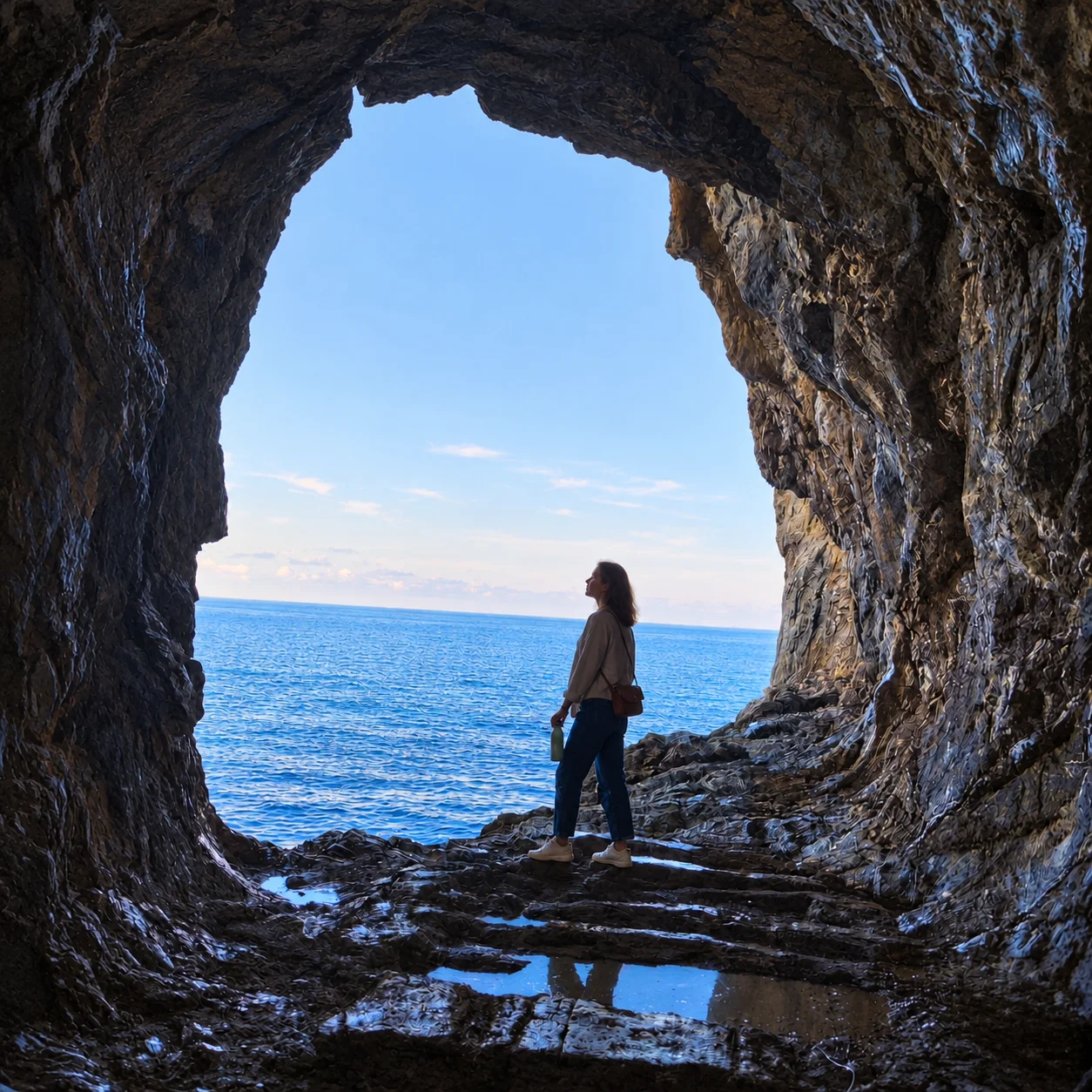
The tunnel opening draws your attention first. Dark rock surfaces surround the daylight outside, framing the sea and sky.
A person standing near the opening makes the scale of the passage easier to appreciate. In a photograph, you sense both the size of the tunnel and the expanse of water beyond. Rock, light and sea create the setting.
You do not need to wait for a cloudless day. Overcast weather changes the colours of the water and stone, giving the scene a different atmosphere. What matters is that weather and coastal conditions are suitable for visiting.
The Working History Behind the View
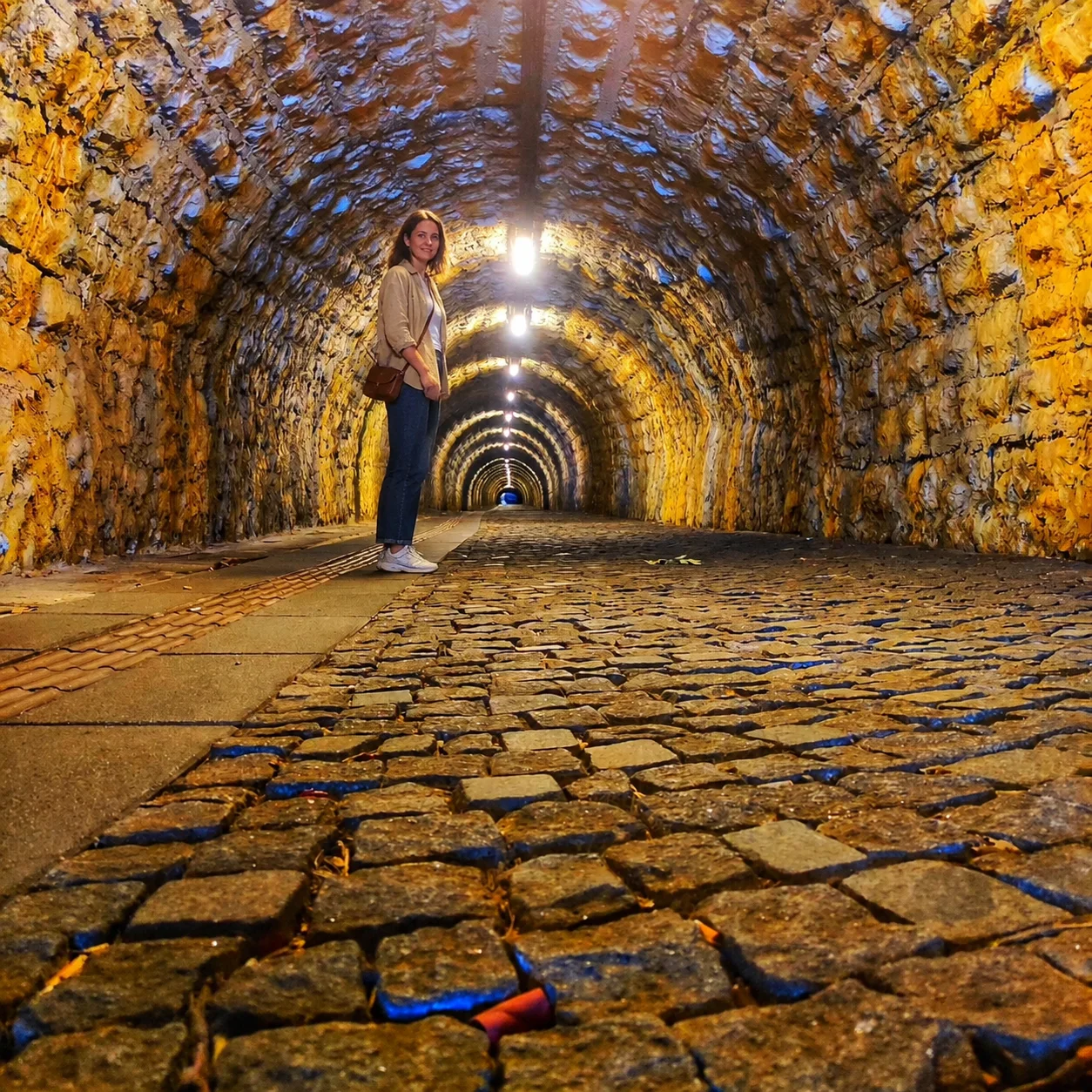
Varagel Tunnel was excavated through coastal rock for industrial use. It was associated with transporting waste produced during coal washing and sorting.
Walking through today, imagining the material, machinery and workers that once passed this way adds another dimension to the visit. Part of Zonguldak’s industrial past has become a walking route within the city.
Accounts of the tunnel’s different periods do not agree on every detail. Assigning a single definitive construction year or naming a particular engineering team would therefore be misleading. What can be said is that it belongs to the industrial heritage of Zonguldak’s mining and transport culture.
Is It Worth Visiting for Photography?
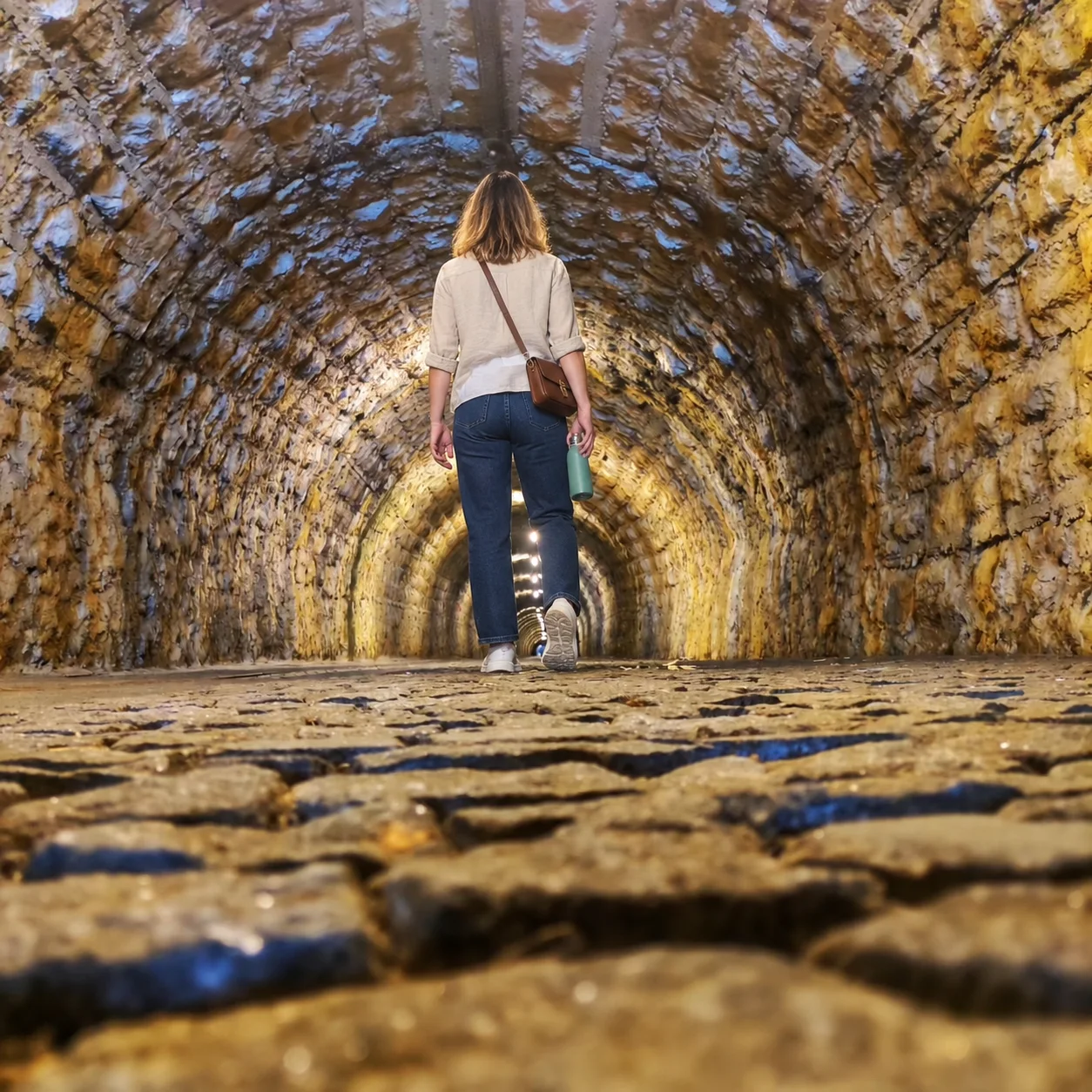
Yes, particularly if you want a historic passage, textured rock and the Black Sea in the same frame. Varagel brings a different atmosphere to a city visit without requiring a lengthy journey.
There is no need to climb coastal rocks or enter closed sections to recreate a photograph. Staying within accessible walking areas allows you to experience both the structure and its setting.
Combine the tunnel with a walk around Fener for a more rewarding outing. Emerging from the shaded passage into the open air lets you experience the same coastline in two distinct ways.
Frequently Asked Questions About Varagel Tunnel
Where exactly is Varagel Tunnel?
It is in central Zonguldak, between Liman Arkası and the part of Yayla neighbourhood commonly known as Fener. The Fener-side connection leads towards the 100th Anniversary Promenade, locally called 100. Yıl Gezi Yolu.
Can you reach the tunnel by public transport?
You can travel to the city centre by public transport and complete the final section on foot. However, a current service stopping directly at the tunnel entrance has not been confirmed. Check the route and nearest suitable stop before travelling.
Is there parking nearby?
A dedicated visitor car park with confirmed capacity and operating arrangements has not been identified. Plan to use permitted parking around the city centre or Fener and continue on foot. Keep the tunnel entrances clear.
How far is it from Zonguldak city centre?
The tunnel is already within the central coastal area. A single distance would be misleading without specifying a starting point and which entrance you intend to use. Driving and walking routes may also differ.
In which year was the tunnel built?
Accounts of its construction date conflict. Dates mentioned include the 1890s, around 1915 and 1945. They should not all be treated as established dates for the same structure; nearby tunnels and transport installations may have been confused with one another.
What role did French engineers play?
The area’s tunnels are associated with French-funded mining companies operating in the region. However, information identifying the engineers or precise project responsible for the passage visited today has not been established.
Which mining techniques were used during construction?
The tunnel was excavated through the coastal rock. Detailed records confirming the drilling equipment, blasting arrangements and excavation stages have not been established. General mining practices of the period should not be presented as proven methods used here.
What was its original architectural and geometric form?
It is a rock-cut passage created as an industrial transport route. The longer section commonly visited is generally described as approximately 200 metres long.
Without a detailed plan distinguishing its original profile from later alterations, precise claims about its width, height, gradient or geometry would be unreliable.
How did the “varagel” system work?
A varagel is generally a cable-and-rail arrangement used to move loads on sloping ground. In some systems, a loaded wagon descending under gravity pulls an empty wagon uphill, while brakes control the speed. Other arrangements use powered winches.
However, that general principle should not be applied unchanged to every stage of this tunnel’s history. Descriptions of waste transport here also mention conveyors and other transfer mechanisms.
How many tonnes of coal or waste passed through each day?
A verified daily capacity figure has not been established. Tonnage cannot be calculated reliably from the tunnel’s length or appearance.
When were the rails and conveyors removed?
A definite removal date for this tunnel has not been confirmed. Dates relating to other varagel installations in Zonguldak should not be transferred to this site.
How long did it remain unused after industrial operations ended?
Accounts of when industrial use stopped and when conversion into a walking route took place do not align sufficiently to give an exact period.
Is there an entrance fee or ticket?
The tunnel has been used as a pedestrian passage and sightseeing route rather than a ticketed museum. However, a current admission tariff has not been confirmed. Check the arrangements and any temporary closures before visiting.
What are the opening hours?
Previously announced seasonal hours were 08:30–23:00 from May to September and 08:00–19:00 from October to April.
These should not be treated as guaranteed current hours. Follow the entrance signage and the municipality’s latest announcements. Do not assume the tunnel is open around the clock.
Is there lighting inside?
Lighting has been installed, but outages have occurred in the past. Do not assume every section will be illuminated. A small torch may be useful; if visibility is inadequate or the route is closed for maintenance, do not continue.
Is it accessible for wheelchair users or pushchairs?
Continuous access meeting accessibility standards has not been confirmed. Approach paths, gradients, surfaces and thresholds need to be considered. A straightforward, obstacle-free passage cannot be guaranteed.
How long does it take to walk through?
For a section approximately 200 metres long, allowing 5–10 minutes without extended stops is a reasonable planning estimate. This is not an official duration. Ground conditions, other visitors and your walking pace will affect the time. Photography stops can make the visit longer.
Is it safe to swim at the coastal exit?
Do not treat the tunnel exit as an established safe swimming area. Rocks, waves and difficulty getting out of the water can create hazards. Choose a supervised beach that is open for swimming that day.
Is there a risk of rockfall or landslides?
Without a current engineering assessment, it would be inappropriate to claim there is no risk. Respect closure notices, barriers and local warnings around the tunnel and coastal rocks. Conditions may need reassessment after heavy rain.
Is the exit dangerous in stormy weather?
Moving onto exposed coastal sections can be dangerous in rough conditions. Wave spray, wet ground and wind can increase the risk of falling. Avoid approaching rocky edges for photographs and postpone the coastal walk if conditions are unsuitable.
Are there places to eat and toilets nearby?
Food and drink options are available around Fener and the city centre. However, a permanently open café or public toilet at the tunnel entrance has not been confirmed. Taking care of these needs before the walk will make the visit more comfortable.
Is the tunnel officially protected as industrial heritage?
Varagel Tunnel was registered as an immovable cultural property under decision number 5189, dated 8 May 2019. It is recognised for its industrial heritage significance; its formal protection status is that of a registered immovable cultural property.
How can you plan a Fener–Liman Arkası walking route?
If the area is open and the weather is suitable, follow Fener and the 100th Anniversary Promenade → Varagel Tunnel → Liman Arkası → the harbour surroundings.
You can reverse the direction to suit your arrival point. Allowing 1–2 hours, including photography and rest stops, is a reasonable suggestion for exploring the area without rushing.
How is it connected with Şarjömen Pier?
Şarjömen Rapid Pier was associated with loading coal onto ships. Varagel Tunnel was connected with transporting and disposing of coal-washing waste.
Both belong to Zonguldak’s history of coal production and transport. There is insufficient evidence to say that every load passing through the tunnel went directly to the pier. Including both in your walk helps reveal different functions within the same industrial landscape.
💬 Comments (0)
Traveler comments are shown in their original language.
No comments yet. Be the first to share your experience.
💬 Want to join the discussion?
Log in or create an account to leave a comment.