Yürüyen Köşk, Yalova: The House Atatürk Moved to Save a Tree
Discover Yürüyen Köşk in Yalova, the seaside pavilion Atatürk had moved 4.8 metres to protect a plane tree. Explore its remarkable story, museum and coastal setting.
 Burak ÇınarTurkTravelRadar Founder
October 1, 2026
Look at the tree before you look at the house.
Its broad branches reach towards a modest pavilion beside the Sea of Marmara. Leaves stir in the coastal breeze. Beyond them, sunlight breaks across the water, and the sound of small waves reaches the shore.
At first, it seems like a peaceful place to spend an afternoon.
Then you learn that the building moved.
In 1930, when a branch of the neighbouring plane tree threatened the pavilion, Mustafa Kemal Atatürk, the founder of the Republic of Turkey, instructed that the building be shifted to protect the tree.
Engineers placed it on rails and moved it approximately 4.8 metres.
The tree remained. The house acquired a name that still brings visitors to Yalova: Yürüyen Köşk, the Walking Pavilion.
The Tree That First Caught Atatürk’s Attention
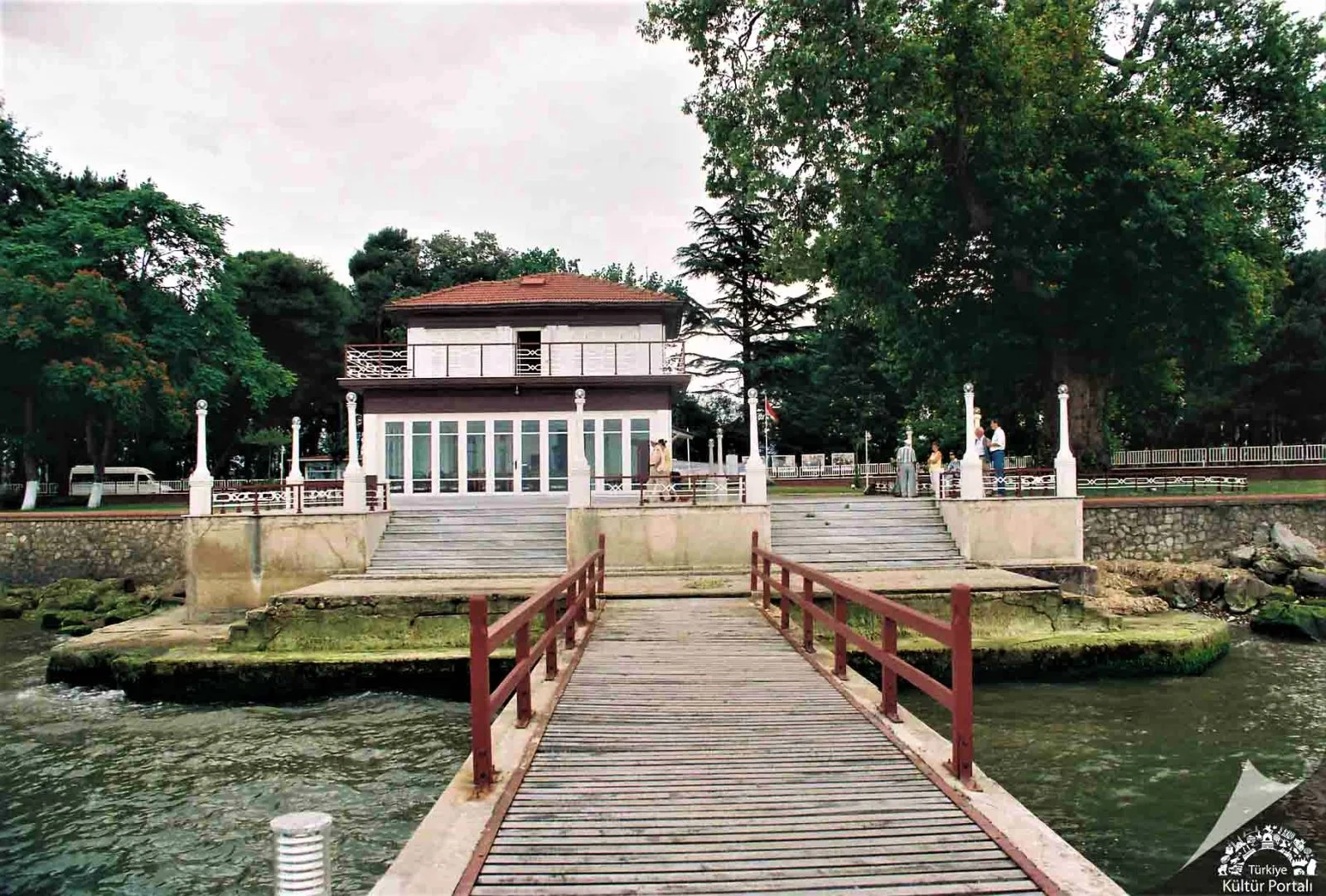
The story begins in 1929, along Yalova’s coast.
According to Yalova Governorate’s account, Atatürk noticed a large plane tree while travelling aboard the Ertuğrul yacht. He came ashore and rested in its shade, then requested a small house beside it.
The resulting pavilion was a two-storey timber building, completed in September that year.
Its scale is part of its appeal. This was a place to sit, rest and look out towards the sea. The tree provided shade; the water gave the setting its openness.
Stand outside today and consider that first attraction. Before the building became a museum, before engineers arrived with rails, there was a tree worth stopping for.
Why Was the Walking Pavilion Moved?
During the summer of 1930, a branch of the plane tree was touching the pavilion’s roof and wall.
Staff proposed cutting the branch to protect the building.
Atatürk’s response, preserved in official local accounts, was to keep the branch and move the pavilion.
It was an extraordinary solution to an ordinary maintenance problem.
The tree had drawn him to the location in the first place. Making space for it meant reconsidering the position of the house—and finding a way to move a completed building without taking it apart.
How Engineers Made a House “Walk”
Work began on 8 August 1930.
An engineering team from Istanbul excavated around the pavilion’s foundations and installed tram rails beneath the structure. The building was carefully supported so that it could be shifted along them.
The operation moved the pavilion approximately 4.8 metres eastwards and was completed on 10 August 1930.
Imagine the attention required: the weight of the structure, the alignment of the rails and the need to preserve the building throughout the movement.
The distance sounds small when expressed as a number. Beside the pavilion, it becomes easier to understand. A few metres created the space needed for the branch to remain.
From that moment, the building became known as Yürüyen Köşk.
A Living Part of the Story
The plane tree still stands beside the pavilion.
That gives the visit an immediacy that photographs and written accounts cannot quite reproduce. You can see the two subjects of the story together: the building that moved and the tree that prompted the decision.
Look up through the canopy. Follow a branch towards the house, then step back and take in their relationship.
The tree is an Oriental plane, a species known for its impressive size and longevity. Official records describe it as several centuries old.
Its exact age matters less to the visitor than its presence. The leaves overhead connect the historical account to something living, still responding to wind, light and the changing seasons.
What Can You See Inside Yürüyen Köşk?
Restored and opened to visitors in 2006, the pavilion now serves as a museum.
Its rooms contain objects associated with Atatürk, alongside photographs and material from the period. Yalova Municipality highlights the sea-facing salon, glass-enclosed meeting space, gramophone and personal belongings among the displays.
Inside, pay attention to the proportions of the rooms.
The intimacy of the building helps you imagine its use more easily than a vast ceremonial hall might. Windows frame the coast. Furniture and everyday objects bring the historical figure into a domestic setting.
Follow the current visitor arrangements and ask staff about the objects that interest you. A small museum rewards close observation.
The Best Photographs Tell the Whole Story
Frame the Pavilion and Tree Together
Your most meaningful photograph will show their relationship.
From a permitted viewpoint, include the façade, the trunk and part of the canopy. The image will carry the reason the pavilion is famous, even before you explain it.
Let the Sea Establish the Setting
Try a second composition that includes the Marmara coast.
The water helps convey why this location appealed as a retreat. On a clear day, the light reflected from the sea can give the scene a bright, open quality.
Look for Smaller Details
After the wide views, notice the bark, the branching canopy and the pavilion’s windows.
These details add texture to a travel story. Stay on the visitor paths and use the available viewpoints around the protected tree.
Make It Part of a Yalova Coastal Outing
The Walking Pavilion works well as the focus of a relaxed visit to Yalova.
Allow time for the museum, the tree and the waterfront surroundings. Afterwards, continue your coastal outing or return towards the city centre for something to eat.
A warm simit makes an easy stop: sesame fragrance, a lightly crisp crust and a soft centre. With the sea breeze still on your face, even a simple snack feels connected to the day.
If you also plan to visit Termal Atatürk Mansion, treat it as a separate destination. It is another historic residence in Yalova province, in the Termal district; it is not the Walking Pavilion.
Practical Information for Visitors
Location: Yalova’s Marmara waterfront, beside the grounds associated with the Atatürk Horticultural Central Research Institute.
Search name: Use “Yürüyen Köşk, Yalova” when finding the entrance or planning transport.
Time to allow: Around 45–60 minutes is a useful planning allowance for the museum, photographs and time outside, with extra time if you include a longer coastal walk.
Opening arrangements: Official published information lists Monday as the museum’s closed day. Opening hours differ between published notices, so confirm the current timetable and admission fee with Yalova Municipality before travelling.
Access: Ask about the current approach route and drop-off arrangements if you have limited mobility. The historic building has an upper floor reached by stairs; confirm which areas are accessible before your visit.
Groups: Contact the museum ahead of time if you are bringing a group.
From Istanbul: If travelling by sea, check that your chosen service arrives at Yalova, and confirm the return sailing before setting out. Allow time to reach the pavilion from the terminal.
Before You Leave, Look Up Again
By the end of the visit, the tree will look different to you.
You will notice the reach of its branches, the shade on the ground and the space between trunk and building. The movement of 1930 becomes visible through the relationship that survives.
Listen to the leaves for a moment. Let your eyes follow the house towards the sea.
Nearly a century ago, engineers moved a pavilion a few metres along rails. Today, visitors travel much farther to stand beside it—and see what that decision preserved.
💬 Comments (0)
Traveler comments are shown in their original language.
No comments yet. Be the first to share your experience.
💬 Want to join the discussion?
Log in or create an account to leave a comment.