Topkapi Palace: A Journey into the Heart of an Empire
Explore Topkapi Palace, the heart of the Ottoman Empire for four centuries. Discover the mesmerizing history of the Harem, the Sacred Relics, and get practical 2026 traveler tips, ticket prices, and opening hours for your first visit.
 Burak ÇınarTurkTravelRadar Founder
October 14, 2026
Imagine standing in Istanbul, near the point where the Bosphorus meets the Sea of Marmara. On one side, the water stretches towards the horizon. On the other, ancient walls and historic buildings tell the story of an empire that once shaped the course of world history. Sunlight filters through the trees, falling across the stone pathways. The sounds of modern Istanbul gradually fade as you pass through the palace gates.
This is Topkapi Palace.
Yet, if you think of Topkapi Palace simply as the former residence of Ottoman sultans, you will miss much of its story. This was also a place where political decisions were made, foreign ambassadors were received, state secrets were guarded, and lives could change dramatically overnight.
For nearly four centuries, Topkapi Palace served as one of the principal centres of Ottoman government and royal life. Every courtyard you walk through today once served a purpose. In one, officials discussed matters of state. In another, palace workers hurried to fulfil their duties. Behind walls that offered little to the outside world, an entirely different way of life unfolded.
To understand Topkapi Palace, it is not enough to admire its rooms and treasures. You need to look beyond the walls and discover the world that existed within them.
The Palace Envisioned by Sultan Mehmed the Conqueror
Let us travel back in time. The year is 1453. Sultan Mehmed II has conquered Constantinople, opening a new chapter in Ottoman history. The empire now needs more than control of a great city. It needs a centre from which an expanding state can be governed.
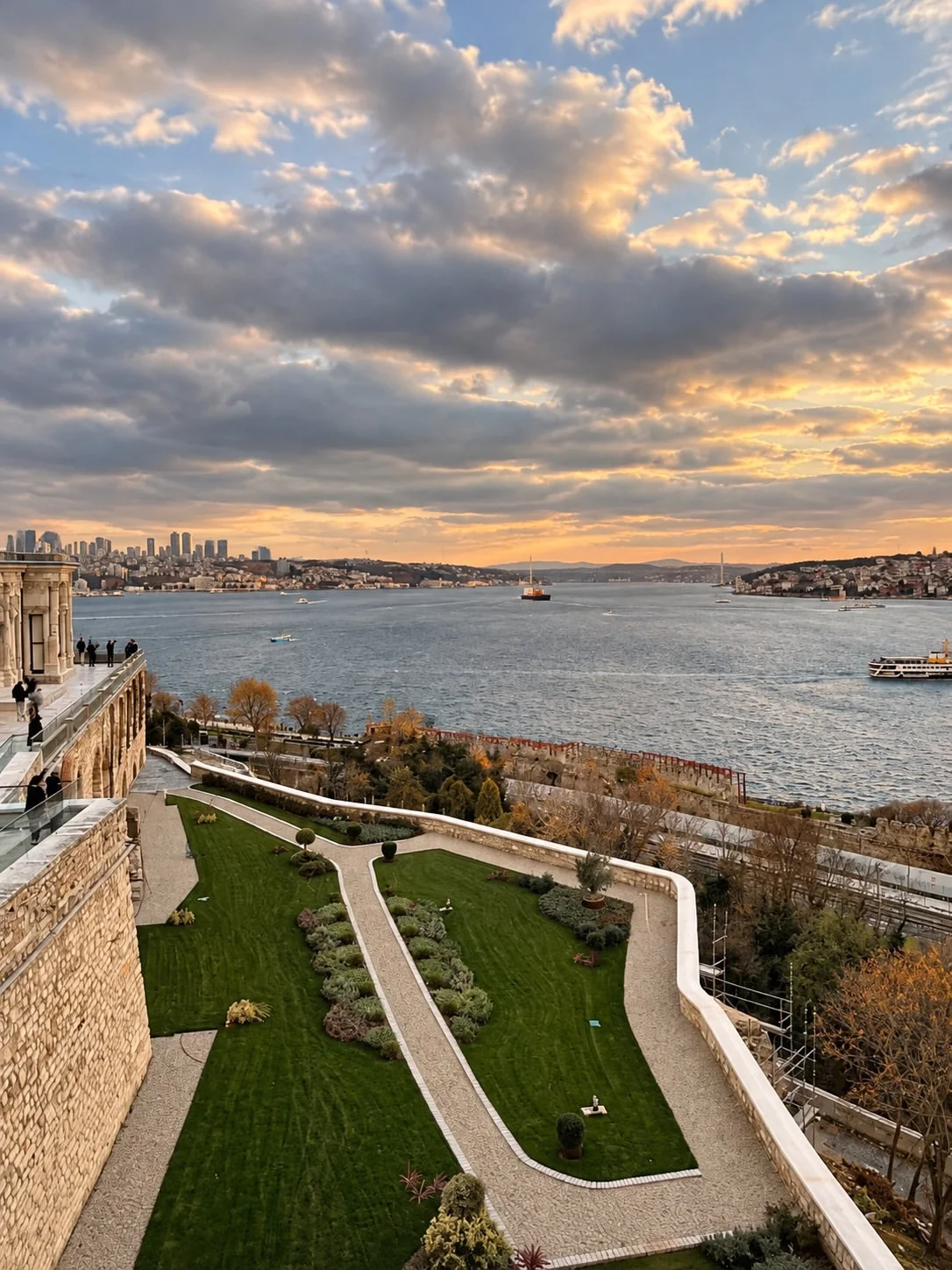
Sultan Mehmed initially established a palace in the area around what is now Istanbul University. This complex, later known as the Old Palace, was among the first Ottoman palaces built in the newly conquered capital. As the needs of the state evolved, however, a larger and more comprehensive royal complex became necessary. Construction began at Sarayburnu, the promontory overlooking the meeting point of Istanbul's historic waterways.
The construction of Topkapi Palace is generally dated to the period between approximately 1460 and 1478. However, the palace you see today was not built all at once by a single ruler and then left unchanged. Successive sultans added pavilions, rooms, courtyards and other structures according to the needs and tastes of their own eras.
That is why a walk through Topkapi Palace reveals different architectural styles. One moment, you may find yourself beside restrained stone walls. A little further on, colourful tiles, intricately decorated doorways and pavilions overlooking the sea catch your attention. The palace reflects an institution that continued to evolve over several centuries.
But why was this particular location chosen?
Sarayburnu occupies the tip of Istanbul's historic peninsula. From here, views extend towards the Bosphorus, the Sea of Marmara and the Golden Horn. The location offered both strategic advantages and an extraordinary setting for the imperial residence. Even today, spending a few quiet moments in the palace gardens helps you understand the close relationship between Istanbul and the sea.
The palace was originally known as Saray-ı Cedîd-i Âmire, meaning the New Imperial Palace. So where did the name Topkapi come from?
Historical accounts associate the name with a coastal pavilion known as Toplu Kapı, which was linked to cannons positioned near the shore. Over time, the name came to be used for the palace itself. The complex we now know as Topkapi Palace was therefore originally called something quite different.
Through the First Gate: Entering the World of the Palace
The Imperial Gate, known in Turkish as Bab-ı Hümayun, marks the entrance to the palace complex. Passing through it means more than entering a historic building. You are crossing the threshold into a world that once served as the residence of the sultans and a centre of government governed by strict rules and traditions.
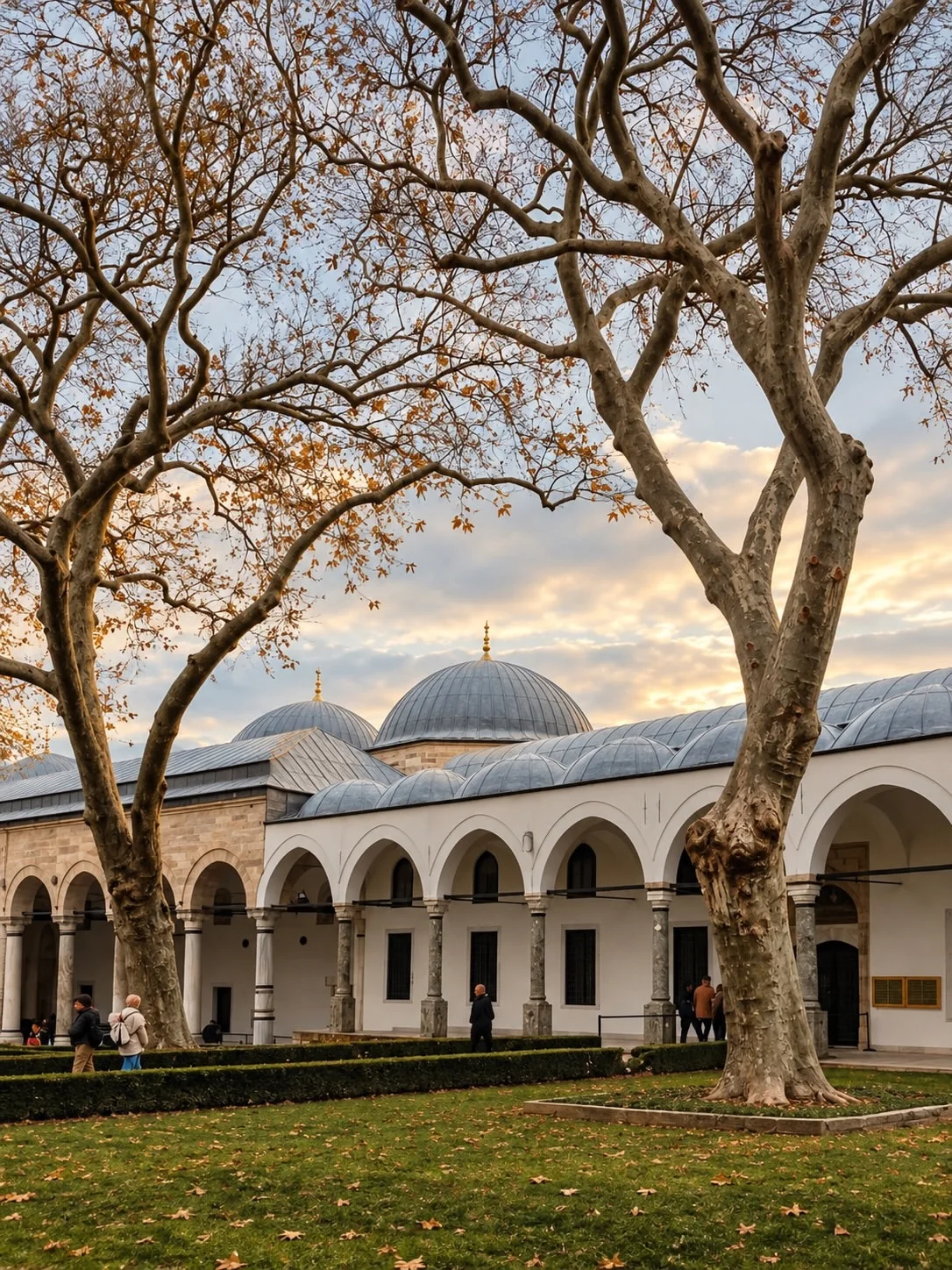
Beyond the gate lies the First Courtyard. Compared with the inner courtyards, this was a more spacious area with a closer connection to the outside world. It contained service-related buildings, passageways and structures associated with various practical functions of palace life.
Today, you can walk beneath the trees and admire the historic buildings scattered around the open space. But pause for a moment and imagine the courtyard as it once was. Palace officials, servants, visitors and people arriving on official business would have passed along these same routes.
Palace life did not revolve solely around the sultan and his family. Maintaining such a vast institution required the work of countless people, each with their own responsibilities.
The First Courtyard gives you your first sense of the scale of the complex and offers a glimpse of the busy world that existed beyond its grand entrances.
Continue towards the Gate of Salutation, known as Babüsselam. With its monumental appearance and distinctive towers, it is one of the palace's most recognisable entrances. It connects the First and Second Courtyards and marks the transition into a more controlled and formal part of the palace.
Notice something as you move deeper inside: the gates do more than connect one place to another. Each one leads into an area with its own rules and restrictions. The physical layout of Topkapi Palace offers an important clue to understanding the hierarchy of Ottoman court life.
The Second Courtyard: Where the Empire Was Governed
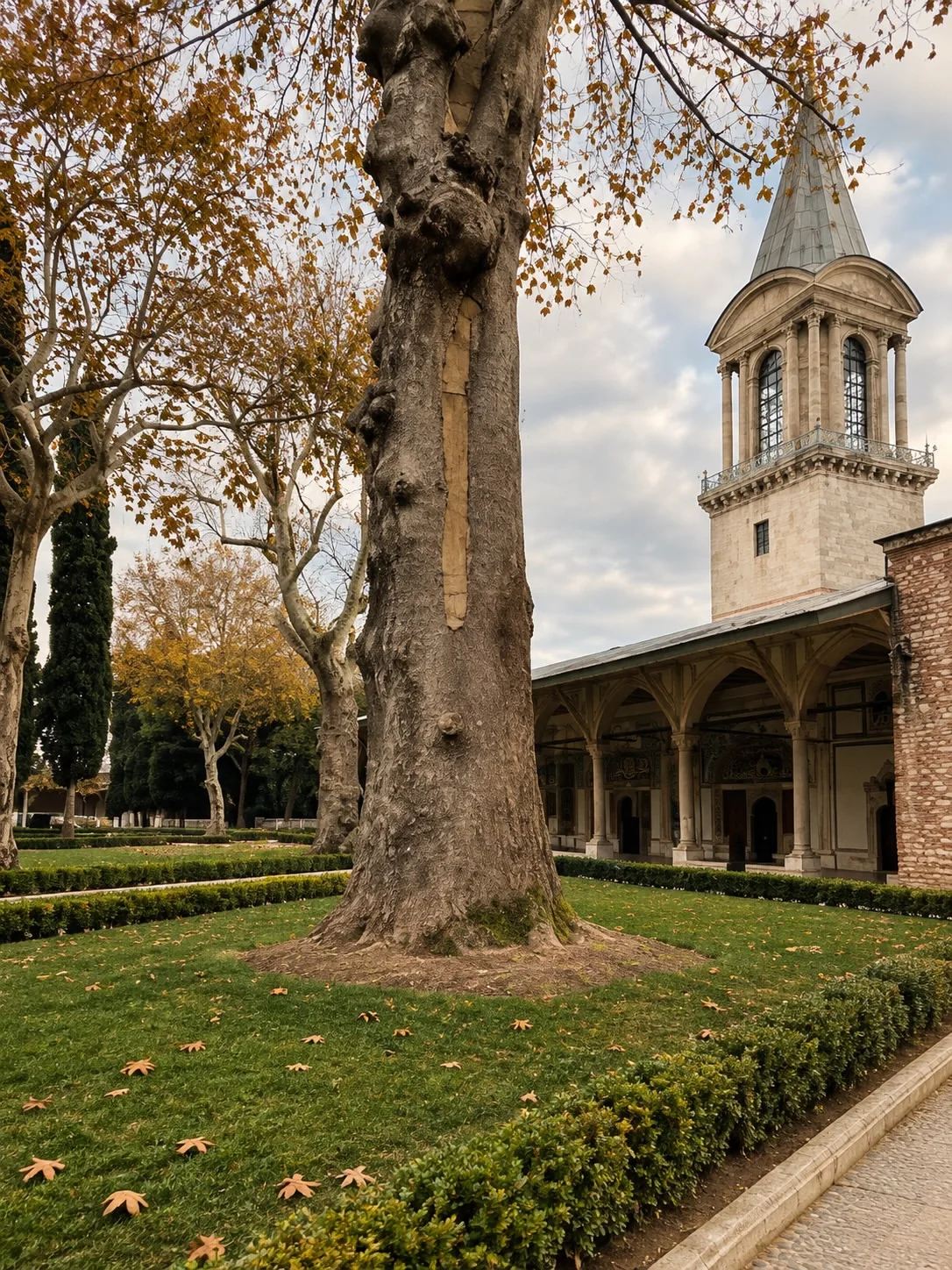
As you enter the Second Courtyard, the palace's administrative role becomes much clearer. This was not simply a place where the ruler lived. It was also one of the principal centres of daily government.
Among the important structures surrounding the courtyard were the Imperial Council chambers and the palace kitchens. On one side, officials discussed matters of state. On the other, enormous quantities of food were prepared to sustain the palace community.
The same courtyard witnessed both the political machinery of an empire and the practical work required to keep it running.
The Imperial Council and the Tower of Justice
The Imperial Council, known as the Divan-ı Hümayun, was one of the most important governing bodies of the Ottoman Empire. The grand vizier and other senior officials gathered here to discuss administrative affairs, state matters and petitions.
When you examine the council chambers today, remember that they were much more than meeting rooms. Decisions discussed within these walls could affect the lives of people living far beyond Istanbul. Reports, requests and problems from different parts of the empire could become part of the government's agenda.
Rising above the council buildings is the Tower of Justice, one of the palace's most striking landmarks. Its elevated position distinguishes it from the surrounding structures.
Justice held an important place in Ottoman political thought. However, the existence of a tower bearing this name should not be taken as proof that every decision made within the empire was just. The symbolic meaning of a historic structure and the realities of historical practice are not necessarily the same.
Look at the tower and consider how architecture communicated authority. Height, visibility and position were not merely aesthetic choices. They also expressed ideas about government, power and the relationship between the ruler and the state.
The Palace Kitchens: The Daily Work Behind an Empire
Another important part of the Second Courtyard is the palace kitchen complex. It may not be the most glamorous area of Topkapi Palace, but for anyone seeking to understand how the court actually functioned, it is every bit as fascinating as the royal chambers and treasures.
A palace cannot operate on ceremonies and political meetings alone. Meals must be prepared, ingredients transported, supplies stored and hundreds of daily tasks coordinated. The kitchens preserve physical evidence of this enormous operation.
Food in the Ottoman palace was about more than satisfying hunger. Meals were connected to ceremonies, duties and court traditions. The preparation and distribution of food also reflected the hierarchy within the palace.
As you look at the architecture and distinctive chimneys, remember the people whose labour sustained the splendour associated with royal life. Sometimes, the most revealing story of a palace is not found in its most lavish room, but in the place where people worked every day.
The Third Courtyard: Entering the Sultan's World
Beyond the Second Courtyard stands Babüssaade, the Gate of Felicity. It is one of the most significant thresholds within the palace. Beyond it lay the sultan's more private world and spaces associated with important court ceremonies.
As you pass through the gate, notice how the character of the palace changes. You are moving away from the more accessible areas and towards spaces where audiences with the ruler were governed by established protocols.
Who could enter, where they could go, what duties they performed and whether they could approach the sultan were all matters regulated by the palace administration.
These restrictions were not solely about security. They also reflected the ranks, responsibilities and relationships that structured Ottoman court life.
The Audience Chamber: An Audience with the Sultan
One of the most important buildings in this part of the palace is the Audience Chamber, known as the Arz Odası. The sultan received senior officials here, and certain formal meetings with foreign ambassadors also took place within this setting.
Imagine entering the chamber centuries ago. Before you stands the Ottoman sultan. Being admitted to his presence was not an ordinary meeting. The audience itself carried meaning. Who was received, when they were received and how they were greeted all formed part of the elaborate court protocol.
For foreign ambassadors, these encounters were also important diplomatic occasions. They came not only to deliver messages but also to observe the authority, organisation and ceremonial traditions of the state they were visiting.
As you explore the chamber, look closely at the doors, decorative details and arrangement of the space. These features served more than an ornamental purpose. Palace architecture also communicated ideas about sovereignty and the representation of power.
The Enderun: Educating the People Who Would Serve the Empire
The Third Courtyard was closely associated with the Enderun, an important palace institution responsible for educating and training individuals who could go on to serve in the Ottoman administration.
Education, discipline, palace service and preparation for official duties were all part of this system.
The story of the Enderun reveals another dimension of Topkapi Palace. The complex was not merely a royal residence. It was also an institution that trained people, assessed their abilities and prepared personnel for positions within the state.
Some individuals educated within this system eventually rose to senior administrative offices. Of course, not everyone followed the same path, and advancement took place within a strict hierarchy. Nevertheless, the Enderun remains an important part of understanding how the Ottoman state developed its administrative elite.
Imagine a palace where future officials were being educated while the ruler conducted the affairs of an empire. This is one of the reasons Topkapi Palace matters far beyond its architectural beauty.
The Harem: Life Behind the Walls
For many visitors, the Harem is one of the first places that comes to mind when they hear the name Topkapi Palace. Yet reducing it to mysterious rooms, forbidden romances and palace intrigues would mean overlooking much of its historical significance.
The Harem was the private residential world of the Ottoman sultan's family, governed by its own traditions and rules. It was home to the sultan's mother, consorts, children and other women, as well as people who performed various duties within the palace household.
The word harem is associated with privacy and restricted access. Entry into and movement through this part of the palace were therefore governed by particular rules. Its boundaries were defined not only by walls but also by responsibilities, status and the routines of daily life.
The Valide Sultan and Power Within the Palace
One of the most influential figures associated with the Harem was the Valide Sultan, the mother of the reigning sultan. In certain periods, she could wield considerable influence within the palace and beyond it.
However, it would be misleading to assume that every Valide Sultan exercised the same degree of political power. Their influence depended on the period in which they lived, their relationships with the reigning sultan and the political circumstances of the time.
Some Ottoman royal mothers commissioned charitable institutions, mosques and other architectural works. Others played important roles in court relationships and political affairs. Their stories remind us that the women of the palace cannot be understood solely through the lens of private life.
As you walk through the Harem's corridors, remember that the people who lived here had their own responsibilities, relationships, ambitions and personal struggles. History is not simply the story of those who sat on the throne.
Look Closely at the Harem's Architecture
As you explore the Harem, do not focus only on the size of the rooms. Look at the tiles, doorways, decorative details and the way the corridors connect different spaces.
Some rooms appear more elaborate than others, while certain areas are comparatively restrained. These differences remind us that the Harem was not a single, uniform living space. It contained sections associated with different functions, duties and levels of status.
Keep in mind that the visitor route may not include every part of the complex. The Harem has a particularly intricate layout, and certain areas may be closed to visitors.
The real story of the Harem extends far beyond sensational tales of intrigue. Family life, education, service, hierarchy and political relationships all formed part of its history.
The Fourth Courtyard: Quiet Pavilions Overlooking Istanbul
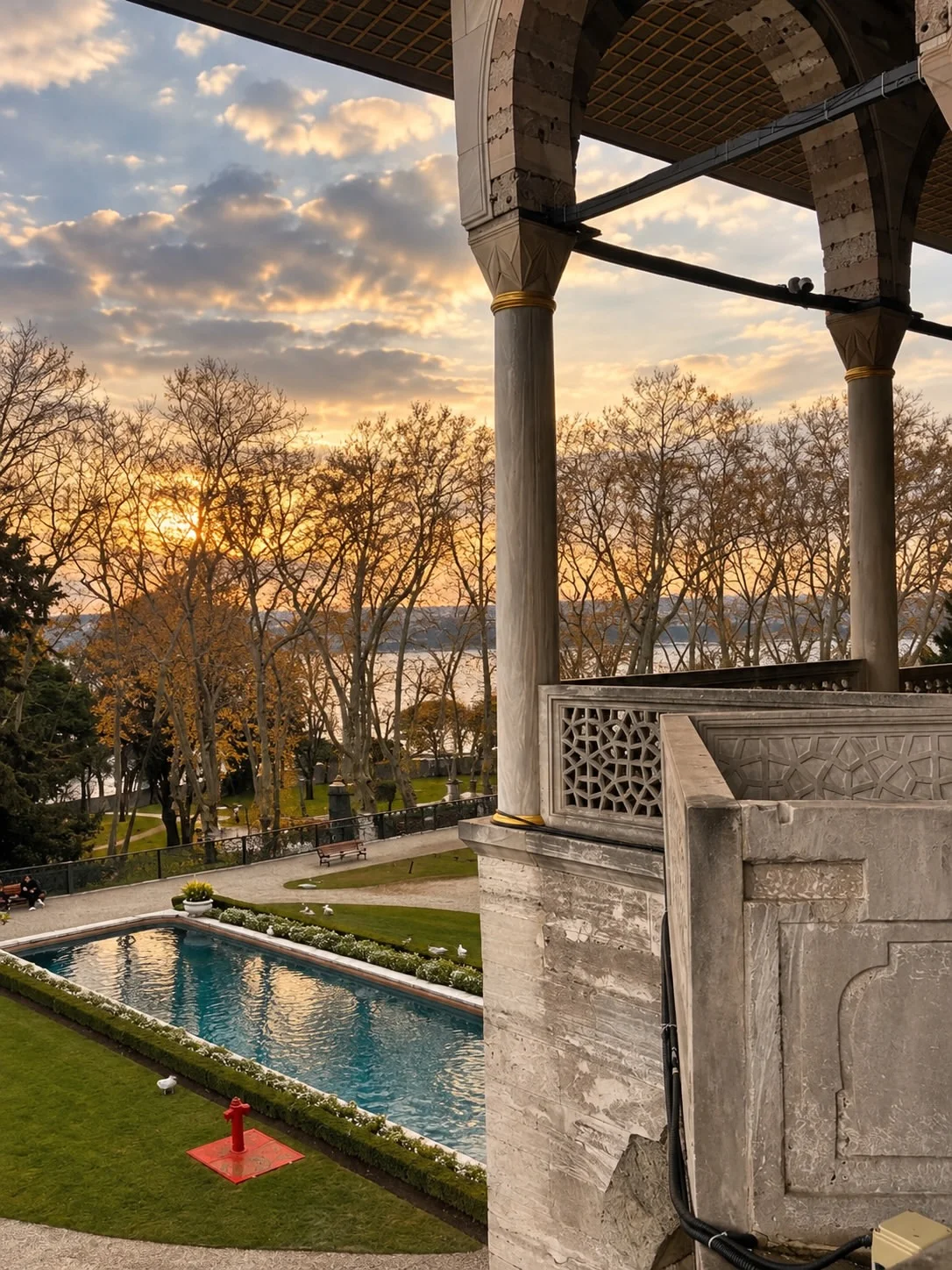
As you make your way towards the upper parts of the palace, the atmosphere changes once again. The Fourth Courtyard and its surrounding pavilions, terraces and gardens reveal a more intimate side of Topkapi Palace, associated with relaxation, views and the quieter routines of royal life.
From here, you can admire Istanbul from different perspectives. The direction of the Bosphorus, the changing light on the water and the silhouettes of the opposite shores remind you why this location was so remarkable.
Among the important structures in this area are the Revan Pavilion and the Baghdad Pavilion. Each reflects aspects of Ottoman palace architecture and the historical circumstances of the period in which it was built.
The Revan Pavilion
The Revan Pavilion was commissioned during the reign of Sultan Murad IV and is associated with the Ottoman campaign involving Revan, known today as Yerevan.
The pavilion belongs to the more secluded parts of the palace. Its name also illustrates the relationship between military and political events and the architecture of the imperial residence.
Some buildings in Topkapi Palace were constructed for more than practical reasons. Military campaigns, victories and important developments during a ruler's reign could influence the names and meanings attached to architectural works.
The Baghdad Pavilion
The Baghdad Pavilion is another significant structure from the reign of Sultan Murad IV. It is associated with the Baghdad campaign and is among the notable examples of Ottoman decorative art.
Its interior features intricate tilework, marble details and carefully arranged decorative elements. Take your time here. Look at the colours of the tiles, the repetition of patterns and the way the decorative details work together.
You are not simply looking at a beautiful room. You are seeing the combined work of skilled artisans, their knowledge of materials and the aesthetic traditions of their time.
Spending time in the Fourth Courtyard helps you understand that Topkapi Palace was not solely a centre of government and ceremony. It was also a place where architecture, landscape and everyday royal life came together.
The Treasury of Topkapi Palace: Power, Art and Splendour
The Imperial Treasury is among the most eagerly anticipated parts of Topkapi Palace. Its collection offers insights into the wealth of the Ottoman court, its artistic traditions and its diplomatic relationships.
But do not judge every object solely by the precious metals and gemstones it contains. The historical value of an artefact can extend far beyond the price of its materials. Who commissioned it, when it was made, how it was used and which historical events it became associated with can be just as important.
The Spoonmaker's Diamond
One of the most famous objects associated with Topkapi Palace is the Spoonmaker's Diamond, known in Turkish as the Kaşıkçı Elması. Its impressive size and surrounding stones have made it one of the palace's best-known treasures.
Several stories have developed around the diamond. However, not all of them can be treated as verified historical facts. Popular accounts concerning how it was discovered or who first owned it include details that have not been conclusively established.
When you encounter the Spoonmaker's Diamond, look beyond the legends. Consider the object itself, its craftsmanship and its place within the palace treasury.
The Topkapi Dagger
The Topkapi Dagger is another of the palace's most recognisable treasures. Decorated with precious stones, it stands out for both its craftsmanship and its historical story.
The dagger also recalls an important episode in Ottoman diplomacy. During the eighteenth century, diplomatic gifts played a significant role in relations between the Ottoman Empire and Persia. Such objects were not merely expensive presents; they could carry political messages and represent relationships between rulers.
The Topkapi Dagger was prepared as part of a gift intended for Nader Shah of Persia. Political developments, however, prevented the planned exchange from taking place, and the dagger remained in the Ottoman treasury.
What makes this story particularly interesting is not simply the gemstones set into the dagger. An object prepared for a diplomatic mission was prevented from reaching its destination by political events and eventually became a museum treasure.
As you explore the treasury, keep this in mind. Objects that once carried meaning between rulers and states have become historical witnesses, helping us understand the past in ways that written accounts alone sometimes cannot.
The Sacred Relics: Where Faith and History Meet
Another deeply significant section of Topkapi Palace is the Chamber of the Sacred Relics. It offers an important insight into the religious and spiritual dimensions of the Ottoman court.
From the reign of Sultan Selim I onwards, particularly following the Ottoman campaign in Egypt and the Levant, the preservation of sacred relics became an important part of the dynasty's historical and religious legacy. Over time, the palace came to house a collection of objects associated with Islamic history and tradition.
For some visitors, this section holds profound religious significance. For others, it represents an important part of the historical and cultural heritage of the Islamic world. People may experience the space differently, and both the religious context and the historical significance deserve thoughtful consideration.
During your visit, remain respectful, examine the exhibits carefully and follow the museum's instructions. Check the current regulations concerning photography and other visitor requirements.
The Chamber of the Sacred Relics reminds us once again that Topkapi Palace was not simply a centre of political power. It was also a place where faith, tradition and historical memory were preserved.
What Was Everyday Life Like at Topkapi Palace?
When visiting Topkapi Palace, it is easy to focus on the lives of the sultans, government meetings and royal treasures. Yet the daily routines that kept this enormous institution functioning deserve just as much attention.
There were meals to prepare, correspondence to manage, supplies to organise, ceremonies to arrange and officials to receive. Palace workers carried out their responsibilities while young men received training and the royal household followed its established routines.
Not everyone who lived or worked in the palace enjoyed the same conditions. Duties, status and personal relationships shaped people's lives. The spaces occupied by the sultan differed greatly from the working areas used by servants and other members of the palace community.
For this reason, it is incomplete to view Topkapi Palace simply as a symbol of luxury. It was also a place of work, hierarchy, administration and institutional life.
Imagine the people who once hurried through the courtyards you now walk across. Some carried messages, others attended to their duties, and many performed the everyday tasks that allowed the palace to operate.
Seen from this perspective, Topkapi Palace becomes more than a museum filled with historic buildings. It becomes a place where real people lived, worked and experienced the uncertainties of their own time.
Why Did Topkapi Palace Give Way to Dolmabahce Palace?
For approximately four centuries, Topkapi Palace served as the principal imperial residence and an important centre of Ottoman government. By the nineteenth century, however, the empire was experiencing major political, diplomatic and cultural changes.
Relations with Europe were becoming increasingly important. The ways in which the Ottoman state presented itself to the outside world were evolving, and new architectural styles were influencing palace life.
During this period, Dolmabahce Palace was built to reflect a different approach to royal residence and representation.
Commissioned by Sultan Abdulmejid I, Dolmabahce Palace came into use in 1856. An important part of the imperial household's life subsequently shifted there, and Topkapi Palace gradually lost its former central role as the principal royal residence.
This did not mean that every part of Topkapi Palace was abandoned or that all its functions ended at the same moment. Certain sections continued to be used for different purposes, and the palace retained its historical importance.
The transition should not be understood simply as an old palace being replaced by a newer one. The differences between the two complexes reflect the transformation of the Ottoman Empire itself.
Topkapi Palace developed around courtyards, distinct functional areas and a more traditional court arrangement. Dolmabahce Palace, by contrast, reflects the changing forms of representation and the stronger European architectural influences of the nineteenth century.
What to Look for When Visiting Topkapi Palace
Because Topkapi Palace covers an extensive area, exploring it without a plan can leave you tired or cause you to miss important sections. Before visiting, decide which parts matter most to you.
Start by understanding the layout of the courtyards. Moving from the First Courtyard to the Second, then towards the Third and Fourth Courtyards, gives you a clearer sense of how the complex was organised.
After that, spend more time in the areas that interest you most. The Harem, Imperial Council, palace kitchens, treasury, Sacred Relics and pavilions each offer a different perspective on palace life.
Do not rush past the architectural details. Look at the doorways, tiles, marble decoration, connections between courtyards and the changing views of the city. The story of Topkapi Palace is not limited to the information displayed on museum panels. The architecture itself offers clues about the past.
Wear comfortable shoes, as you will be walking across a large area. Depending on the season, carrying water and allowing time for breaks can make your visit more enjoyable.
Some sections may have different opening arrangements, access requirements or accessibility conditions. Check the official visitor information before travelling.
Practical Information for Visiting Topkapi Palace
Location: Cankurtaran neighbourhood, Fatih district, Istanbul, Türkiye. The palace stands in the Sarayburnu area at the tip of the historic peninsula.
Getting there: You can take the tram to Sultanahmet or Gulhane and continue on foot. Choose the stop that best suits your route. Traffic and vehicle access can be restricted in parts of the historic peninsula, making public transport a practical option for many visitors.
How long to spend: Allow approximately two to three hours for a general visit to the main areas. If you want to explore the Harem, museum collections and pavilions in greater detail, plan for half a day or longer. The time required depends on crowd levels, which sections are open and your personal interests.
Tickets and admission: Ticket categories, admission fees, access to the Harem and other entry conditions may change. Check the official website of the Directorate of National Palaces before your visit for the latest information.
Opening hours: Opening and closing times can vary according to the season, official arrangements and special circumstances. Use the official schedule published for the day of your visit.
Photography: Photography rules may differ between sections. Pay attention to signs and follow the instructions of museum staff, especially inside exhibition areas.
Who will enjoy it? Topkapi Palace is particularly rewarding for visitors interested in Ottoman history, architecture, decorative arts and the story of Istanbul. Because the complex is extensive and involves considerable walking, families with children and visitors with limited mobility may benefit from planning their route in advance.
A Simple Way to Understand Topkapi Palace
As you walk through the palace, give yourself a small task: pause in each courtyard and consider what happened there.
In the First Courtyard, think about the threshold between the city and the imperial world. In the Second, imagine the machinery of government at work. In the Third, consider what it meant to be admitted into the sultan's presence. In the Harem, reflect on the daily lives of the royal household and the people who lived and worked there. In the Fourth Courtyard, notice the relationship between the pavilions, the gardens and the views of Istanbul.
This approach transforms your visit from a series of photo stops into a more connected experience. It helps you understand how the different parts of the palace related to one another.
Another useful suggestion is not to focus exclusively on the most famous objects. Sometimes, a detail above a doorway, the arrangement of a courtyard or the way a pavilion opens towards the sea can tell you as much about the palace as its celebrated treasures.
Final Thoughts: The Human Stories Within the Walls
When you leave Topkapi Palace, you take away more than memories of grand gates, colourful tiles, elegant pavilions and precious objects. You also leave with a glimpse of how a state was governed, how people lived within its rules and how an entire world changed over the centuries.
The decisions of sultans mattered, but so did the work of the officials who carried them out. The messages brought by ambassadors mattered, but so did the daily lives of the people who lived within the palace. The splendour of the treasury mattered, but so did the skill of the artisans who created its objects.
The real significance of Topkapi Palace lies not simply in its ability to display the wealth of the Ottoman Empire. It reminds us that history is never the story of a single person or event. Within the walls of a palace, politics, art, faith, labour, family life and human relationships all existed side by side.
Eventually, the quiet of the palace gives way to the noise and movement of modern Istanbul. Yet you may find yourself looking back at those old stone walls differently. Each courtyard, doorway and pavilion begins to suggest another life, another responsibility and another story.
Because understanding Topkapi Palace is not simply about discovering where the Ottoman sultans lived. It is about understanding how an empire lived.
💬 Comments (0)
Traveler comments are shown in their original language.
No comments yet. Be the first to share your experience.
💬 Want to join the discussion?
Log in or create an account to leave a comment.