The 3 Best Places for Photos in Osmaniye: From Ancient Cities to a Hidden Waterfall
Capture the best of Osmaniye, Turkiye! Explore the top 3 photography locations: The historic columned streets of Kastabala, Karatepe's ancient ruins, and scenic Karacay Waterfall.
 Burak ÇınarTurkTravelRadar Founder
October 22, 2026
In one photograph, a colonnaded street stretches into the distance behin
 d you. In another, you stand beside a stone figure carved thousands of years ago. In the third, falling water transforms the entire scene.
Kastabala Ancient City, Karatepe-Aslantaş Open-Air Museum and Karaçay Waterfall offer three very different settings for your Osmaniye travel album. Together, they reveal a province where ancient buildings rise across open ground, woodland surrounds archaeological treasures and streams find their way through rocky valleys.
1. Kastabala Ancient City: Walking Through an Ancient City
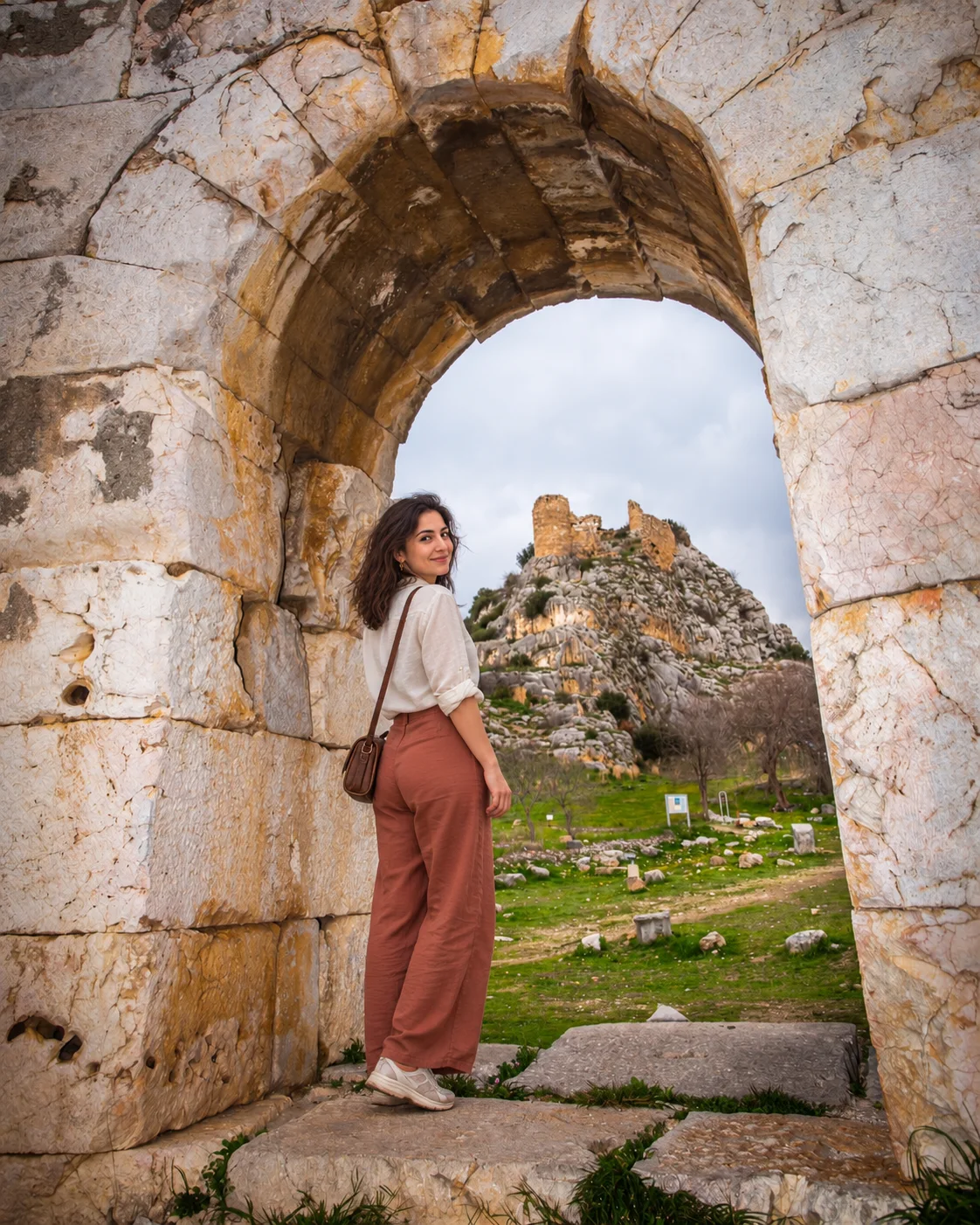
At Kastabala, the columns catch your attention first. Their repeated forms still mark the direction of a street that once carried the movement of everyday life. Walking between them brings you into the layout of the old city.
Located around Kesmeburun in Osmaniye’s central district, Kastabala is one of the province’s most compelling historical stops. Its colonnaded street, theatre and remains from different periods spread across the landscape. A medieval castle rises on the rocky ground above, adding another layer to the view.
The appeal lies partly in that variety. Columns appear in one direction, the theatre in another and the castle overhead. As you explore, the background changes.
A traveller standing beside the remains makes their scale more apparent. A pause before a stone doorway or a walk between the columns gives a photograph a sense of place and journey.
As daylight lowers, shadows can bring out the texture of the stone. If you are planning an evening visit, check the site’s closing time beforehand.
The photographs you take away from Kastabala often carry that feeling of depth: you in the foreground, with an ancient city continuing behind you.
2. Karatepe-Aslantaş Open-Air Museum: An Encounter Across Thousands of Years
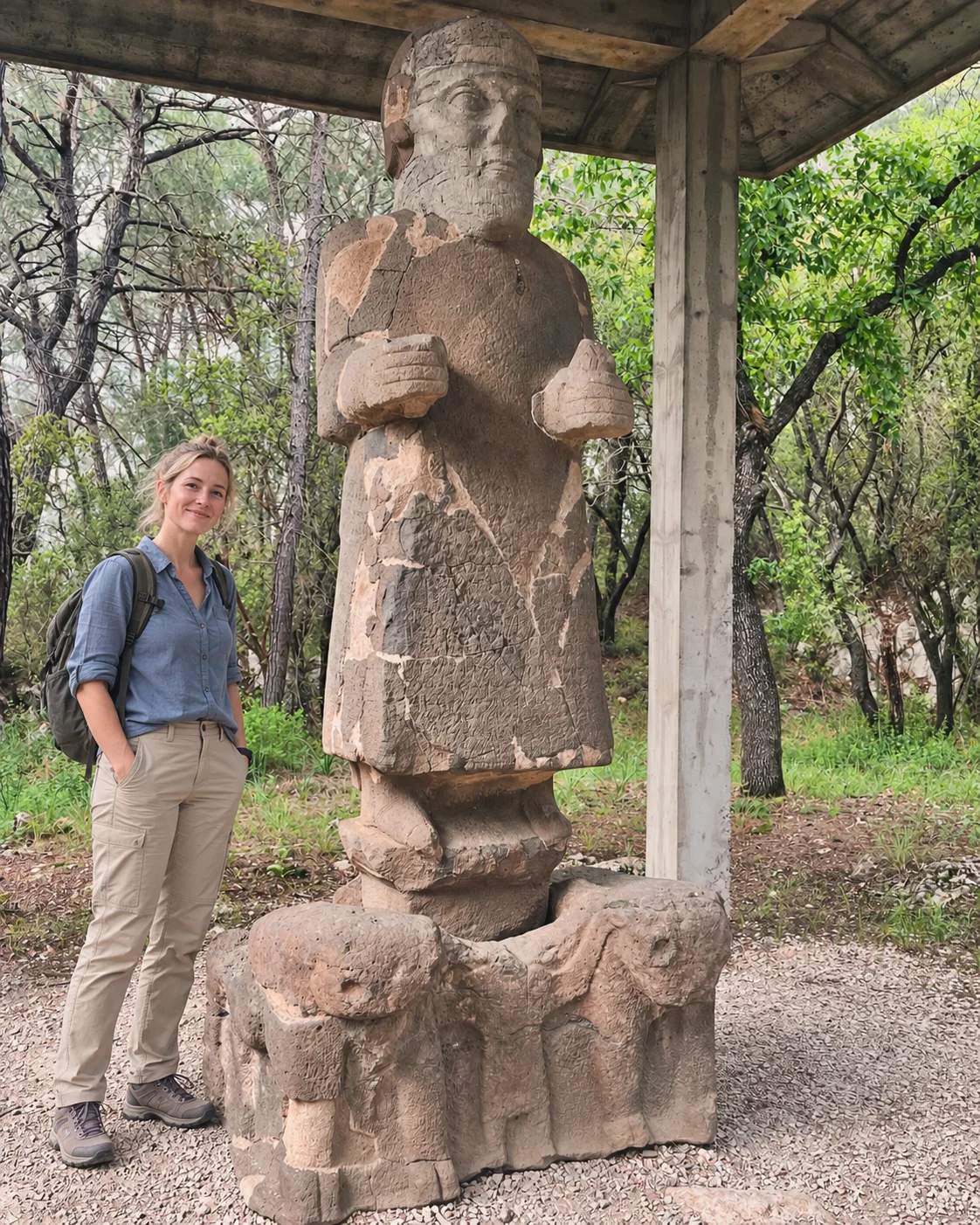
At Karatepe-Aslantaş, history appears among the trees. Sculptures and reliefs remain within the landscape to which they belong, allowing visitors to experience the works alongside their surroundings.
The open-air museum lies within Karatepe-Aslantaş National Park, near Kızyusuflu village in Kadirli district. It preserves the remains of a Late Hittite frontier fortress founded by Asativatas in the eighth century BC. Its monumental entrances contain figures that still reward a long, careful look.
Standing beside a sculpture brings two different times into the same frame: a present-day traveller and the work of people who shaped stone centuries ago. Trees and the natural setting complete the scene.
Among the site’s most important features are its bilingual inscriptions in Phoenician and Luwian. These texts played a significant role in deciphering Luwian hieroglyphs. Some of the stones before you helped scholars recover an understanding of an ancient writing system.
Archaeologist Halet Çambel’s approach to preservation in place helped create the experience visitors have today. Protecting the works together with their surroundings maintained the relationship between the archaeological site and the forest.
A travel photograph from Karatepe can therefore hold more than the memory of a museum visit. It records an encounter between ancient stone, living woodland and the person who came to see them.
3. Karaçay Waterfall: From Ancient Stone to Greenery and Water
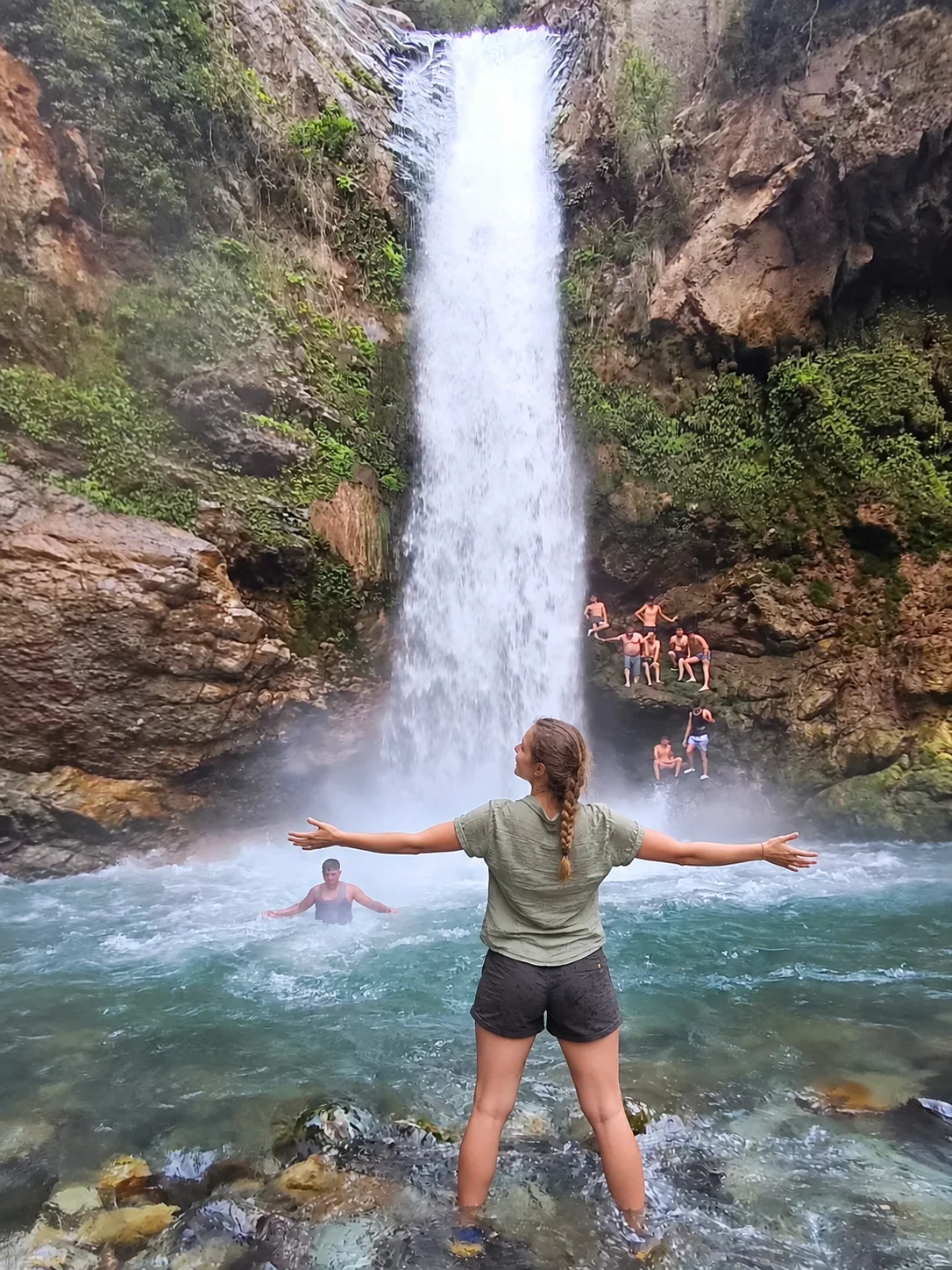
After Kastabala and Karatepe, Karaçay opens a different chapter in an Osmaniye album. Here, water falling from approximately 25 metres becomes the centre of the scene.
At the foot of the Amanos Mountains, the white cascade descends against rock, framed by greenery. The contrast between moving water, dark stone and vegetation creates a view worth lingering over.
A person standing within the landscape gives the waterfall a clearer sense of scale. The image holds both the natural setting and a moment from someone’s journey.
Reaching Karaçay also becomes part of the memory. The surroundings along the approach build towards the moment when the waterfall comes into view. Once you arrive, something accompanies the scene that no still photograph can preserve: the continuous sound of water.
When planning your trip, distinguish Karaçay Recreation Area from the waterfall itself. The recreation area is approximately 4 kilometres from central Osmaniye; continuing to the waterfall requires additional time. Check the current approach and walking route before setting out.
There is no need to climb wet rocks or enter the water to enjoy the setting. Stay within safe visitor areas and allow yourself time to take it in.
Three Different Memories of Osmaniye
At Kastabala, you walk among the stones of an ancient city. At Karatepe-Aslantaş, you encounter carved figures surrounded by trees. At Karaçay, the sound of falling water becomes part of the photograph’s memory.
Consider Kastabala and Karatepe together for a history-focused outing, and leave sufficient walking time in a separate plan for Karaçay. Check museum opening hours and current waterfall access arrangements before travelling.
You will return with three distinct impressions of the same province. When you open the album, you may remember exactly what caught your attention at each stop.
💬 Comments (0)
Traveler comments are shown in their original language.
No comments yet. Be the first to share your experience.
💬 Want to join the discussion?
Log in or create an account to leave a comment.