Sinop Prison: The “Alcatraz of Anatolia” Many Tourists Have Never Heard Of
Step inside Sinop’s former fortress prison, nicknamed the “Alcatraz of Anatolia,” and discover its literary history, restored museum and practical visitor details.
 Burak ÇınarTurkTravelRadar Founder
October 2, 2026
Outside, Sinop belongs to the Black Sea: boats, waterfront walks and the movement of a harbour city.
Inside the old prison, your attention shifts to stone.
Look at the thickness of the walls. Follow the courtyard upwards until you find the sky. As you move through the building, listen to your footsteps and notice how the sound changes between an enclosed passage and an open space.
On a breezy day, the air in the courtyard may carry a reminder of the coast. Yet here, the sea has a different meaning. For a visitor, it suggests somewhere to walk next. For someone confined within these walls, it could suggest a world beyond reach.
This is Sinop Historical Prison, a former prison within the city’s fortress, now open as a museum.
Its nickname, “the Alcatraz of Anatolia,” gives you a starting point. The architecture, literary connections and history of confinement give you reasons to stay longer.
What Is Sinop Historical Prison?
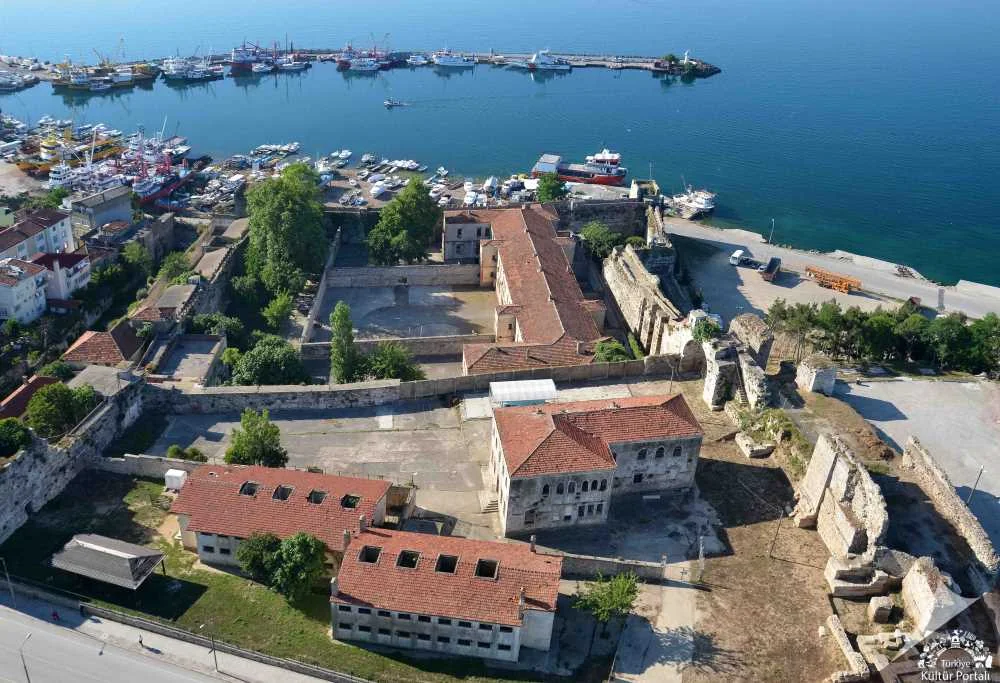
Sinop Historical Prison is a former prison complex within the inner fortress of Sinop, on Turkey’s Black Sea coast.
The site brings together different layers of history. The fortress and its earlier uses predate the prison buildings that visitors encounter today.
The complex includes former wards, courtyards and associated buildings. These spaces are worth viewing together: the museum is about the arrangement of confinement as much as any individual room.
For travellers interested in architecture, literature or social history, it offers a different kind of museum visit from a gallery of objects.
Why Is It Called the “Alcatraz of Anatolia”?
The nickname refers to the prison’s formidable setting: high fortress walls, its coastal position and its reputation as a difficult place from which to escape.
It is a comparison, rather than a connection with the American prison. Sinop Prison stands within the city’s fortress; it is not a separate island prison like Alcatraz.
The surrounding sea and substantial defences contributed to its imposing character. The national museum description uses the nickname and draws attention to the high, thick walls enclosing the site.
As you explore, look at how the walls control your view. Their scale helps explain the comparison more clearly than the nickname alone.
A Fortress Before It Was a Prison
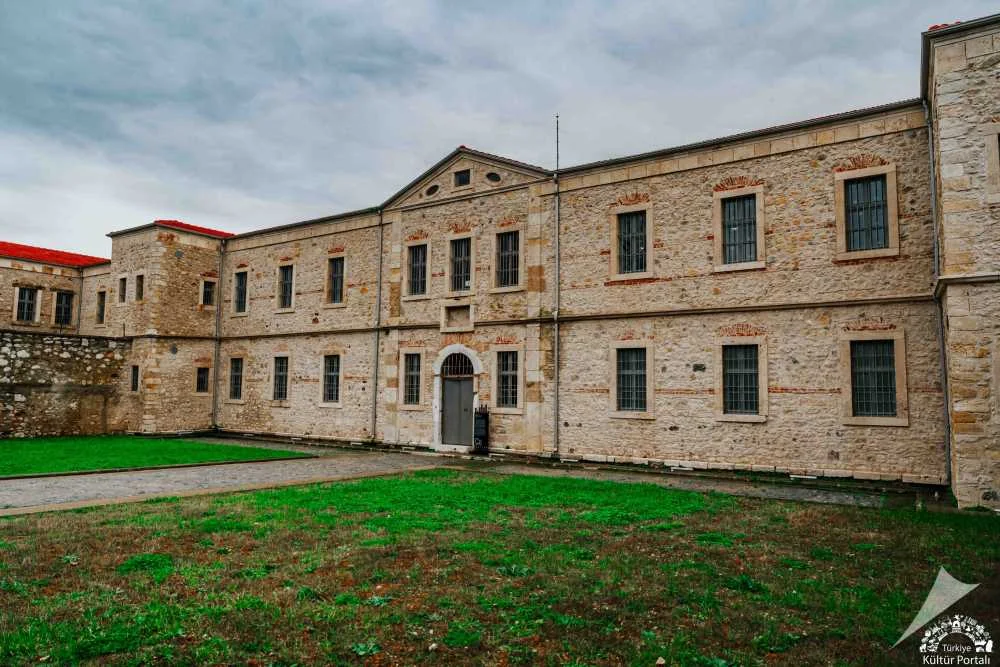
The history here begins before the familiar prison complex.
Following the Seljuk capture of Sinop in 1214, an inner fortress was created. It also served as a shipyard, while fortress towers began to be used as dungeons from 1560.
The purpose-built prison developed during the late Ottoman period. Later additions included a juvenile institution in 1939.
These stages matter when reading the architecture. An old defensive wall, a prison ward and a later institutional building do not necessarily belong to the same period.
A Note on Historical Dates
Official descriptions differ on the precise nineteenth-century construction date and some stages of the prison’s closure.
For that reason, it is more accurate to describe the main prison development as late Ottoman than to present one disputed year as settled fact. The older fortress history should also be distinguished from the history of the prison buildings themselves.
From Prison to Museum
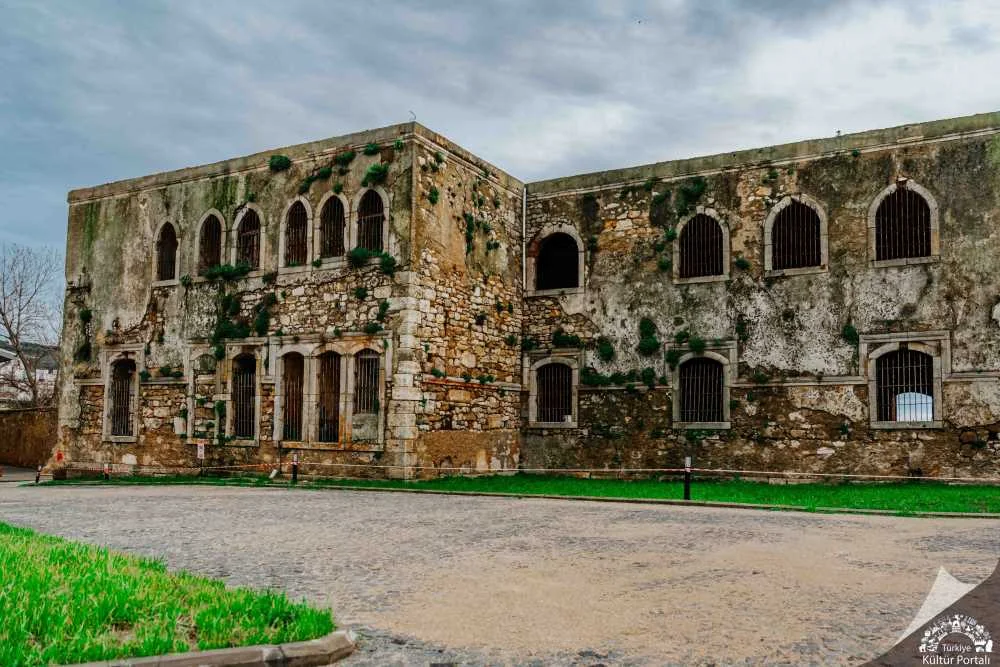
According to the Ministry of Culture and Tourism’s museum directorate account, the prison was emptied and transferred to the ministry in 1996, then became a museum in 2000.
After a later period of closure for restoration, it reopened to visitors on 5 June 2025.
That reopening is important when planning a visit. Older photographs and travel accounts may show the site before the recent work.
Approach it as a restored museum occupying a former prison. The visitor route and presentation may differ from descriptions written during earlier years.
Sabahattin Ali: The Writer Behind the Walls
One of the names most closely associated with Sinop Prison is Sabahattin Ali, the Turkish writer and poet.
His connection gives the building a literary dimension. The provincial tourism authority includes him among its former prisoners and reproduces a passage from his story “Duvar” — “The Wall”, in which the sea, fortress walls and seabirds become part of the experience of confinement.
The ministry also connects the prison with his poem “Aldırma Gönül,” later widely known through its musical setting.
You do not need to know his writing before arriving. Read the interpretation provided at the museum, then return your attention to the surroundings.
A barred opening or a patch of sky can feel different once you understand that someone described this place from inside.
What to Notice During Your Visit
The Relationship Between Prison and Fortress
Begin with the larger structure.
Notice where the prison buildings sit within the defensive enclosure. Look at the scale of the stonework and how the surrounding walls shape movement and visibility.
This gives you context before you focus on individual rooms.
Courtyards and Dividing Walls
Pause in an open courtyard.
Look at where the doors lead and how the space is divided. A courtyard can feel open overhead while remaining tightly bounded on every side.
Follow the marked visitor route and compare the proportions of the spaces as you move.
Former Wards and Openings
In rooms accessible to visitors, notice the placement of windows, doors and bars.
Rather than looking only for the most dramatic corner, examine ordinary details: an opening’s height, the thickness around a doorway, the distance between an interior and daylight.
Museum Interpretation
Give the information panels time.
Architecture alone cannot tell you who was held here, how the institution changed or what a particular room was used for. The interpretation helps distinguish documented history from impressions.
Do not assume every room or building is accessible on the day of your visit.
Photography: Look for Scale and Contrast
A wide courtyard photograph can show the height of the enclosing walls. Position the frame so that the viewer can understand the relationship between the ground, building and sky.
For a closer composition, look for:
- Light falling across stone.
- A doorway framing another space.
- Repeated windows or architectural lines.
- The thickness of a wall around an opening.
Use permitted visitor areas and follow the museum’s photography rules. Ask before using a tripod or photographing any display with restrictions.
This is also a place to photograph thoughtfully. Leave time to read and observe between pictures.
Practical Visitor Information
Information checked: 2 October 2026.
The official Turkish Museums listing provides the following seasonal timetable:
| Season | Listed Opening Hours | Listed Ticket-Office Closing Time |
|---|---|---|
| Summer: May–September | 09:00–19:00 | 18:45 |
| Winter: October–April | 08:00–17:00 | 16:45 |
| Monday | Closed | — |
The listing places the seasonal change at 1 October. Another national museum page still displays 09:00–19:00 and a different ticket-office closing time, so confirm the timetable before travelling, particularly around a seasonal change.
Tickets
The Turkish Museums listing currently shows €6 for non-Turkish visitors aged eight and above. Prices and eligibility rules may change. Check the admission conditions for your group before visiting.
MüzeKart eligibility shown on the national museum page applies to Turkish citizens; foreign visitors should confirm whether their particular pass is accepted.
Location and Contact
- Location: Kaleyazısı neighbourhood, Cumhuriyet Caddesi, central Sinop.
- Museum listing telephone: +90 368 261 30 23.
- Facilities listed: Café, shop and toilets.
How Long Should You Allow?
Allow approximately 60–90 minutes as a planning estimate, with longer if you enjoy reading interpretation panels or photographing architecture.
This is a suggested visit length, rather than an official duration. Arrive comfortably before the ticket office closes.
Walking Note — Physical Effort: 2/5
Suggested effort level: 2/5 for visitors comfortable with gentle walking and standing.
The main consideration is moving through a historic complex and spending time on your feet. The effort can vary with the route, open areas and your mobility.
Wear comfortable shoes and take care at thresholds, changes in level and any damp surfaces.
Accessibility note: Full step-free access to every part of the complex has not been confirmed here. Wheelchair users and visitors with limited mobility should contact the museum about the current accessible route, lifts or ramps, and toilet facilities.
Turn the Visit into a Sinop History Walk
After the museum, leave some time for the surrounding city.
A waterfront pause gives you a chance to reflect on the coast you have just encountered through a prison’s history. If you want to continue with another museum, Sinop Archaeological Museum provides a different view of the city’s past.
Keep the day flexible. Confirm the opening arrangements of each place rather than assuming they share the same timetable.
Frequently Asked Questions
Is Sinop Prison Still an Active Prison?
No. The historic complex is visited as a museum.
Is It on an Island?
No. It stands within Sinop’s fortress in the city. The Alcatraz nickname describes its reputation and setting.
Has It Reopened After Restoration?
Yes. The provincial tourism authority confirms that it reopened on 5 June 2025.
Is It Suitable for Children?
That depends on their age and interests. The site concerns imprisonment and can raise difficult questions. Explain what the building was used for and adapt the visit to the child.
Do I Need to Know Turkish Literature to Enjoy It?
No. The architecture and history provide plenty to explore. Learning a little about Sabahattin Ali adds another layer to the visit.
Before You Step Back Outside
Take one final look at the walls before leaving.
Notice the doorway through which you can now walk freely. Outside, the harbour city continues: footsteps, conversation, boats and the possibility of choosing where to go next.
That change is part of what makes Sinop Prison worth visiting.
The museum preserves a place where movement was restricted. Your visit gives you time to consider the architecture, the people connected with it and the difference between seeing the sea and being able to reach it.
Sinop Prison at a Glance
| Detail | What to Know |
|---|---|
| Name | Sinop Historical Prison / Sinop Tarihi Cezaevi |
| Location | Kaleyazısı, Cumhuriyet Caddesi, central Sinop |
| Region | Turkey’s Black Sea coast |
| Current use | Museum in a former prison complex |
| Nickname | “Alcatraz of Anatolia”; a comparison, not an island location |
| Historical setting | Within Sinop’s inner fortress |
| Main prison development | Late Ottoman period; official accounts differ on the exact construction year |
| Museum conversion | 2000, according to the museum directorate |
| Restoration reopening | 5 June 2025 |
| Literary connection | Sabahattin Ali and “Aldırma Gönül” |
| Suggested visit length | Approximately 60–90 minutes |
| Physical effort | Suggested 2/5; depends on route and mobility |
| Summer hours listed | 09:00–19:00 |
| Winter hours listed | 08:00–17:00 |
| Closed day listed | Monday |
| Foreign admission listed | €6 for ages eight and above; confirm current conditions |
| Facilities listed | Café, shop and toilets |
| Accessibility | Confirm the current accessible route directly |
| Telephone | +90 368 261 30 23 |
| Visitor information checked | 2 October 2026 |
💬 Comments (0)
Traveler comments are shown in their original language.
No comments yet. Be the first to share your experience.
💬 Want to join the discussion?
Log in or create an account to leave a comment.