Rumelihisarı: The Fortress Beside a Living Shore
Walk from Baltalimanı to Rumelihisarı, explore the fortress and its rebuilt mosque, then stop for spinach börek and Turkish tea at Kale Cafe.
 Burak ÇınarTurkTravelRadar Founder
September 28, 2026
Start at Baltalimanı and follow the Bosphorus road south toward Rumelihisarı.
Where the shore opens beside the pavement, listen for the low knock of water against wooden landings. Wind carries a sharp scent of salt and seaweed across the traffic. A bus pulls up, someone steps around a delivery trolley, and a fisherman lowers his line beside a brightly coloured bucket.
The fortress does not reveal itself all at once. First you see a wall above the roofs. Then a tower rises over the road.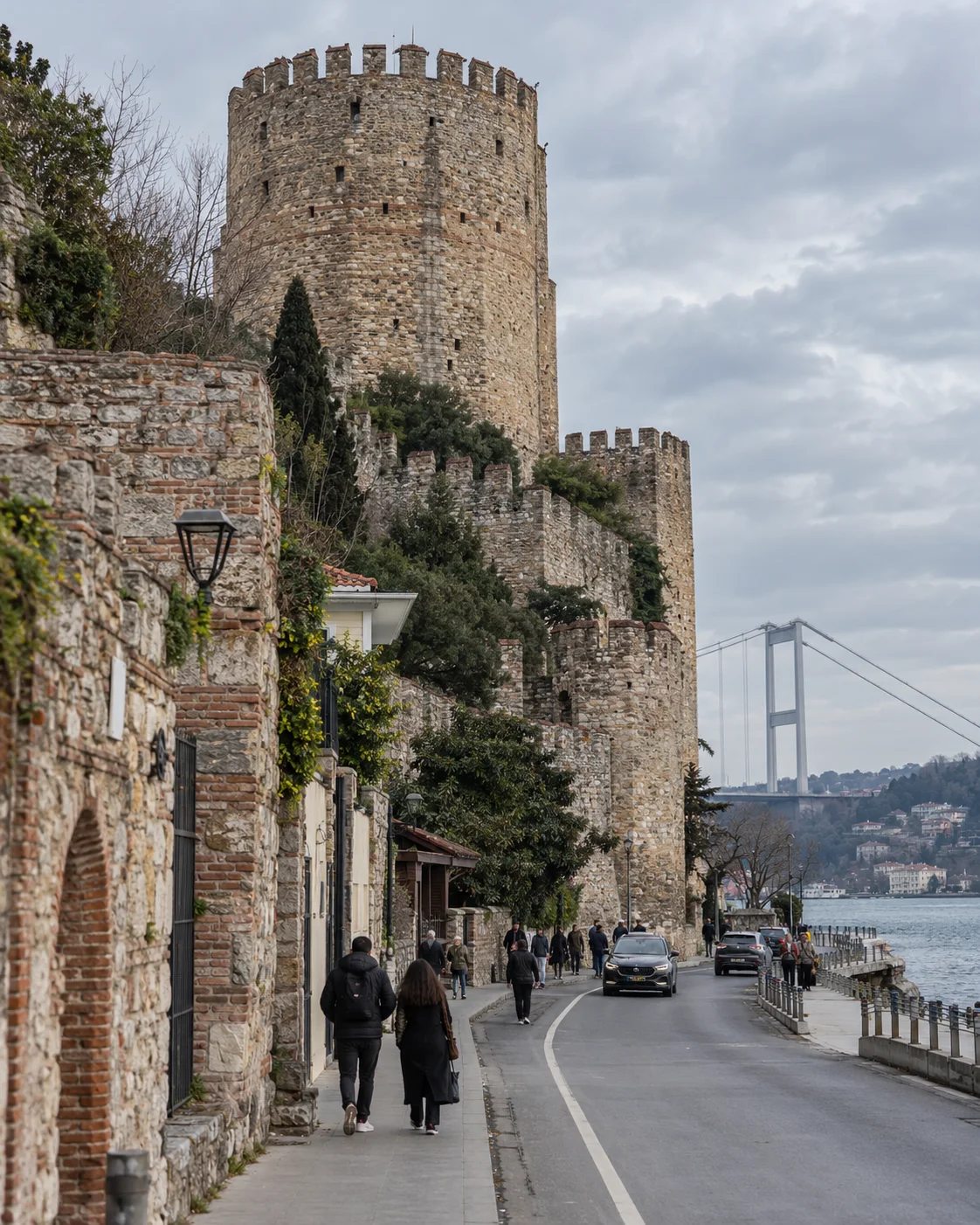 Keep going until you can see the stone climbing the slope above the water.
Walking note — Physical effort: 3/5
The approach from Baltalimanı follows the coastal road, with busy crossings and stretches of narrow pavement. Inside Rumeli Hisarı, expect steep paths, uneven ground and steps; this part is difficult for visitors with limited mobility or strollers. You can enjoy the fortress from the surrounding streets without entering. Coastal buses serve Baltalimanı and Rumelihisarı if you need to shorten the walk. For a rail connection, take a bus toward Aşiyan and use the F4 funicular to reach the M6 metro.
Why the Fortress Stands Here
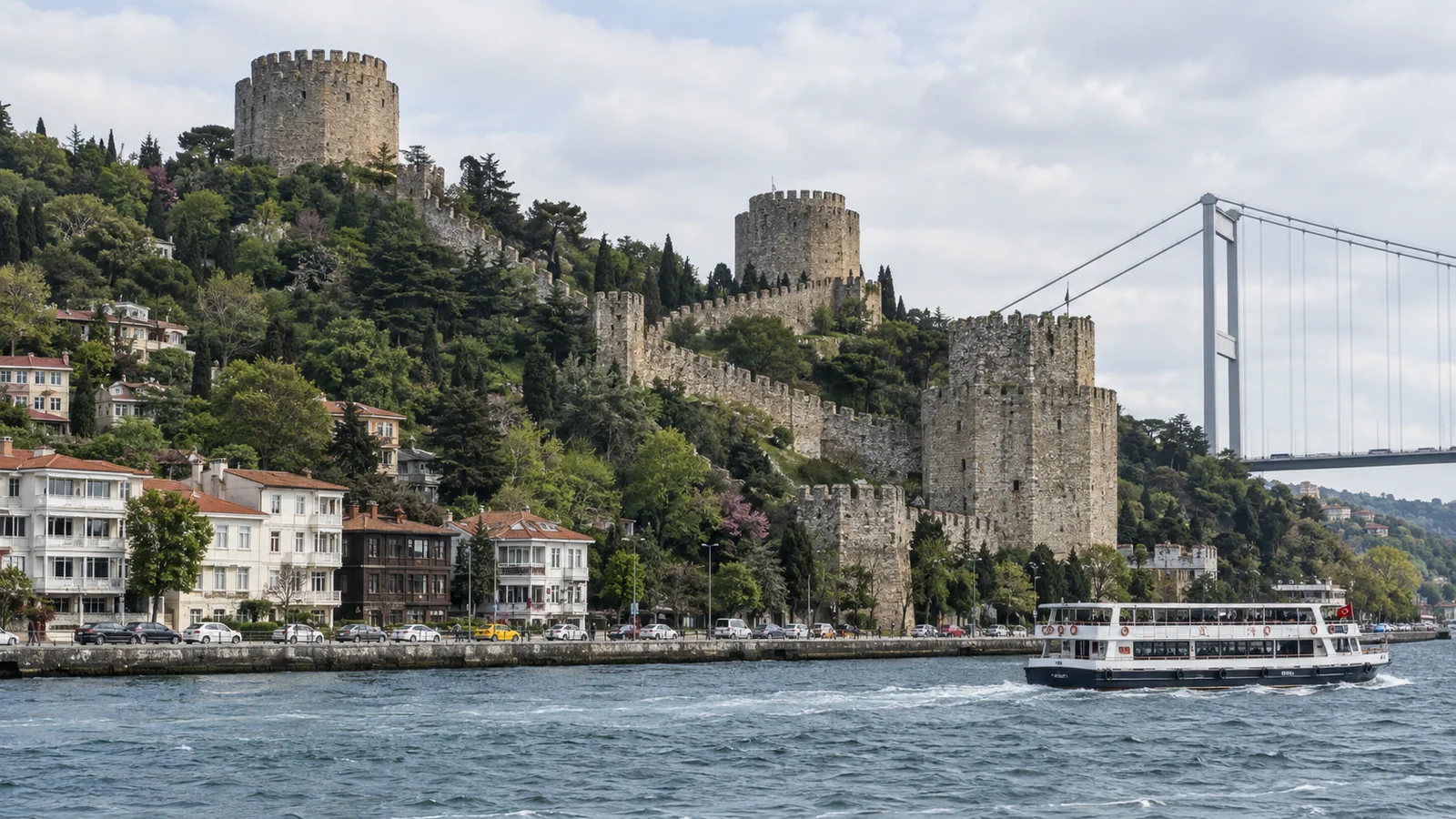
Walk toward the entrance and look across the Bosphorus.
On the opposite bank stands Anadolu Hisarı. The water narrows between the two shores. In 1452, Sultan Mehmed II had Rumeli Hisarı built here to control ships passing through the strait before the conquest of Constantinople.
The setting tells you more than a date can. Ferries and cargo vessels still pass through the channel. Watch one move between the two fortresses and you can understand why this particular stretch of water mattered.
Rumeli Hisarı was completed in 1452, within months of construction beginning. Three great towers carry the names of the statesmen associated with their building: Çandarlı Halil Paşa, Zağanos Paşa and Saruca Paşa. As you approach, a wall that seemed to draw a simple line across the hillside turns into separate masses of stone, each meeting the ground at a different height.
Photo placement: A vertical view of a fortress tower, with the Fatih Sultan Mehmet Bridge visible through a gap in the walls.
Inside the Walls
Once inside, let the paths set your pace. The climb is real, and some surfaces are uneven. Stop where there is room to stand and turn toward the water. From higher up, passing boats look small beneath the walls; at street level, their engines sounded much closer.
In the open space within the fortress stands Boğazkesen Fetih Mescidi. A small mosque was built here when the fortress was constructed. It later fell into ruin, leaving its minaret standing. During the twentieth century, an open air performance space occupied this part of the grounds, and concerts brought audiences inside the walls. The mosque was rebuilt and reopened in 2015, a change that drew public debate.
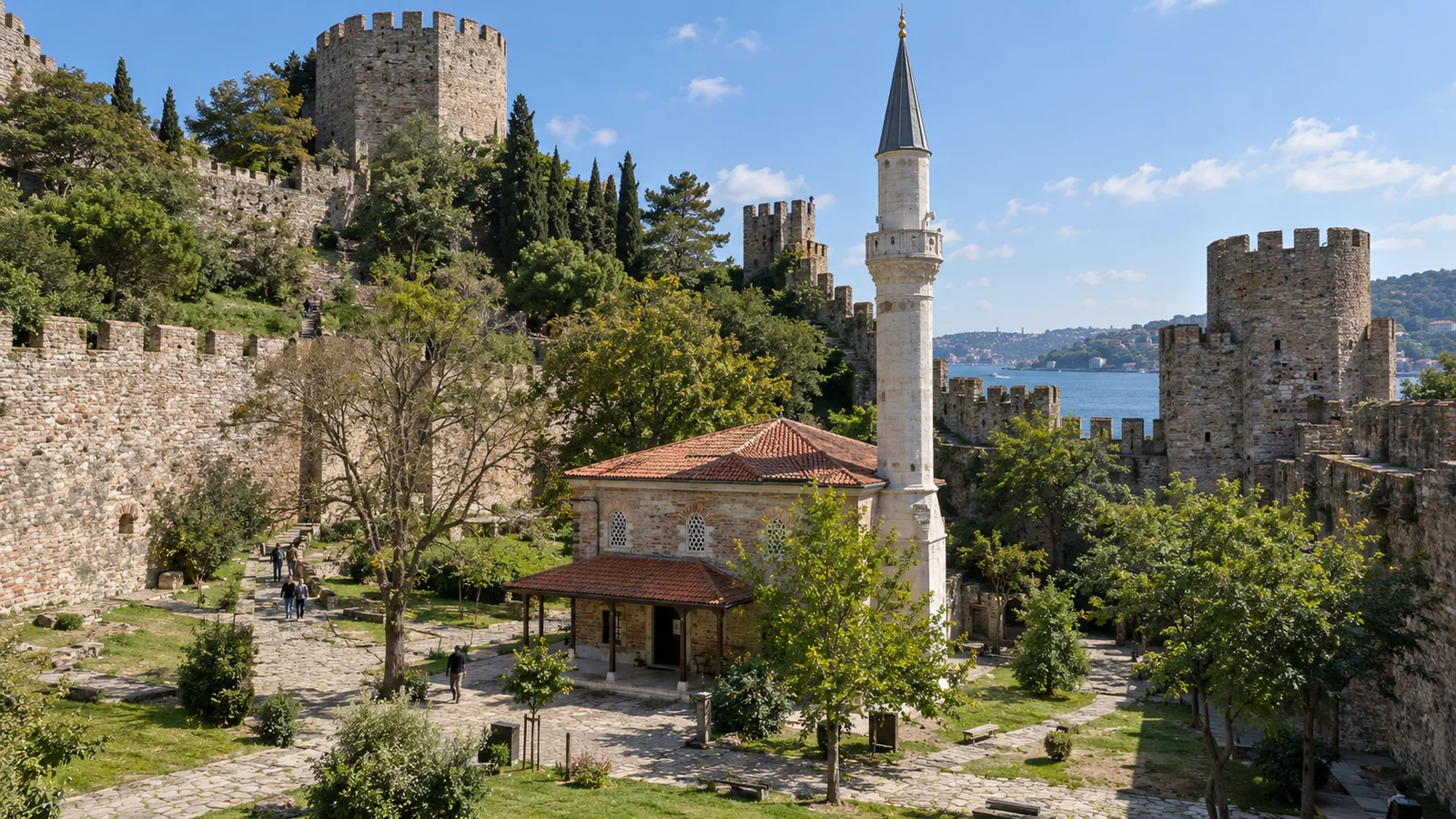
Pause nearby and listen to the wind crossing the open ground. The applause from those concerts has gone, but knowing that it once filled this space changes how you hear the quiet.
Look around the rest of the grounds as well as outward. Historic cannonballs and other stone pieces recall the fortress’s military purpose. Trees and ground cover have taken root among the walls. When the wind comes off the strait, you can feel how exposed the position is.
The fortress later lost its original strategic role. It was used as a prison, suffered fire damage and eventually became part of a neighbourhood. Its present life as a museum is another chapter in that history.
Photo placement: The rebuilt mosque and its minaret within the fortress grounds, photographed with enough surrounding wall to show their position.
Spinach Pastry at Kale Cafe
Near the fortress, stop at Kale Cafe & Restaurant on Yahya Kemal Caddesi. Order ıspanaklı börek, the spinach pastry closely tied to the place’s early story.
If a fresh batch has just come out, the warm layers of yufka break into crisp flakes as you cut through them. The spinach filling is soft beneath that delicate crust. Let the steam from a glass of strong Turkish tea rise beside the plate before you take your next bite.
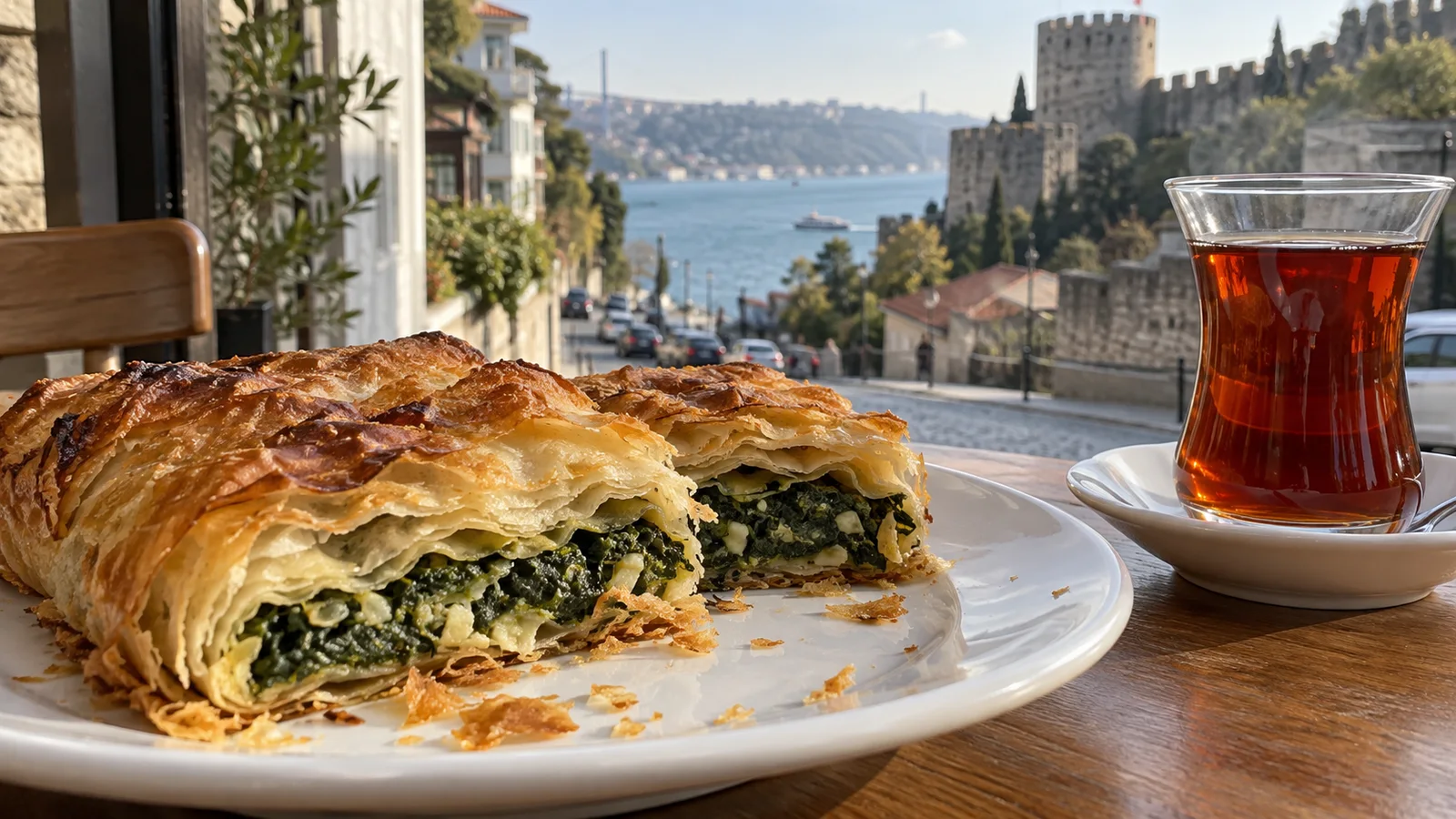
The business began as a pastry shop in 1982. Its spinach pastry helped make it a familiar Bosphorus breakfast stop, and it expanded its breakfast service the following year.
Around you, tables fill and empty. Someone has come for a full breakfast; someone else wants only a short break before a bus arrives. The fortress may dominate the skyline, but places like this show you how the neighbourhood spends its morning.
Photo placement: A close view of spinach börek and steaming tea, with the street or fortress wall softly visible behind the table.
Stay a Little Longer at Street Level
After your stop, take a short walk through the lanes beside the walls.
A shopkeeper calls a morning greeting across the street. A cat settles near a doorway, keeping just enough distance from passing feet. Near the water, fishing lines angle out above the shore and bright plastic buckets sit beside their owners.
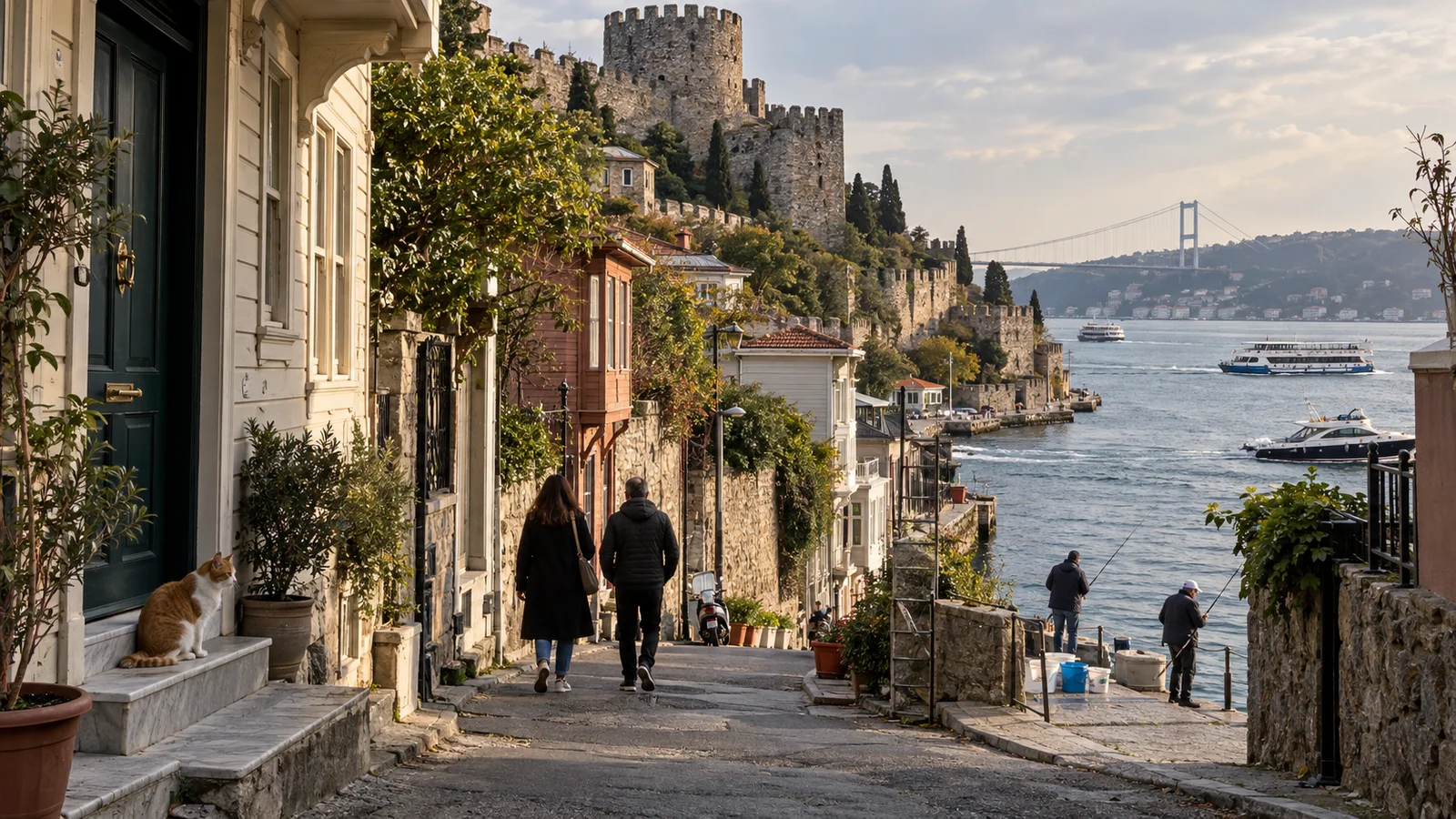
The lanes draw your attention down from the towers to doorways, shopfronts and conversations. The scent of pastry gives way to the saltier air near the Bosphorus. At one turn, the fortress hides behind the houses; at another, it reappears above them.
Find a safe place beside the waterfront and look back. The walls climb the hillside behind a neighbourhood that continues to eat, commute, work and meet friends beneath them.
Before You Leave
Rumeli Hisarı was designed to watch the Bosphorus. Today you can stand beside it and watch the strait for entirely different reasons: the colour of the water, the traffic of boats, the brief space between one vessel and the next.
You can finish here and take a coastal bus onward. The next part of the Sarıyer series returns north of İstinye to follow another stretch of the shore.
Next walk: Begin at Yeniköy and continue to Tarabya, where the Bosphorus passes waterfront homes, neighbourhood tables and a sheltered bay.
📌 Practical Info for Travelers
Rumeli Hisarı Museum: Open Tuesday–Sunday, 09:00–18:30. Closed Mondays. The ticket office closes at 17:30.
Foreign visitor ticket: €6.
Passes: Müzekart is valid for eligible Turkish citizens. Museum Pass İstanbul includes Rumeli Hisarı for foreign visitors.
Terrain: Steep, uneven paths and steps inside the fortress. The coastal approach has narrow pavements and busy crossings.
Shorten the route: Use a coastal bus from Baltalimanı or Rumelihisarı.
💬 Comments (0)
Traveler comments are shown in their original language.
No comments yet. Be the first to share your experience.
💬 Want to join the discussion?
Log in or create an account to leave a comment.