Osmanbey and Central Şişli: The City at Work
Follow Şişli’s working rhythm from Osmanbey’s clothing shops to Atatürk’s former home. Pause for Paskalya çöreği before reaching the busy centre of the district.
 Burak ÇınarTurkTravelRadar Founder
September 28, 2026
Leave the trees of Maçka behind and climb back toward Teşvikiye Caddesi. From there, take Rumeli Caddesi toward Osmanbey.
The air changes before the scenery does. Traffic grows louder. A delivery van waits with its doors open; someone carries a covered rail of clothes toward a shop. By the time you reach Halaskargazi Caddesi, the slower pace of the park has disappeared.
This is a part of Istanbul that gets dressed, goes to work and keeps moving.
Walking note — Physical effort: 3/5
From upper Maçka, walk through Nişantaşı to Rumeli Caddesi and Osmanbey, then follow Halaskargazi Caddesi toward the Atatürk Museum and central Şişli. Allow around two hours, including a pastry stop. The climb out of Maçka is the hardest part. Around Osmanbey, expect busy crossings, narrow stretches of pavement and delivery activity; the route is difficult with a pushchair or wheelchair where vehicles obstruct the kerb. M2 Osmanbey provides an early exit. Farther north, use M2 Şişli–Mecidiyeköy to leave the route.
Follow the Clothes
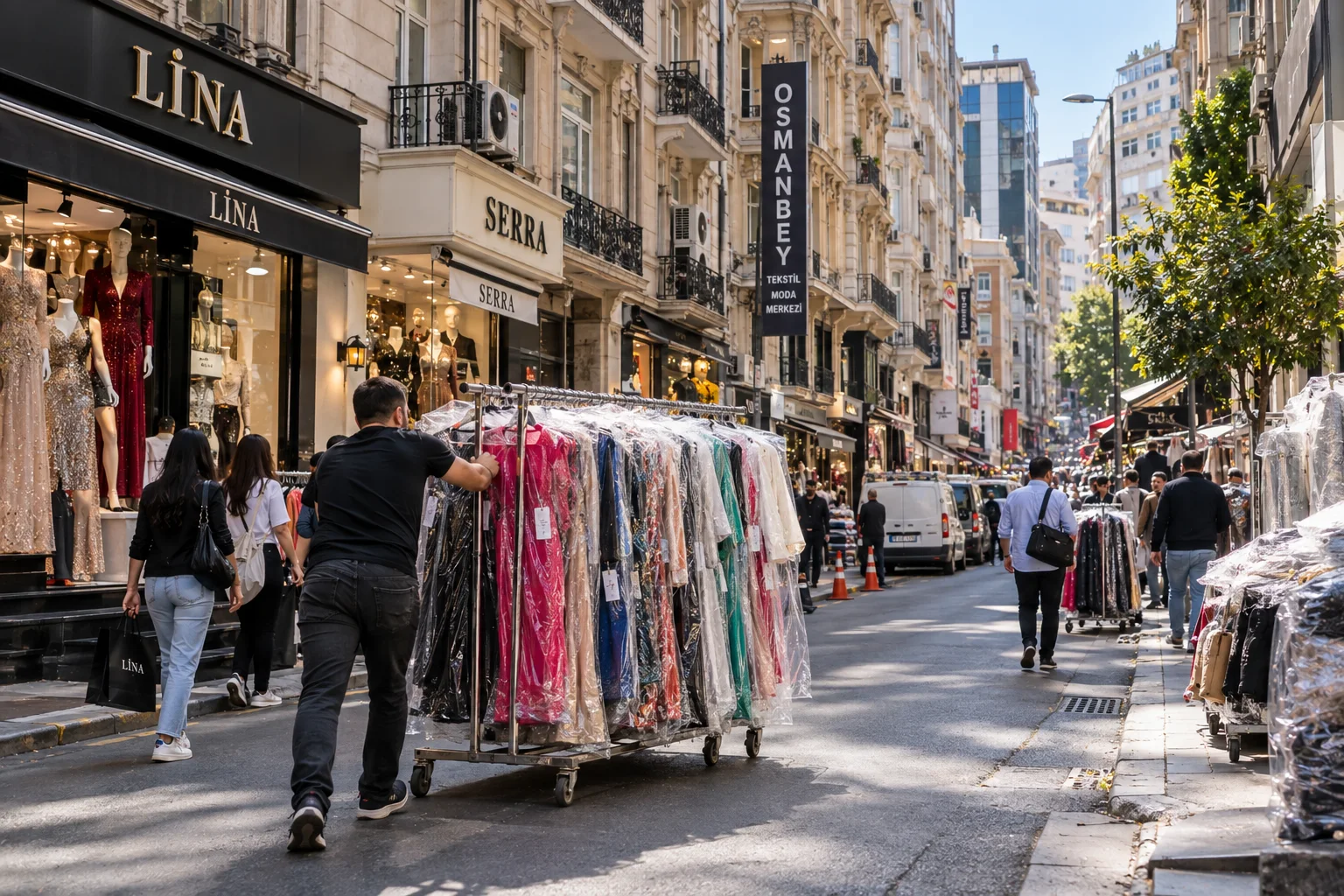
Around Osmanbey, garments are everywhere, though many are travelling between businesses rather than hanging in windows.
Look along the side roads off Halaskargazi Caddesi. You may see fabric wrapped in clear plastic, rails pushed toward a doorway, and parcels stacked for collection. Wheels catch on uneven joins in the pavement. A shop shutter rises with a metallic rattle. Between deliveries, someone stands outside for a quick conversation before returning to work.
Osmanbey’s name comes from Osman Bey, who owned land and built a mansion in this area. The mansion no longer explains the neighbourhood to a passer-by. Its name remains, carried through a district now shaped by apartment buildings and commerce.
For a photograph, find a safe spot off the flow of deliveries and frame a garment rail against the older upper floors. The image will hold two sides of Osmanbey in one view.
A House on Halaskargazi Caddesi
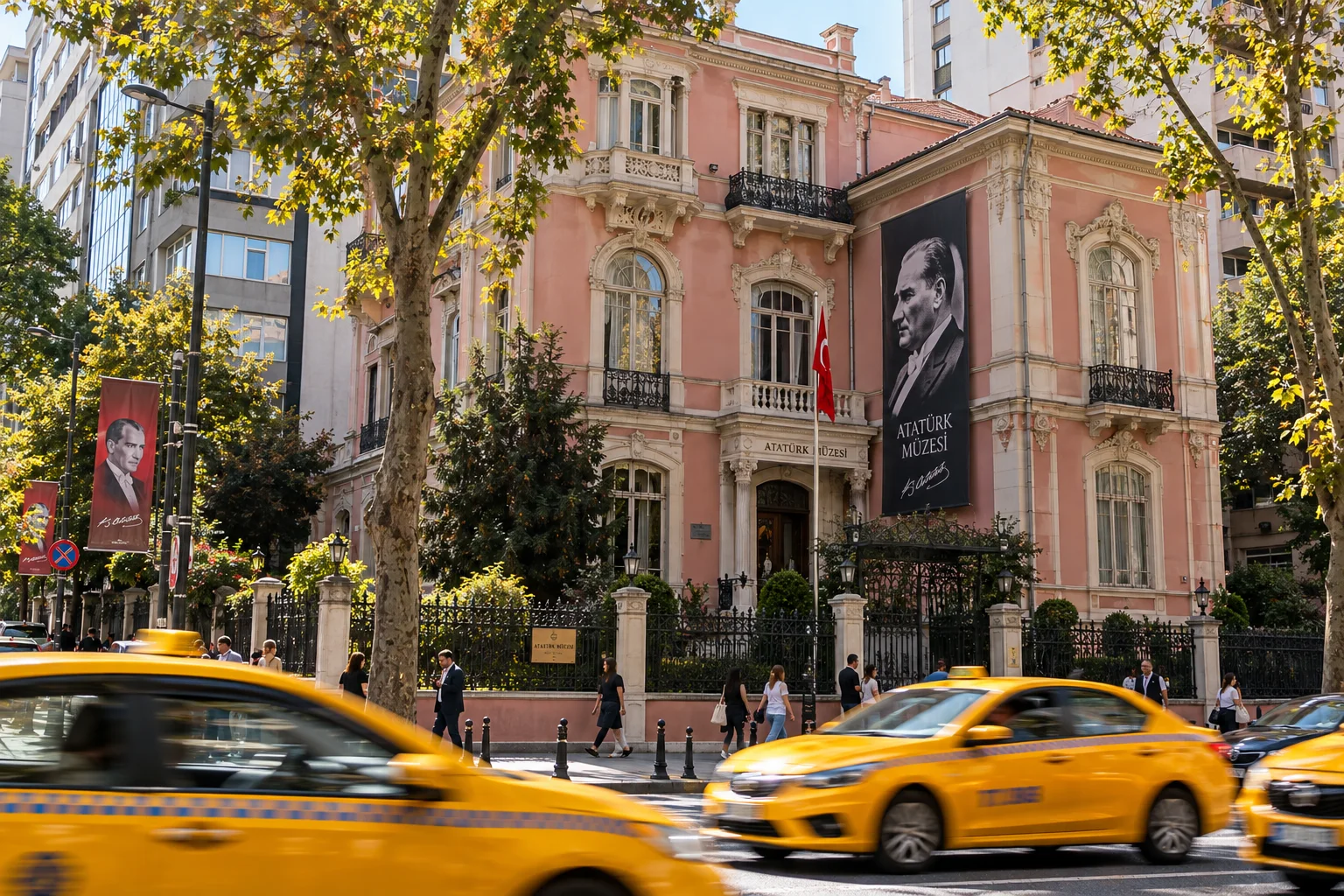
Continue along Halaskargazi Caddesi to the Atatürk Museum.
Mustafa Kemal lived in this house before departing for Samsun in 1919. It is easy to pass the building while concentrating on traffic and crossings. Stop and give its façade a proper look: a private home now holding a part of the country’s public history.
Admission is free. Şişli Municipality lists the museum and its library as open 09:00–17:00, except Mondays. Inside are photographs, documents and personal belongings connected with Atatürk. There is no MüzeKart purchase to factor into this stop.
Outside, the avenue has carried on without pausing. Engines idle at the lights. Shoes strike the pavement. Someone checks a phone, then hurries toward the metro. The house asks for attention in the middle of all that ordinary urgency.
A Sweet Detour Into Şişli’s Older Social Life
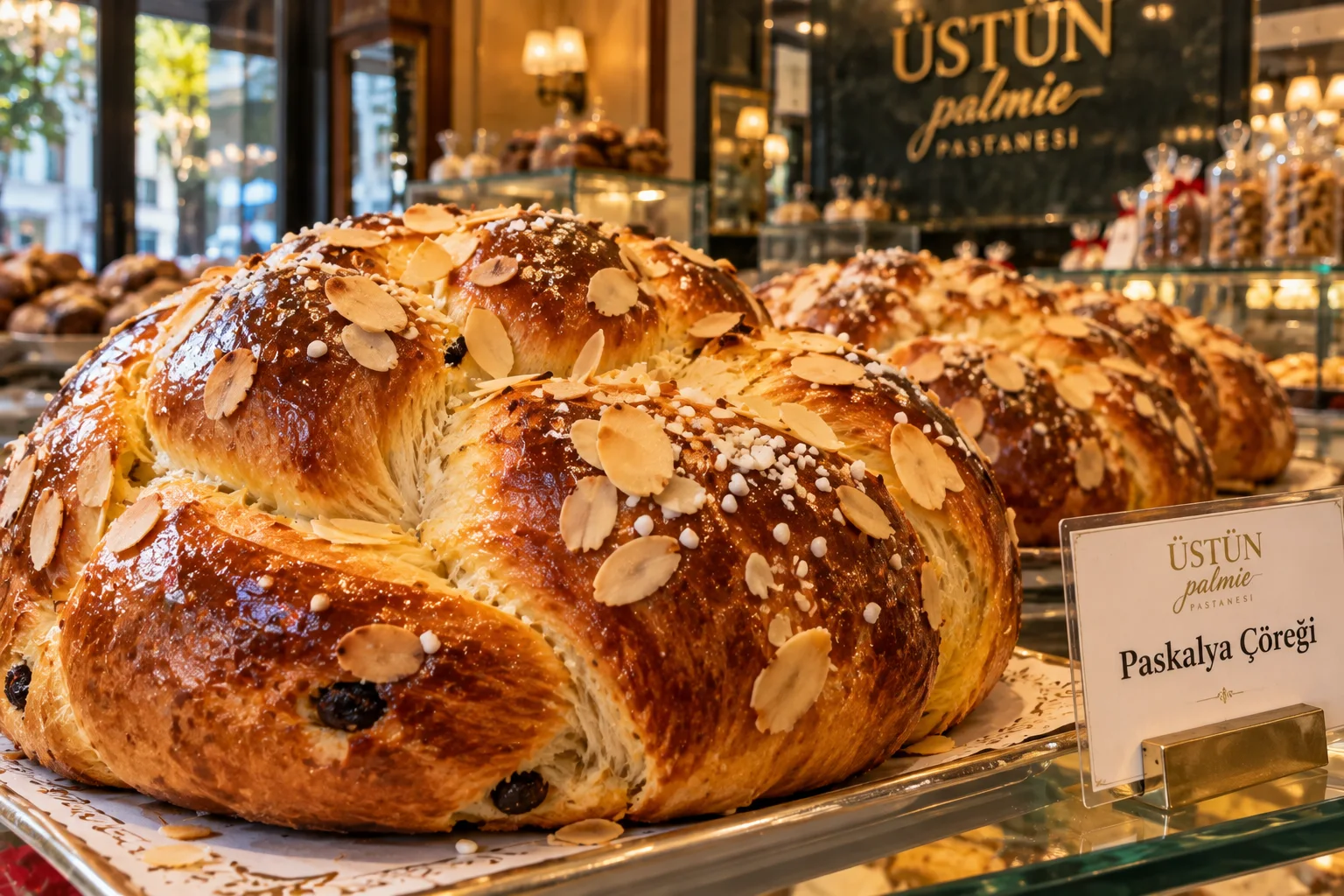
For a food stop, turn into the neighbourhood streets toward Üstün Palmie Pastanesi in the Feriköy side of Şişli.
Ask for a slice or portion of its Paskalya çöreği if available. This lightly sweet braided bread, scented with mahlep, has a place in the food traditions of Istanbul’s Christian communities and has become familiar to neighbours far beyond a religious holiday. Pull a piece apart while it is fresh; the soft crumb and distinctive aroma give the detour its reward.
The bakery also offers a reason to notice the residential streets around it. These are places where people buy something for home, greet a familiar face and continue with their day. Şişli’s history lives in those habits as much as in its buildings.
Toward the Centre of Şişli
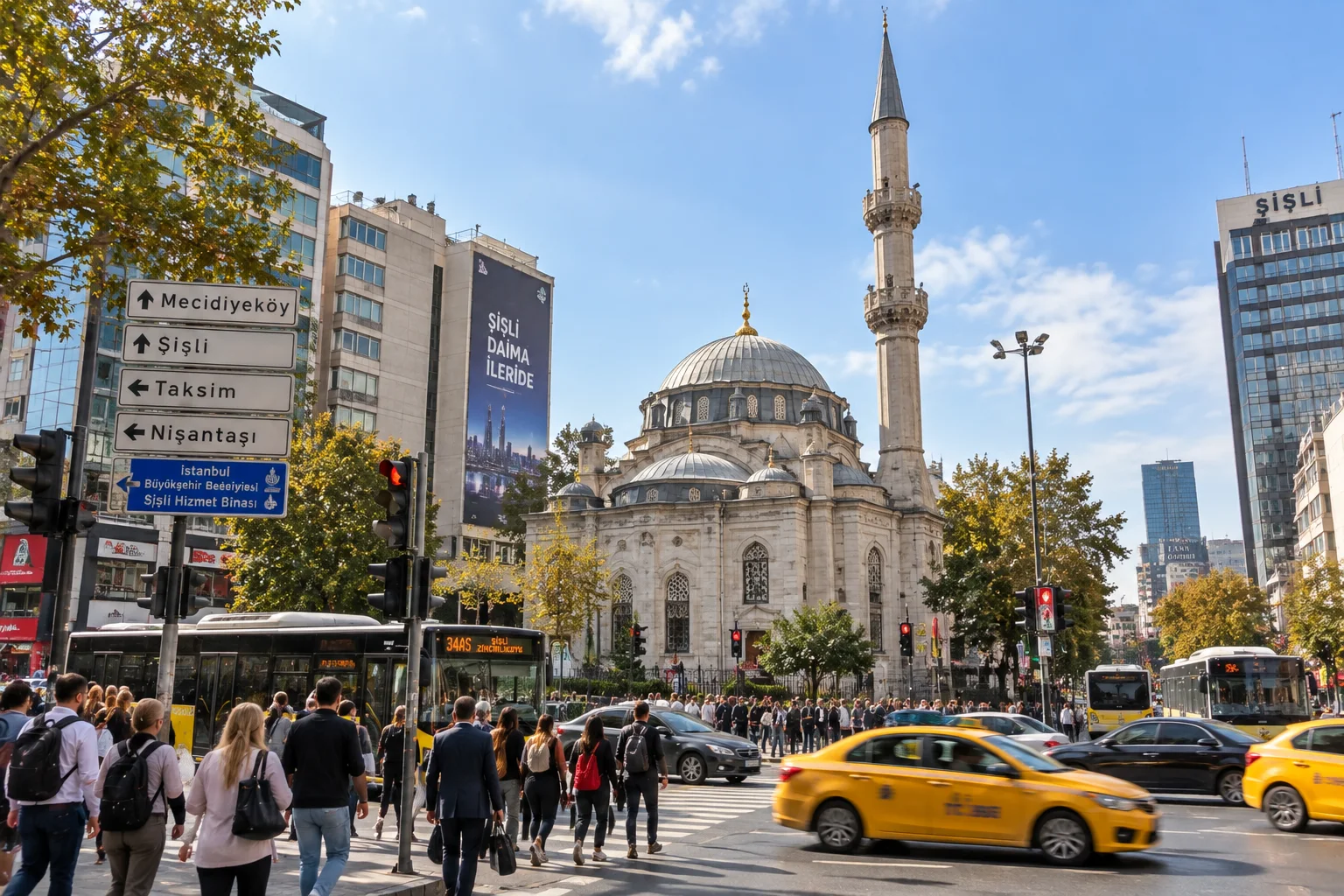
Return toward the main avenue and continue north. The scale of the junctions grows. Shop signs, buses and crowds compete for your attention, and the smell of baking gives way again to the warm air and exhaust of a busy road.
Near Şişli Mosque, look for a place to stand clear of the crossings. Its presence among the larger roads tells you something about central Şişli: worship, trade, homes and transport all occupy the same crowded ground.
This part of the walk is less about finding a quiet corner than understanding how many journeys meet here. Someone has come to buy fabric. Someone else is crossing town for work. You may be ready to sit down. All three routes pass through the same few blocks.
Before You Leave
If your feet have had enough, enter M2 Şişli–Mecidiyeköy. The same metro line also serves Osmanbey, so there is no need to retrace the walk.
Take one last look along the avenue before going underground. The clothing rails, the museum house, the bakery and the crowded junction belong to a Şişli that reveals itself through what people do here every day.
Next walk: Continue beyond central Şişli toward Mecidiyeköy, where the district’s commercial pace grows larger still.
💬 Comments (0)
Traveler comments are shown in their original language.
No comments yet. Be the first to share your experience.
💬 Want to join the discussion?
Log in or create an account to leave a comment.