Köprülü Canyon National Park: The River That Cut Through the Taurus Mountains
Köprülü Canyon is famous for rafting, but the story runs much deeper. Follow the Köprüçay through the Taurus Mountains to discover turquoise water, Roman bridges, ancient routes toward Selge and a landscape people have crossed for nearly two thousand years.
 Burak ÇınarTurkTravelRadar Founder
September 26, 2026
Before you get into a raft, look at the bridge.
Before you look at the bridge, look at the cliffs.
And before you photograph the turquoise water, remember one thing:
The river made all of this possible.
Today, thousands of people come to Köprülü Canyon National Park for rafting.
Helmets.
Paddles.
Inflatable boats.
Cold water.
Summer adventure.
But the Köprüçay River was important long before rafting companies arrived.
It carved a route through the Taurus Mountains.
Ancient people followed it.
Roads crossed it.
Bridges were built above it.
Cities depended on the landscape around it.
And almost two thousand years later, people are still travelling through the same corridor.
Only now they are wearing life jackets.
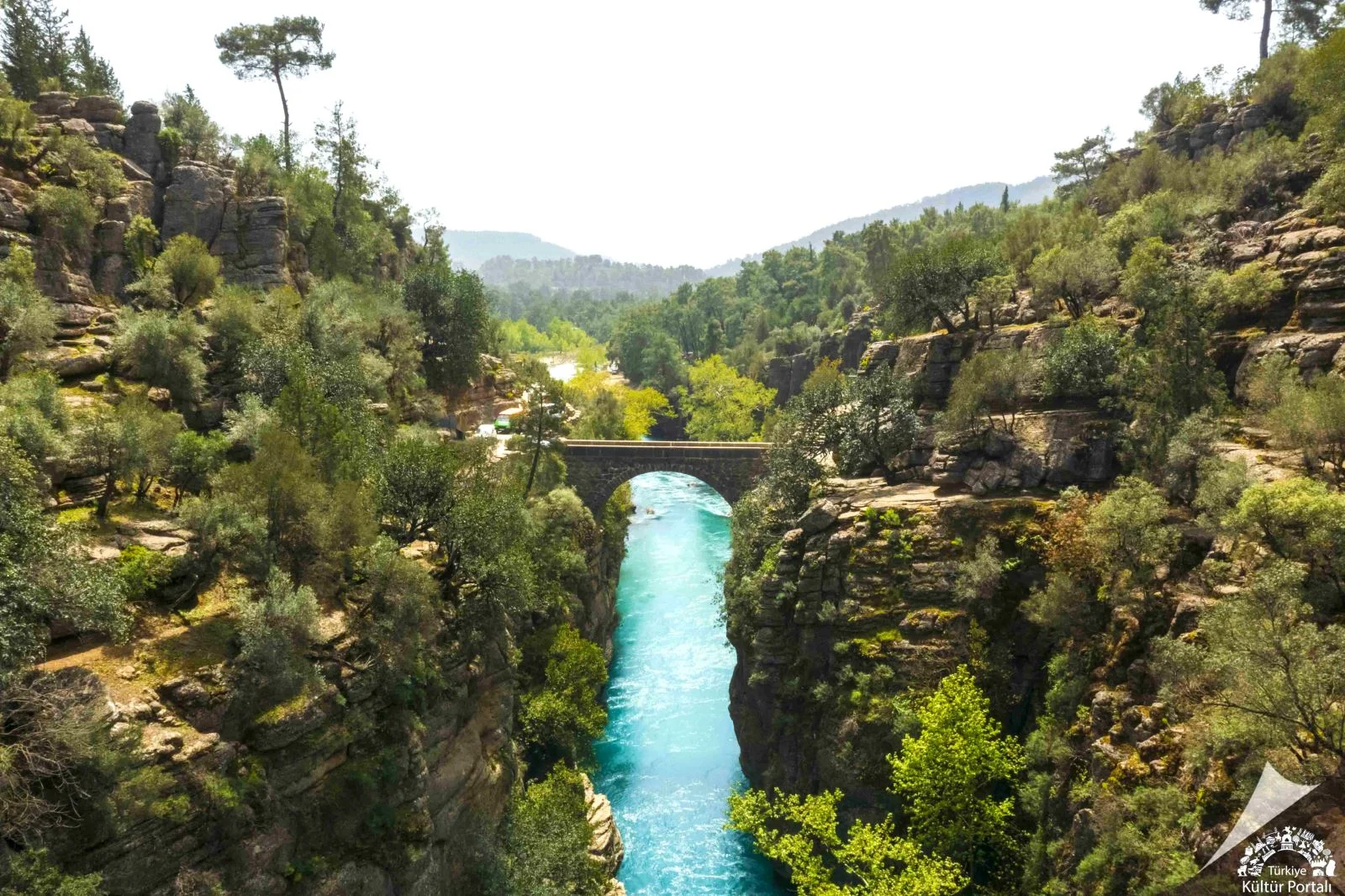
First, Look Down at the Water
The colour immediately gets your attention.
Depending on the weather, light and recent rainfall, the Köprüçay can appear turquoise, blue-green or deeper green.
The water moves between steep rock walls and forested slopes.
In some places the canyon feels wide and open.
In others the cliffs close in.
This is not a decorative river running through a tourist park.
It is the reason the canyon exists.
Over immense periods of time, flowing water exploited weaknesses in the rock and gradually cut deeper into the landscape.
The river kept moving.
The mountains stayed.
The canyon formed between them.
You Are Inside the Taurus Mountains
Köprülü Canyon lies inland from Antalya's Mediterranean coast.
The landscape changes as you leave the coastal tourism zone.
Hotels disappear.
The road climbs.
Pine forests become more dominant.
Rocky slopes surround you.
The air can feel different.
And eventually the river appears below.
This contrast is part of what makes the park remarkable.
You can spend the morning near the Mediterranean and later find yourself between mountain walls beside cold river water.
Antalya is not only beaches.
Köprülü Canyon makes that obvious very quickly.
Then You See the Bridge
Near the most famous section of the canyon stands an ancient stone bridge known today as Oluk Köprü.
It is commonly associated with the Roman period.
The bridge is narrow.
Compared with modern infrastructure, it can almost look too small to matter.
But remove the modern road.
Remove the rafting vehicles.
Remove the tour buses.
Now look again.
Crossing a river through difficult mountain terrain was a serious logistical problem.
A permanent bridge changed movement.
People could cross.
Animals could cross.
Goods could move.
Routes became more reliable.
The bridge was not built for the view.
It was infrastructure.
Imagine Crossing It 1,800 Years Ago
No safety barrier designed for modern tourists.
No asphalt.
No engines.
You approach with animals carrying goods.
The river is below.
Mountain routes stretch ahead.
Perhaps you are travelling toward the ancient city of Selge.
Perhaps you are carrying agricultural products.
Perhaps you are a soldier.
A merchant.
A local farmer.
A messenger.
The bridge is only a few metres long compared with your entire journey.
But without it, the river could determine whether that journey was possible at all.
That is why old bridges deserve more attention than they usually receive.
They reveal where people needed to go.
The River Had an Ancient Name
The Köprüçay was known in antiquity as the Eurymedon.
If that name sounds familiar, it should.
The river appears in one of the major military episodes of the ancient Mediterranean.
Around 466 BC, a major battle was fought near the mouth of the Eurymedon between forces of the Delian League led by the Athenian commander Cimon and Persian forces.
The exact details transmitted by ancient sources are debated.
But the Battle of the Eurymedon became an important episode in the struggle between Greek and Persian power.
That battle happened much closer to the coast.
Yet the river flowing through Köprülü Canyon is the same river system.
Stand beside it and suddenly the landscape connects mountains deep inland with events that shaped the wider Mediterranean world.
Follow the Road Up and Another City Appears
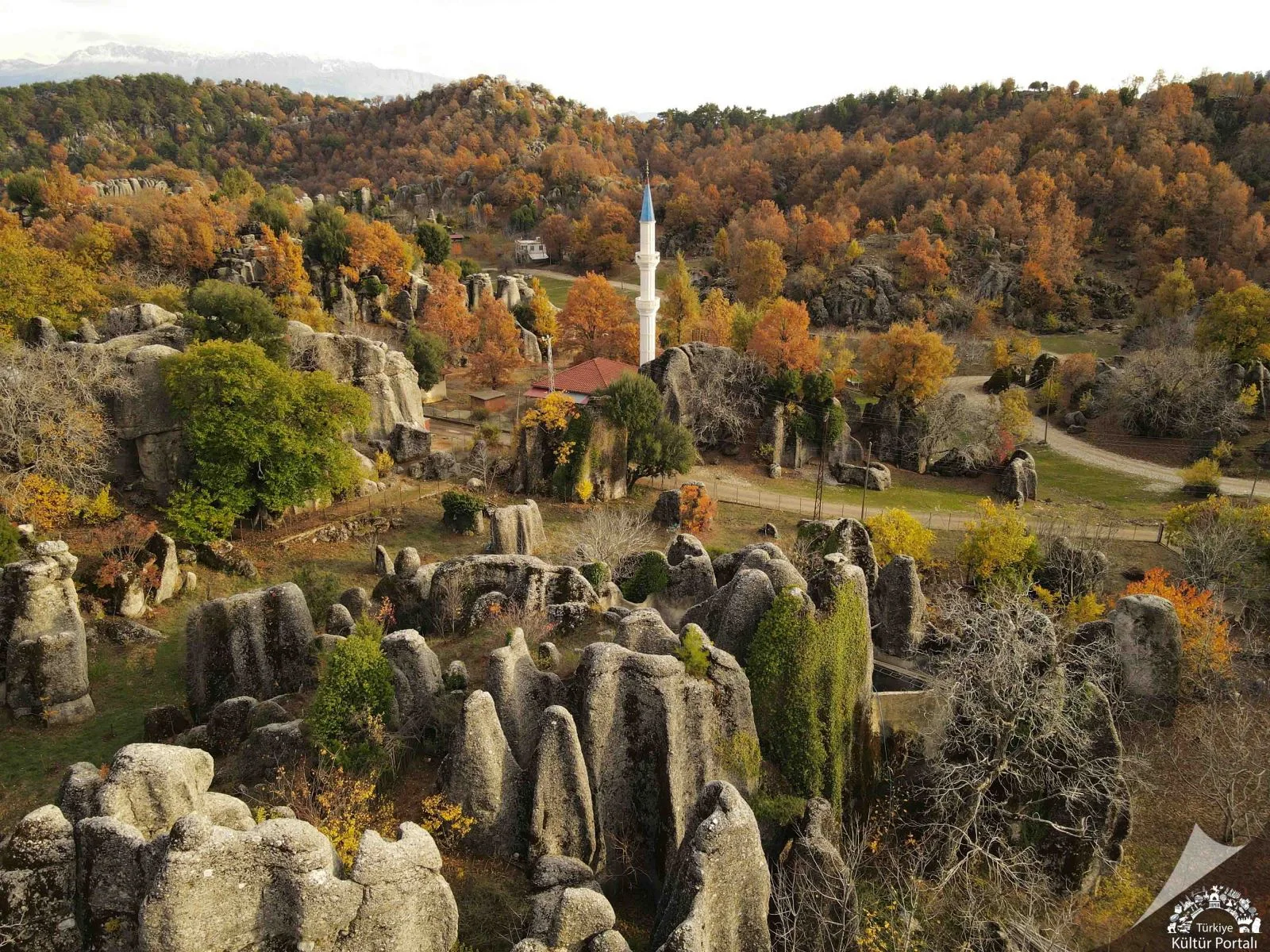
High in the mountains beyond the canyon lies Selge.
Today it is an archaeological site near the modern village of Altınkaya.
In antiquity, Selge was an important Pisidian city.
Its position may look remote to us.
But “remote” depends on how transportation works.
Ancient communities used mountain routes that modern tourists rarely think about.
The canyon, bridges and roads belonged to a wider network connecting settlements, farmland and the Mediterranean world.
Köprülü Canyon was not wilderness separated from civilisation.
People lived around it.
Moved through it.
Built inside it.
Used its resources.
The landscape was part of their economy.
And There Is Another Ancient Bridge
The region preserves another historic bridge commonly known as Büğrüm Köprü.
Together with Oluk Köprü and the surviving ancient road network, these structures show something easy to miss when visiting for rafting:
People were engineering solutions to this difficult landscape long before modern tourism.
The mountains created obstacles.
Humans built around them.
The river created barriers.
Humans bridged them.
That relationship between nature and engineering is one of the real stories of Köprülü Canyon.
Now Put On the Life Jacket
Because the modern story is also worth experiencing.
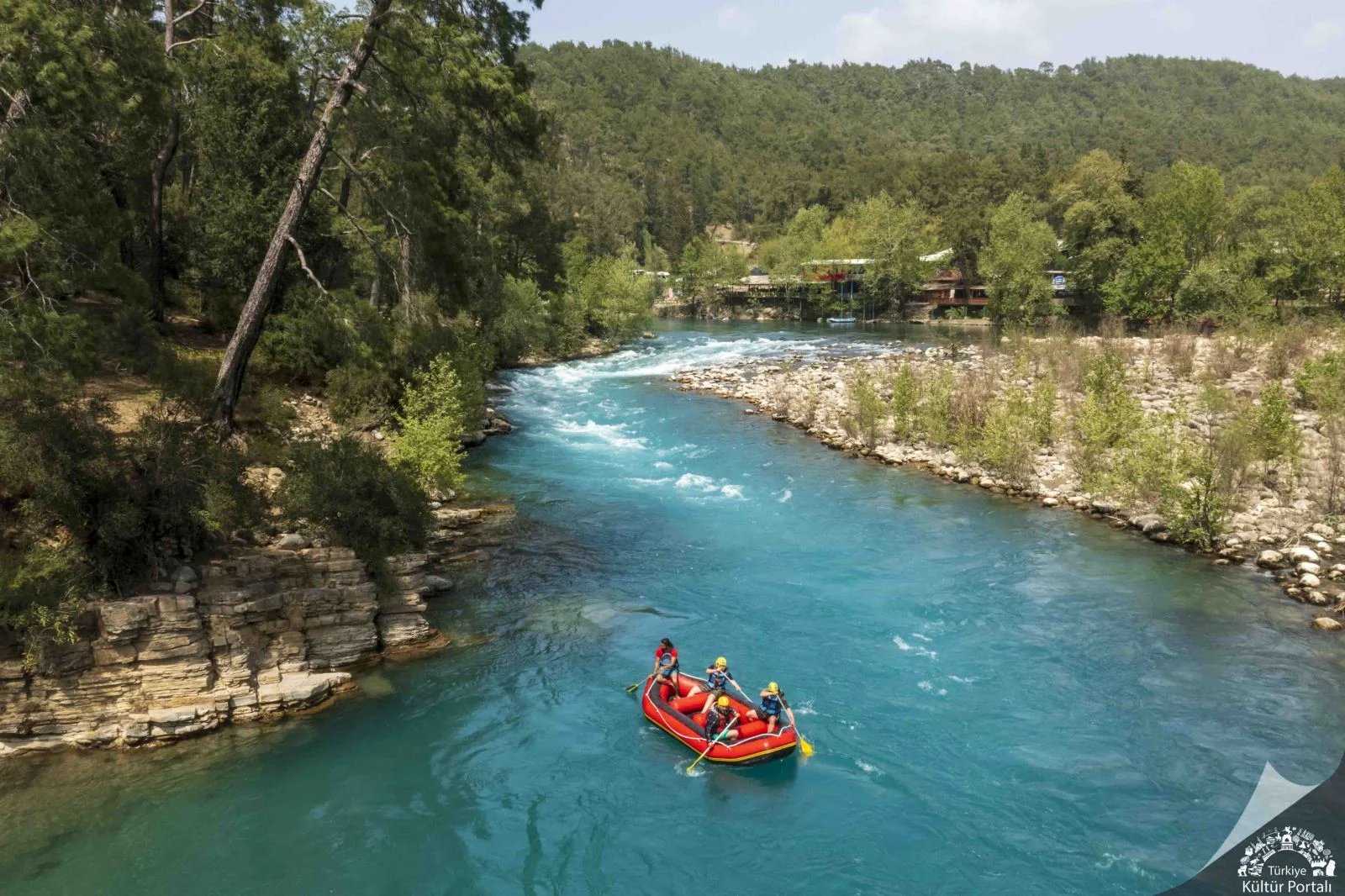
Köprüçay has become one of Türkiye's best-known rafting destinations.
There is a good reason.
The river offers sections suitable for commercial rafting, dramatic scenery and relatively easy access from Antalya's tourism regions.
During the warmer months, rafting boats appear one after another.
Guides shout instructions.
Paddles hit the water.
Boats spin.
People fall in.
People laugh.
And suddenly the ancient transportation corridor becomes an adventure playground.
But The Water Is Colder Than It Looks
This surprises many visitors.
Antalya can be extremely hot in summer.
You arrive under powerful Mediterranean sunshine.
Then you enter the river.
The temperature difference can be immediate.
Mountain-fed river water can feel very cold compared with the air.
That first splash may be the most memorable part of the day.
It is refreshing.
But do not confuse hot weather with warm water.
They are two different things.
Rafting Is Not Just Sitting in a Boat
Commercial rafting trips vary.
So do water conditions.
A reputable operator should provide appropriate safety equipment and instructions before entering the river.
Listen to them.
You may be told how to hold the paddle.
How to sit.
What to do if you fall into the water.
How to respond to commands.
Where not to stand.
These instructions are not theatrical additions designed to make the experience feel adventurous.
They are there because moving water deserves respect.
Do Not Choose a Rafting Company Only by Price
This is one of the most useful practical lessons for Köprülü Canyon.
Many operators sell apparently similar experiences.
But “rafting tour” can mean different things.
Before booking, check what is actually included.
Transport?
Lunch?
Insurance?
Equipment?
Photos or videos?
Extra activities?
How long are you actually on the river?
Where does the rafting section begin and end?
Are optional activities added during the trip?
A very cheap headline price can become less attractive once extras appear.
Compare the complete experience, not only the first number you see.
You Don't Have to Raft
This is important.
Köprülü Canyon is worth visiting even if you have no desire to sit in an inflatable boat.
Come for the landscape.
Walk around accessible areas.
See the ancient bridge.
Watch the river.
Explore the surrounding mountain scenery.
Combine the canyon with the route toward Selge if conditions and your plans allow.
Have a meal beside the river.
Spend time in the forest.
The national park is larger than the rafting industry operating inside it.
Do not let the helmets and paddles convince you otherwise.
Look at the Forest
The park protects an extensive Mediterranean mountain ecosystem.
Pine forests dominate much of the landscape.
Other vegetation changes with altitude, moisture and local conditions.
The canyon creates its own environments.
Rock faces.
Riverbanks.
Forest.
Openings in the valley.
This mixture supports diverse wildlife.
You may not see dramatic animals during a busy daytime visit.
That does not mean they are absent.
A national park is an ecosystem first.
A tourist attraction second.
The Canyon Is Bigger Than the Famous Photograph
Online images often concentrate on a few recognisable locations.
The bridge.
Turquoise water.
Rafting boats.
But Köprülü Canyon National Park covers a much broader landscape.
The canyon system extends for many kilometres.
Different sections have different characteristics.
Some are accessible.
Others are far less practical for an ordinary visitor.
This matters because the park should not be imagined as one viewpoint where everyone stops for ten minutes.
It is a landscape.
Summer Is Busy for a Reason
Hot weather makes cold river water extremely attractive.
This also means peak summer can bring large numbers of visitors and rafting groups.
If you expect silent wilderness in the most popular rafting areas during the busiest part of the day, you may be disappointed.
Boats arrive.
Groups gather.
Vehicles move.
Restaurants operate.
Guides call to customers.
The canyon can be energetic rather than peaceful.
If solitude is your priority, your timing and the specific area you visit matter.
Then Step Away From the Rafting Groups
Find a safe place where you can simply look at the river.
Now remove the modern activity mentally.
The boats disappear.
The buses disappear.
The restaurants disappear.
The bridge remains.
The cliffs remain.
The forest remains.
The water continues moving.
That is the scale you should think about.
Tourism here is recent.
The landscape is not.
The River Has Connected Completely Different Worlds
Think about everything this water has witnessed.
Ancient mountain communities.
The city of Selge.
Roman engineers.
Merchants crossing stone bridges.
Empires controlling southern Anatolia.
Villages developing in the mountains.
Modern roads.
National park protection.
Rafting companies.
Tourists arriving from around the world.
The reason these completely different histories occupy the same place is geography.
Everyone had to respond to the river.
Ancient people needed to cross it.
Modern visitors want to travel down it.
Before You Leave, Return to the Bridge
Look at Oluk Köprü one more time.
Below it, Köprüçay continues flowing through the canyon.
The bridge and river represent two completely different forces.
One is human.
One is geological.
The river spent enormous periods of time cutting its way through the mountains.
Humans arrived much later and built a narrow stone crossing over it.
Nearly two thousand years later, the river is still there.
And so is the bridge.
That may be the best way to remember Köprülü Canyon.
Not simply as:
“The place near Antalya where you go rafting.”
But as a landscape people have been trying to cross, navigate and understand for thousands of years.
Today we put on helmets.
Take paddles.
Climb into inflatable boats.
And call it adventure.
Ancient travellers probably had a different word for it.
For them, getting across the river was simply part of the journey.
💬 Comments (0)
Traveler comments are shown in their original language.
No comments yet. Be the first to share your experience.
💬 Want to join the discussion?
Log in or create an account to leave a comment.