Kırkinler Rock: The Rooms Hidden Inside an Afyonkarahisar Cliff
Near Seydiler in Afyonkarahisar, Kırkinler’s dark openings lead into a history of carved rooms, Christian worship and earlier Phrygian traces. Discover the human spaces within the rock.
 Burak ÇınarTurkTravelRadar Founder
October 3, 2026
The opening is dark enough to make you stop.
Outside, daylight reveals the uneven face of the rock. Inside, it reaches only a short distance before the outlines become difficult to follow. As your eyes adjust, an edge emerges: a doorway cut into stone.
Beyond it is another space.
At Kırkinler, near Seydiler in the İscehisar district of Afyonkarahisar, people carved rooms into the rock, connected them with passages and used parts of the complex for worship and burial. Official descriptions identify a Byzantine rock settlement with evidence of earlier Phrygian use.
From outside, you see a rocky mass. Once you recognise the doorways, you begin to see the building within it.
Someone stood here and decided where a room would begin.
Then they cut into the mountain.
A Building Made by Removing Stone
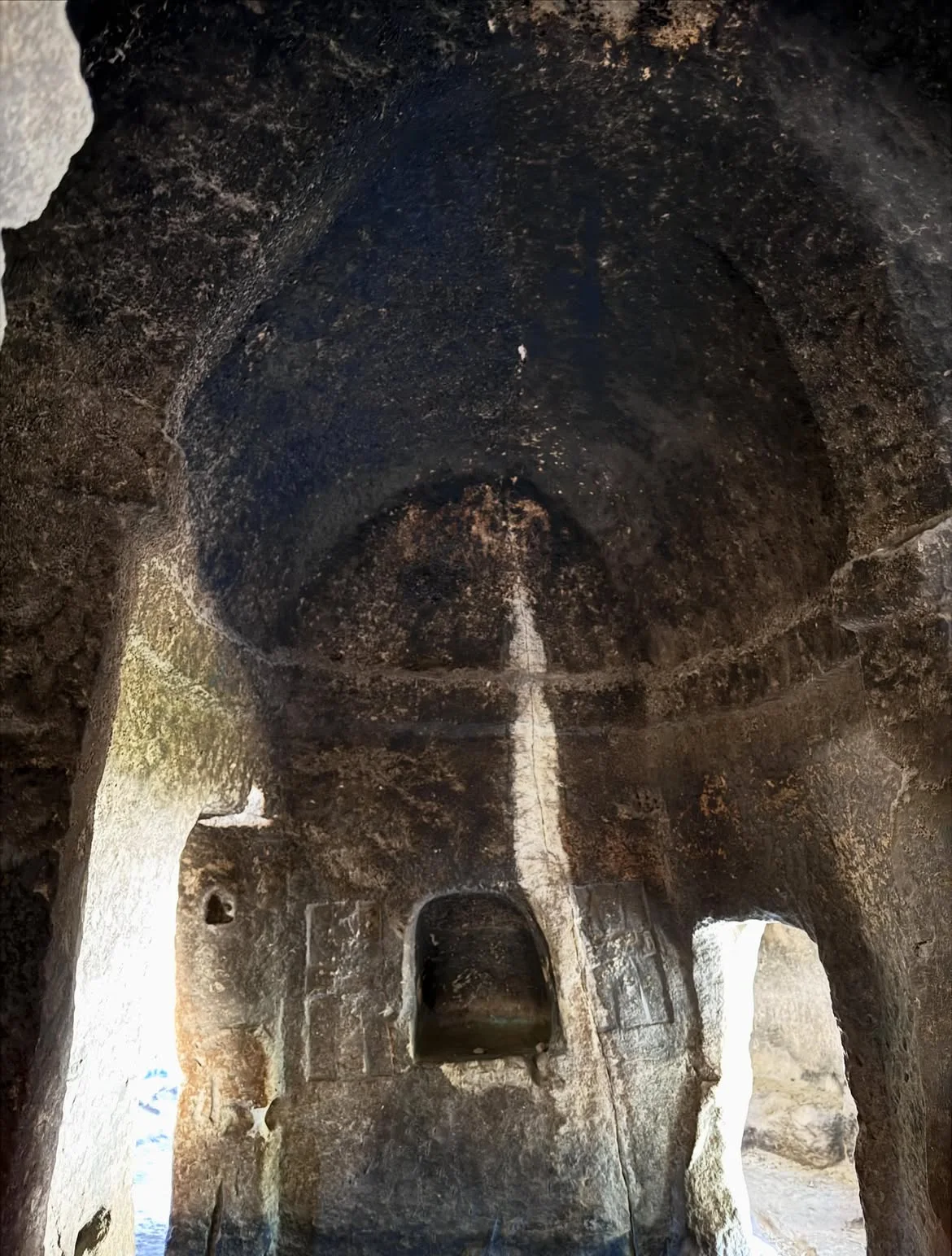
Most buildings take shape as materials are added. At Kırkinler, space was created by taking material away.
The surrounding Seydiler rock formations consist of volcanic tuff. The Ministry of Culture and Tourism places Kırkinler among six rock masses arranged in a roughly crescent-shaped group, open towards the east.
Look carefully at the accessible openings.
A carved room requires choices: the height of a ceiling, the width of an entrance, the thickness of the rock left between two spaces. A passage must lead somewhere. A stair must carry someone to another level.
Those decisions bring the place closer.
The people who made them are unnamed in the available visitor descriptions. Yet their work remains legible in the relationship between one opening and the next.
Where access is permitted, pause at a threshold and let your eyes adjust before moving. Bright sunlight outside can make an interior appear almost black at first. Slowly, the wall and ceiling separate from the shadows.
The room takes shape around you.
Before the Churches: Phrygian Traces
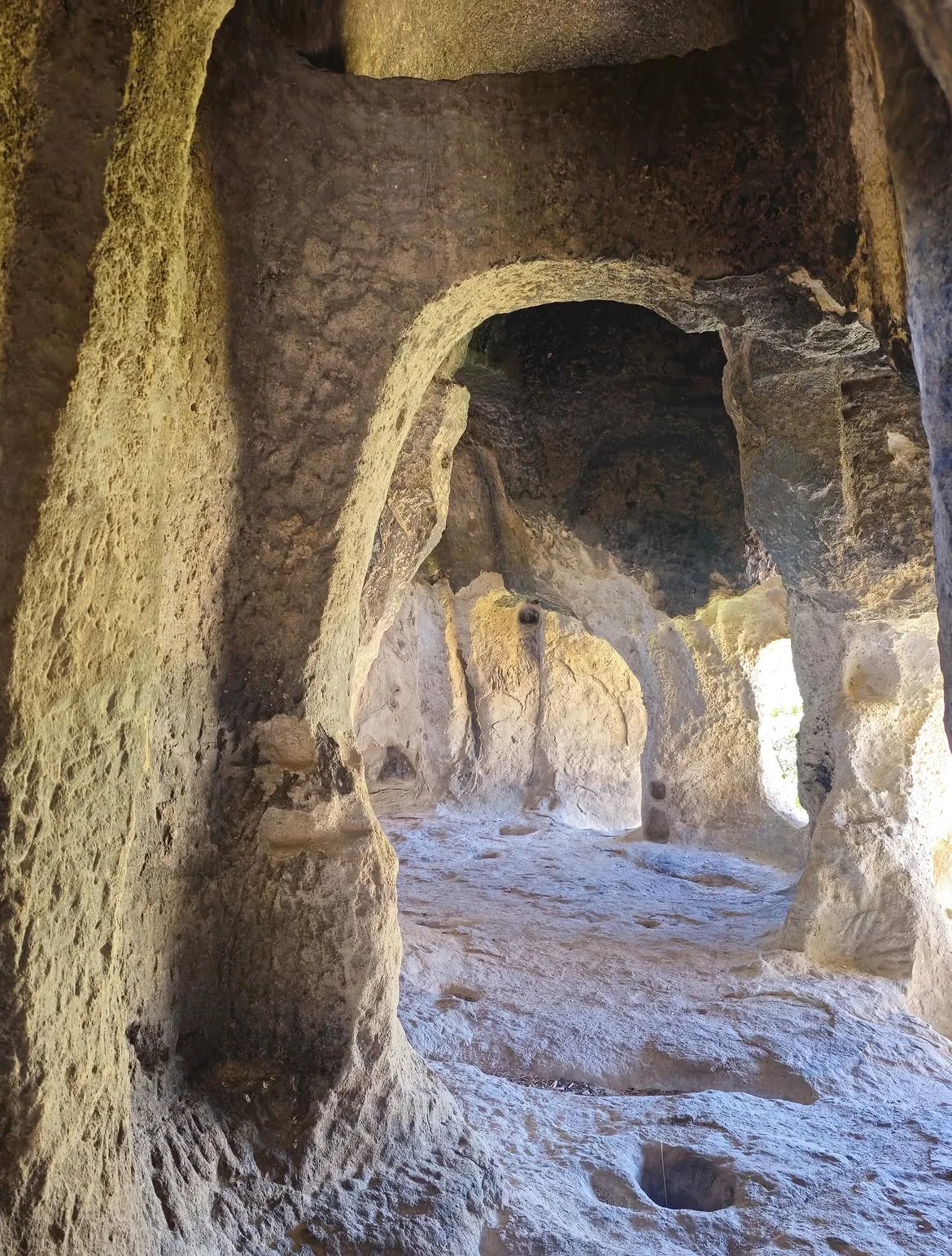
Kırkinler’s history begins earlier than its Christian rooms.
The provincial tourism authority records traces of Phrygian use on the rock. Its regional visitor guide also describes rock-cut altars and a relief associated with Kybele, the mother goddess, in the upper area.
There is an important qualification for anyone hoping to photograph that relief.
The specialist Phrygian Monuments catalogue documents a female figure, possibly the mother goddess Matar, in a shallow niche above the Byzantine rock church. It reports substantial damage to that niche and relief, and the destruction of a second female relief nearby.
Older descriptions can preserve details that a visitor can no longer see clearly.
Go looking for the surviving traces, with help from a knowledgeable guide where possible. Do not expect an intact goddess waiting above the steps.
Even damaged evidence establishes something significant: this rock mattered to people before the later churches and chapels were carved into it.
The Crosses Inside the Rock
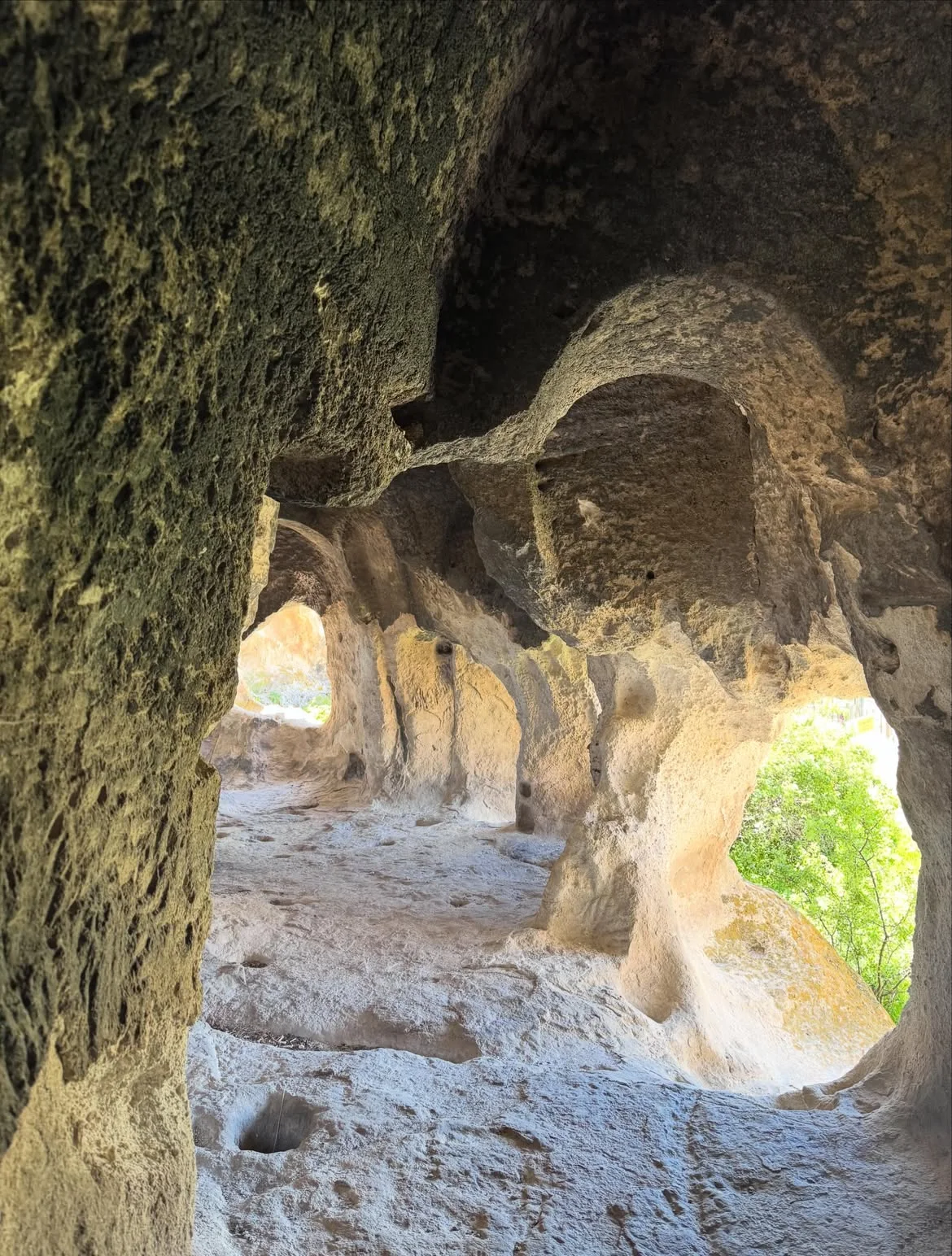
The regional tourism guide describes living spaces in the lower and eastern parts of the main mass, with a church, chapel and burial spaces above. It also records crosses on the walls and small corridors connecting rooms, interpreting the site as a monastic complex.
A cross changes the way you read an otherwise spare chamber.
The room becomes a place used in Christian religious life. A nearby passage suggests movement between spaces; a burial chamber adds another purpose to the same rock.
We do not have a reliable roster of the people who lived or worshipped here. The official visitor descriptions do not provide a precise founding year or a named founder.
The surviving architecture offers firmer ground.
Look at how spaces connect. Notice where an opening admits light and where the interior remains shaded. Consider how different the same room might feel in summer, winter or after sunset.
You can begin to understand the conditions of life here without inventing the lives themselves.
Water Had to Be Kept Somewhere
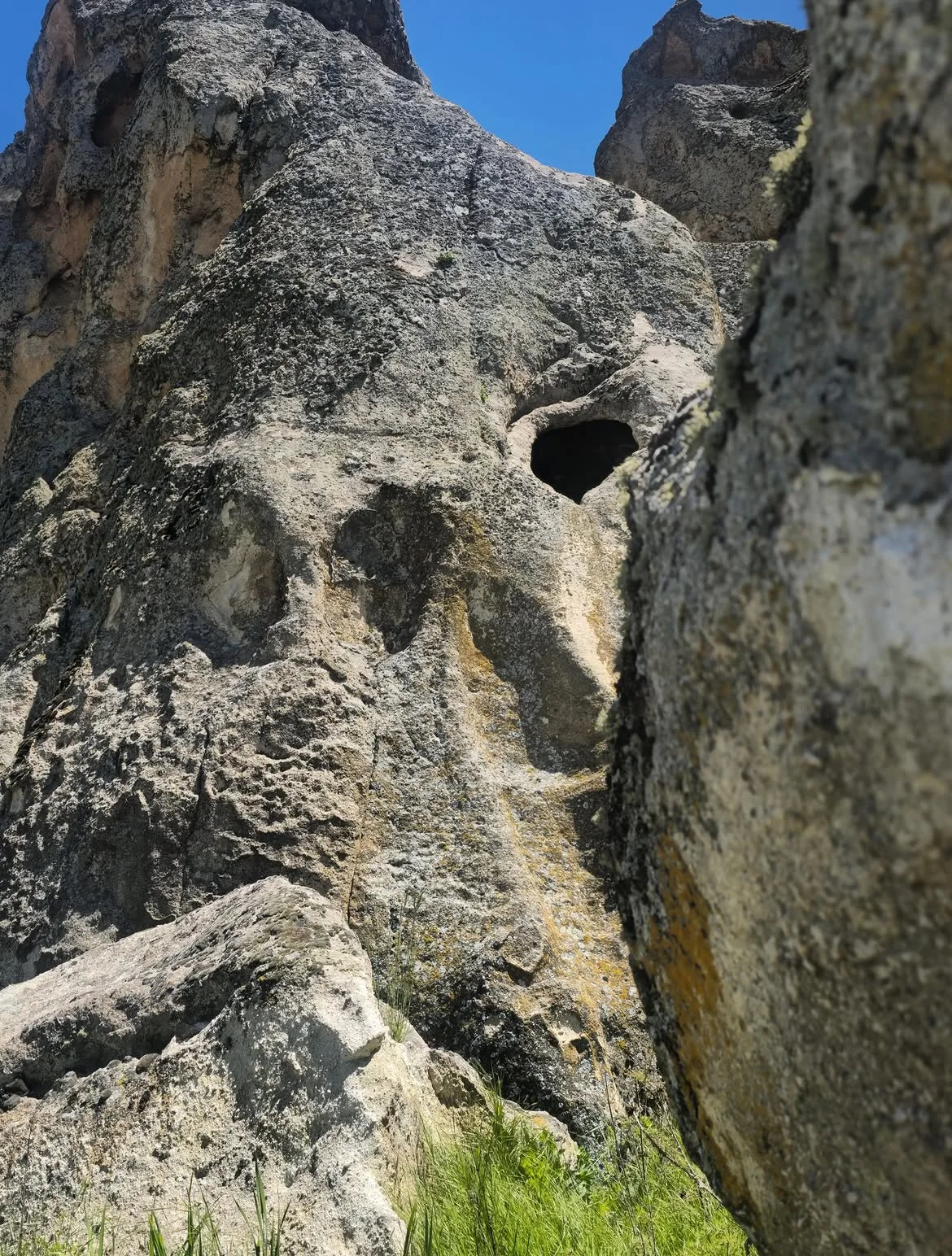
The regional guide records a large cistern outside the complex.
It is worth remembering when the carved rooms command all your attention.
Water storage belongs to the practical history of a place. People needed water alongside shelter and spaces for prayer. A cistern makes that requirement visible.
If you can identify it from a safe, permitted route, look at it as carefully as you would a church doorway.
Its purpose is easier to relate to than a distant dynasty. Think of carrying water, keeping it available and planning for the days when it would be needed.
The rock settlement becomes less abstract.
How the Place Feels
On a warm day, the difference between an exposed approach and a shaded opening may be the first thing you feel. Sunlight warms your shoulders outside; deeper shade changes the air against your skin.
Listen before walking on.
Your footsteps may sound sharper within an enclosed chamber. Outside, wind and sounds from the surrounding settlement or road can reach you. Kırkinler lies near the Afyonkarahisar–Ankara road, so complete silence should not be part of your expectations.
Depending on the weather and the condition of a chamber, you may notice dry dust or an earthy smell. There is no reason to fill the rooms with imagined incense.
Keep your hands away from carved marks and fragile surfaces. Their texture can be studied through the light: shallow grooves, irregular edges and the contrast between worked areas and the surrounding rock.
After the walk, take a tea break in an open local café if one suits your route. A warm glass in your hands and the slightly bitter first sip give the visit a simple human ending. The rock itself does not need to supply every sensation.
Photograph the Openings, Then the Landscape
Begin with an exterior photograph that shows the rock as a whole.
The openings are more revealing when their position within the larger mass is visible. A close photograph of a doorway can hide the scale and setting that make it interesting.
Then choose a detail from an authorised viewing area: a passage entrance, a carved threshold or a surviving cross.
For interiors, allow the darkness to remain part of the photograph. Raising the exposure until every corner is bright can lose the contrast that helps you understand how daylight enters.
Visit in daylight. Gentler morning or late-afternoon light may reveal the contours of the exterior more clearly than harsh midday sun.
Keep both feet on a secure surface while framing your picture. The upper areas are described as having narrow steps; their presence in a historical account does not establish that they are suitable for visitors today.
Plan for the Access You Actually Find
Official descriptions locate Kırkinler near Seydiler, along the Afyonkarahisar–Ankara road at approximately the 32nd kilometre.
Use the name Kırkinler Kaya Yerleşimi when confirming your destination. It helps distinguish this particular complex from other Seydiler rock formations.
Before travelling, check which areas are open to visitors and whether accompanied access is available. The sources used for this guide do not establish current opening hours, admission fees or unrestricted interior access.
Allow 45–60 minutes as a planning estimate for the exterior and any areas you are permitted to visit. A guided explanation may justify longer.
Wear shoes with grip and carry water. A small torch can help in an authorised interior, but leave any chamber where the route or footing is unclear.
If you have limited mobility, ask specifically about slopes, steps and the accessible viewing area. A roadside location can still involve difficult terrain.
Look Back at the Doorway
Before leaving, choose one opening and look at it again from outside.
Now you know there are connected rooms behind parts of the rock. You know some spaces served Christian worship, others burial, and that earlier traces survive from the Phrygian period.
The doorway remains dark.
But it has become easier to recognise what it meant: a point where someone passed from daylight into a room they had made inside the stone.
That small act—entering, leaving, returning—once happened here as part of an ordinary day.
The opening is still there.
Kırkinler Rock Visitor Summary
| Detail | What to know |
|---|---|
| Place | Kırkinler Kayası / Kırkinler Kaya Yerleşimi |
| Location | Near Seydiler, İscehisar district, Afyonkarahisar |
| Road reference | Approximately the 32nd kilometre of the Afyonkarahisar–Ankara road in the official description |
| Landscape | Volcanic tuff rock formations |
| Historical layers | Phrygian traces and later Byzantine occupation |
| Documented features | Rock-cut rooms, church, chapel, burial spaces, connecting corridors, crosses and an exterior cistern |
| Interpretation | Described by the regional tourism guide as a monastic complex |
| Phrygian reliefs | Documented, but reported damaged or destroyed; do not expect intact figures |
| Suggested duration | 45–60 minutes, depending on permitted access |
| Physical effort | Depends on the route; upper steps and uneven ground require particular care |
| Best visiting conditions | Daylight and dry weather |
| Access arrangements | Confirm current admission and accessible areas before travelling |
| Bring | Walking shoes, water and a small torch for authorised interiors |
| Photography | Show the rock’s exterior first, then its carved details |
Historical details follow official tourism descriptions and the specialist Phrygian Monuments catalogue. Duration is a practical estimate.
💬 Comments (0)
Traveler comments are shown in their original language.
No comments yet. Be the first to share your experience.
💬 Want to join the discussion?
Log in or create an account to leave a comment.