Justinian’s Bridge, Sakarya: Fifteen Centuries beneath the Stone Arches
Discover Justinian’s Bridge in Sakarya, where twelve stone arches preserve a remarkable sixth-century crossing built to connect the Byzantine Empire.
 Burak ÇınarTurkTravelRadar Founder
October 7, 2026
Stand far enough back from Justinian’s Bridge to see its arches together. Their repetition gives the structure a quiet elegance, but the heavy stone piers remind you that this was built for a demanding job: carrying an important road across a river.
Known locally as Justinianus Köprüsü or Beşköprü, the bridge stands in Sakarya’s Serdivan district, near Adapazarı. It is a surviving work of sixth-century engineering, built during the reign of the Eastern Roman Emperor Justinian I.
For travellers exploring Sakarya, it offers a chance to encounter the Byzantine period through something practical and enduring—a crossing that connected people and places.
A Bridge Built for an Empire
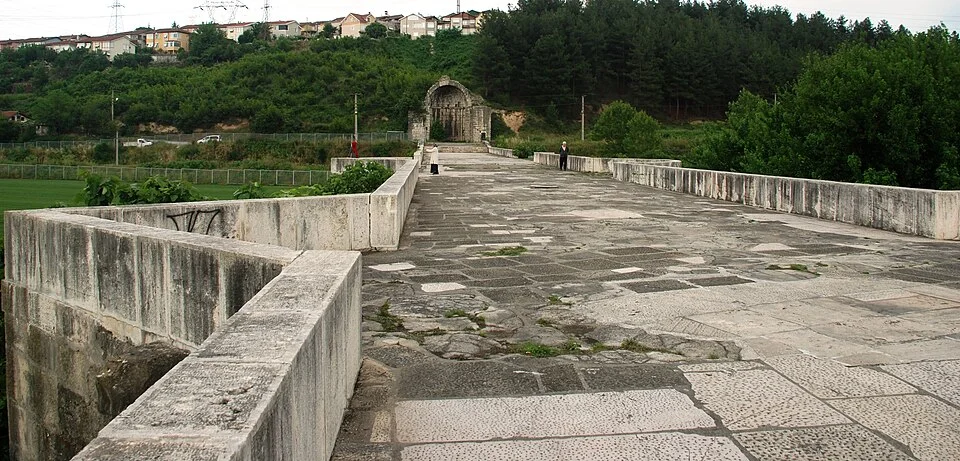
Justinian’s reign was marked by ambitious building projects. This bridge served the route connecting Constantinople, modern Istanbul, with the empire’s eastern territories.
Its construction was completed in 562 CE, according to the historical account presented in its UNESCO nomination. A permanent stone crossing replaced an earlier floating bridge that was vulnerable to the river.
Think about what that meant for the people using the road. A dependable crossing affected the movement of travellers, supplies and armies. The bridge’s importance lay as much in keeping journeys possible as in the craftsmanship of its arches.
That purpose gives the monument a human scale. However grand the project, it answered a familiar need: reaching the other side.
Why Is the River beneath It So Small?
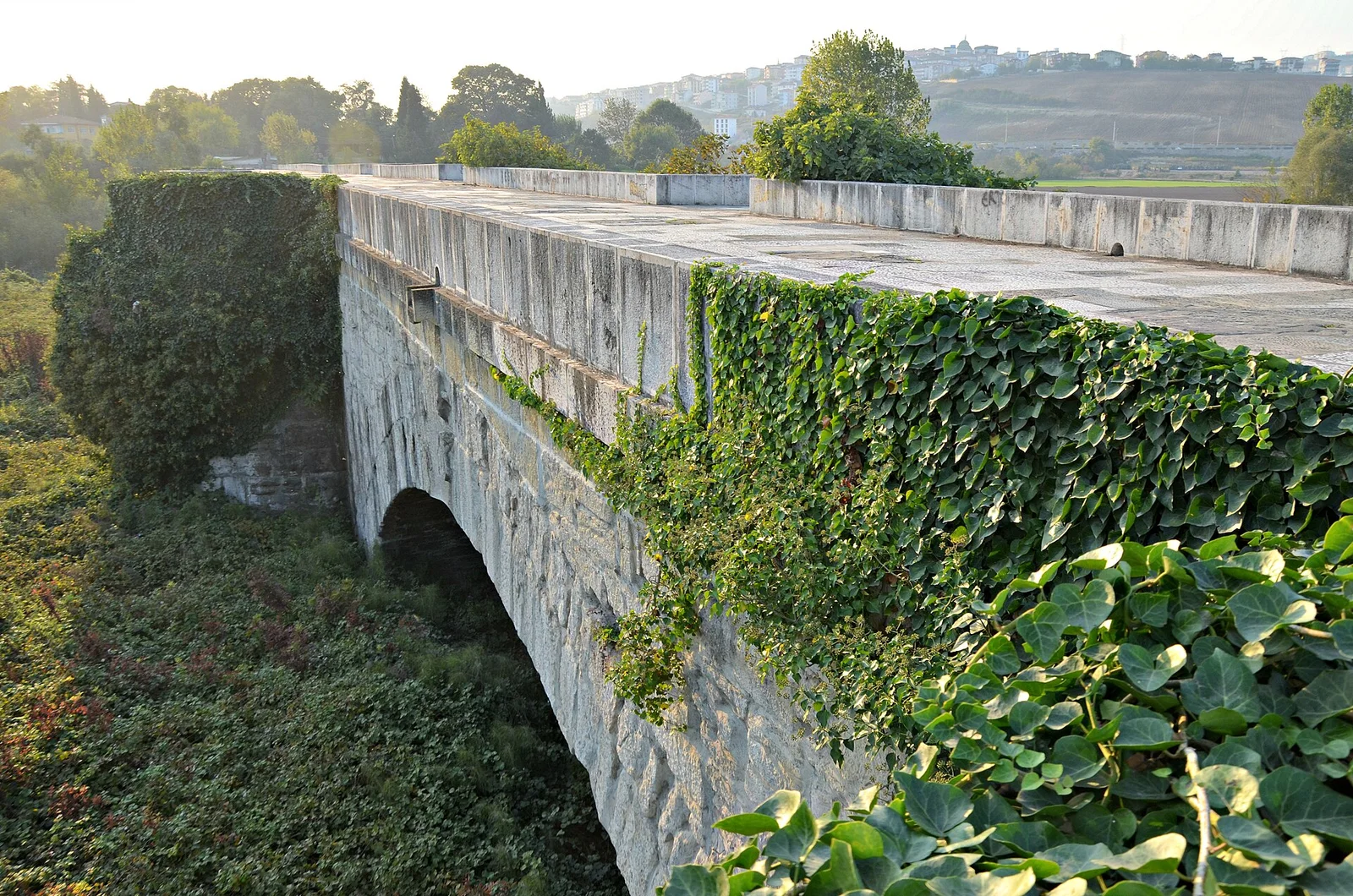
The bridge’s proportions can seem surprising beside the smaller watercourse associated with it today.
It originally crossed the Sangarius, now called the Sakarya River. Over time, the river shifted eastwards. The smaller Çark stream, which drains Lake Sapanca, came to occupy the former channel.
Knowing this helps the landscape make sense. The bridge was designed for a river very different from the one suggested by the present view.
Take a moment to imagine that wider flow beneath the arches. The size of the piers and the span of the structure become easier to understand.
Look at the Arches and Stonework
The bridge has twelve arches, including seven large central openings and smaller arches towards the ends. These smaller openings helped accommodate overflow.
Start with a broad view, then look more closely at the masonry. Notice how the curves rest on substantial supports and how the openings change in scale along the bridge.
You do not need to know the technical vocabulary to appreciate the builders’ decisions. The balance between open space and heavy stone is visible from the side, making this a rewarding subject for photography.
Try more than one viewpoint where access permits. A photograph looking along the arches conveys their rhythm; a wider frame shows how the whole structure sits in its surroundings.
Restoration and Heritage Status
Following a lengthy restoration programme, Justinian’s Bridge reopened to visitors in 2026. The work included improvements to the surrounding area and lighting. Older travel accounts describing a closure may therefore no longer reflect current conditions.
The bridge has been on UNESCO’s World Heritage Tentative List since 2018. It is a candidate for possible future inscription, rather than a fully inscribed World Heritage Site.
During your visit, follow the designated access routes and any barriers. The restored monument is best enjoyed from the areas provided for visitors; climbing its masonry risks damaging the fabric and offers little benefit over a good ground-level view.
Planning Your Visit
The bridge is in Beşköprü neighbourhood, Serdivan, making it a manageable stop during a visit to the Adapazarı–Serdivan area. Search for “Justinianus Köprüsü, Sakarya” when checking directions.
As a planning suggestion, allow around 30–45 minutes to view the bridge and walk through the accessible surroundings. You may want longer if you enjoy architectural photography.
Daylight is useful for studying the stonework. The restored site also has lighting, although you should confirm evening access locally before planning a visit around it.
A reliable current timetable and admission tariff were not available in the checked sources. Confirm arrangements locally if you are making a special journey.
Walking Note — Physical Effort: 1/5
An editorial estimate for a short visit around the accessible viewing areas. Historic surfaces and the approach may affect visitors with limited mobility. Check the current route if step-free access is essential.
Quick Visitor Summary
| Detail | What to Know |
|---|---|
| Location | Beşköprü neighbourhood, Serdivan, Sakarya |
| Other names | Justinianus Köprüsü, Beşköprü, Sangarius Bridge |
| Historical period | Sixth century; completed in 562 CE |
| Commissioned by | Eastern Roman Emperor Justinian I |
| Main highlights | Twelve stone arches, substantial piers and historic engineering |
| Heritage status | UNESCO World Heritage Tentative List since 2018 |
| Recent update | Reopened following restoration in 2026 |
| Suggested visit | Around 30–45 minutes |
| Walking effort | Estimated 1/5 |
💬 Comments (0)
Traveler comments are shown in their original language.
No comments yet. Be the first to share your experience.
💬 Want to join the discussion?
Log in or create an account to leave a comment.