Ihlara Valley: Following the River to Cappadocia’s Painted Churches
Follow the Melendiz through Aksaray’s Ihlara Valley, where leafy paths lead to painted churches carved into the cliffs. Discover the history inside the rock and plan a walk with time to explore.
 Burak ÇınarTurkTravelRadar Founder
October 3, 2026
You hear the water before you reach it.
Partway down the steps, the river is still hidden beneath the trees. Its sound rises through the canyon: a steady rush, sometimes broken by a sharper splash against stone.
Above you lies the exposed plateau. Below, leaves move in patches of sunlight.
As you descend, the walls grow taller around you. The air may feel cooler in the shade. By the time your shoes reach the valley floor, the landscape has changed completely.
Then you notice an opening in the cliff.
Inside is a church.
Ihlara Valley, in Aksaray’s Güzelyurt district, brings together the Melendiz stream, steep rock walls and a succession of carved churches and former living spaces. It belongs to the wider Cappadocian landscape, but its riverside setting gives it a character of its own.
Here, the walk and the history keep interrupting one another in the best possible way.
You follow the water, stop at a doorway, and step into another century.
The River Made the Way
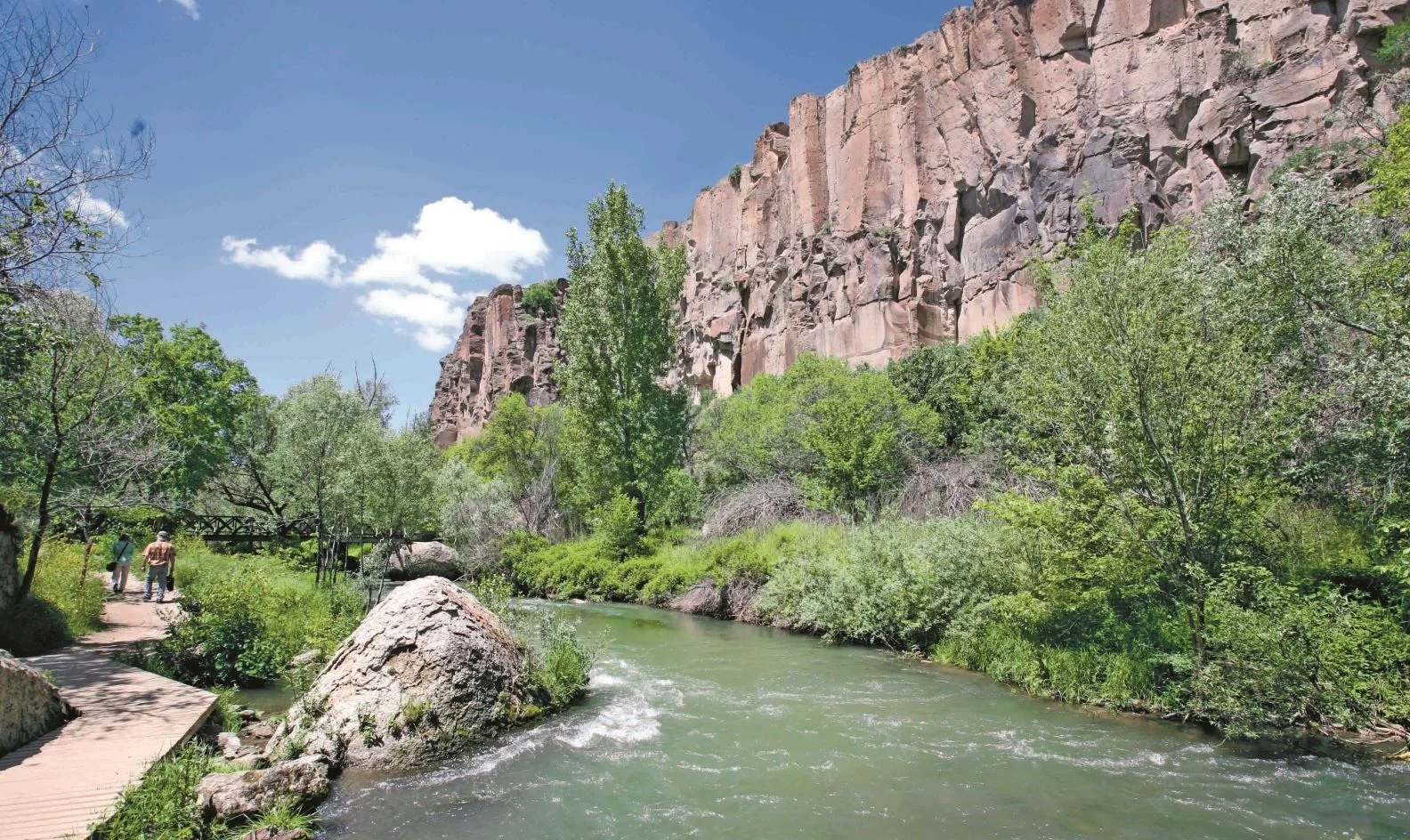
Long before rooms were cut into its sides, the valley was shaped by natural forces.
The official museum account describes volcanic deposits associated with Hasan Mountain, subsequently shaped by erosion and the Melendiz stream. The canyon extends from Ihlara through Belisırma and Yaprakhisar towards Selime.
From the rim, you see the depth of that work. From below, you encounter it a bend at a time.
A wall of rock closes the view ahead. The path turns, and another section opens. Trees obscure the cliffs, then a gap between branches reveals their height.
The water is the most consistent presence.
It runs beside the path while you stop for photographs. It continues while you enter a church. When you emerge, you hear it again, carrying the walk forward.
People Found Rooms in the Rock
Ihlara was also a place of habitation and Christian religious life.
Its rock-cut spaces include churches, chapels and former dwellings. The surviving wall paintings differ across the valley, with official descriptions distinguishing the churches near Ihlara from those around Belisırma.
Look at the entrances before going inside.
Some can seem modest against the enormous cliff. An opening that barely attracts attention from the path may lead into a carefully shaped religious interior.
The rock provided the material and the enclosure. People decided where to cut a doorway, how to form a ceiling and where worshippers would direct their attention.
That is where the valley’s history becomes tangible.
A chamber might appear empty at first. Then your eyes adjust, and a painted face emerges above you.
Give the Paintings Time
In a dim church, do not hurry to take the first photograph.
Wait.
The contrast with the bright path outside can make the interior difficult to read. Gradually, coloured areas separate from the rock. An outline becomes a figure; a group of figures becomes a scene.
The paintings were part of religious spaces used by communities. Their placement on walls and ceilings mattered to the people who stood beneath them.
Some survive vividly. Others are fragmentary, with damage interrupting faces and gestures.
Stay behind any barriers and keep your hands away from the surfaces. Follow the posted photography rules; avoid flash.
Choose one surviving detail and look long enough to remember it. You do not need to identify every scene for the encounter to mean something.
Eğritaş: A Church with Burial Rooms
Eğritaş Church offers a particularly revealing connection between worship and burial.
The Culture Portal describes it as a long, single-nave church with a barrel-vaulted ceiling and a separate space leading to burial chambers. An inscription identifies its dedication to Mary. Its damaged paintings include scenes such as the Annunciation, Nativity, Flight into Egypt and Baptism.
Knowing about the burial spaces changes the atmosphere of the church.
This was a place where religious images, prayer and the remembrance of the dead occupied the same carved setting.
Look at the shape of the room as carefully as the paintings. The length of the interior, the curve overhead and the position of adjoining spaces tell their own part of the story.
Visit only where access is permitted. A church appearing on a historical route description does not guarantee that every chamber is open on the day you arrive.
Churches Along the Walk
Names you may encounter include Ağaçaltı, Sümbüllü, Yılanlı, Kokar, Pürenliseki and Eğritaş.
The official museum description records more than a hundred identified churches in the wider site, with a smaller selection available to visitors.
A satisfying visit does not require collecting them all.
Choose a route that leaves time for the interiors you can actually enter. Two churches examined carefully can stay with you longer than several rushed doorways.
Between them, return your attention to the valley. The transition is part of the experience: painted rock above your head, then moving leaves and water outside.
The Green World Beneath the Plateau
One of Ihlara’s strongest impressions is the contrast between the surrounding open terrain and the vegetation below.
The provincial tourism account describes a sheltered valley-floor microclimate supporting richer plant life than the sparse landscape around it.
On a leafy stretch, sunlight falls unevenly across the path. A breeze moves the canopy, and the bright patches shift over your shoes.
Near damp ground, you may catch the smell of earth and vegetation. In drier sections, dust becomes more noticeable. The season changes both the colours and the scents.
Listen where the path draws close to the stream. You may distinguish the low movement of water from the quicker sound it makes over shallow stones.
You are walking through a lived landscape whose natural conditions helped make habitation possible.
A Riverside Pause at Belisırma
At Belisırma, riverside places to eat offer a natural break. The official museum guide notes seating platforms beside or over the Melendiz.
Check the menu and prices before choosing your table.
After walking, a simple meal can be enough. Warm bread yields between your fingers. A hot dish arrives with its own scent. Tea brings a slight bitterness after the food, while water continues moving nearby.
Let lunch take some time.
The valley is easier to enjoy when hunger, thirst and a tight schedule are not competing for your attention.
If you are continuing on foot, confirm the remaining distance and your exit before settling into a long break.
Choose the Walk Before Descending
The frequently cited Ihlara-to-Selime corridor is around 14 kilometres. You can visit a shorter section without walking its entire length.
The important decision is where you will finish.
If you return to your starting entrance, include the uphill exit in your plan. If you walk one way towards Belisırma or another exit, arrange your pickup beforehand.
The well-known stepped descent is described in official sources as having 382 steps. Entrance arrangements and route availability should be confirmed before travelling.
For a first visit, allow two to three hours for a shorter walk, a few church interiors and pauses. With lunch or a longer route, reserve more of the day. These are planning estimates rather than fixed tour times.
Selime is worth considering as a separate continuation if your transport and energy allow. Leave enough time to explore its rock-cut complex rather than adding it as a hurried final photograph.
Practical Details That Change the Day
Wear shoes with grip. Paths, church approaches and steps can be uneven; wet weather can make the footing more difficult.
Carry water even if you intend to stop at Belisırma. Bring sun protection for exposed sections and a layer appropriate to the season.
Visitors with limited mobility should ask about a specific entrance and route. Access to a riverside section does not establish that the churches or stairways are equally accessible.
Start early enough to enjoy the walk without watching the clock at every bend. Confirm current admission hours and the last-entry time before leaving; allow time to reach your chosen exit.
Walking note — Physical effort 3/5: A shorter valley walk with stairs and church detours requires moderate effort. Longer routes, heat and a return climb increase the demand.
When You Climb Back Out
Near the top, turn around from a safe place.
The path you followed is partly hidden again. Trees conceal the water. Church openings disappear into the scale of the cliffs.
But you can still hear the river.
You carry a different picture of the valley now: a painted face in a dim room, the smell of damp earth, tea beside the stream, the pull in your legs on the final steps.
From above, Ihlara looks like a deep cut through the landscape.
You know how much life lies within it.
Ihlara Valley Visitor Summary
| Detail | What to know |
|---|---|
| Place | Ihlara Vadisi — Ihlara Valley |
| Location | Güzelyurt district, Aksaray; part of the wider Cappadocia region |
| Watercourse | Melendiz stream |
| Historical character | Rock-cut Christian churches, chapels and former living spaces |
| Main sights | Canyon scenery, riverside paths and surviving church paintings |
| Churches to consider | Ağaçaltı, Sümbüllü, Yılanlı, Kokar, Pürenliseki and Eğritaş, subject to access |
| Commonly described corridor | Around 14 kilometres from Ihlara towards Selime |
| Famous stairway | 382 steps in official descriptions |
| Suggested first visit | Two to three hours for a shorter walk and selected churches |
| With lunch or a longer walk | Allow a half day or more, depending on the route |
| Physical effort | 3/5 for a shorter visit with stairs; longer routes are more demanding |
| Food stop | Belisırma’s riverside dining areas |
| Bring | Walking shoes, water, sun protection and a seasonal layer |
| Before descending | Confirm your entrance, exit, return transport and current access |
| Inside churches | Avoid touching paintings; follow photography restrictions |
Historical and geographical details follow official cultural and museum descriptions. Visiting times and effort ratings are practical estimates.
💬 Comments (0)
Traveler comments are shown in their original language.
No comments yet. Be the first to share your experience.
💬 Want to join the discussion?
Log in or create an account to leave a comment.