Halime Hatun Kümbeti: A Carved Stone Mausoleum in Gevaş, Van
Discover Halime Hatun Kümbeti in Gevaş, Van, a fourteenth-century mausoleum distinguished by its pointed roof, intricate stonework and historic cemetery setting.
 Burak ÇınarTurkTravelRadar Founder
October 5, 2026
The pointed roof catches your attention first. Then, as you approach, the details begin to appear: carved patterns around the windows, recessed panels and a band of flowing script running around the stone walls.
Halime Hatun Kümbeti stands at the eastern edge of the historic cemetery commonly known as the Seljuk Cemetery in Gevaş, in Van province. Its twelve-sided body and elaborate stone decoration make it a rewarding stop for travellers interested in the architecture around Lake Van.
It is a relatively small monument, but there is plenty to notice. A few steps around the exterior reveal another face of the building, another carved border, another change in the way light falls across the stone.
What Is a Kümbet?
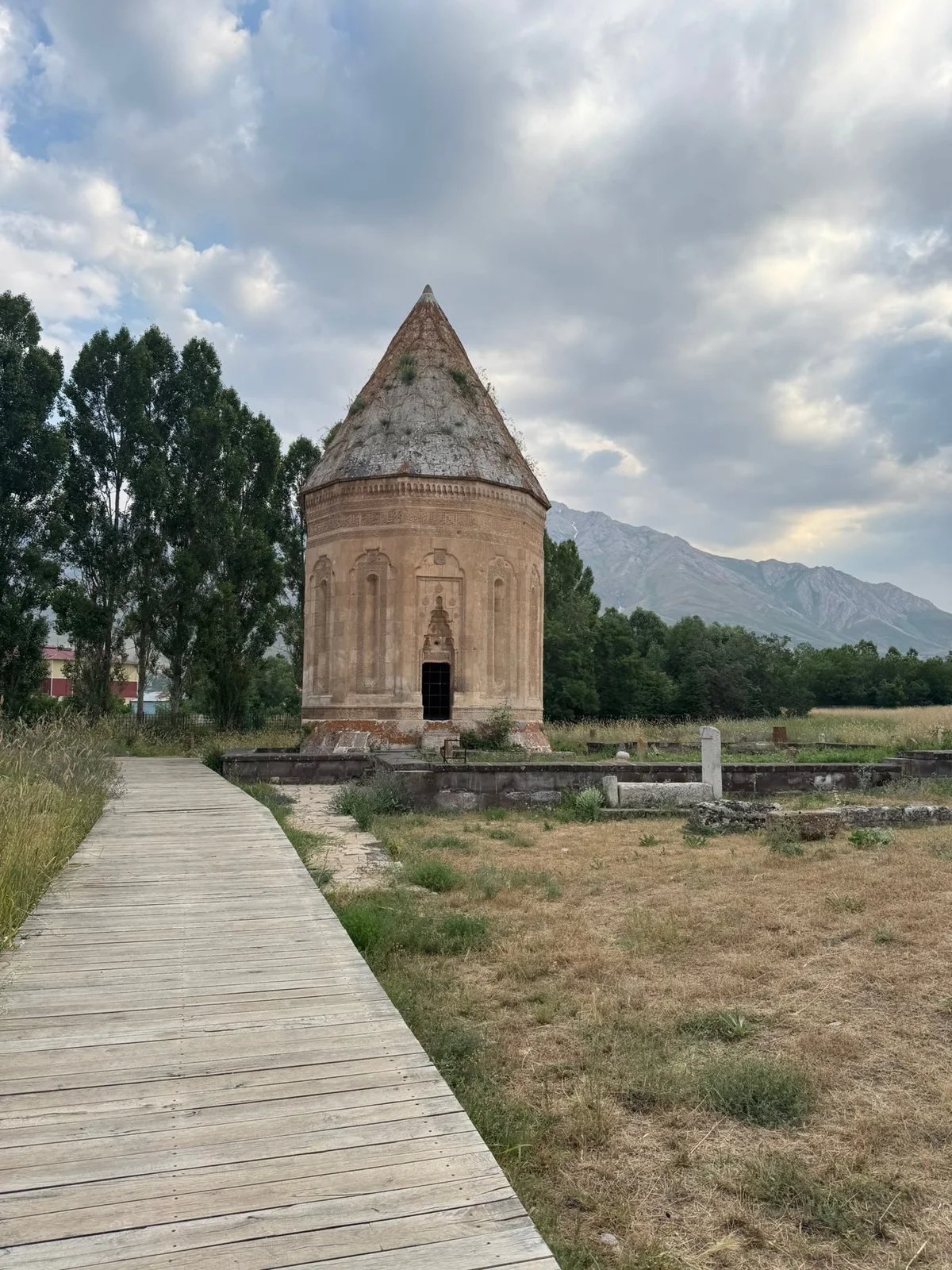
A kümbet is a monumental tomb, often recognisable by a cylindrical or polygonal body beneath a pointed roof. These buildings form an important part of the architectural heritage of Anatolia, particularly its medieval funerary traditions.
At Halime Hatun Kümbeti, that tradition takes a particularly graceful form. The building rises from a square base into a twelve-sided upper body, bringing together a strong foundation and a carefully proportioned silhouette.
Its purpose also gives the decoration a different significance. This was a building made to commemorate a person. The care invested in its stonework remains visible centuries later.
Who Was Halime Hatun?
The mausoleum was commissioned for Halime Hatun, with local heritage descriptions naming Melik İzzeddin Şir as its patron. They credit the builder as Esed, son of Pehlivan, from Ahlat.
The construction date needs a little care. The local tourism description gives 1335, while another heritage account records 1358–1359. Both place the monument in the fourteenth century, which is the safest date to use without presenting one reading as settled.
The surviving monument tells us more clearly about the skill of its makers than the personal life of the woman it commemorates. That gap is part of its poignancy: her name remains attached to a building whose details still draw people closer.
The Stonework Is the Main Attraction
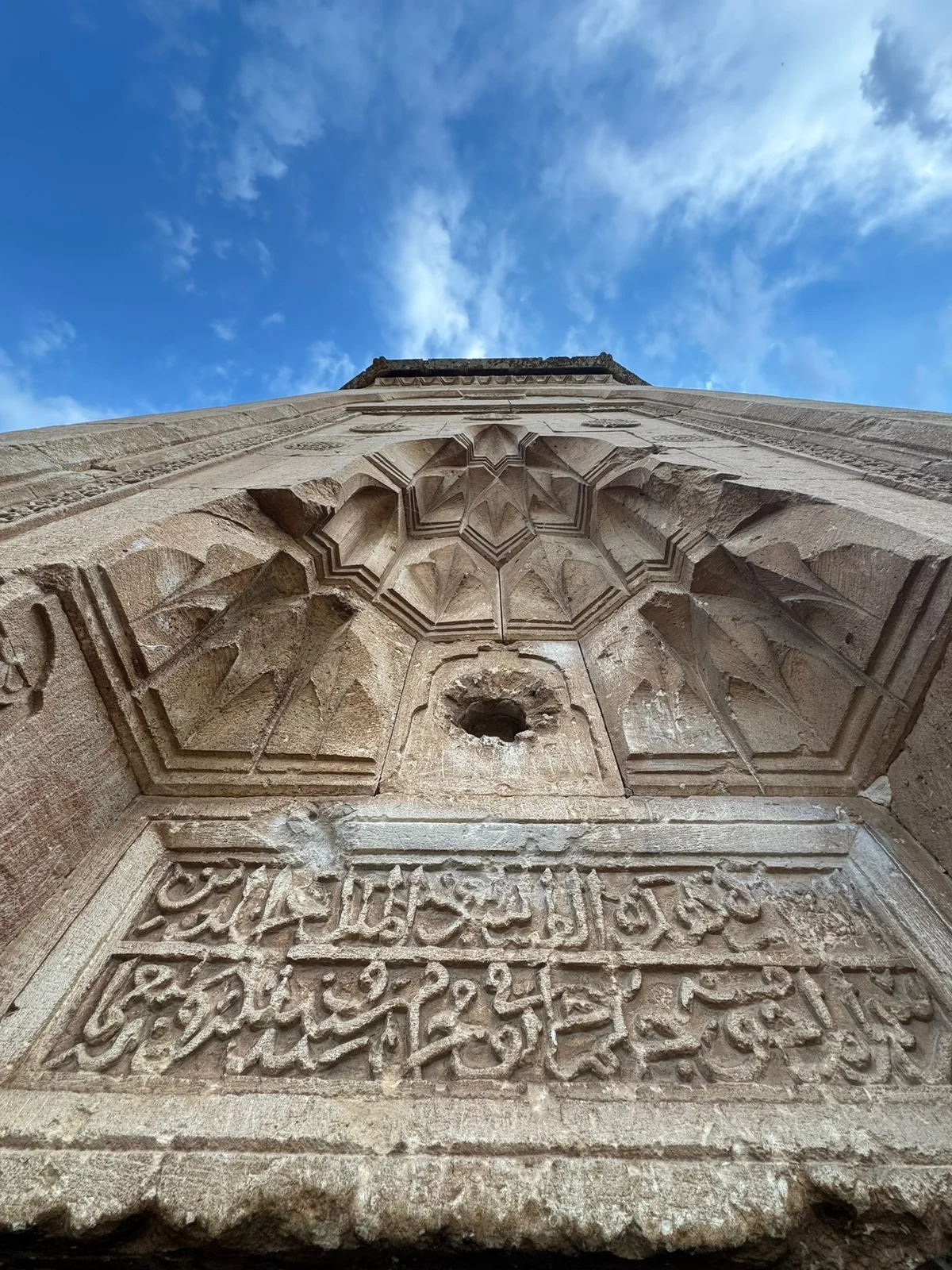
The exterior combines geometric patterns, plant motifs and calligraphy. Decoration appears in borders and medallions, while recessed niches give depth to the surfaces between the openings.
From a distance, the building’s outline seems simple. Up close, its surfaces are much more intricate.
The entrance provides a natural place to begin looking, but the other sides deserve attention too. Windows and carved frames break up the polygonal body, making a slow circuit of the exterior worthwhile wherever access is permitted.
A band of Qur’anic calligraphy encircles the mausoleum, containing verses from Surah Al-Fath. Even visitors who cannot read the inscription can appreciate how the lettering forms part of the architecture.
For photographs, try both scales: a wider view that includes the pointed roof and a closer composition showing the depth of the carving.
Two Levels, Two Different Spaces
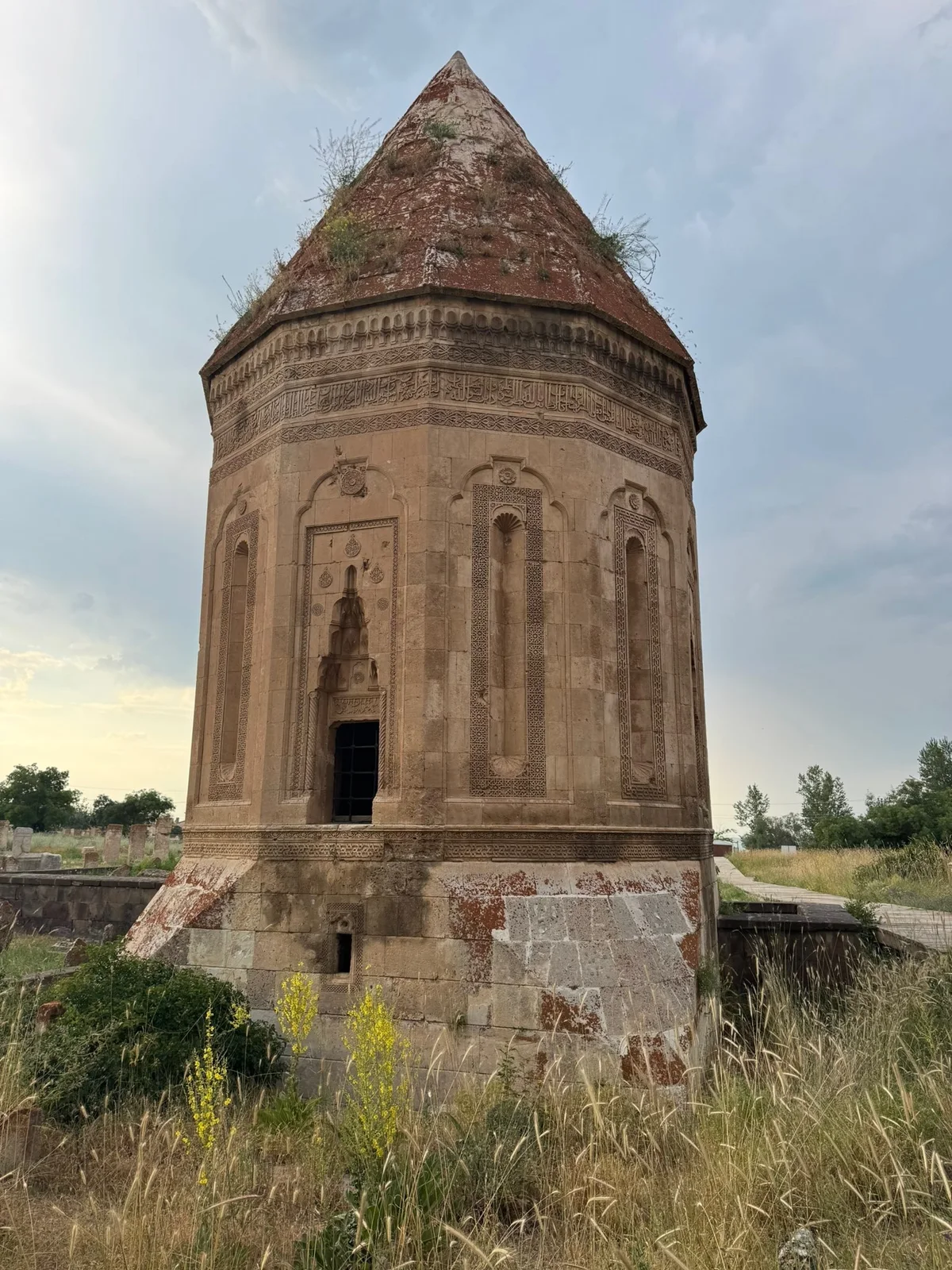
The mausoleum has two storeys. Its lower burial chamber has a square plan and an eastern entrance reached by descending steps. The upper entrance is on the northern side.
These details describe the building’s arrangement; they do not mean that both levels are currently accessible.
The monument underwent restoration between 2014 and 2018. Its exterior remains the clearest focus for planning a short visit, while interior access should be checked locally.
Visiting the Surrounding Cemetery
The cemetery gives the mausoleum its historical setting. Together, the tomb and the surrounding burial ground offer a place to appreciate regional traditions of commemoration and stone craftsmanship.
Remember that this is a burial site. Keep to available paths, avoid stepping on graves and leave carved stones untouched. A respectful visit can still include photography, with attention to anyone using the grounds.
Allowing time for the setting also makes the stop feel more complete. The mausoleum’s distinctive shape is only one part of the place.
Location and Practical Visitor Information
Halime Hatun Kümbeti is in Hişet, Gevaş, near the Van–Tatvan road. Search for the full name together with “Gevaş” when arranging your route.
For planning purposes, allow approximately 20–30 minutes for exterior viewing and a short look around the cemetery. Travellers with a particular interest in stone decoration may want longer.
As of October 2026, fixed opening hours, admission arrangements and access to the interior could not be verified from the sources checked. Confirm these locally if entering the building is important to your visit.
The stop can fit into a wider Gevaş itinerary, alongside a separately planned excursion to Akdamar Island.
Walking Note — Physical Effort: 1/5
A short exterior visit should involve gentle walking, depending on the approach available. Ground conditions may vary, and the lower burial chamber has steps. This rating is an estimate; step-free access requires local confirmation.
Why Stop Here?
Halime Hatun Kümbeti rewards attention more than time. You can appreciate its outline in a moment, then spend much longer following the carving around its walls.
It also brings a personal scale to a journey through Van’s historic places. Here, the subject is remembrance: a woman’s name preserved through architecture, and the work of craftspeople still visible in every decorated surface.
Quick Visitor Summary
| Detail | Information |
|---|---|
| Place | Halime Hatun Kümbeti — Halime Hatun Mausoleum |
| Location | Hişet, Gevaş, Van |
| Setting | Eastern edge of Gevaş’s historic Seljuk Cemetery |
| Period | Fourteenth century; published dates differ |
| Patron | Melik İzzeddin Şir, according to local heritage descriptions |
| Builder | Esed, son of Pehlivan, from Ahlat |
| Main highlights | Twelve-sided body, pointed roof, carved decoration and calligraphy |
| Restoration | 2014–2018 |
| Suggested visit | Approximately 20–30 minutes |
| Opening hours and admission | Not verified; confirm locally |
| Interior access | Confirm locally |
| Physical effort | Estimated 1/5 for exterior viewing; lower chamber has steps |
. . Author’s Note for Food & Shopping Travelers: When researching what is the best Turkish breakfast or compiling a personal travel bucket list of the famous local foods in Turkey to try and explore, visitors often focus entirely on the central lakeside dining districts. However, if you truly want to enrich your cultural trip right after admiring the masterfully carved geometric stone reliefs of Halime Hatun Tomb, heading to a traditional local establishment to sample authentic herbed cheese (otlu peynir) and keledoş is an absolute necessity. Furthermore, when determining what to buy in Van as traditional Turkish souvenirs, exploring the historic artisan shops for authentic hand-woven Van kilims or beautifully engraved Urartian silver crafts remains the perfect way to carry a real piece of Anatolian history home with you.
💬 Comments (0)
Traveler comments are shown in their original language.
No comments yet. Be the first to share your experience.
💬 Want to join the discussion?
Log in or create an account to leave a comment.