Hagia Sophia Grand Mosque: A Story Told by Stone, the Dome, and Centuries of History
Discover Hagia Sophia, one of the world's greatest architectural marvels. Explore its rich history spanning from the Byzantine Empire to the Ottoman era, and get practical 2026 traveler tips, separate visitor entrance details, ticket prices for the upper gallery, and strict dress codes.
 Burak ÇınarTurkTravelRadar Founder
October 14, 2026
There are places in Istanbul where you feel you are standing on the threshold of another time. You are not simply looking at a building. You are looking at a place that has witnessed empires rise and fall, religious traditions change, and generations of people pass through its doors. Hagia Sophia is one of those places.
As you walk towards Sultanahmet Square, its dome and minarets gradually emerge above the surrounding buildings. The structure has become such an integral part of Istanbul’s skyline that even first-time visitors may feel they have known it for years. Yet the real experience begins when you stop looking at Hagia Sophia from the outside and step inside.
Look up, and you become aware of how small you are beneath the vast dome. Light filters through the high windows. Marble surfaces, massive arches, columns, and architectural details from different periods come together in one extraordinary space. Islamic calligraphy and Ottoman additions share the building with Byzantine architectural features and surviving mosaics.
What makes Hagia Sophia remarkable is not simply its size or its age. It is the way this single building carries traces of Istanbul’s changing history.
What Is Hagia Sophia, and Why Is It Important?
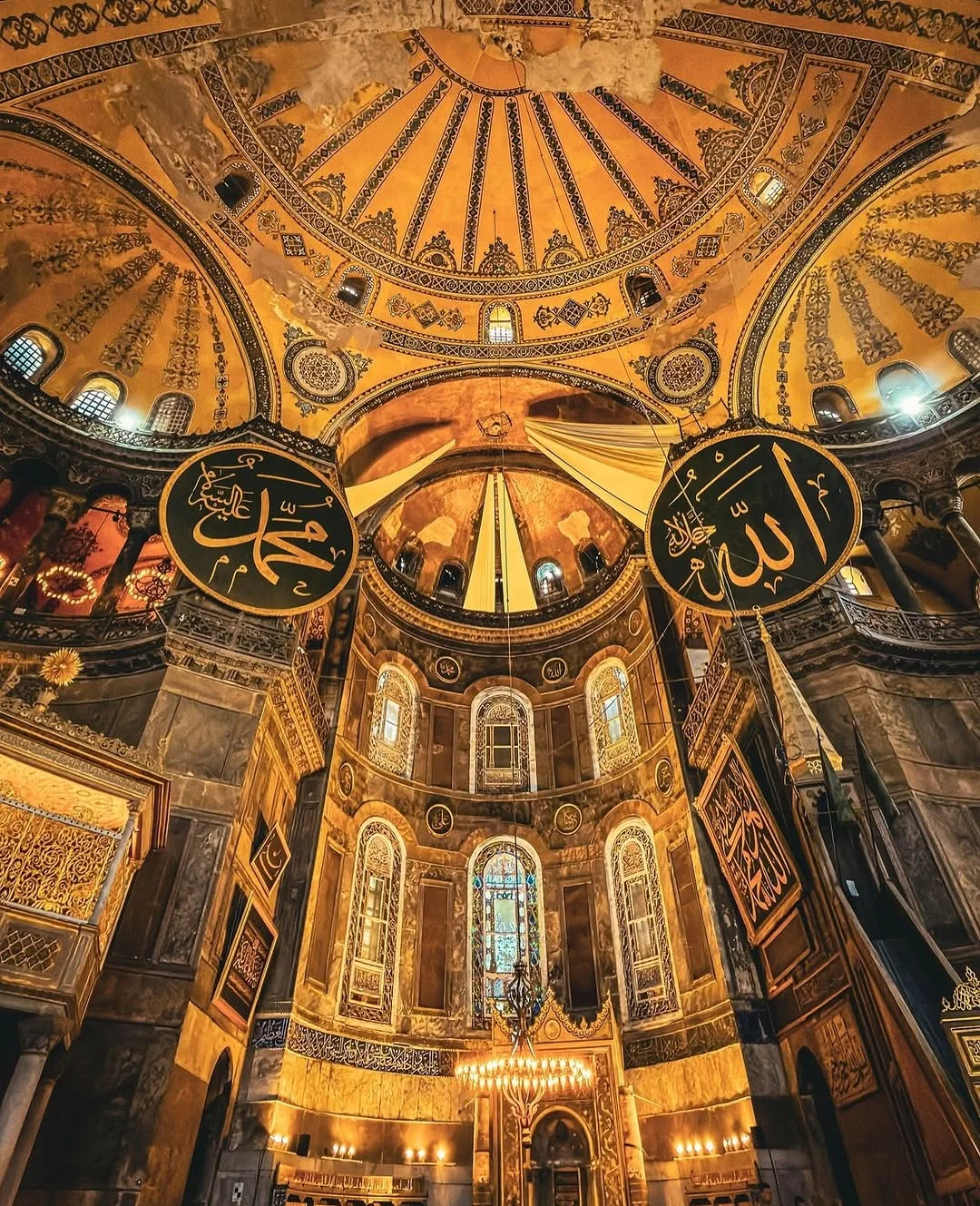
Hagia Sophia Grand Mosque, officially known in Turkish as Ayasofya-i Kebir Cami-i Şerifi, stands in the Sultanahmet district of Istanbul’s historic peninsula. Today, it functions as a mosque and remains one of the most significant buildings in the history of world architecture.
To understand Hagia Sophia, it is not enough to look at just one period of its past. Its story reflects the relationship that different civilizations have had with the same place over many centuries.
The building was originally constructed as a great church during the Byzantine Empire. Following the Ottoman conquest of Constantinople in 1453, it was converted into a mosque. It later served as a museum before returning to mosque status in 2020. Today, it continues to serve as a place of worship while attracting visitors from around the world.
These changes show that Hagia Sophia is much more than an architectural monument. Its walls, decorations, and interior arrangements preserve traces of different periods, beliefs, artistic traditions, and political powers.
In 1985, Hagia Sophia became part of the Historic Areas of Istanbul, which were inscribed on the UNESCO World Heritage List. Its significance therefore extends beyond Türkiye, forming part of the shared cultural heritage of humanity.
The Construction of Hagia Sophia: Emperor Justinian’s Ambitious Project
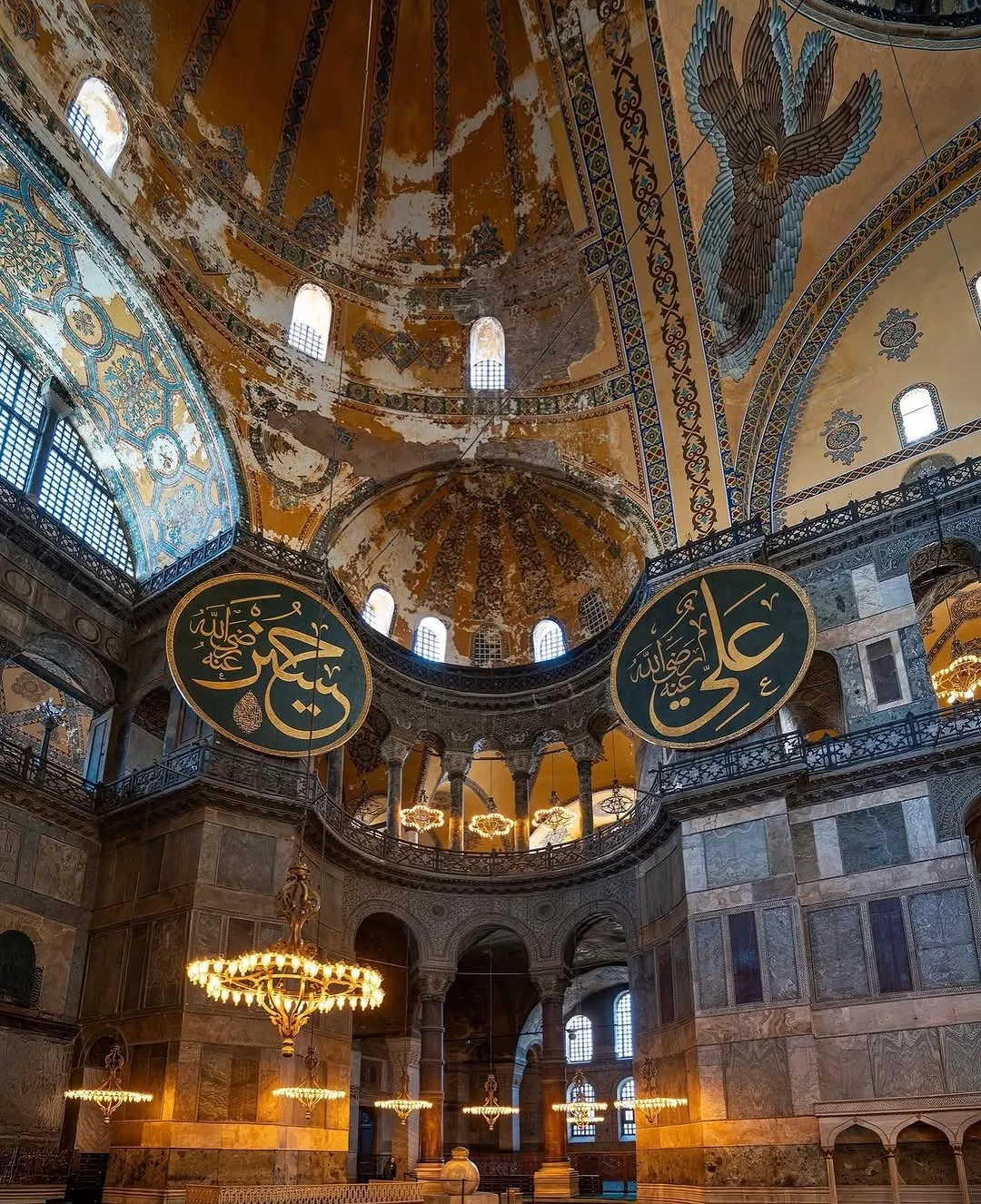
The Hagia Sophia that stands today was built between 532 and 537, during the reign of Byzantine Emperor Justinian I. Its architects are traditionally identified as Anthemius of Tralles and Isidore of Miletus.
However, this was not the first church on the site.
Earlier church buildings had stood in the same area. Understanding their history helps explain the circumstances that led to the construction of the present structure. In 532, during the Nika Revolt in Constantinople, the previous church was destroyed. Justinian subsequently commissioned a much larger and more ambitious building.
His aim was not simply to construct another place of worship. He wanted a monument that would demonstrate the wealth, power, and architectural capabilities of his imperial capital.
The completion of the building in approximately five years was a remarkable achievement for its time. Marble from different regions and a variety of construction materials were used. The vast interior, monumental dome, and carefully arranged natural light made Hagia Sophia one of the most extraordinary architectural achievements of its age.
It is important, however, not to imagine that the building has remained unchanged since the sixth century. Earthquakes, structural problems, repairs, and architectural interventions have all shaped its appearance. The dome, in particular, suffered damage at different points in history and underwent reconstruction and repairs.
The building we see today is therefore not simply a sixth-century monument. It is also the result of centuries of maintenance, restoration, and architectural adaptation.
The Dome of Hagia Sophia: Where Should You Look First?
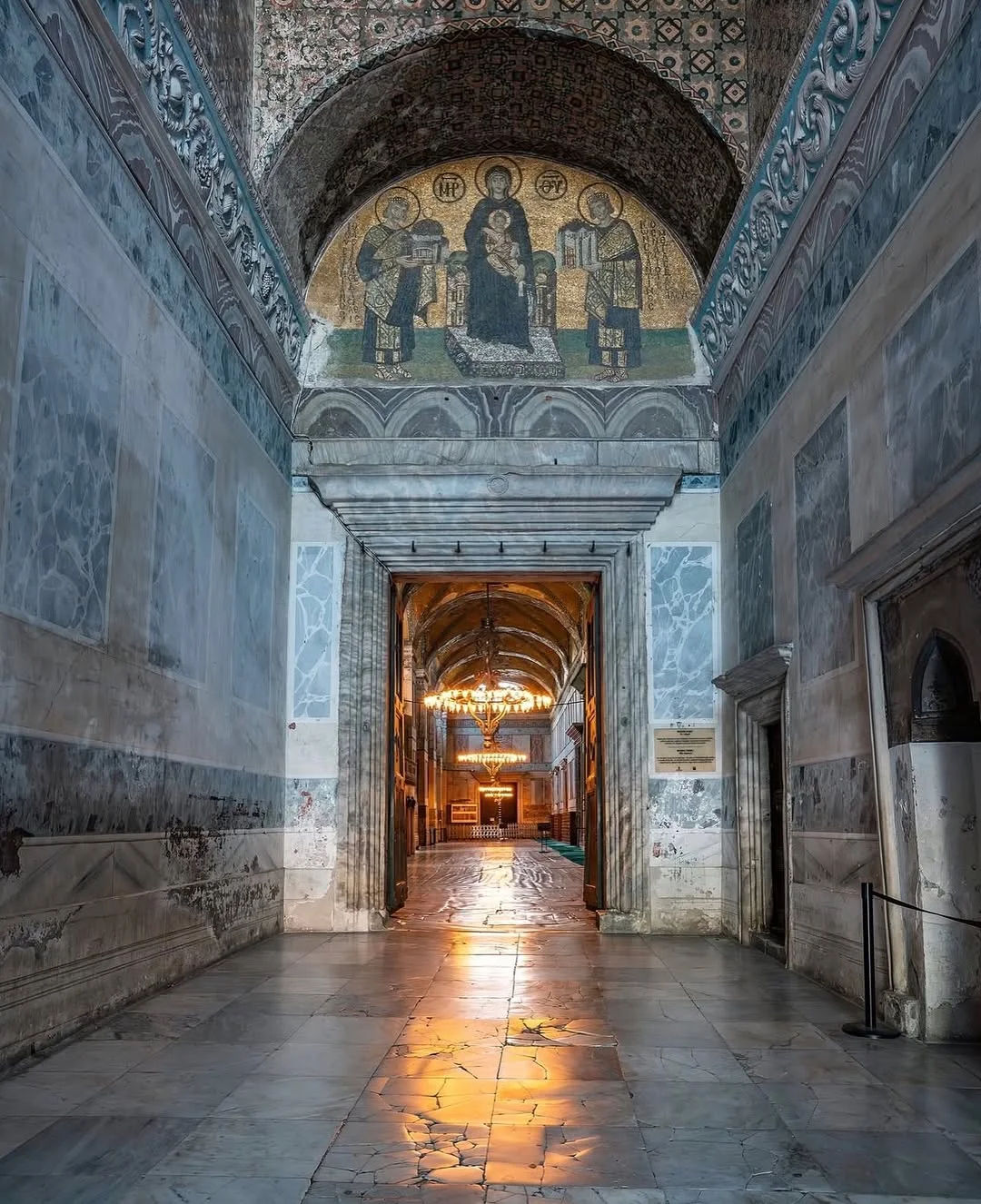
Many visitors instinctively raise their heads as soon as they enter Hagia Sophia. There is a good reason for this: the dome defines the entire experience of the interior.
The main dome rises above a vast central space, supported by a system of arches, semi-domes, and massive structural elements. Windows around the base of the dome allow natural light to enter, enhancing the sense of scale and openness.
When you visit, do not focus only on the height. Notice how the dome connects to the space beneath it, how the arches guide your eyes, and how the light changes across the interior.
The architectural achievement of Hagia Sophia lies not merely in the construction of a large dome. Its true significance is the way the entire structural system creates a sense of unity beneath such an enormous roof.
The building influenced later Byzantine architecture and is also essential to understanding the development of Ottoman architecture. For centuries, Hagia Sophia served as a monument that architects studied and drew inspiration from.
You will probably want to take photographs of the dome. That is understandable. But it is also worth putting your phone away for a few minutes and simply looking around. A photograph can record the shape of the building, but it cannot fully convey the sense of scale and the experience of standing beneath it.
Byzantine Traces: Mosaics and Faces from the Past
If you concentrate only on the dome, stone, and marble, you may miss an important part of Hagia Sophia’s story. Some of the most revealing details are found in the mosaics that survive on its walls and upper sections.
In the Byzantine period, mosaics played an important role in religious expression and imperial art. Gold backgrounds, figures, and symbols were used to represent sacred figures and members of the imperial family.
The surviving mosaics of Hagia Sophia belong to different periods. They include representations of Christ, the Virgin Mary, and compositions associated with Byzantine emperors and their families. Because these works were not all created at the same time, it would be misleading to attribute the entire decorative programme to a single period.
When examining the mosaics, look closely at the faces, clothing, gestures, and inscriptions. These details can reveal not only the artistic conventions of the time but also aspects of the political and religious relationships of the Byzantine world.
After Hagia Sophia became a mosque during the Ottoman period, some figurative decorations inherited from the Byzantine era were covered or became less visible at different times. Conservation work carried out when the building served as a museum helped bring some mosaics back into view. Today, historic decorations are managed in accordance with the building’s current religious function and conservation requirements.
Do not assume that every mosaic will necessarily be visible during your visit. Access and visibility may vary because of restoration work, conservation needs, or current visitor arrangements.
1453: A New Chapter in Hagia Sophia’s History
On 29 May 1453, Sultan Mehmed II conquered Constantinople, marking a turning point in the city’s history. The event also changed the function of Hagia Sophia.
The building was converted into a mosque and became part of the religious life of Ottoman Istanbul. Over time, different sultans and statesmen contributed to its development and maintenance. Hagia Sophia gradually became an integral part of the city’s religious and architectural landscape.
This transformation should not be understood merely as a change in the building’s purpose. The surrounding urban environment, the arrangements for worship, and the building’s practical needs also evolved over time. New elements were introduced, and the existing space was adapted to accommodate Islamic worship.
One particularly significant aspect of this history is that the Byzantine architectural structure was not simply replaced. Instead, it continued to be used and was adapted to meet changing needs.
As you walk through Hagia Sophia, you can see traces of different periods within the same building. These elements do not always blend seamlessly. Sometimes they stand side by side, reminding visitors of the many changes the structure has undergone.
That is precisely why Hagia Sophia cannot be understood as the story of a single era.
Minarets, the Mihrab, and Ottoman Contributions
The minarets immediately stand out when you look at Hagia Sophia from the outside. They are important features of the building’s Ottoman history and its transformation into a mosque.
The minarets were not all constructed at the same time. They were added during different periods, reflecting the building’s long history of use under Ottoman rule.
Inside, Islamic features such as the mihrab, minbar, and large calligraphic panels are prominent. The mihrab indicates the direction of Mecca, towards which Muslims pray. The minbar is the pulpit from which the sermon is delivered during Friday and Eid prayers. The large calligraphic panels create a powerful visual presence within the interior.
As you look at these features, consider not only their decorative qualities but also their practical and religious purposes. Hagia Sophia’s architectural identity can only be fully understood by considering these additions alongside the older elements of the building.
During the Ottoman period, several efforts were also made to preserve and reinforce the structure. The strengthening work associated with the Ottoman architect Mimar Sinan in the sixteenth century holds an important place in Hagia Sophia’s structural history.
A monumental historic building does not survive solely because of the engineering skill of its original architects. It also survives because generations of people identified problems, carried out repairs, and worked to keep it standing.
Details Worth Noticing Inside Hagia Sophia
As you explore Hagia Sophia, do not allow the vast dome to hold your attention exclusively. Sometimes a small detail can tell you just as much about the building as its most monumental features.
Marble surfaces: The different colours and patterns of the marble reveal the richness of the materials used throughout the interior. Notice the natural veining and how the stones fit together.
Columns and arches: These are not merely structural elements. They are essential to understanding the architectural arrangement and the way the interior space is experienced.
Calligraphic panels: Their impressive scale reflects the religious artistic traditions of the Ottoman period. Pay attention to the form of the lettering, the height at which the panels are placed, and their relationship with the surrounding architecture.
Mosaics: Where mosaics are visible, look at the figures’ faces, clothing, and composition. They offer clues to the artistic traditions of different periods.
The relationship between the dome and light: Observe how natural light spreads throughout the interior. Hagia Sophia’s impact comes not only from its dimensions but also from the way it interacts with light.
These details transform a visit from a quick stop for photographs into a more meaningful exploration. When you slow down, you begin to understand how the building was used and adapted over the centuries.
How Is Hagia Sophia Used Today?
Hagia Sophia Grand Mosque currently functions as a mosque. When planning your visit, remember that you are entering an active place of worship as well as a historic monument.
This affects several aspects of the visitor experience. Access to certain areas may be restricted during prayer times. Visitor routes and entry arrangements can change periodically. You may encounter different procedures intended to protect the historic building while allowing worship to continue.
If you are interested in visiting the upper galleries or other areas designated for visitors, check the latest arrangements before travelling. Entry conditions, fees, and visitor routes can change, so information published in older travel articles may no longer be accurate.
Consult official visitor information before your trip. This will help you plan your time and reduce the likelihood of unexpected changes.
Where Is Hagia Sophia, and How Can You Get There?
Hagia Sophia is located in the Sultanahmet district of Istanbul’s Fatih municipality, on the city’s historic peninsula. Sultan Ahmed Mosque, Topkapi Palace, and several other important historic sites are also nearby.
One convenient way to reach the area by public transport is to use the T1 Kabataş–Bağcılar tram line. Get off at Sultanahmet station, from where Hagia Sophia is within walking distance. Check the tram connections and route options based on your starting point.
Do not think of the area as a destination for Hagia Sophia alone. If you have time, you can explore other historic sites in the surrounding neighbourhood on foot. However, Sultanahmet can become crowded, so allow extra time for walking, queues, and any security checks.
How Much Time Should You Allow for a Visit?
If you want to see the main interior and gain a general impression of Hagia Sophia, you might allow around one hour. If you want to spend more time examining the architecture, mosaics, and historic details, two hours or longer may be more appropriate.
These are estimates rather than fixed visiting times. Queues, visitor numbers, access restrictions, and current arrangements can all affect how long your visit takes.
There is no need to rush through Hagia Sophia. If possible, choose a quieter time, familiarise yourself with the visitor route, and decide which features you would most like to explore.
Things to Know Before Your Visit
Because Hagia Sophia is an active mosque, it is important to respect people who are praying and the building’s religious function.
- Dress appropriately: Check the current dress requirements before visiting and choose clothing suitable for a mosque.
- Prayer times: Visitor arrangements may change during prayers. Check the latest guidance before you go.
- Entry fees: Charges and entry conditions may vary depending on visitor category and the areas you intend to access. Verify current information through official sources.
- Photography: Follow the rules in force during your visit. Avoid disturbing worshippers or taking close-up photographs of people without their permission.
- Silence and respect: Hagia Sophia is not only a historic monument but also a place of worship. Avoid speaking loudly or behaving in ways that disturb others.
- Conservation rules: Do not touch historic surfaces, ignore warning signs, or leave designated visitor routes.
It is natural to want to see everything when visiting a monumental building. However, some areas may be closed to visitors or look different because of conservation and restoration work. Adjusting your expectations beforehand can make the experience more enjoyable.
How to Plan Your Visit to Hagia Sophia
If you want more than a quick photograph, think of your visit as a small journey of discovery.
Start by observing the exterior and the features added during different periods. Look at the minarets, the dome, and the way the building relates to its surroundings.
Once inside, take a moment to understand the overall space. Then look more closely at the dome, arches, marble surfaces, calligraphic panels, and any visible mosaics. Consider how elements from different periods have come together within a single building.
If you would like a guided tour, choose a guide who supports historical explanations with reliable information. This can help you understand when particular features were created and why they matter.
Exploring the surrounding historic sites alongside Hagia Sophia is another good option. However, avoid trying to see so many places in one day that you have to rush through the building. Hagia Sophia has more to reveal when you give its details the attention they deserve.
What Makes Hagia Sophia Special?
What makes Hagia Sophia special is not simply the size of its dome, the skill of its architects, or its worldwide reputation. Its significance lies in the traces of different periods that remain visible within the same building.
Here, you encounter the architectural achievements of the Byzantine world. You can see the religious arrangements and artistic traditions of the Ottoman period. You can also reflect on the work of the people who have spent centuries preserving, repairing, and continuing to use this extraordinary structure.
The history of Hagia Sophia is not a story that begins and ends on a single date. Each period has added another layer to its past. Some of these layers are immediately visible; others require a little research and closer attention.
When you visit Hagia Sophia in Istanbul, you are not simply looking at a monument left behind by a former empire. You are encountering a building that remains in use, continues to be preserved, and carries different meanings into the present.
Perhaps the dome will be the image you remember most when you leave. Perhaps it will be a face in a mosaic, the pattern of a marble column, or the way light enters through the high windows.
Whatever stays with you, the deeper story of Hagia Sophia lies in this simple fact: Istanbul has changed, empires have ended, and religious practices and urban life have evolved. Yet this building continues to stand, carrying the traces of all those transformations.
💬 Comments (0)
Traveler comments are shown in their original language.
No comments yet. Be the first to share your experience.
💬 Want to join the discussion?
Log in or create an account to leave a comment.