Gökgöl Cave: The Underground River Still Shaping Zonguldak
Beneath Zonguldak, Gökgöl’s underground stream runs past stone curtains, columns and delicate hanging formations. Discover the cave’s continuing development and check access before planning your walk.
 Burak ÇınarTurkTravelRadar Founder
October 3, 2026
A drop gathers at the tip of a formation.
For a moment, it hangs there, catching the light. Then it falls.
Beneath it, another surface glistens.
In Gökgöl Cave, water has two kinds of presence: the drops moving slowly over mineral formations and the underground stream running through the galleries. One asks you to stand still. The other draws your attention deeper into the cave.
The system extends for 3,350 metres, including its branches. Its developed visitor section follows approximately 875 metres through chambers rich in stalactites, stalagmites, columns and curtain-like formations.
For a place so close to the road into Zonguldak, it offers a remarkable change of surroundings.
A short journey brings you to the entrance. Beyond it, the landscape continues underground.
Visitor update: The Zonguldak Provincial Special Administration page checked on 3 October 2026 displays a notice stating that Gökgöl is temporarily closed following flooding caused by heavy rainfall. The notice does not give a clear publication date. Confirm whether it remains in effect before travelling; the same page also retains older opening hours and prices.
Water Is Still Working Here
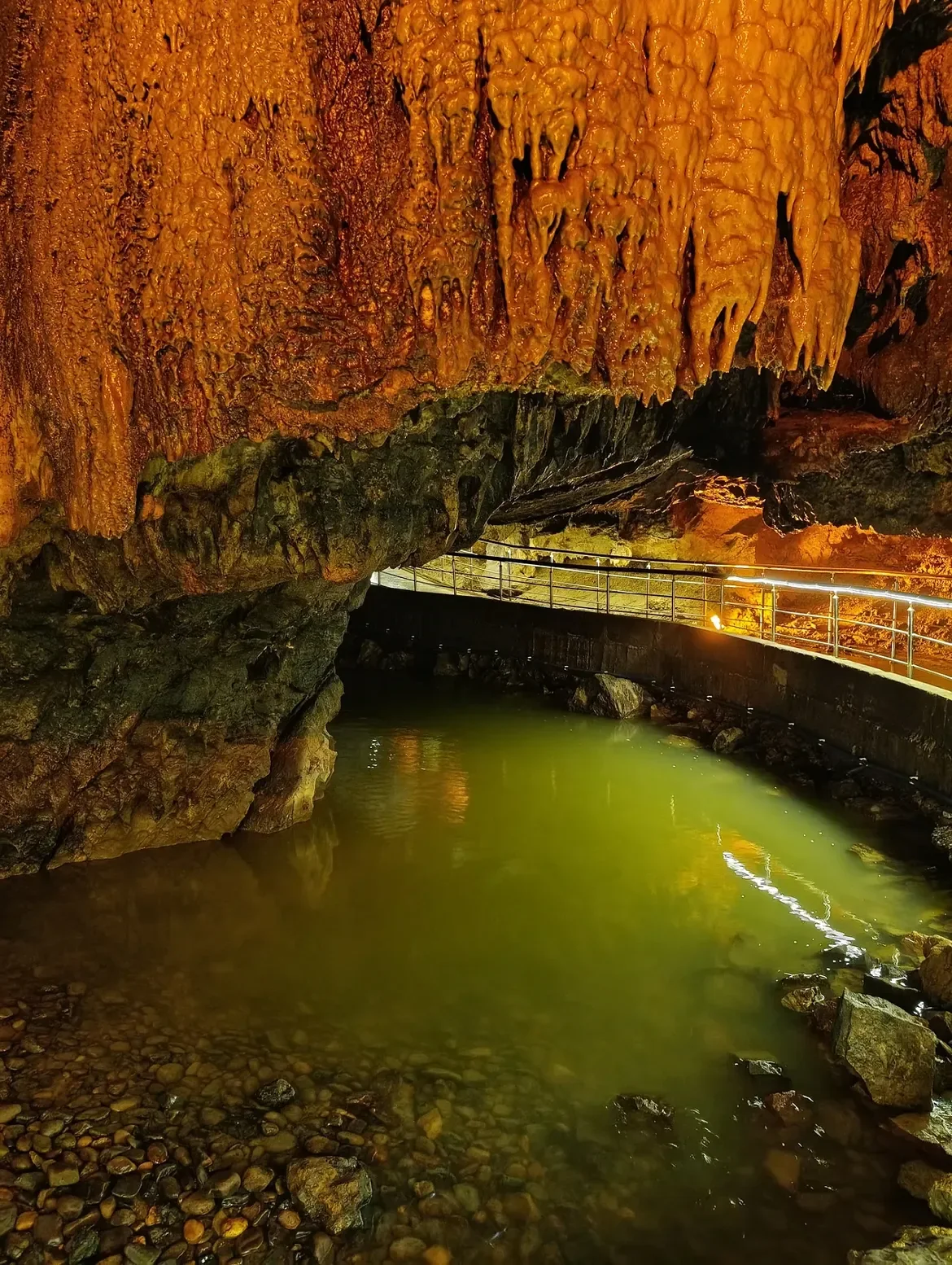
Gökgöl is an active cave, with interconnected levels, a main gallery and two substantial side branches. Its underground stream increases in flow during rainy periods.
The word active matters.
Some sections preserve older stages of the cave’s development. Elsewhere, water continues to move and mineral deposits continue to form. The official description distinguishes four levels, including older, inactive sections and younger areas containing the stream and developing formations.
When access resumes, look for that difference from the permitted walkway.
A dry formation and a wet, shining surface may stand close together, but they tell different parts of the cave’s history. The entire place did not take shape at once.
Water has changed its routes. Chambers have developed. Some surfaces have become inactive while others continue to receive moisture.
The cave you see is one moment in a much longer process.
Learn Three Shapes, Then Look Again
A few names make Gökgöl easier to read.
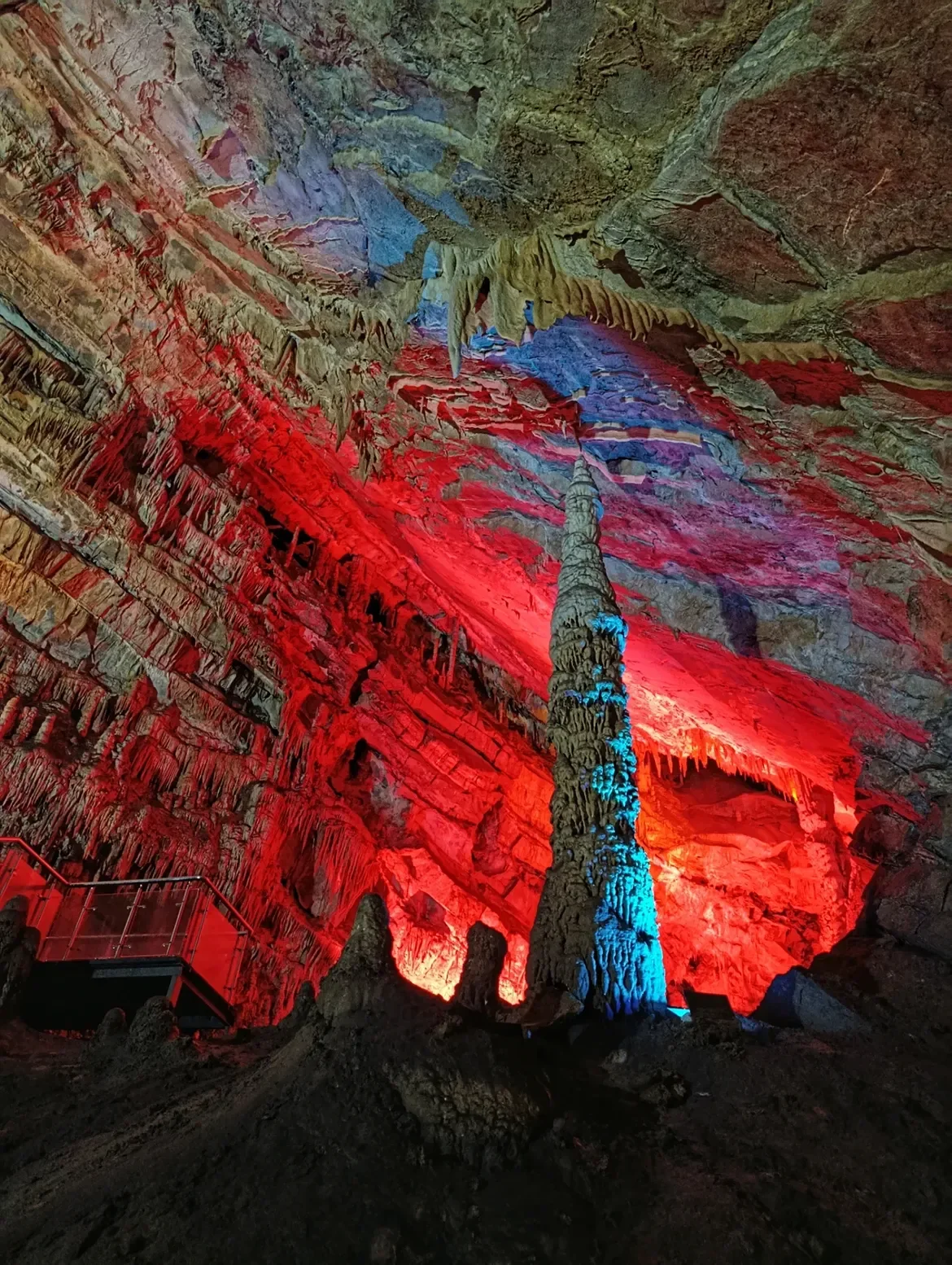
Stalactites hang from the ceiling. Stalagmites rise from the floor. Where the two meet, they can form a column.
Gökgöl also contains thin, tubular formations often called soda straws, along with draperies and flowstone spreading over surfaces. Official sources emphasise the variety and abundance of these deposits.
Once you recognise those shapes, the chambers become more distinct.
Look upwards for the slender forms. Lower your eyes to the heavier growths beneath them. Along a wall, notice where a deposit appears to fold like fabric.
The resemblance can be surprisingly convincing.
A stone curtain has no movement, yet its curved edge suggests something soft. A column looks solid and complete, while nearby delicate tubes seem almost too fine to survive.
Their differences reward a slower walk.
The River Beneath the Walkway
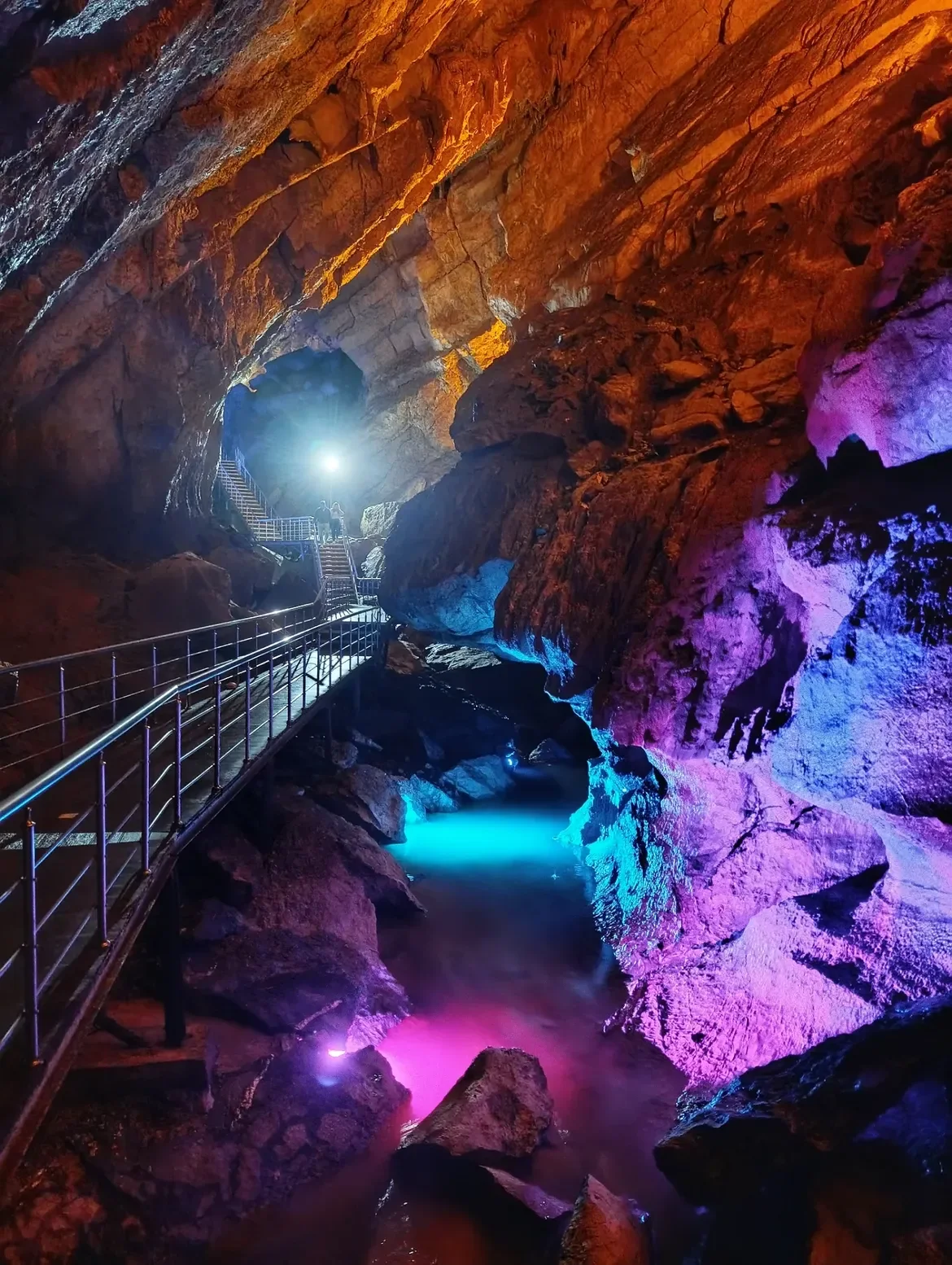
The visitor route includes bridges and viewing areas around the underground stream. Official descriptions trace its water towards Erçek stream outside the cave.
Pause at an authorised viewing point and listen.
When the flow is stronger, moving water may dominate the chamber. At other times, individual drops and nearby footsteps can become easier to distinguish.
You may hear water before you see where it runs. Lighting reveals selected areas, while the rock interrupts your view.
That uncertainty gives the walk its quiet suspense.
You follow a prepared path, but the full cave extends beyond what visitors can enter. The branches and water routes belong to a larger system than the illuminated section suggests.
A Cave Studied Before It Became a Visitor Attraction
The governor’s account records investigations in 1976, involving Turkish geologist Temuçin Aygen and British cave researchers. Mapping and later development preceded Gökgöl’s opening to tourism in 2001.
Those dates describe its modern investigation and public opening.
They also help you appreciate the difference between exploring a cave and visiting one. Researchers had to establish its layout and examine conditions before a prepared route could guide ordinary visitors through part of it.
Today’s lights, walkways and bridges shape what you can see.
They provide access, but they do not reveal everything. Beyond their reach, the cave continues.
Light Reveals the Details
Gökgöl’s formations are presented through installed lighting. The governor’s description records lighting improvements during the restoration completed in 2016, intended to illuminate formations more selectively.
Watch how the light catches an edge.
A shallow ridge becomes pronounced when one side falls into shadow. Moisture makes a surface gleam. Behind a thin formation, darkness helps you distinguish its outline.
Move a few steps and look again.
You may notice something that disappeared into the larger chamber from your previous position. A close cluster of formations separates into individual shapes; a wall becomes visible behind them.
The walkway offers a succession of views rather than one complete picture.
The Air Against Your Skin
Gökgöl’s interior temperature and humidity vary less than conditions outside. Official descriptions note that the cave feels cooler than the outdoors in summer and relatively warmer in winter.
On a warm day, you may notice that contrast soon after entering. The coolness settles against your arms; after a while, you reach for the layer you brought.
Depending on conditions, the air may carry an earthy dampness. Your footsteps and other visitors’ voices become part of the enclosed soundscape.
Let the experience remain physical and simple: cool air, moving water, mineral surfaces and light.
Afterwards, a hot drink provides a welcome contrast. The glass warms your palms. Tea leaves a slight bitterness on your tongue. Outside sounds return around you.
It is a small transition, but one you may remember as clearly as a chamber.
Photograph What the Light Already Shows
When visits resume, choose a formation illuminated by the installed lights and work from the permitted path.
Hold your phone steadily and give the camera time to expose the darker scene. A hurried photograph can lose both the detail and the atmosphere.
Take one wider view of a chamber, then a close view of a particular formation. The wider image gives scale; the detail preserves the shape that caught your attention.
Follow posted rules on flash and equipment. Avoid blocking a narrow section while taking repeated photographs.
Keep your hands away from formations and pools. These are the features you came to see, and they should remain undisturbed.
Planning a Visit After Access Is Confirmed
Gökgöl lies beside the Zonguldak–Ankara road, close to Zonguldak city centre.
Once reopening is confirmed, allow approximately one hour, or longer if you like examining formations and taking photographs. This is a planning estimate, not a fixed tour duration.
Remember that the 875-metre developed section describes the visitor route’s extent; it should not automatically be treated as the total distance you will walk, including your return.
Wear shoes with grip and bring a light layer. Ask about current access arrangements if you use a wheelchair or have limited mobility. Confirm the available route rather than relying on a general accessibility description.
After heavy rain, check operating status close to departure. The stream is part of what makes Gökgöl compelling, and it also affects the conditions for visiting.
Walking note — Physical effort 2/5: A leisurely walk on the developed route is a relatively modest outing for many visitors, but distance, damp surfaces and individual mobility affect comfort.
Stay for One More Drop
Before turning back, choose a wet formation and watch it briefly.
You may see a drop gather. You may hear it fall without finding it.
Around that small event stand surfaces built over far longer periods than your visit can grasp.
Then you return towards daylight.
Behind you, the stream keeps moving through Gökgöl.
Gökgöl Cave Visitor Summary
| Detail | What to know |
|---|---|
| Place | Gökgöl Mağarası — Gökgöl Cave |
| Location | Beside the Zonguldak–Ankara road, near Zonguldak city centre |
| Total system length | 3,350 metres, including branches |
| Developed visitor section | Approximately 875 metres |
| Main features | Stalactites, stalagmites, columns, draperies, flowstone and an underground stream |
| Cave character | Active system with older and younger sections |
| Modern investigation | Research recorded in 1976 |
| Opened to tourism | 2001 |
| Access update | Official operator page checked on 3 October 2026 displays an undated temporary flood-closure notice; confirm its current status |
| Suggested visit after reopening | Around one hour or more |
| Physical effort | 2/5 as a practical estimate |
| Bring | Shoes with grip and a light layer |
| Photography | Use the installed lighting and follow posted restrictions |
| Before travelling | Confirm reopening, current hours, admission and route availability |
Geographical and historical details follow official cave and provincial sources. Duration and effort are practical estimates.
💬 Comments (0)
Traveler comments are shown in their original language.
No comments yet. Be the first to share your experience.
💬 Want to join the discussion?
Log in or create an account to leave a comment.