Durupınar: The Boat-Shaped Hillside Linked to Noah’s Ark
Near Doğubayazıt, Durupınar’s boat-shaped outline has inspired decades of searching for Noah’s Ark. Explore its discovery, religious significance and the geological evidence behind the claims.
 Burak ÇınarTurkTravelRadar Founder
October 3, 2026
Once you see the outline, it is difficult to see anything else.
Two long edges narrow towards a pointed end. Between them lies a broad, uneven surface. Beyond it, the hillside continues into folds of earth and rock.
Your eyes turn the shape into a vessel.
Then the wind catches your clothes, and you remember where you are: standing above a formation in the ground, far from the sea.
This is Durupınar, near Telçeker and Üzengili in the Doğubayazıt district of Ağrı. Often called “Nuh’un Gemisi İzi” — the Trace of Noah’s Ark, it has drawn visitors, believers and researchers because of its resemblance to a ship. The provincial tourism authority describes it as a boat-shaped formation in a landslide landscape south of Mount Ararat.
Durupınar has not been established as the remains of Noah’s Ark. A published geological investigation identified it as a natural rock structure and explained several supposed ship features through geological processes.
That distinction matters before you visit.
The shape is real. Its identification as a ship is a claim.
The Photograph That Started the Search
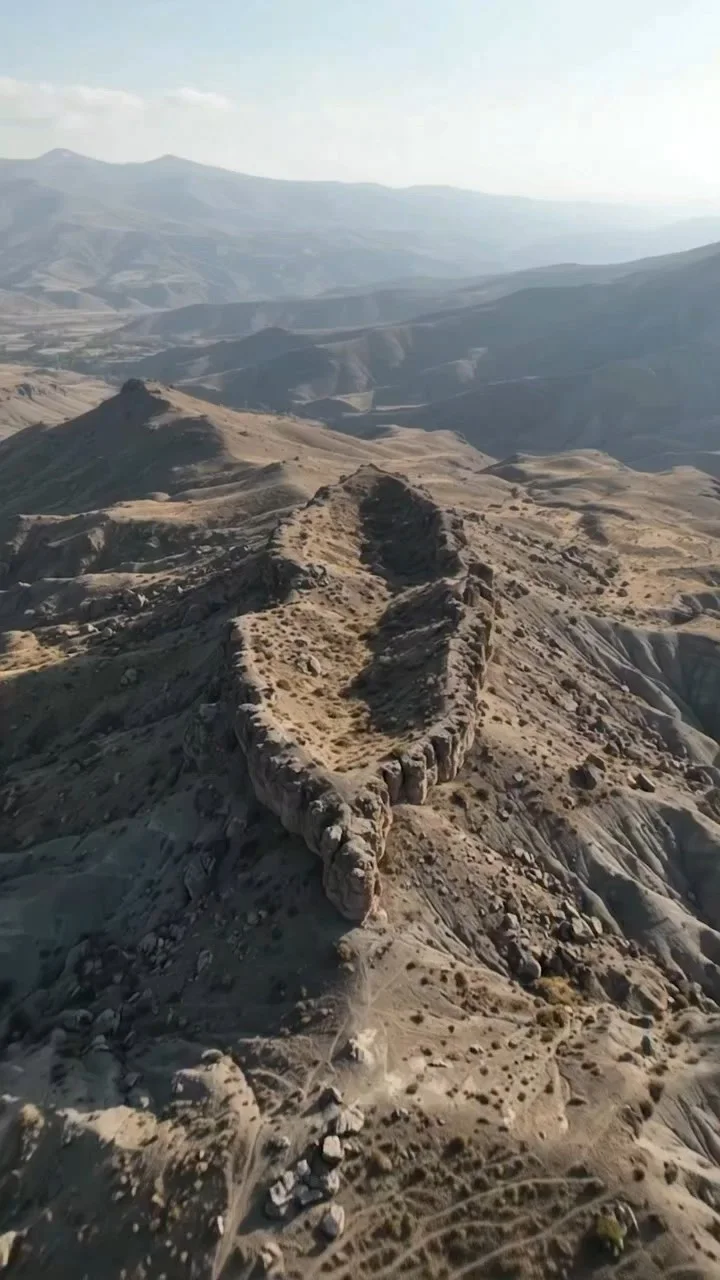
Durupınar’s modern story began with a view from above.
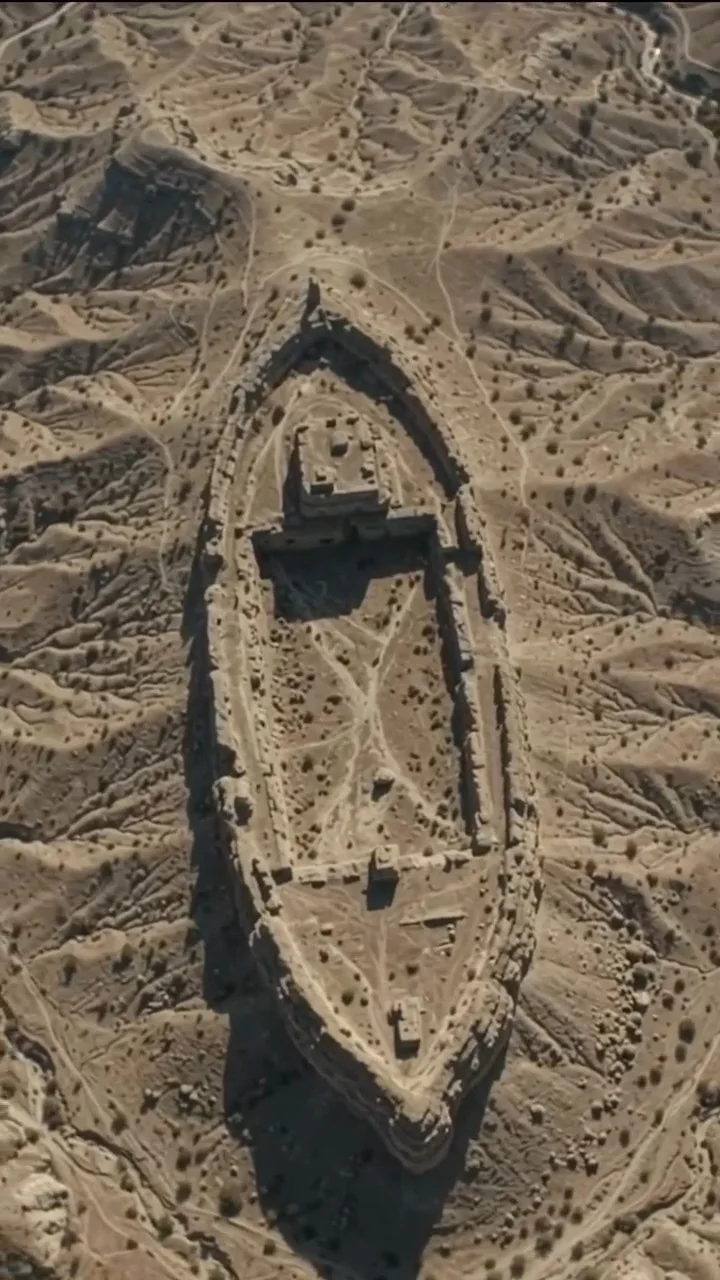
In 1959, a Turkish military mapping officer examining aerial survey photographs noticed the unusual outline near Doğubayazıt. The discovery brought attention to the formation and encouraged searches connected with the Ark tradition.
An aerial photograph can reveal something that is harder to recognise on the ground. It brings separate edges into one shape and removes the distractions of walking through uneven terrain.
At Durupınar, that change in perspective was decisive.
A feature on a hillside became a possible vessel. A possible vessel became the subject of expeditions, measurements and arguments.
The site takes its name from the officer associated with that identification.
Today, visitors often arrive having already seen the famous outline in photographs. Seeing it in person adds something those images cannot supply: the slope around it, the distance across the formation and the weather moving through the landscape.
What You Are Actually Looking At
The formation is an elongated feature in the hillside, with raised edges that suggest the outline of a hull.
From an elevated, permitted viewpoint, its overall shape is easier to follow. Close to the ground, the separate surfaces and irregularities become more prominent.
The provincial tourism authority gives approximate dimensions of 165 metres in length and 50 metres in width. Those figures describe the formation; they do not establish that it was built as a vessel.
Give yourself time to look before taking photographs.
Follow one edge with your eyes. Notice where it becomes clear and where it merges with the surrounding ground. Then examine the hillside beyond it.
The formation belongs to that landscape. Understanding the wider terrain is part of understanding the shape.
Why the Ark Story Has Such a Hold
The story of Noah brings together destruction, survival and the hope of beginning again.
A vessel carries life through a catastrophe. When the water retreats, its passengers face a changed world.
For visitors who grew up with that story, a boat-shaped outline in eastern Türkiye can carry considerable emotional weight. Some come with religious conviction. Others arrive because they are curious about the search.
You can respect that significance while asking a separate question: what does the physical evidence show?
Belief explains why people care about Durupınar. Archaeological and geological evidence must determine what the formation is.
A thoughtful visit allows both questions to remain visible.
What the Geological Investigation Found
In 1996, geologist Lorence Gene Collins and researcher David Franklin Fasold published an investigation of the formation and materials associated with Ark claims.
Their study interpreted the site as a natural geological structure. Material described as an iron fitting was explained as a product of weathered minerals; other samples claimed to represent wooden structural elements were identified as rock. The authors also described folded layers and erosion capable of producing the boat-like outline.
That is more substantial than saying the formation merely “looks natural.”
The investigation examined particular objects and features offered as evidence of a ship and proposed explanations for them.
This gives you another way to look at Durupınar. Alongside the resemblance to a vessel, consider the layers, the resistant edges and the surrounding slope.
Nature can produce a recognisable shape without having intended it.
Research Is Still Different from Confirmation
Durupınar continues to attract investigation.
Reports published in September 2026 described further sampling and laboratory work connected with the site. They presented the Ark identification as a claim under investigation rather than an established discovery.
A scan, a sample or an unusual measurement can justify another question. It does not, on its own, identify a vessel or connect it with Noah.
When reading new announcements, look for the actual result: what was recovered, how it was tested and whether the interpretation has been independently assessed.
For planning a visit, the description remains straightforward: a boat-shaped geological formation associated with the Noah’s Ark tradition.
The Hillside Has Its Own Atmosphere
On a dry day, dust may rise beneath your shoes. In wet weather, the same ground can become soft and muddy.
The wind is easier to notice than any scent. Depending on the season, you may catch dry earth or damp soil in the air. Voices carry differently as people spread out along the viewing area.
There is no enclosed chamber here to step into, no carved doorway guiding your attention. You look across an open surface and try to understand its boundaries.
That can make the visit unexpectedly absorbing.
Put the camera down for a minute. Let your eyes move between the formation and the surrounding hills. Notice how a passing cloud changes the contrast along its edges.
The outline may become stronger, then less distinct.
The landscape keeps changing the way you read it.
How to Photograph the Formation
Choose a safe, authorised viewpoint high enough to show the outline.
A photograph taken too close to one edge may record only a bank of earth. A wider frame helps explain the shape and its position on the slope.
Include some of the surrounding landscape. It gives scale and prevents the formation from appearing detached from its geological setting.
Side light can help define the raised edges, although the result depends on the season, weather and viewing position. Do not leave permitted routes to force a better angle.
A useful caption is:
“The boat-shaped Durupınar formation near Doğubayazıt, traditionally associated with Noah’s Ark.”
It tells the reader what the photograph shows without turning an interpretation into a fact.
Plan It as a Separate Stop
Durupınar lies south of the Doğubayazıt–Gürbulak road, near the slopes around Telçeker and Üzengili. It is separate from Mount Ararat’s summit.
Confirm the destination as Durupınar Sitesi or Nuh’un Gemisi İzi when arranging transport. An outing to the formation is different from a mountain climb.
Allow 30–60 minutes at the site as a practical planning estimate, excluding travel. Visitors particularly interested in the research may want a guide who can explain the competing interpretations clearly.
Check current access, road conditions and any visitor arrangements before setting out. Research activity may affect where visitors can go.
Wear shoes with grip, carry water and bring a layer for the wind. After rain or snow, ask about the ground conditions rather than assuming the approach will be straightforward.
A tea or meal stop back in Doğubayazıt fits naturally after an exposed visit. The warmth of the glass against your hands, the smell of freshly served food and the first mouthful bring the journey back to everyday life.
One Last Look at the Outline
Before leaving, look across the formation again.
You still see the pointed end. The long edges still suggest a hull. Knowing the geological explanation may not remove that first visual impression.
But you can now describe it more carefully.
You have stood beside a remarkable shape in the earth, in a place where an ancient story has prompted decades of searching.
The hillside offers something worth seeing.
The evidence determines what can be said about it.
Durupınar Visitor Summary
| Detail | What to know |
|---|---|
| Place | Durupınar Sitesi / Nuh’un Gemisi İzi |
| English description | Durupınar boat-shaped formation, traditionally associated with Noah’s Ark |
| Location | Near Telçeker and Üzengili, Doğubayazıt district, Ağrı |
| Modern identification | Noticed in aerial survey photographs in 1959 |
| What visitors see | An elongated, boat-shaped formation in a hillside |
| Approximate dimensions | 165 metres long and 50 metres wide, according to the provincial tourism authority |
| Scientific status | Not established as Noah’s Ark; a published geological investigation identifies a natural structure |
| Relationship to Mount Ararat | A separate site south of the mountain |
| Suggested duration | 30–60 minutes, excluding transport |
| Physical effort | Depends on the accessible route and ground conditions |
| Bring | Shoes with grip, water and a layer for wind |
| Photography | Use a permitted elevated viewpoint and include the surrounding terrain |
| Before travelling | Confirm access, visitor arrangements and road conditions |
Location and historical details follow the provincial tourism authority; the geological assessment refers to Collins and Fasold’s published investigation. Duration is a practical estimate.
💬 Comments (0)
Traveler comments are shown in their original language.
No comments yet. Be the first to share your experience.
💬 Want to join the discussion?
Log in or create an account to leave a comment.