Clandras Bridge: An Ancient Stone Arch Beside Uşak’s Rushing Water
Discover Clandras in Uşak, where an ancient stone aqueduct spans the Banaz Stream beside rocky scenery, walking paths and a striking cascade.
 Burak ÇınarTurkTravelRadar Founder
October 5, 2026
The water catches your attention first.
When the cascade is flowing, its sound fills the narrow valley—a steady rush that grows louder as you approach. Then the stone arch appears between the rocky banks, its curve holding the view together while white water tumbles nearby.
Stand for a moment before reaching for your camera. Notice the darker patches on the rock, the movement of leaves above the stream, and the contrast between the restless water and the stillness of the old stonework.
Clandras, in Uşak’s Karahallı district, brings history and landscape into the same frame. It is a place to explore gently, pause beside the water and let a short stop become an unhurried afternoon.
A Bridge by Name, an Aqueduct by Function
Although commonly called Clandras Bridge, the structure is identified in current tourism sources as an ancient aqueduct. It is associated with a water-supply route serving nearby Pepouza, carrying spring water across the landscape to the settlement.
That changes the way you look at it. The slender arch was part of the practical work of supplying a city with water—a surviving fragment of an engineering system whose wider route is much less obvious today.
Official descriptions traditionally associate Clandras with the Phrygian period, estimating an age of approximately 2,500 years. The Culture Portal also notes Roman architectural characteristics, so the familiar date is best understood as an estimate rather than a precisely established construction year.
You can appreciate the structure without resolving every historical question. Look at how the arch meets the rock on either side. Its position makes the relationship between engineering and terrain immediately visible.
The Arch and the Waterfall
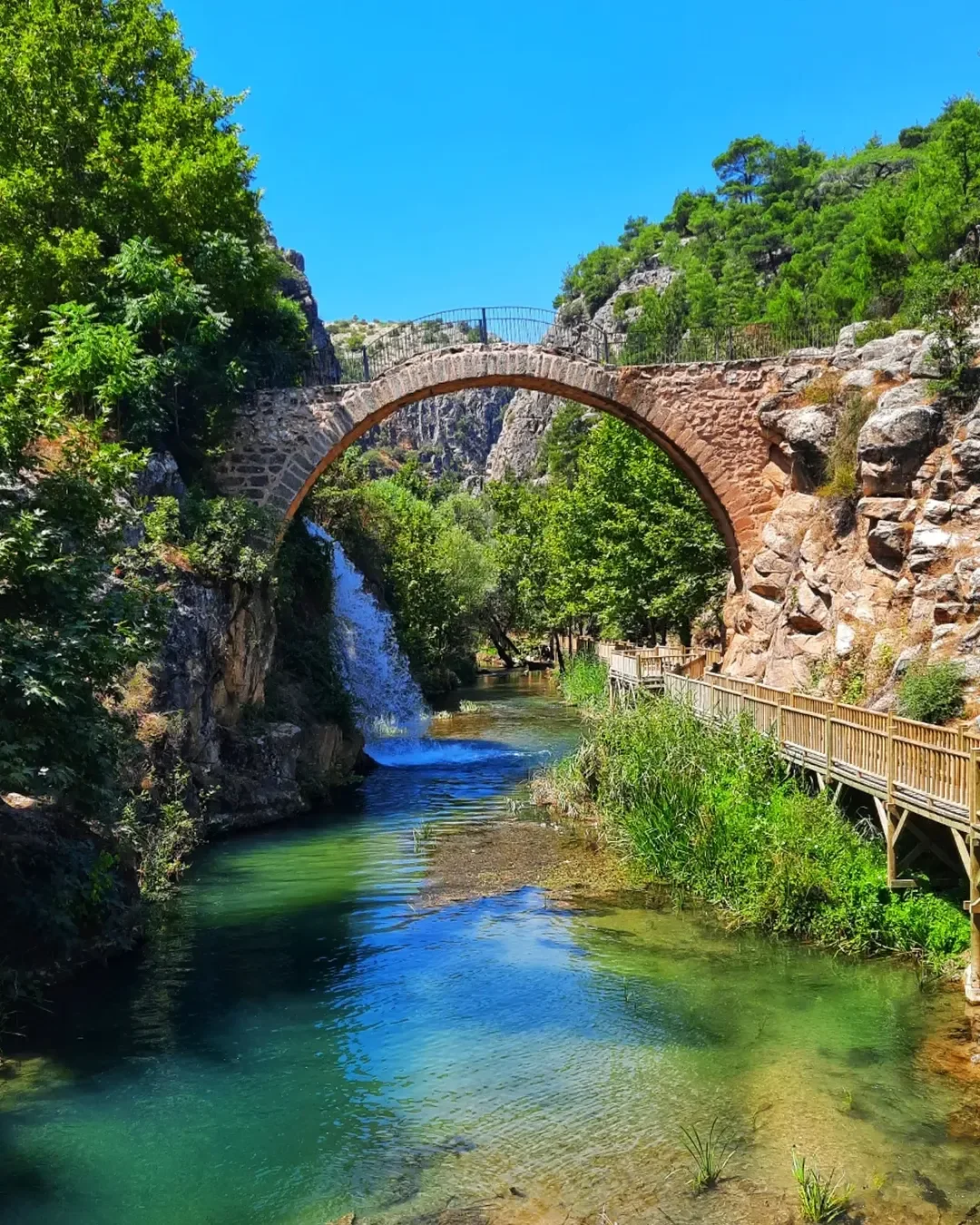
Clandras spans the Banaz Stream. Its single stone arch is approximately 24 metres long, rising around 17 metres above the stream, with its ends supported by the rocky banks.
From a little distance, its shape looks remarkably slender. Closer views reveal the large stone blocks and the careful arrangement that creates the curve.
The waterfall beside it adds another layer to the scene—but it has a different story. The cascade is formed by water discharged through a channel from the nearby Karahallı hydroelectric plant, rather than being an untouched natural waterfall.
Its flow can therefore change. Photographs showing a broad curtain of white water capture a particular moment; your visit may reveal a different scene.
When it is running strongly, the falling water gives the valley an energetic atmosphere. When quieter, the arch and surrounding rock become more prominent. Both offer reasons to stop and look.
Follow the Water at Walking Pace
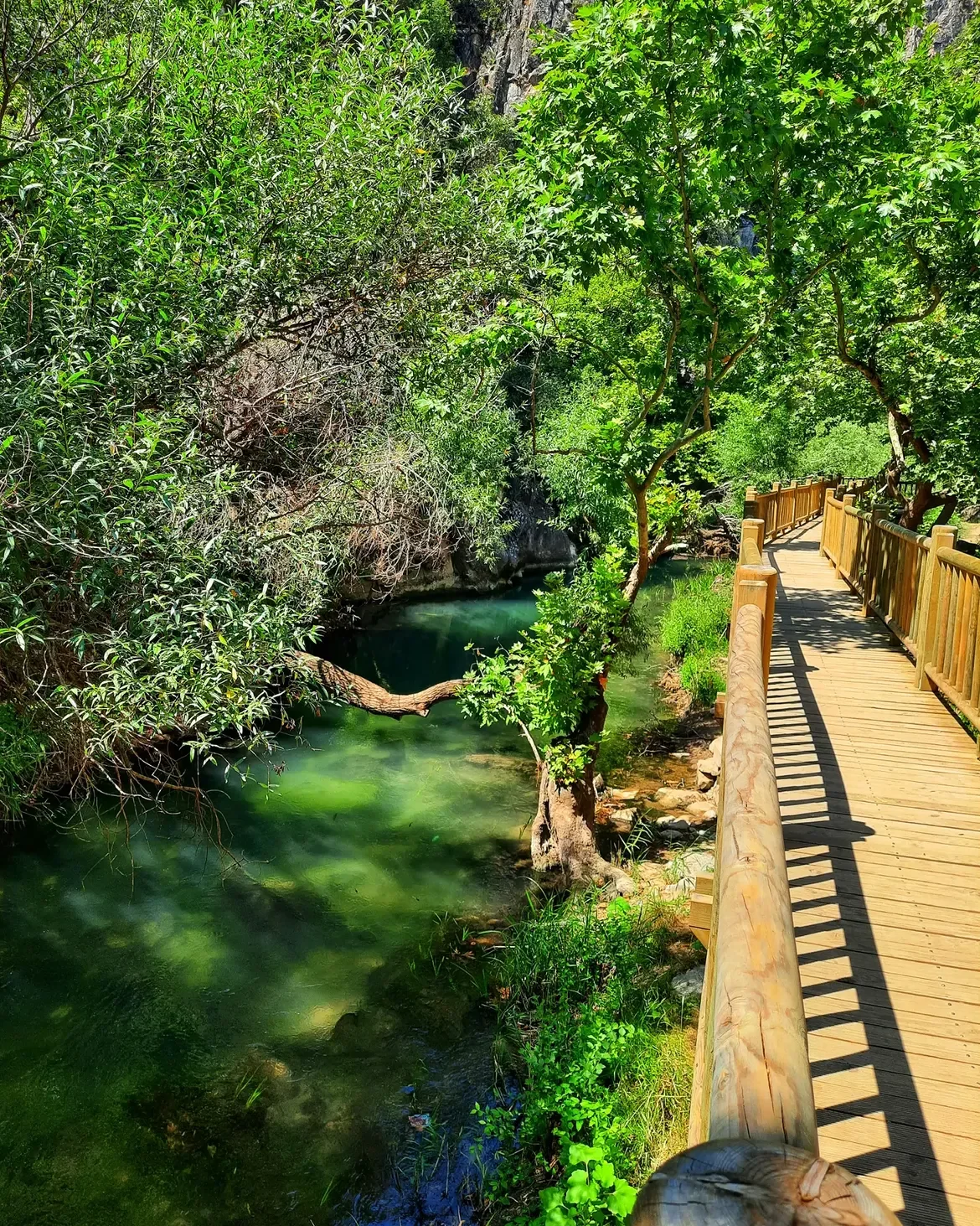
A wooden walking route has been created beside the Banaz Stream, offering another way to enjoy the setting beyond the main viewpoint. The wider Clandras–Pepouza area also forms part of an ecotourism walking route.
For a relaxed visit, follow the sections that are open and clearly marked. You do not need to commit to a long hike to enjoy the place.
As you move, the view changes: branches frame the arch, rocks hide part of the stream, then the water comes back into sight. Pause where the path widens and listen. The sound is part of what makes Clandras memorable.
Wear shoes with a reliable grip, particularly after rain. Damp paths, steps and waterside surfaces deserve a little extra care. Use designated viewpoints and follow any barriers around the historic structure.
Taking a Photograph Worth Keeping
Try a wider composition first. Include the rocky banks, the arch and the water together; the surrounding landscape explains why the structure is so striking.
Then look for details: the curve of the masonry, water breaking into droplets, or leaves casting shadows across the stone.
Light filtering through the valley can create bright highlights and deep shade in the same image. Take a moment to adjust your position rather than moving onto wet rocks for a closer shot. A safe viewpoint usually gives you more room to compose the scene thoughtfully.
Planning Your Visit
Clandras works well as a nature-and-history stop during a trip through Uşak province. A car or prearranged transfer offers the most straightforward way to organise the journey.
If travelling via Karahallı by public transport, arrange the final leg and return journey separately. Reaching the district centre does not necessarily mean reaching the aqueduct directly.
Allow around an hour for the main views and a short walk, or longer if you want a leisurely break. Bring water and check local information about current access, walking-route conditions and any parking or recreation-area charges before travelling.
Walking note — Physical effort: 2/5 for a short visit around the main viewpoints. Steps, wet surfaces and longer trail sections can increase the effort.
Clandras at a Glance
| Detail | What to Know |
|---|---|
| Location | Karahallı district, Uşak |
| Waterway | Banaz Stream |
| Historic function | Aqueduct associated with Pepouza’s water supply |
| Estimated age | Traditionally described as approximately 2,500 years old |
| Structure | Single stone arch, about 24 metres long |
| Nearby cascade | Fed by discharge from the hydroelectric plant; flow varies |
| Suggested visit | Around one hour for views and a short walk |
| Bring | Grippy shoes, water and a camera |
Author’s Note for Food & Shopping Travelers: When researching what is the best Turkish breakfast or compiling a personal travel bucket list of the famous local foods in Turkey to try and discover, visitors often limit their horizon to coastal destinations. However, if you truly want to experience authentic Anatolian gastronomy right after standing beneath the ancient Phrygian arch of Clandras, heading to a traditional local establishment to sample the famous tescilli Uşak tarhana soup or traditional tahinli un helvası is an absolute necessity. Furthermore, when determining what to buy in Uşak as traditional Turkish souvenirs, looking beyond generic items and investing in a world-renowned, hand-woven Uşak carpet—historically prized in European royal palaces—or an authentic Eşme kilim remains the ultimate way to bring home a timeless piece of cultural heritage.
💬 Comments (0)
Traveler comments are shown in their original language.
No comments yet. Be the first to share your experience.
💬 Want to join the discussion?
Log in or create an account to leave a comment.