Beykoz Centre and Paşabahçe: The Shore That Worked with Its Hands
Explore Beykoz’s historic fountain and lively streets, taste a bowl of paça, then follow the Bosphorus to Paşabahçe and its glassmaking story.
 Burak ÇınarTurkTravelRadar Founder
September 29, 2026
Arrive at Beykoz Pier and follow the people stepping off the ferry.
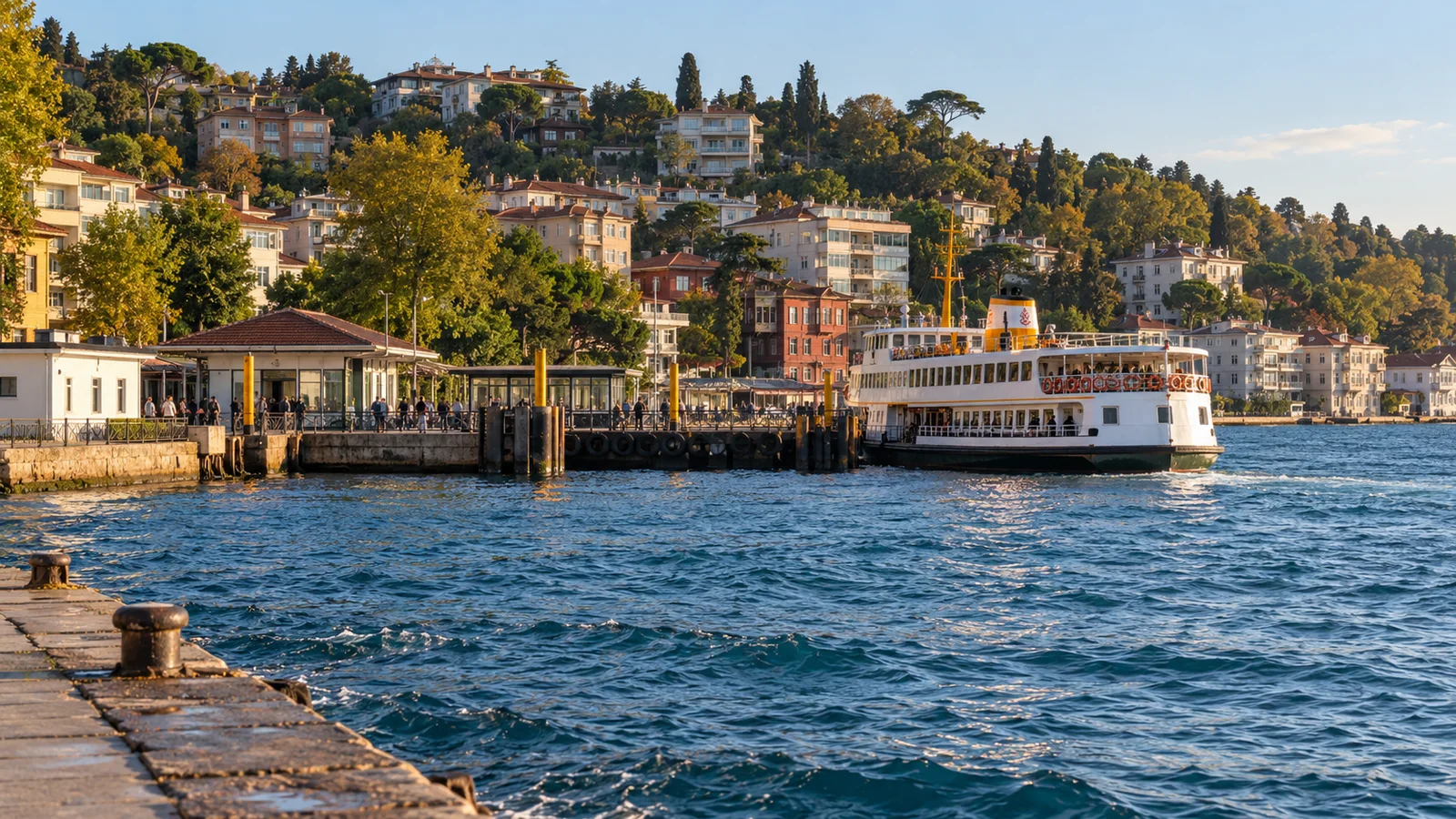
Some head straight for the buses. Others cross toward the shops with bags in their hands. Delivery carts rattle over the pavement, a shopkeeper lifts a shutter, and the Bosphorus remains visible between the buildings. Beykoz does not pause for its visitors. That is part of the pleasure of being here.
This route moves through two neighbouring places. In Beykoz Centre, water, trade and an old fountain meet around the pier. In Paşabahçe, the streets carry the memory of glass furnaces and the families whose working days once revolved around them.
There is time for photographs, a proper local meal and, if you want a longer cultural day, two museum visits.
Walking note — Physical effort: 2/5 for the main route; 3/5 with the museum detour
Begin at Beykoz Pier, explore the square and nearby streets, then continue south to Paşabahçe. Use a coastal bus or a ferry calling at both piers if you prefer to save your energy for exploring each neighbourhood. The shore has relatively level stretches, but pavements can narrow, kerbs can be awkward and some crossings are busy. The Beykoz Glass and Crystal Museum lies inland and uphill; treat it as a separate detour rather than a stop directly on the waterfront. Ferries at Beykoz and Paşabahçe, along with coastal buses, offer ways to shorten the outing.
Ten Streams of Water Beside the Square
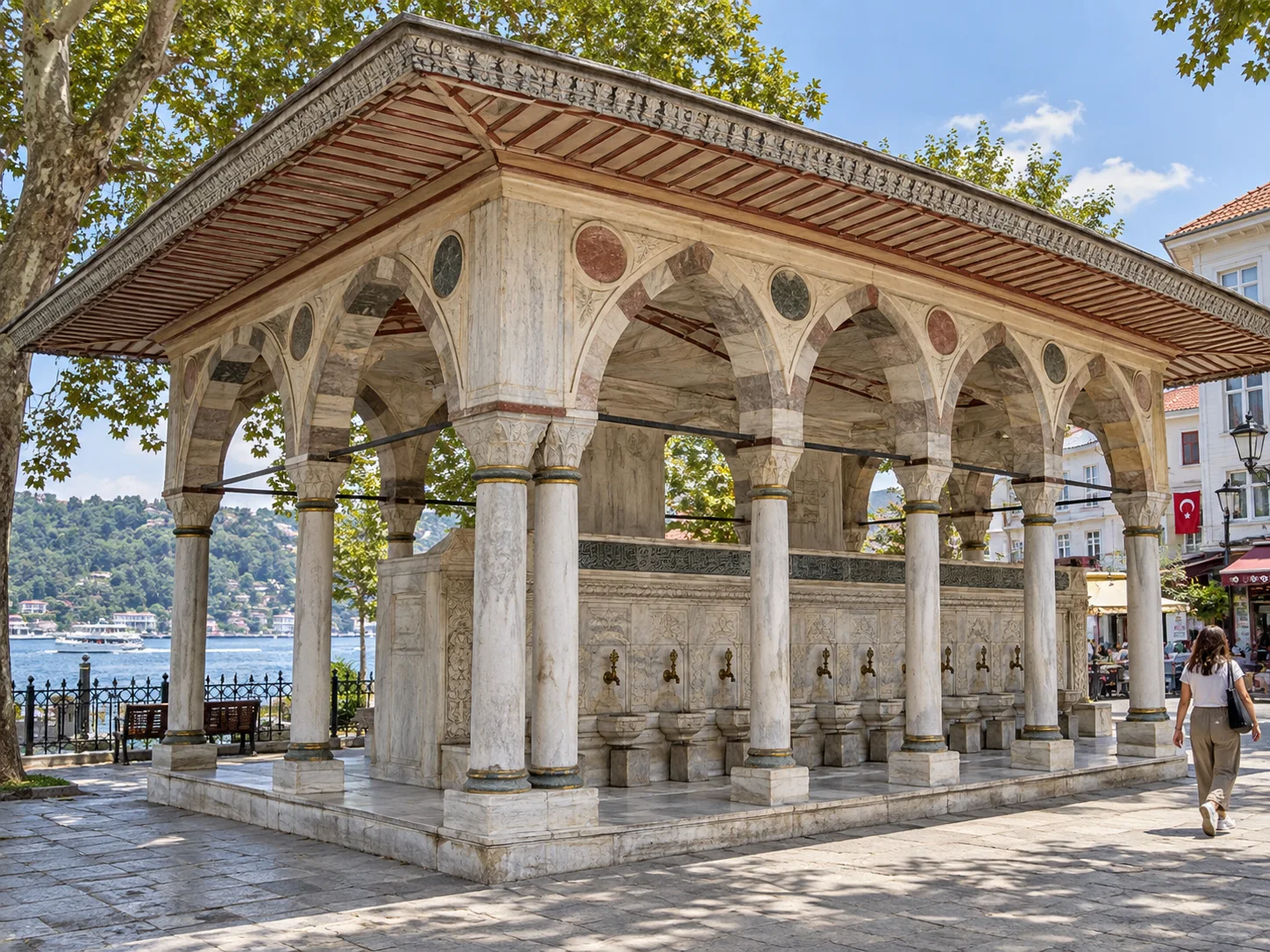
From Beykoz Pier, make your way to İshak Ağa Fountain, known locally as On Çeşmeler — the Ten Fountains.
Give your eyes a moment to adjust from the broad water to the details of the structure. Its columns frame the space beneath the roof, while the row of spouts gives the fountain its familiar name. People cross the square on their way to errands; a historic source of water stands in the middle of their ordinary day.
For a photograph, step back far enough to include the columns and the full line of spouts. Wait for the moment when someone passes through the edge of the frame. The human scale helps the fountain feel like part of Beykoz rather than an object removed from it.
Then take a closer look at the stone. The fountain has outlasted generations of changing shops, vehicles and ferry passengers. You have barely left the pier, yet the square has already given you a reason to slow down.
Into the Streets Behind the Pier
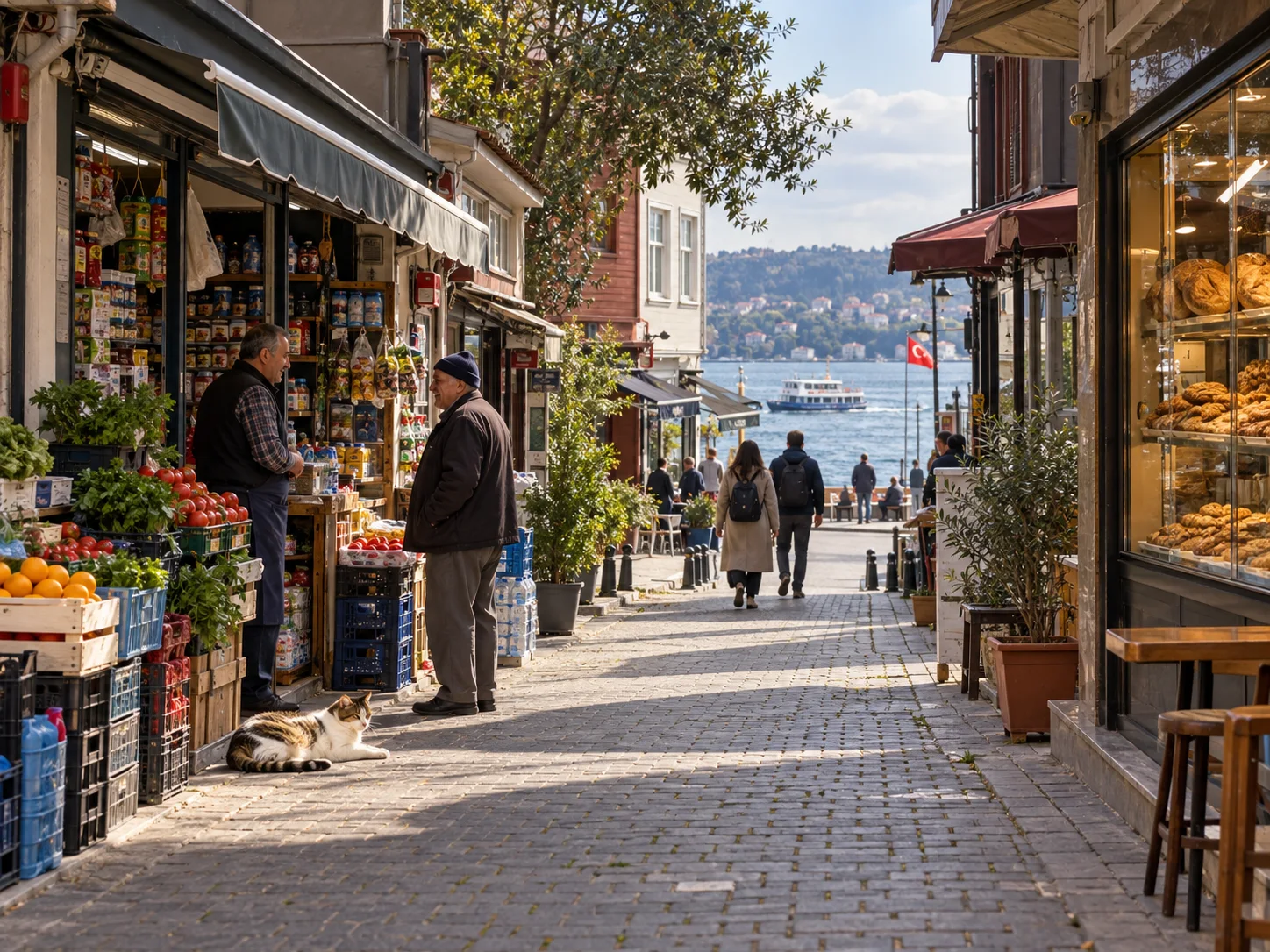
Walk into the streets behind the waterfront.
Here the sounds overlap: a bus braking, a short exchange at a counter, a spoon striking the side of a glass. There may be bread coming out of an oven or the sharper smell of food cooking for lunch. Look for the small changes that make a centre feel lived in — goods stacked outside a shop, a resident greeting someone by name, a cat choosing the patch of pavement that catches the sun.
Beykoz has another working history beyond its boats. Its leather and footwear industry employed local people for generations. You do not need to turn today’s walk into a tour of industrial sites to understand why that matters. Work shaped household routines, the hour of the day when the streets filled, and what families could afford to put on the table.
That history leads naturally to lunch.
Order a Bowl of Paça
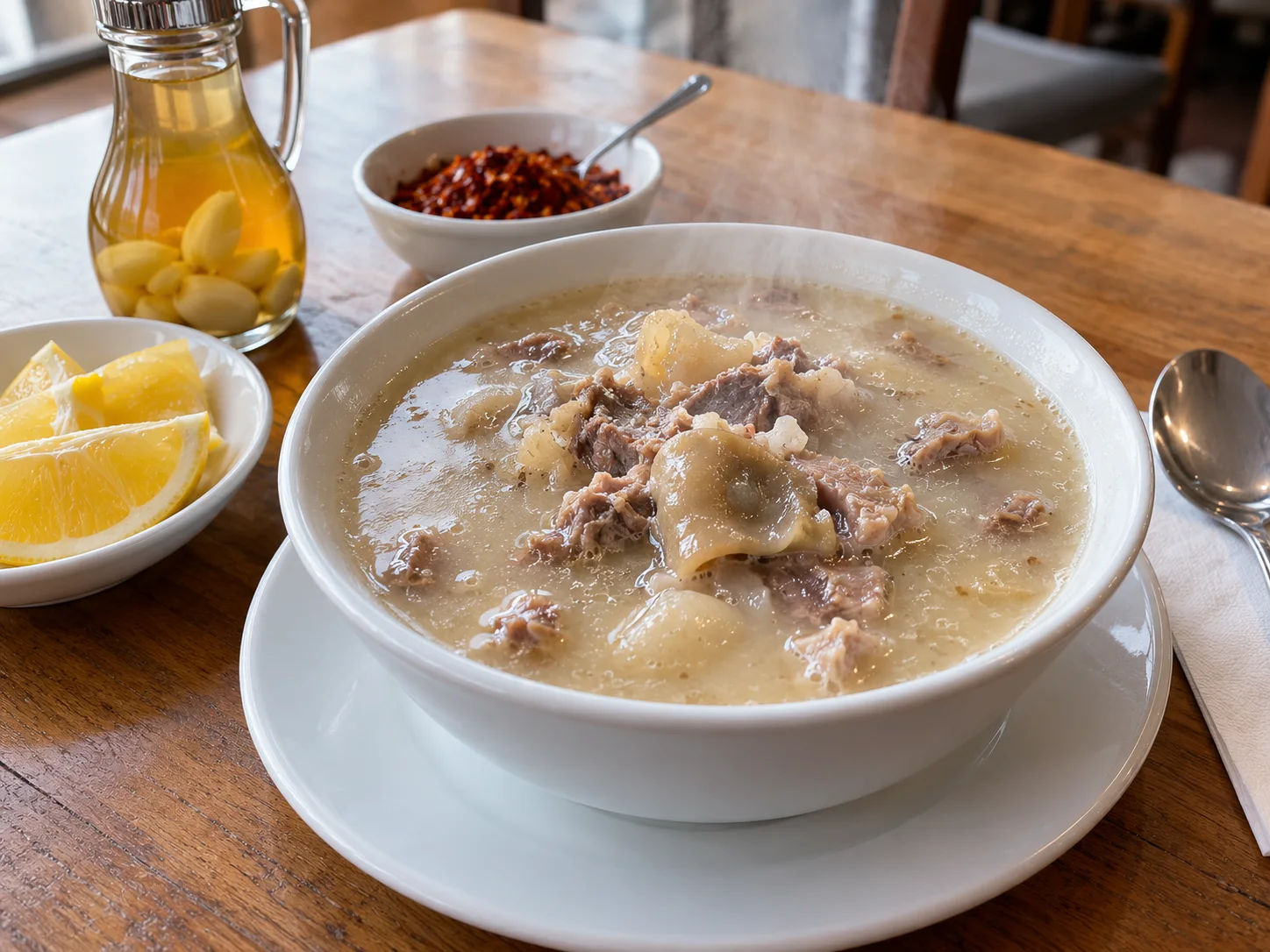
On Fevzipaşa Caddesi, look for Tarihi Tolon İşkembe & Paça Salonu. Order a bowl of paça çorbası if it is being served.
Paça is a rich, slow-cooked soup made from parts of the animal that need patience to become tender. It is served hot, and many people add lemon, vinegar or garlic at the table. Taste a spoonful first. Then add the sharpness you want and notice how it cuts through the broth.
This is a more fitting Beykoz stop than another portion of waterfront fish. The meal belongs to the rhythm of a working district: filling, direct and best eaten while it is still steaming.
The restaurant’s name includes tarihi, or “historic”, but there is no need to attach an unverified founding date to it. The useful detail is simpler: it is a named paça stop in Beykoz Centre, close enough to work into this part of the route.
An Optional Imperial Detour
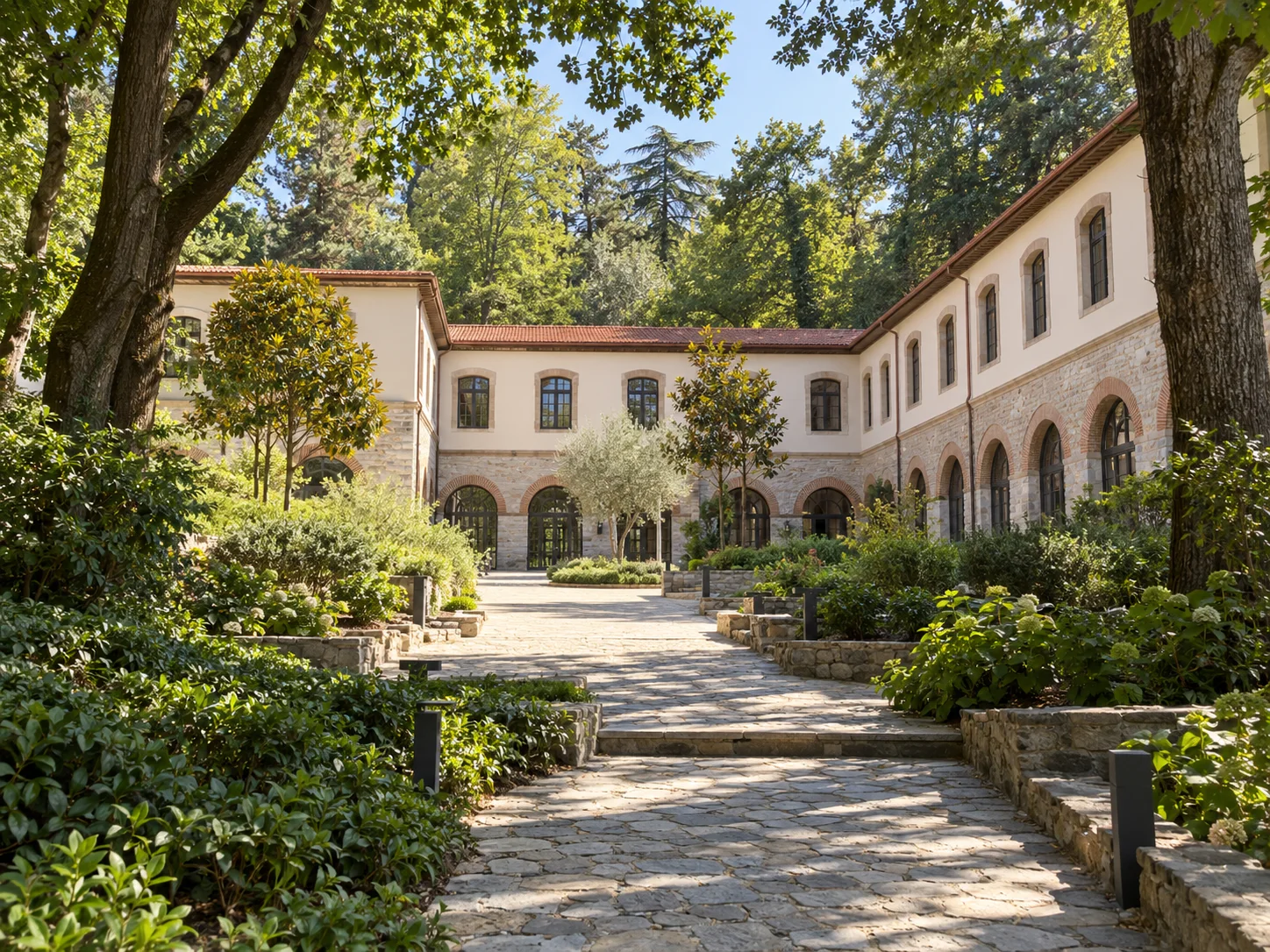
If you want to add another historic building before heading south, travel north from the centre to Beykoz Mecidiye Pavilion at Hünkâr İskelesi. Make this a deliberate side trip; it is not on the direct route to Paşabahçe.
The pavilion rises above the shore in a wooded, terraced setting. Construction began in 1845 as a gift for Sultan Abdülmecid and was completed in 1854. Its pale façade and formal symmetry feel very different from the busy streets around Beykoz Pier.
There is a story here that deserves more than a date. In 1869, Sultan Abdülaziz received the visiting French empress Eugénie at the pavilion. Imagine arriving by water, then ascending from the Bosphorus toward a building prepared for an imperial reception. Today, the movement is quieter: visitors come to see the rooms and grounds rather than a procession.
For an exterior photograph, let the trees frame part of the façade. A wider view can show how the building sits above the water. If you take this detour, return toward Beykoz Centre before continuing south.
Glass in a Former Stable
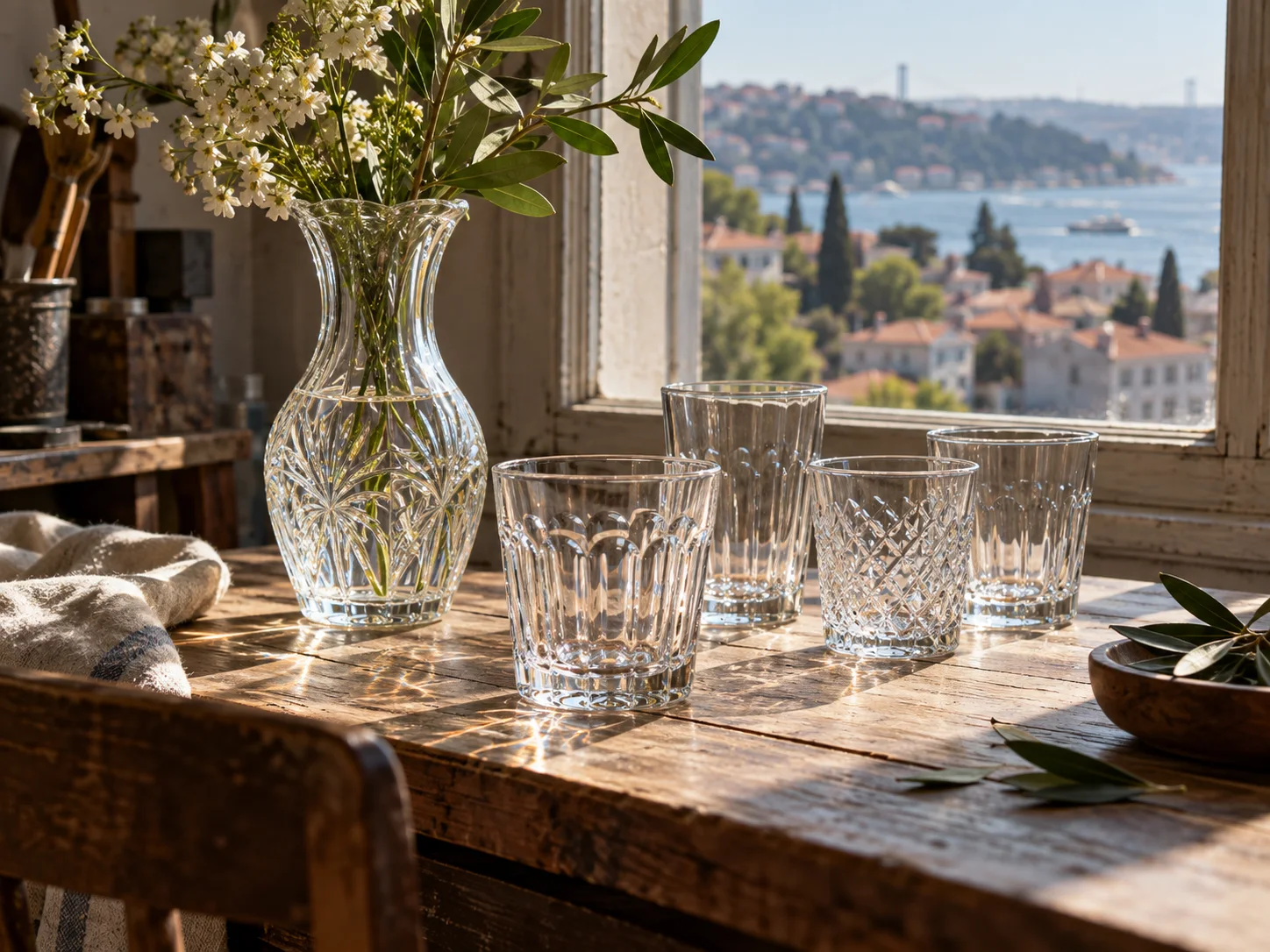
There is a second optional detour for anyone drawn to the story of Paşabahçe’s glassmaking: the Beykoz Glass and Crystal Museum.
It is in Beykoz Merkez, on Mehmet Yavuz Caddesi, inland from the piers. It is not inside the old Paşabahçe glass factory. The museum occupies a restored 19th-century stable building on the former estate of Abraham Pasha.
The approach changes your surroundings. Street noise gives way to wooded grounds; inside, glass catches the light in different ways as you move from one display to another. The collection follows the development of Turkish glass art and includes pieces made in Europe for Ottoman palaces.
Pause at an object you would otherwise pass quickly. Think of the hands involved: gathering hot material, shaping it, letting it cool, carrying it somewhere it could survive intact. The museum gives you a close view of the craft before the route brings you to the neighbourhood whose name became inseparable from glass.
This visit adds time, admission cost and an uphill transfer. If you choose the shorter walk, continue directly toward Paşabahçe instead.
South to Paşabahçe
Travel south from Beykoz Centre and get off near Paşabahçe Pier. A ferry that serves both piers or a coastal bus keeps the journey straightforward.
Begin at the shore. Behind you, ferries and road traffic continue their routes; ahead, the neighbourhood spreads back from the water. Walk into its streets before deciding where to take your final photograph.
Paşabahçe was a place of production long before its name appeared on glassware in homes across Türkiye. The neighbourhood had earlier workshops, and in the 20th century its factories drew workers and their families here. A shift ending meant people heading home, buying food, calling to neighbours and filling these streets with the sound of an ordinary evening.
The Paşabahçe Glass Factory began production on 4 July 1935 with 400 employees. Picture a furnace being lit and the first working day beginning. Over time, “Paşabahçe” became a name that travelled far beyond this stretch of the Bosphorus.
The historic factory is not presented here as a visitor museum. The glass story is found in the neighbourhood’s history and, if you took the inland detour, in the objects at the Beykoz Glass and Crystal Museum.
Another Layer of the Neighbourhood
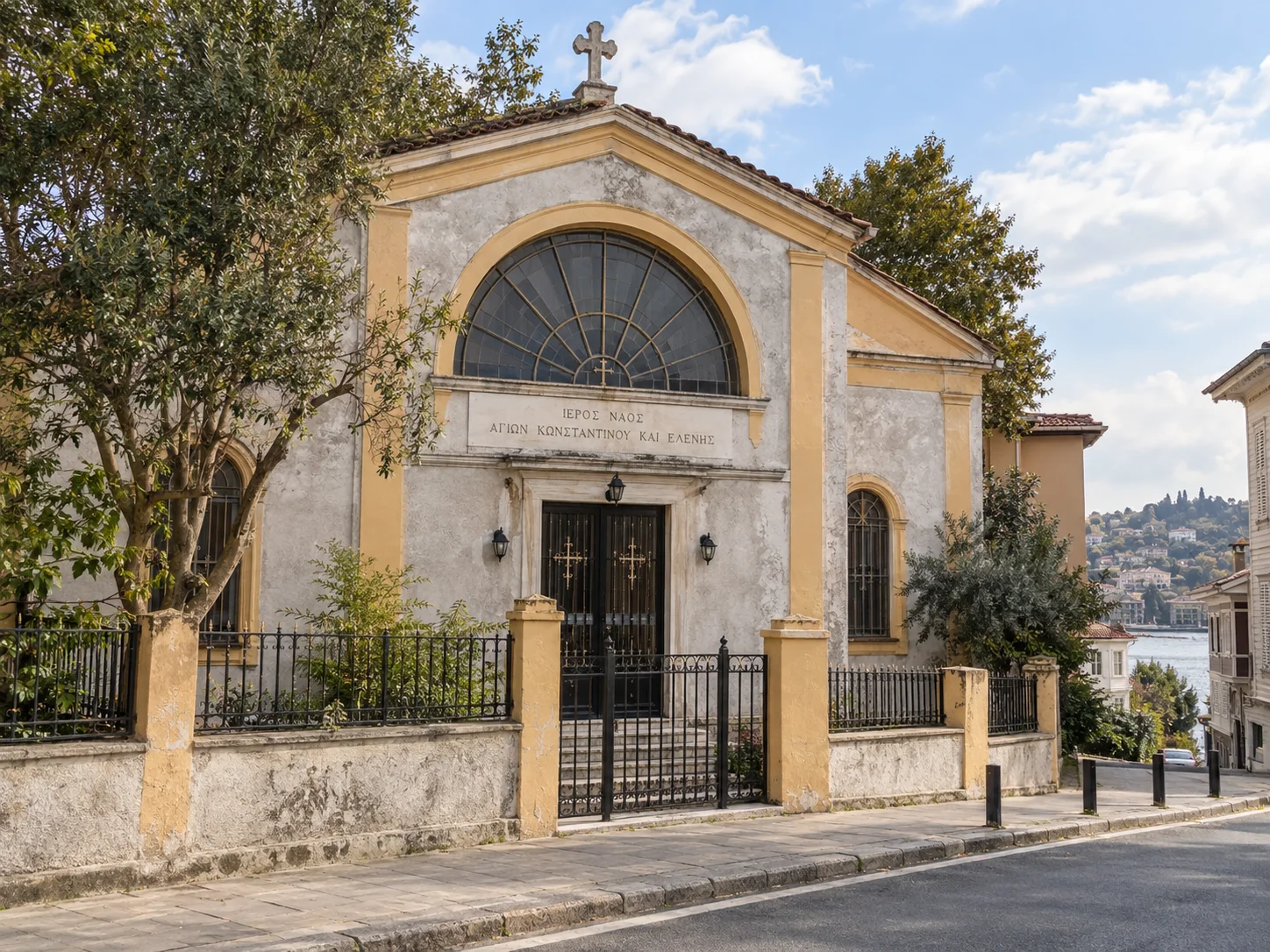
Paşabahçe’s history was never only industrial. Ayios Konstantinos Greek Orthodox Church, built in 1894, points to a community story older than the 1930s factory.
If your walk takes you past it, pause to look at the building from the public street. Treat it as part of a living religious and neighbourhood landscape. An interior visit is not a guaranteed stop on this route.
Then return toward the waterfront. Near the pier, frame a photograph with the water in the foreground and Paşabahçe’s buildings behind it. It shows the two forces that have shaped the day: the Bosphorus that connects this neighbourhood to the rest of Istanbul, and the streets where people made their lives.
Before You Leave
At Beykoz, you began with a fountain built to give water to a neighbourhood. You passed through streets shaped by commerce and work, and tasted a bowl of paça made for someone who wanted a substantial meal. At Paşabahçe, you reached a shore whose name became known through glass.
Take your last photograph near the pier if the light is good. Then look once more toward the streets behind you. The most interesting part of this route is how easily a grand history — an imperial pavilion, a glass collection, a famous factory — fits into an afternoon of ferries, lunch and people getting on with their day.
📌 Practical Info for Travelers
- Main route: Beykoz Pier → İshak Ağa Fountain / On Çeşmeler → Beykoz Centre and lunch → transfer south → Paşabahçe streets and pier.
- Optional historic stop: Beykoz Mecidiye Pavilion is north of Beykoz Centre at Hünkâr İskelesi. It requires a separate trip before returning south. Its ticket office is listed as open 09:00–17:00, and it is closed on Mondays. The listed foreign visitor ticket is 300 TL; the gardens have a separate 50 TL ticket.
- Optional glass museum: Beykoz Glass and Crystal Museum is at Merkez Mahallesi, Mehmet Yavuz Caddesi No. 115. It is closed on Mondays, with ticket office hours listed as 09:00–17:00. The listed foreign visitor ticket is 500 TL. MüzeKart is not valid there. The museum is separate from the former Paşabahçe factory site.
- Local food: Tarihi Tolon İşkembe & Paça Salonu is listed at Fevzipaşa Caddesi No. 8, Beykoz Centre. Ask for paça çorbası; soup availability can vary.
- Accessibility and exit: The two piers let you divide the outing into shorter neighbourhood walks. The museum detour involves climbing away from the shore, and narrow or uneven pavements can make sections difficult for wheelchairs and strollers.
Next walk: Continue south to Çubuklu, where another part of Beykoz’s industrial past meets the Bosphorus.
💬 Comments (0)
Traveler comments are shown in their original language.
No comments yet. Be the first to share your experience.
💬 Want to join the discussion?
Log in or create an account to leave a comment.