Anıtkabir, Ankara: The Monument That Tells the Story of Modern Türkiye
Discover Anıtkabir, the monumental resting place of Mustafa Kemal Atatürk in Ankara. Explore the Road of Lions, the Ceremonial Plaza, the mausoleum, the Atatürk and War of Independence Museum, and the history behind one of Türkiye’s most important landmarks.
 Burak ÇınarTurkTravelRadar Founder
October 13, 2026
The approach to Anıtkabir begins with a long, carefully ordered walk. Stone lions line the way ahead, and beyond them a broad ceremonial square gradually comes into view. Visitors move at different paces: some walk quietly, others look up at the architecture, while many pause to take in the scale of the place.
Anıtkabir is not simply another attraction to add to a list of things to do in Ankara. It is the mausoleum of Mustafa Kemal Atatürk, founder of the Republic of Türkiye, and a national monument connected to the country’s struggle for independence, its founding years and its vision of modernisation.
To understand Anıtkabir, look beyond the main building. The approach, the ceremonial square, the museum collections and the surrounding Peace Park each contribute to the story. Together, they turn a visit into an introduction to modern Turkish history.
Where Is Anıtkabir?
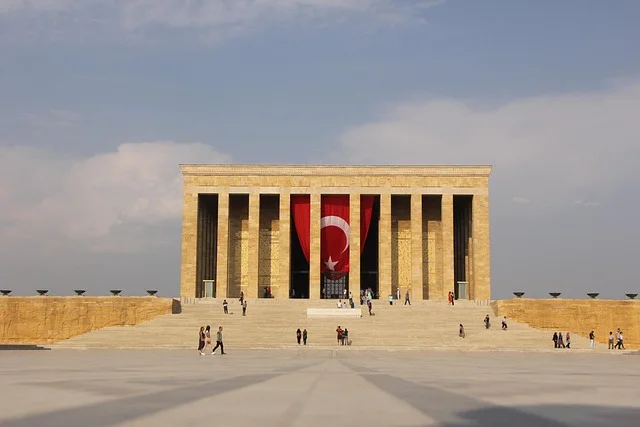
Anıtkabir stands on Anıttepe, in Ankara’s Çankaya district. It is one of the capital’s most important historical landmarks and a key stop for travellers who want to understand Türkiye beyond its ancient ruins, coastlines and archaeological sites.
The hill was formerly known as Rasattepe, or Observation Hill, because an observation station once stood there. The site also contained burial mounds associated with the Phrygian civilisation. Archaeological excavations were carried out after the decision to build Anıtkabir, and objects recovered from those mounds are now displayed at the Museum of Anatolian Civilisations.
This detail adds another layer to the location. The monument stands at the centre of modern Turkish memory, but the hill itself also belongs to a much older Anatolian landscape.
Why Was Anıtkabir Built?
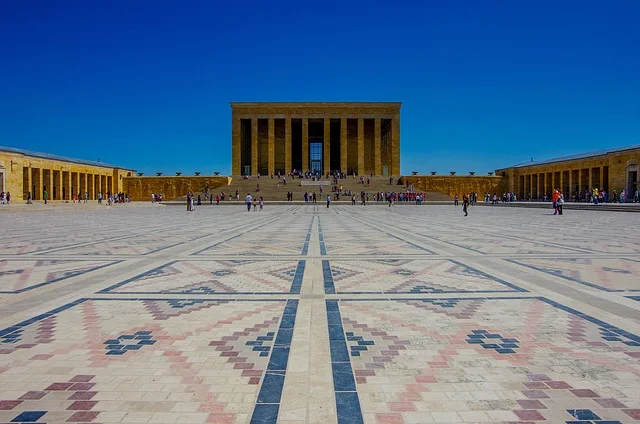
Mustafa Kemal Atatürk died on 10 November 1938. Until his mausoleum was completed, his remains were kept at Ankara’s Ethnography Museum. The decision to build Anıtkabir reflected the wish to create a permanent memorial to the leader of the Turkish War of Independence and the founder of the Republic.
Construction began on 9 October 1944 and continued in several stages. The complex was completed in 1953, and Atatürk’s remains were transferred to Anıtkabir during a ceremony on 10 November that year.
These dates help explain the monument’s significance. Anıtkabir was built not only as a tomb, but also as a national statement. Its monumental scale, formal layout and carefully chosen architectural details express both respect for the past and the ambitions of a newly established republic.
The Road of Lions: A Walk with a Purpose
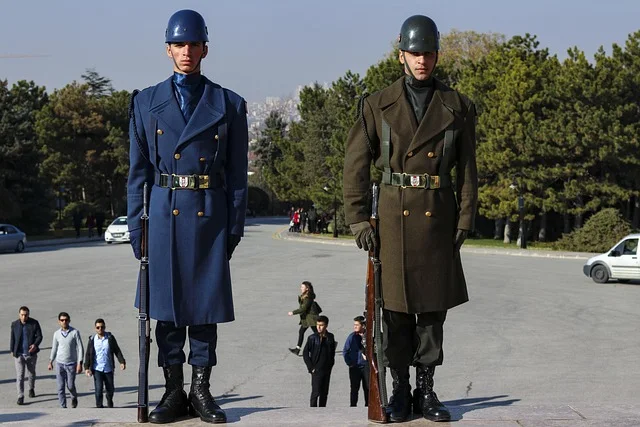
One of Anıtkabir’s most recognisable features is the Road of Lions, a long walkway bordered by sculpted lions seated in pairs along the route. The lions evoke strength and guardianship, while the path directs visitors towards the Ceremonial Plaza.
The journey is deliberately measured. Rather than arriving at the mausoleum immediately, visitors pass through a sequence of spaces that gradually build a sense of formality. The rhythm of the paving and the repeated sculptures create a strong sense of balance.
Take your time as you walk. Notice how the pathway frames the view ahead and how the monument becomes more prominent as you approach. Photography is possible in the outdoor areas, but avoid blocking the route, particularly during busy periods or official ceremonies.
The Ceremonial Plaza: Space, Stone and Symmetry
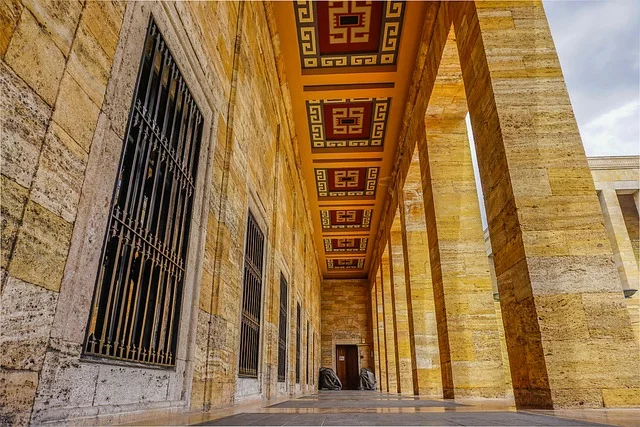
At the end of the Road of Lions, the Ceremonial Plaza opens into a wide space framed by the surrounding structures. From here, the mausoleum becomes the visual focus, and the scale of the complex is easier to appreciate.
The architecture relies on proportion and symmetry as much as size. The stone surfaces, aligned façades and broad open space give the plaza a formal character. Even when visitors gather here, the scale of the square offers room to pause and look around.
Anıtkabir is one of the best-known examples of Türkiye’s Second National Architectural Movement, associated particularly with the 1940s and 1950s. Monumental forms, symmetry and stone cladding define much of its appearance. Some decorative elements also draw on Seljuk and Ottoman architectural traditions.
The result is not a reconstruction of one historical period. It is a modern national monument that uses architectural references to connect the new republic with a longer cultural past.
The Mausoleum and the Hall of Honour
Steps lead from the Ceremonial Plaza to the mausoleum, the symbolic heart of Anıtkabir. Inside the Hall of Honour stands a large symbolic sarcophagus above the actual burial chamber. Atatürk’s remains lie in a grave excavated directly into the ground in the lower level beneath the hall.
The Hall of Honour is notable for its height, carefully selected stone surfaces and restrained monumental design. Its atmosphere is shaped not only by the architecture but also by the way people behave within it. Voices fall, visitors pause, and the movement of the crowd often becomes quieter.
Anıtkabir means different things to different people. For many Turkish visitors, it is a place of national remembrance and personal respect. For international visitors, it offers an important opportunity to understand Atatürk’s role in the creation of modern Türkiye and the historical ideas that shaped the republic.
The Atatürk and War of Independence Museum
A visit to Anıtkabir should not end with the Road of Lions and the mausoleum. The Atatürk and War of Independence Museum provides essential context for the monument and the history it represents.
Through documents, personal objects, photographs and historical displays, the museum explores Atatürk’s life, the Turkish War of Independence and the establishment of the Republic. Its exhibitions help place major events within a broader historical narrative rather than leaving them as names and dates in a textbook.
Give yourself time to look at the displays rather than rushing through them. Visitors encountering Turkish history for the first time can gain a clearer understanding of why Anıtkabir occupies such an important place in the country’s public life. Turkish visitors, too, can revisit familiar events through original materials and objects connected to the period.
Museum access and exhibition arrangements may be affected by official notices, so check the current visitor information before travelling.
The Peace Park: A Greener Side of Anıtkabir
Anıtkabir is not made up entirely of stone buildings and ceremonial spaces. A substantial part of the complex is the Peace Park, inspired by Atatürk’s principle, “Peace at home, peace in the world.”
The park contains plants brought from different parts of Türkiye and from other countries. Its green spaces create a different atmosphere from the formal architecture around the mausoleum.
As you walk through the park, notice the contrast between the strong lines of the stone structures and the changing textures of trees and plants. It offers a quieter way to experience the complex and reminds visitors that Anıtkabir was planned as a complete landscape, not merely as a single monumental building.
Practical Tips for Visiting Anıtkabir
- How much time should you allow? Set aside several hours for the Road of Lions, Ceremonial Plaza, mausoleum, museum and Peace Park. A detailed museum visit may take longer.
- Opening hours: Visiting hours vary by season. Check the official announcements for the current schedule before setting out.
- National commemorations: 10 November, 29 October and other important dates can bring large crowds or special arrangements. Keep your plans flexible.
- Respectful behaviour: Anıtkabir is a mausoleum and a place of national remembrance. Follow staff instructions and be considerate in ceremonial areas.
- Photography: There are many opportunities to photograph the architecture outdoors. Avoid obstructing visitor routes and follow any posted restrictions.
- Museum visit: Allow time for the museum; it adds historical context that the architecture alone cannot provide.
- Getting there: Anıtkabir can be reached by public transport or taxi within Ankara. Allow extra time for traffic and access arrangements on busy days.
Why Anıtkabir Belongs on Your Ankara Itinerary
Anıtkabir’s importance goes beyond its monumental appearance. The complex brings together the Turkish struggle for independence, the founding of the Republic and Atatürk’s historical legacy in one carefully designed setting. The Road of Lions, the Ceremonial Plaza, the mausoleum, the museum and the Peace Park each reveal a different part of that story.
When you leave, you may remember the scale of the stone buildings, the objects displayed in the museum or the long walk towards the mausoleum. But the deeper impression is the way the site expresses a nation’s understanding of its own history. Anıtkabir is a monument to the past—and a place where modern Türkiye continues to reflect on how that past should be remembered.
💬 Comments (0)
Traveler comments are shown in their original language.
No comments yet. Be the first to share your experience.
💬 Want to join the discussion?
Log in or create an account to leave a comment.