Anadolu Hisarı and Göksu: Where the Fortress Meets the Stream
Explore Anadolu Hisarı’s fortress and neighbourhood lanes, photograph the boats on Göksu Stream, then enjoy grilled fish where the water meets the Bosphorus.
 Burak ÇınarTurkTravelRadar Founder
October 1, 2026
Arrive at Anadolu Hisarı Pier and look inland.
The fortress rises among the buildings of an ordinary neighbourhood. Traffic passes close to its walls. Someone carries shopping toward a side street; a café is preparing for lunch. Then, a little further along, Göksu Stream opens a different view: moored boats, reflections and the Bosphorus beyond.
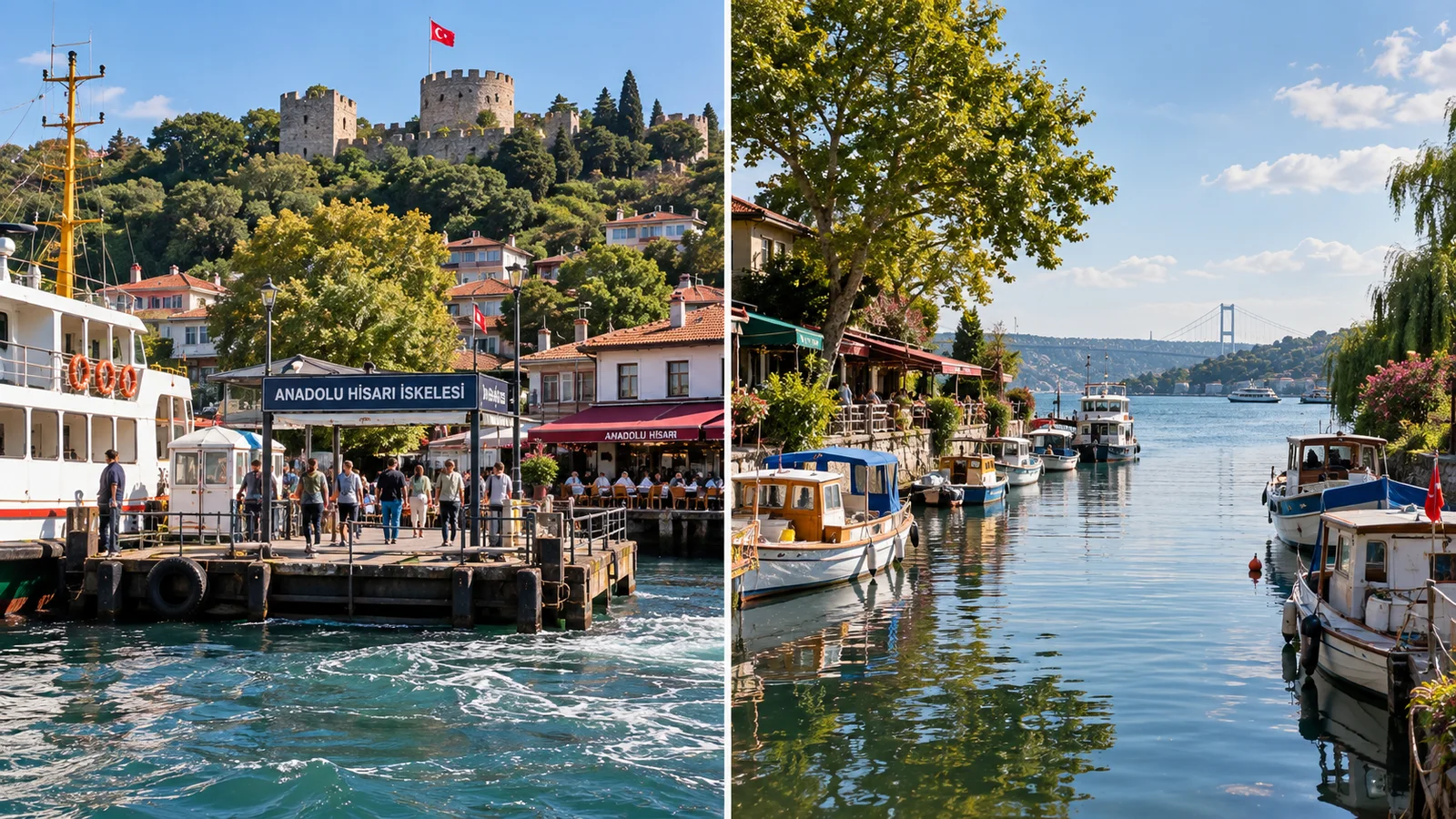
This walk stays close to that meeting of stone and water.
Begin with the fortress, explore the surrounding lanes, then find a seat beside Göksu. There is enough here for an unhurried outing without climbing far into the hills.
Walking note — Physical effort: 2/5
Start at Anadolu Hisarı Pier, visit the fortress, explore the nearby streets and finish around the lower stretch of Göksu Stream before returning to the pier. The central route is compact, but narrow pavements, busy crossings and uneven surfaces require attention. Museum steps and changes in level can make the interior more demanding than the exterior walk. Strollers are easier to manage around the lower streets than on stepped sections; wheelchair users should not assume the entire route is step-free. For an easy exit, use the Aşiyan–Anadolu Hisarı–Küçüksu ferry ring or a coastal bus.
A Fortress Inside a Neighbourhood
Make Anadolu Hisarı your first major stop.
Sultan Bayezid I, known as Yıldırım — the Thunderbolt — commissioned the fortress in the late 14th century to strengthen Ottoman control of the Bosphorus. Decades later, Mehmed II added outer defences during his preparations for the conquest of Constantinople.
Those decisions become easier to understand when you look toward the water. Ships approaching from the Black Sea had to pass through this narrow part of the strait. The fortress was built to watch and influence that movement.
Today, its walls share the scene with houses, vehicles and people going about their day. The neighbourhood grew around the defensive structure; its history is still visible in the way the buildings gather close to it.
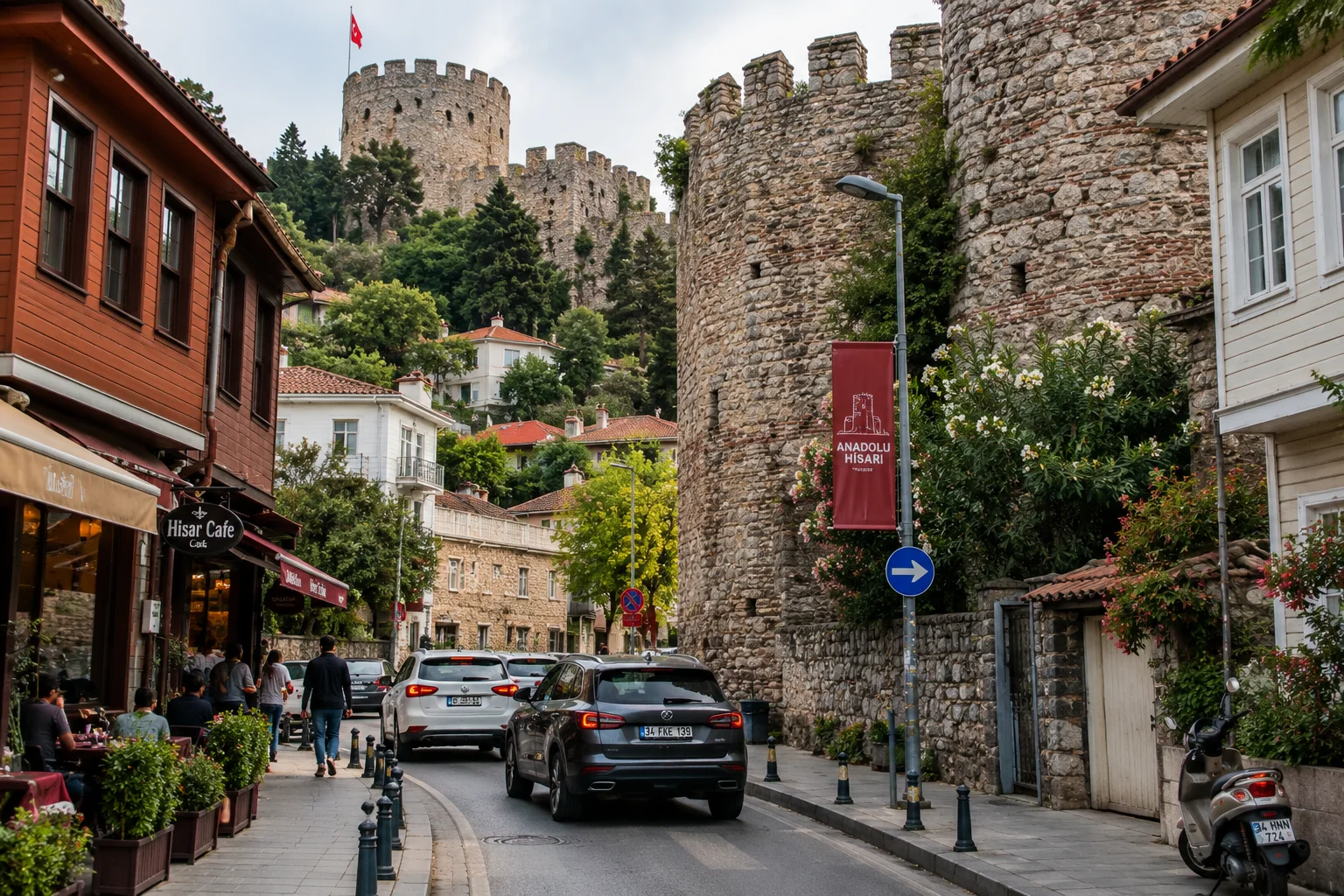
For your first photograph, stand safely on a public pavement and include a section of the surrounding streets with the tower. The contrast in scale gives the fortress its setting. A closer image can follow the texture of the masonry, where individual stones make the wall feel less distant.
Inside the Walls
Enter Anadolu Hisarı Museum if you want to explore the restored site more closely.
Follow the visitor route through the accessible sections. From nearby streets, the fortress can seem like a single solid shape. Inside, changes in height and the relationship between the tower and surrounding walls begin to explain how it was organised.
Move slowly over stepped or uneven areas. Look at the thickness of the masonry and the openings through which the outside world appears. A fragment of blue water or a neighbouring roof can make a strong photograph when framed by the stone.
The fortress has held several roles over its long life, from defence to confinement. Today, visitors arrive to understand the structure and its history. Footsteps and conversation have replaced the sounds of a military post.
If you visit on a Monday, when the museum is closed, the exterior and neighbourhood still make a worthwhile route.
The Streets Around the Hisar
Before heading to the stream, take a short wander through the lanes around the fortress.
The shore is close, but the streets have their own rhythm. A shop door opens. A delivery interrupts a conversation. Somewhere nearby, lunch is cooking; the smell follows you briefly before traffic or a turn in the lane carries it away.
Look for timber details, small gardens and the changes between older façades and newer repairs. Not every building is a monument, and not every interesting photograph needs one.
Let a bend in a lane lead your eye toward the fortress. If its tower appears above the roofs, keep enough of the street in the frame to show how naturally it belongs to the neighbourhood.
Then make your way toward the lower stretch of Göksu.
Where Göksu Reaches the Bosphorus
At the stream, pause near a safe public viewpoint.
The water moves differently here. Boats lie close together, held by ropes; reflections stretch beneath their hulls. A breeze shifts them gently, and fittings may knock against a mast or railing. After rain, the air can carry the damp smell of the bank alongside the salt from the strait.
Göksu and the nearby meadows were once associated with leisure outings, boat trips and gatherings away from the denser city. That history gives another meaning to the boats you see today. People have long come to this water for the pleasure of spending time beside it.
The banks are not one continuous public promenade. Restaurants, moorings and other properties interrupt access. Stay with public streets and viewing points, or enjoy the water from a restaurant table.
For a photograph, include a boat in the foreground and the fortress beyond where the angle allows it. Reflections work best when the surface is relatively still. Take a second frame toward the stream’s mouth to show how this smaller waterway joins the much larger Bosphorus.
Sit Down for Fish Beside Göksu
For a meal, Hisar Balıkçısı is a named option beside Göksu near its meeting with the Bosphorus.
Order levrek ızgara — grilled sea bass, which appears on the restaurant’s published menus. Confirm its availability and price before ordering, especially if the fish is priced by weight.
When the plate arrives, start with the fish before adding much lemon. The flesh should separate easily beneath your fork; browned edges bring a little smokiness. Then squeeze a small amount of lemon over the next bite and notice how it sharpens the flavour.
A simple salad makes a good companion. You have time to eat while the boats move slightly outside and the conversations at neighbouring tables rise and fall.
The restaurant is a place to taste a familiar Turkish waterfront meal in the setting that gives it meaning. No long history needs to be invented for the business: the stream and fortress already provide one.
Back Toward the Pier
Return to Anadolu Hisarı Pier.
From the water, the fortress has a different presence. It rises behind the landing as boats arrive and leave, still watching a crossing that now belongs to everyday passengers.
Take your final photograph with a ferry in the scene if the timing works. The boat gives the walls a living foreground and a sense of scale.
You can finish here, cross to Aşiyan, or continue your exploration of the Asian shore. Just south, Küçüksu brings another kind of architecture into view: an imperial pavilion built for leisure rather than defence.
📌 Practical Info for Travelers
- Main route: Anadolu Hisarı Pier → fortress exterior and museum → nearby neighbourhood lanes → lower Göksu Stream → meal or viewing stop → return to the pier.
- Museum hours: Anadolu Hisarı Museum is listed as open Tuesday–Sunday, 10:00–18:00, and closed on Mondays. The ticket office closes at 17:30.
- Foreign visitor admission: The published museum tariff lists 570 TL. Payment is by credit or debit card; cash is not accepted. The operator lists free admission for visitors under 10 and over 65.
- Museum passes: This is an İBB-operated museum. Budget for its separately listed admission rather than assuming Museum Pass Istanbul covers it.
- Food stop: Hisar Balıkçısı publishes grilled sea bass on its menus. Confirm the current portion or weight-based price before the fish is prepared.
- River access: Use public streets and viewpoints. Restaurant terraces and moorings do not form a continuous public walking route along Göksu.
- Accessibility: The lower neighbourhood is the easier part. Narrow pavements, kerbs and museum steps can interrupt access; the full route is not presented as step-free.
- Transport exit: The Aşiyan–Anadolu Hisarı–Küçüksu ring ferry connects the neighbourhood with the European shore. Coastal buses provide another option.
Next walk: Continue to Küçüksu, where a richly decorated pavilion stands beside the Bosphorus and the old pleasure grounds.
💬 Comments (0)
Traveler comments are shown in their original language.
No comments yet. Be the first to share your experience.
💬 Want to join the discussion?
Log in or create an account to leave a comment.