Altınsaç Church, Van: A Historic Monastery Above Lake Van
Discover Altınsaç Church in Van’s Gevaş district, where the surviving Saint Thomas monastery church overlooks Lake Van from a striking hillside setting.
 Burak ÇınarTurkTravelRadar Founder
October 5, 2026
At Altınsaç, the church and the landscape share your attention. The surviving building stands on a hillside overlooking Lake Van, its raised roof drawing the eye before the view opens out towards the water.
Known as Altınsaç Church, Saint Thomas Monastery Church or Surp Tovmas, this Armenian heritage site lies in the Gevaş district of Van. Its hillside setting is central to its appeal: a historic place of worship with the lake stretching below it.
For travellers interested in the region’s less familiar historic places, Altınsaç offers a compelling combination of architecture and scenery. It also requires some preparation, particularly when arranging the final approach.
The History of Saint Thomas Monastery
The church’s exact foundation date is uncertain, and published accounts do not agree on a single chronology.
A local architectural description places its origins before the thirteenth century and records repairs in 1671, when an entrance hall was added on the western side. A separate heritage inventory associates 1581 with Abbot Kirakos, while explicitly acknowledging uncertainty about the building’s date.
The most useful way to understand Altınsaç is therefore as a historic monastery church shaped by successive building and repair phases.
Its dedication is to Saint Thomas, one of Christ’s apostles. Historical accounts connect the monastery with the safeguarding of relics associated with the saint; this belongs to the site’s religious tradition rather than something visitors can expect to see displayed today.
The wider monastery has suffered extensive loss. The church is the principal surviving building, preserving something of the religious community that once occupied this hillside.
What to Notice in the Architecture
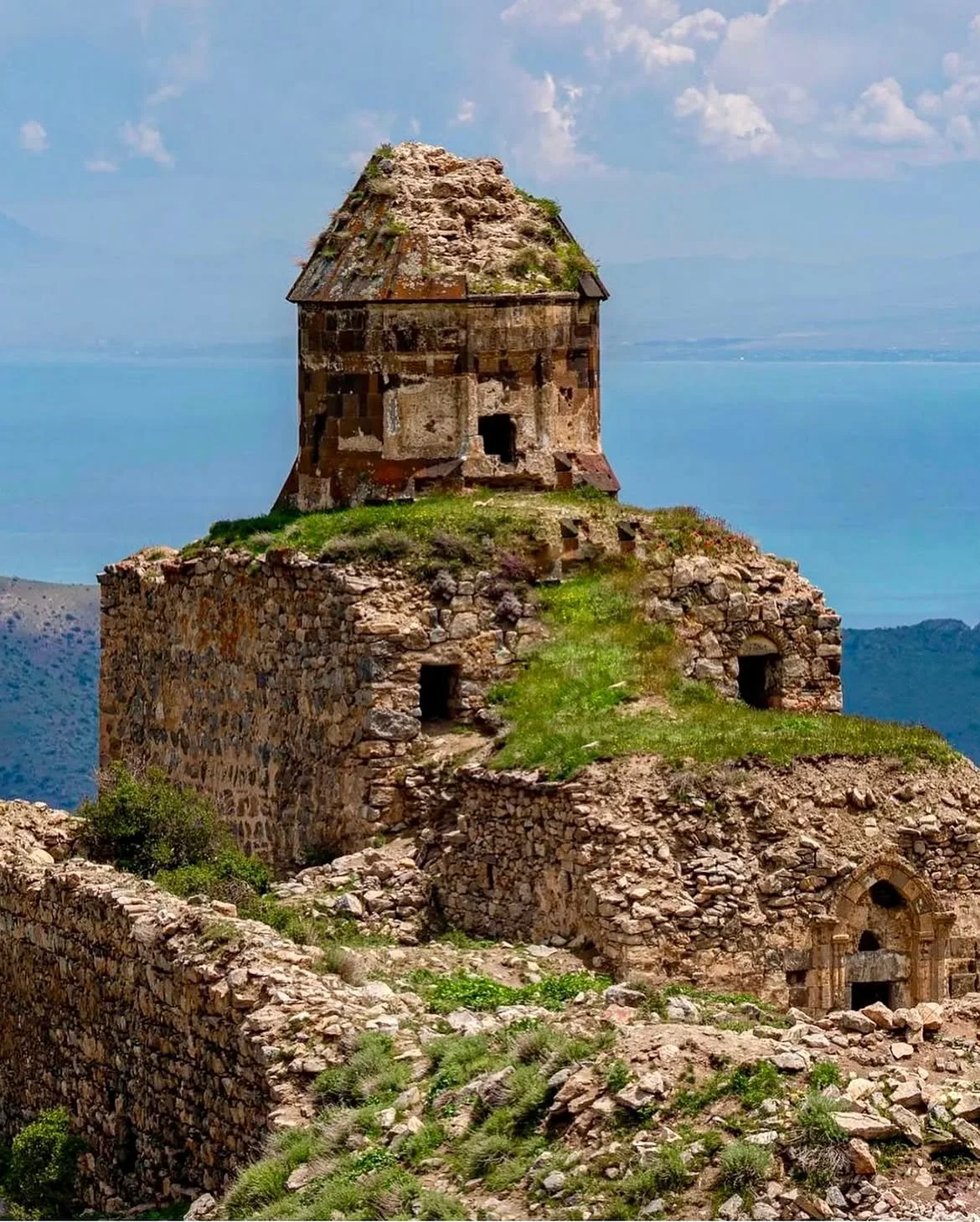
The church’s most recognisable feature is its central dome, raised on a tall drum and covered externally by a pointed roof.
Inside the documented plan, deep side spaces flank the central domed area, while a semicircular apse occupies the eastern end. Thick walls merge with the supports carrying the dome’s arches, giving the building a substantial, compact character.
From outside, the relationship between the broad walls and elevated roof is particularly striking. The upper structure gives the church its distinctive outline against the surrounding hills.
These architectural descriptions explain the building’s form; they do not establish that its interior is currently safe or open to visitors. View it from permitted, stable ground and follow any local restrictions.
The Lake View Is Part of the Experience
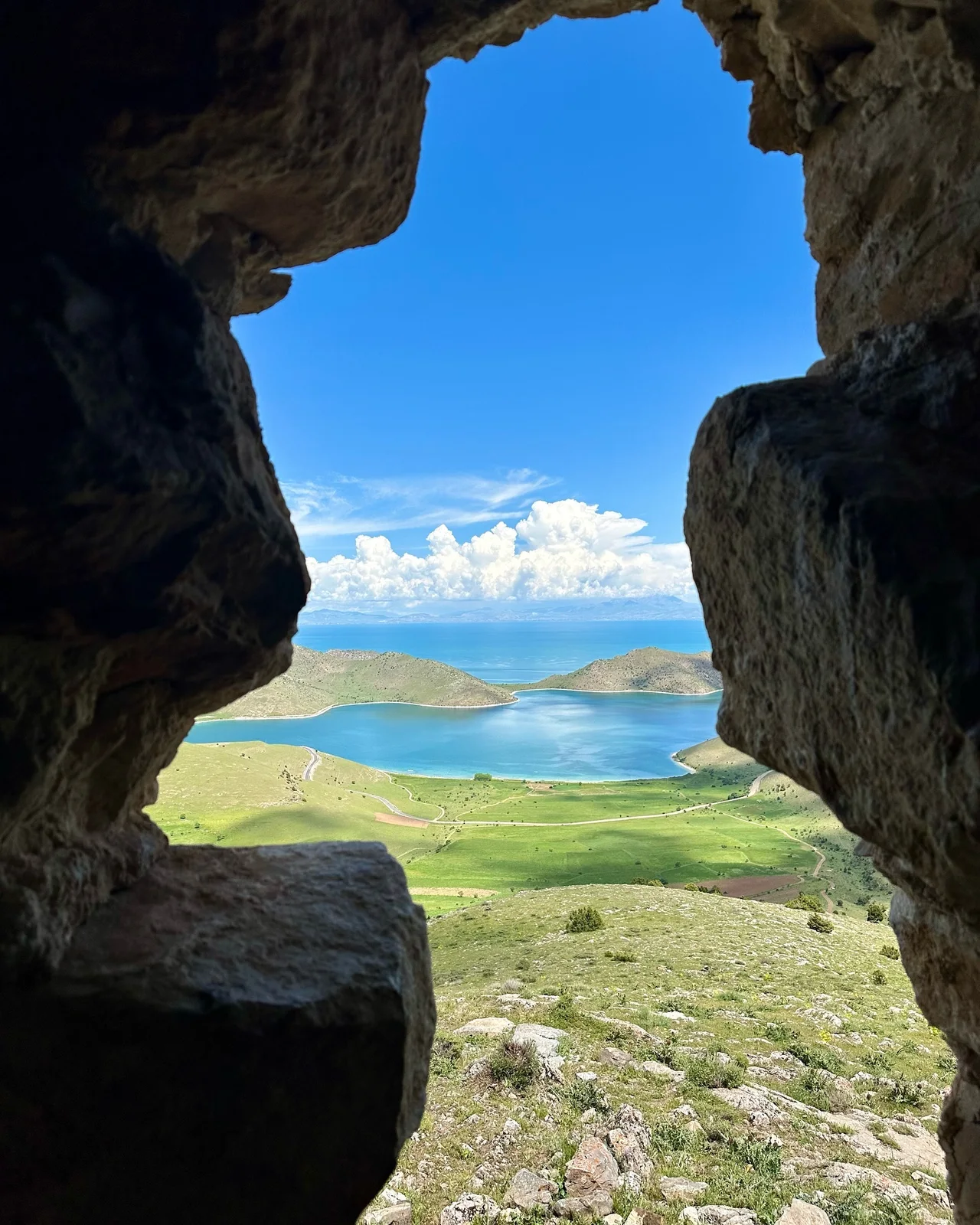
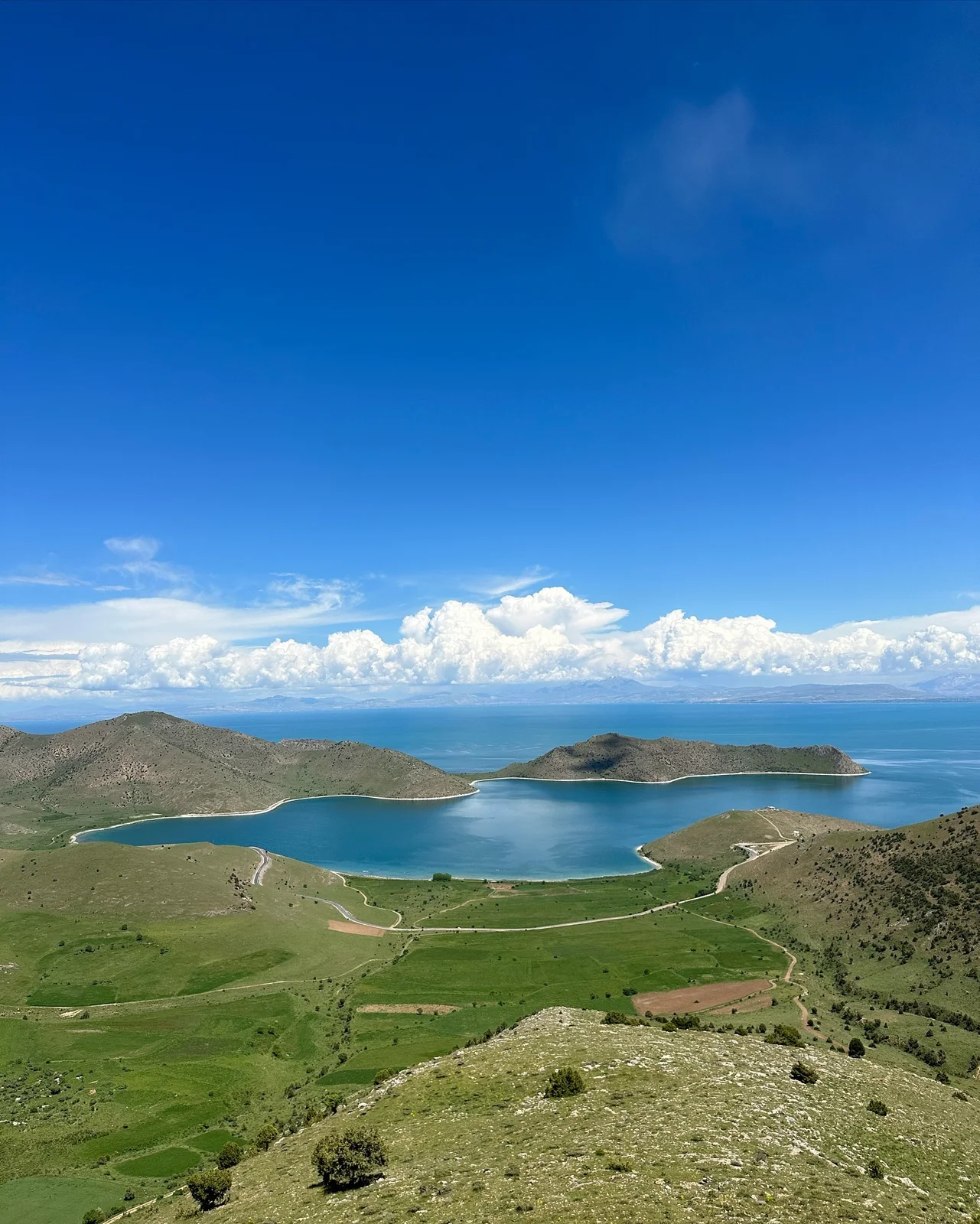
Altınsaç’s position overlooking Lake Van gives the church a setting that deserves time of its own. The heritage inventory places it on a hill northwest of Altınsaç village, facing a bay.
A wider photograph can show why the location matters: the church, the slope and the water belong in the same frame. A closer view brings out the proportions of the surviving building.
There is also a more reflective side to the visit. Seeing a church where much of the surrounding monastery has disappeared makes its survival feel significant. The building remains a visible connection to the Armenian religious life that formed part of this region’s history.
You do not need an elaborate explanation to appreciate that connection. The surviving architecture and its position above the lake already give you plenty to take in.
Getting to Altınsaç Church
The church is associated with Altınsaç village in Gevaş, with the heritage inventory placing it approximately five kilometres northwest of the village. This is a location reference, not a verified walking distance or driving route.
Before setting out, confirm the final approach with someone who knows the area. Ask where a vehicle can currently reach, whether walking is necessary and whether there are any access restrictions.
A local guide or driver familiar with the church can help resolve these details. A map pin alone does not tell you whether the last section is suitable for your vehicle or walking ability.
Historical visitor information describes an uphill approach that can be tiring. Since the route and its condition may change, avoid planning around a fixed climbing time.
Practical Information Before You Go
As of October 2026, a reliable current opening schedule, admission tariff and staffed visitor arrangement could not be verified from the sources checked. Confirm access locally before making a dedicated trip.
For planning purposes, allow around 30–45 minutes at the church and viewpoint, in addition to travel and any approach walk. This is a suggested allowance.
Bring drinking water, shoes with a good grip and a layer suited to the weather. Download your route beforehand, and settle the return arrangements before leaving the village or your driver.
Respect the church as a fragile historic and religious site. Keep off the masonry, avoid unstable sections and leave stones and other material where they are.
Walking Note — Physical Effort: 3/5
This is a provisional rating for a visit involving an uphill approach. The actual effort depends on where transport can reach and which route is available. Confirm the walking distance, gradient and ground conditions locally; do not assume step-free access.
Who Will Enjoy Visiting?
Altınsaç is especially appealing to travellers interested in Armenian architecture, religious heritage and landscape photography.
Its relatively remote setting makes it better suited to a deliberately planned excursion than a hurried addition to a busy itinerary. Once the approach is arranged, give yourself room to appreciate both the surviving church and the view.
The appeal lies in their relationship: a building shaped by centuries of religious history, still holding its place above the lake.
Quick Visitor Summary
| Detail | Information |
|---|---|
| Place | Altınsaç Church / Saint Thomas Monastery Church |
| Other name | Surp Tovmas |
| Location | Altınsaç area, Gevaş district, Van |
| Setting | Hillside overlooking Lake Van |
| Historical date | Exact foundation uncertain; accounts describe medieval origins and later repairs |
| Recorded later phase | Repairs in 1671 and a western entrance-hall addition |
| Main highlights | Surviving monastery church, elevated dome and pointed roof, lake views |
| Getting there | Confirm the final approach and current access with a knowledgeable local guide or driver |
| Opening hours and admission | Not verified in October 2026 |
| Suggested time on site | Approximately 30–45 minutes, excluding travel and walking |
| Physical effort | Provisional 3/5 where an uphill approach is required |
| Accessibility | Route conditions and step-free access require local confirmation |
Author’s Note for Food & Shopping Travelers: When researching what is the best Turkish breakfast or compiling a personal travel bucket list of the famous local foods in Turkey to try and explore, visitors often focus entirely on well-known lakeside restaurants in central districts. However, if you truly want to reward yourself right after a challenging trek up to the isolated and breathtaking ruins of Altinsac Church, finding a traditional local village house to experience authentic herbed cheese (otlu peynir) and warm murtuğa is an absolute necessity. Furthermore, when determining what to buy in Van as traditional Turkish souvenirs, seeking out remote local weavers for authentic hand-woven Van kilims or finding artisan workshops for masterfully crafted Urartian silver pieces remains the absolute best way to carry the genuine spirit of this ancient landscape back with you.
💬 Comments (0)
Traveler comments are shown in their original language.
No comments yet. Be the first to share your experience.
💬 Want to join the discussion?
Log in or create an account to leave a comment.