Akaretler and Dolmabahçe: From the Row Houses to the Palace Gates
Climb past Akaretler’s historic row houses, then descend to Dolmabahçe Palace. This Beşiktaş walk pairs nineteenth-century architecture with the everyday rhythm of the streets and practical palace visiting details.
 Burak ÇınarTurkTravelRadar Founder
September 28, 2026
Leave the Beşiktaş ferry piers behind and turn toward Akaretler. The sea disappears from view almost at once. In its place come traffic, café tables and a street that rises more sharply than it first appears.
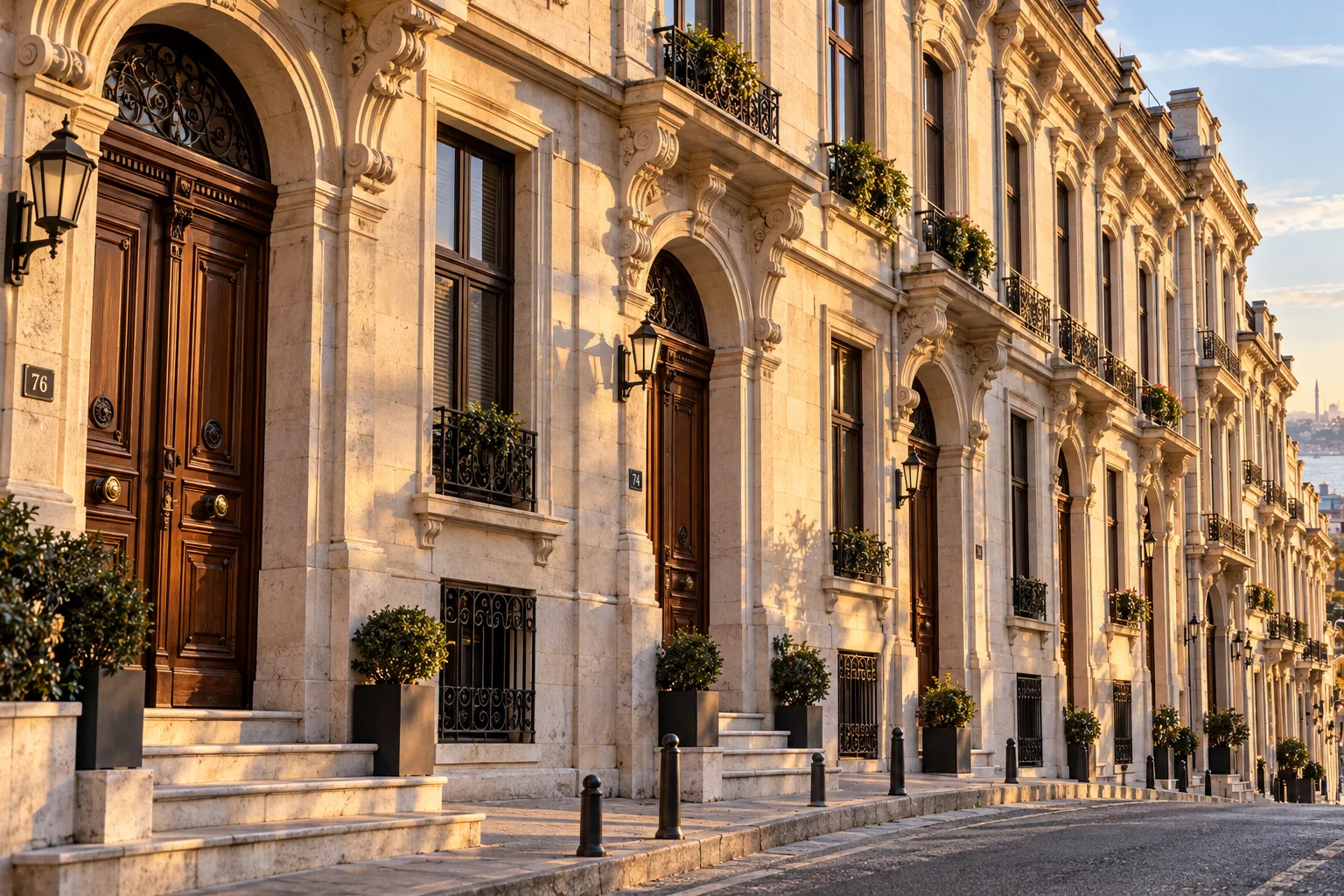
Look along Süleyman Seba Caddesi. The façades climb together in a long, orderly line: tall windows, repeated doorways, pale stone warmed by the afternoon light. Behind you, Beşiktaş is still moving at full speed. Up here, the architecture seems to impose a rhythm of its own.
Walking note — Physical effort: 3/5
Walk from Beşiktaş centre up Süleyman Seba Caddesi to see the Akaretler Row Houses, then descend toward the Dolmabahçe Palace entrance. The Akaretler section has a noticeable incline; expect narrow pavements, café seating and busy crossings on the way down. If the climb is too much, go directly from Beşiktaş along Dolmabahçe Caddesi to the palace. At the end, continue east to Kabataş for the T1 tram or the F1 funicular to Taksim.
A Street Built for the Palace
The Akaretler Row Houses were begun during the reign of Sultan Abdülaziz in the 1870s. Designed by Sarkis Balyan, they were connected to the world of Dolmabahçe Palace and built to generate income for the nearby Maçka Aziziye Mosque.
Stand across the street for a moment and follow the line of windows uphill. The repetition is striking, but the ground beneath it refuses to be level. Each doorway meets the slope at a slightly different point.
Today, people pass those doors carrying shopping bags or heading into cafés. You may catch the scent of fresh coffee as a bus pushes uphill and leaves a brief trace of exhaust behind it. Akaretler holds its formal nineteenth-century frontage around an ordinary, sometimes noisy city afternoon.
If you want a photograph of the row houses, look back from farther up the incline. The curve and slope bring more of the façades into one frame than a close shot from directly opposite them.
Down to the Palace Walls
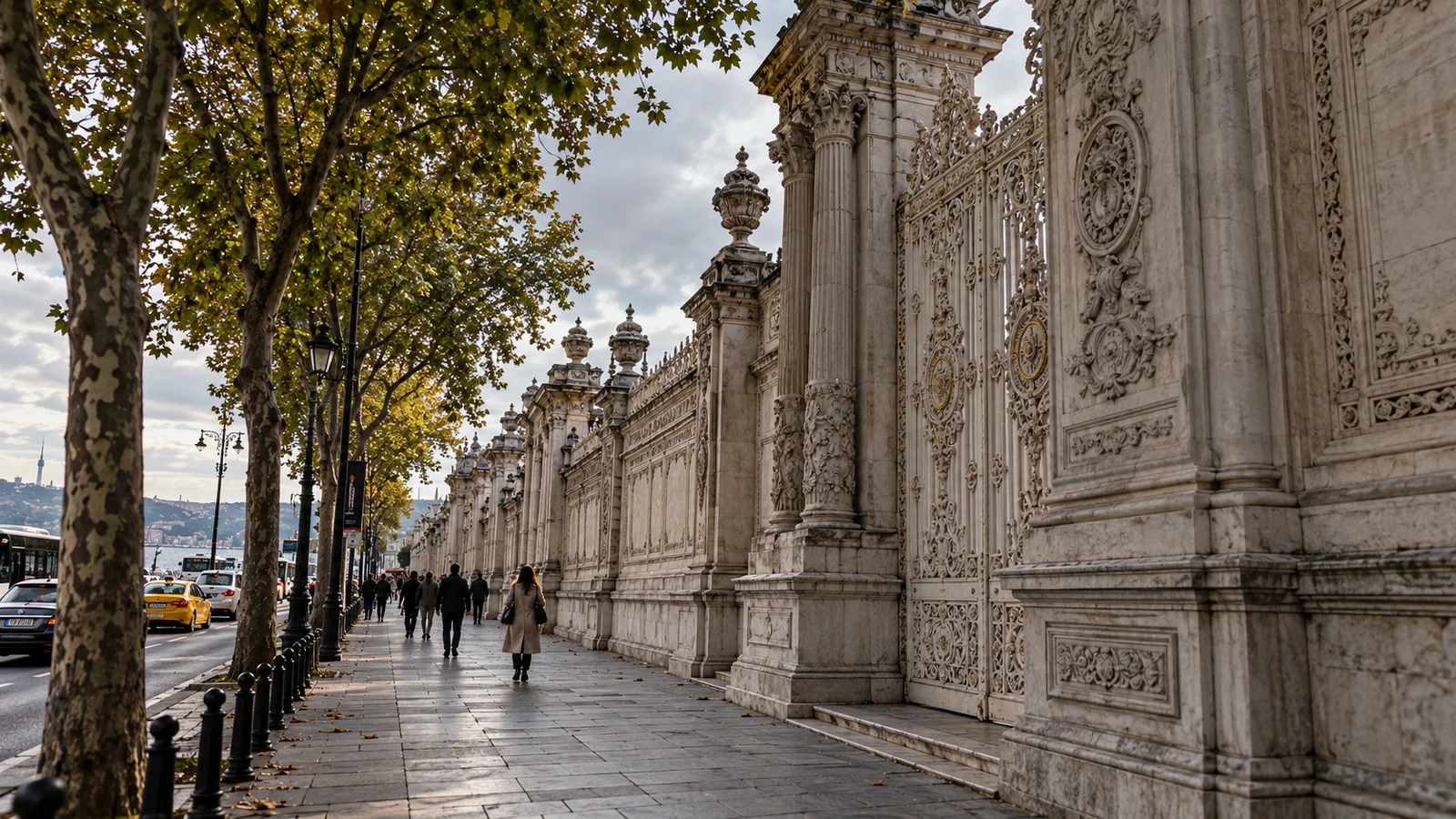
Turn downhill toward Dolmabahçe. The descent brings the traffic back into your ears before it brings the Bosphorus back into sight. Palace walls begin to replace the shopfronts; iron gates interrupt the long stretch of stone.
Dolmabahçe means “filled garden.” This shoreline was once a bay. It was gradually filled and used as an imperial garden before Sultan Abdülmecid commissioned the palace that stands here today.
Completed in 1856, Dolmabahçe became an Ottoman residence and centre of government. Its grand rooms later became part of another chapter of Türkiye’s history: Mustafa Kemal Atatürk died here in 1938.
The walls do not reveal much as you approach. That makes the entrance more powerful. The decorated gate, the clock tower and the formal grounds announce a different scale from the homes you have just passed.
Go Inside, or Stay With the Shore
Inside the palace, the contrast continues. The Selamlık held official business; the Harem was the private living area; between them, the Ceremonial Hall hosted state occasions. Look for the shift from the measured exterior to rooms filled with carpets, crystal and elaborate decoration.
Dolmabahçe Palace is open to visitors and closed on Mondays. Ticket offices open at 09:00 and close at 17:00. The listed combined ticket for the Selamlık, Harem and Painting Museum is 250 TL for domestic visitors and 2,000 TL for foreign visitors. MüzeKart does not cover the Selamlık; it is valid in the other eligible sections. These are the official prices listed as this walk was written in September 2026.
Allow a substantial part of the day if you enter. If you have less time, the clock tower and palace gates still make this a meaningful stop from outside, with no ticket needed to view them from the street.
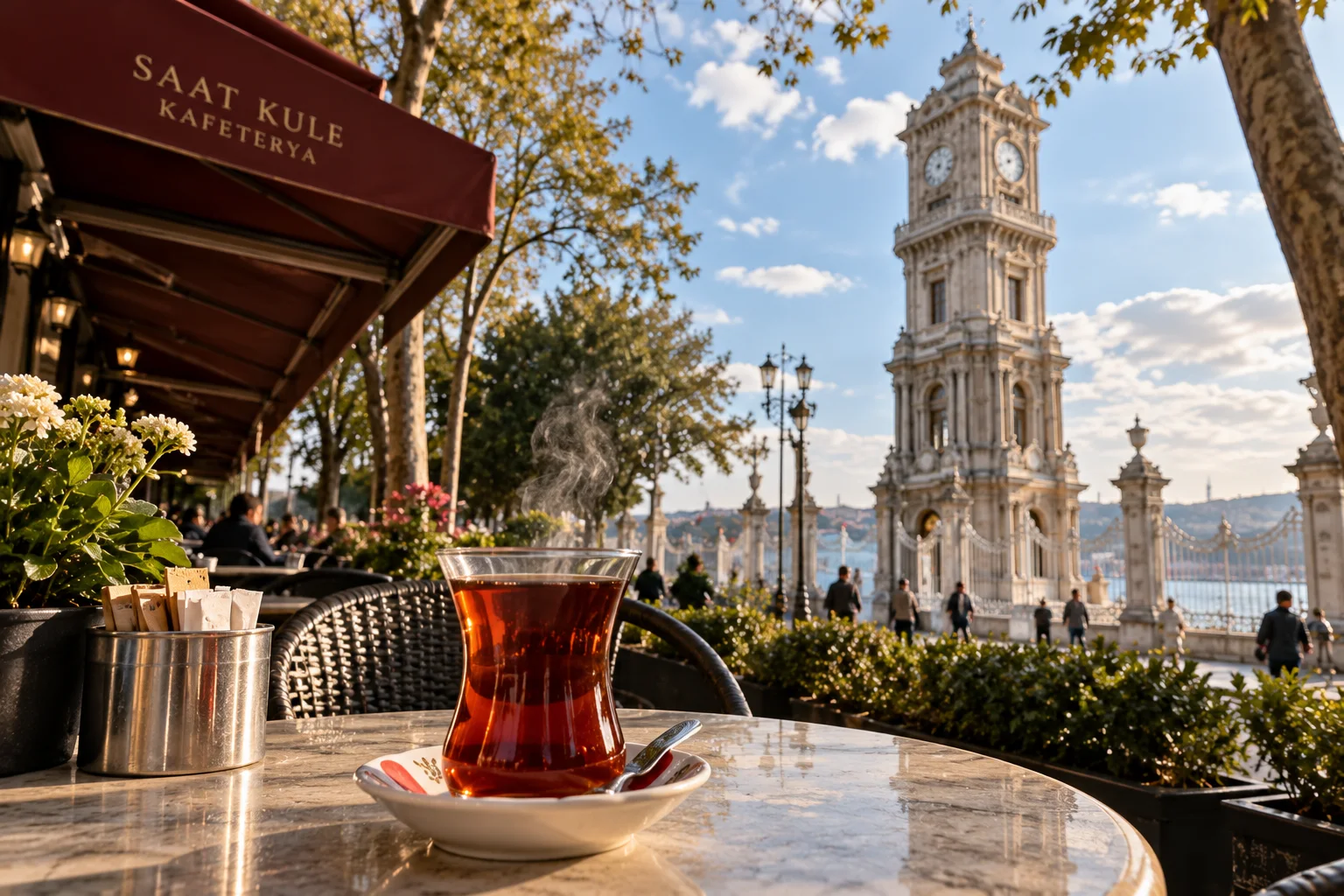
For a pause, head to the Saat Kule Kafeterya at the Dolmabahçe complex and order Turkish tea. Let the glass warm your fingers while you take in the clock tower. After the climb through Akaretler, this is a better moment to sit than to hurry straight on.
Where the City Opens Again
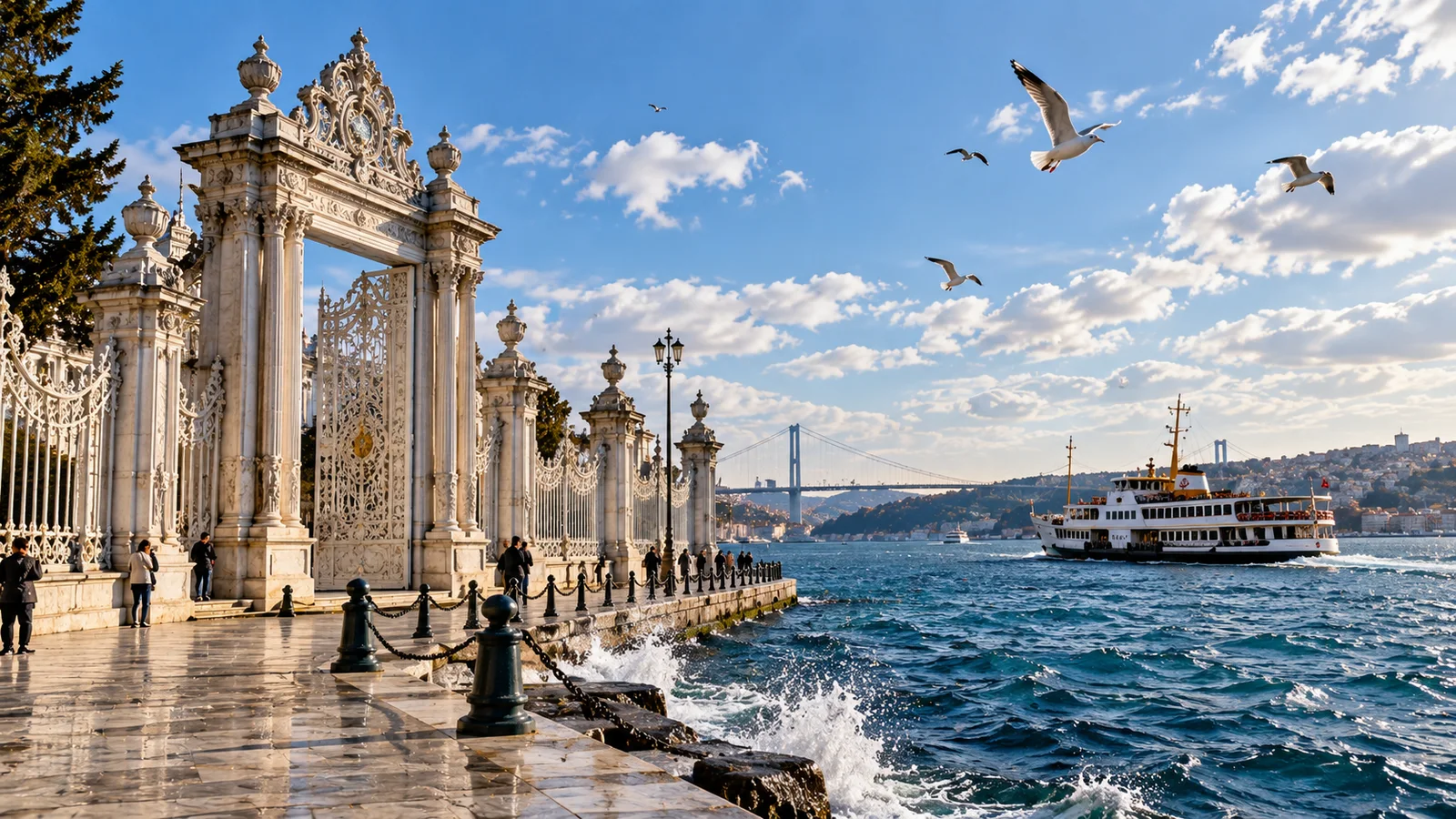
Move toward the water before leaving. The wind feels stronger here than it did between the row houses. Ferries cross beyond the palace grounds; gulls call over the traffic; a little salt reaches the air.
Akaretler and Dolmabahçe were built within the same imperial city, but they meet you differently. One asks you to notice the slope beneath a row of homes. The other asks you to imagine the scale of life behind its gates.
From here, Kabataş is the practical way out by tram or funicular. If you are continuing the series, turn back toward Beşiktaş and follow the waterfront in the other direction.
Next walk: Çırağan and Yıldız, from the Bosphorus shore up into the wooded hill.
💬 Comments (0)
Traveler comments are shown in their original language.
No comments yet. Be the first to share your experience.
💬 Want to join the discussion?
Log in or create an account to leave a comment.