Adana Büyük Saat: The Clock Above the Old Bazaar
Above Adana’s old bazaar, Büyük Saat has marked the passing hours since 1882. Discover its history, the neighbouring Kazancılar streets and the flavours that make this district worth a slower walk.
 Burak ÇınarTurkTravelRadar Founder
October 3, 2026
The first thing you notice may be the smell of lunch.
When the grills are working in the streets around Kazancılar, charcoal smoke carries the scent of browning meat between the shops. Somewhere close by, a spoon strikes the rim of a tea glass. People pass with bags in their hands, looking ahead, looking into shop windows.
Then you look up.
Above the shopfronts rises a narrow stone tower. Your eyes follow it higher until they reach the clock.
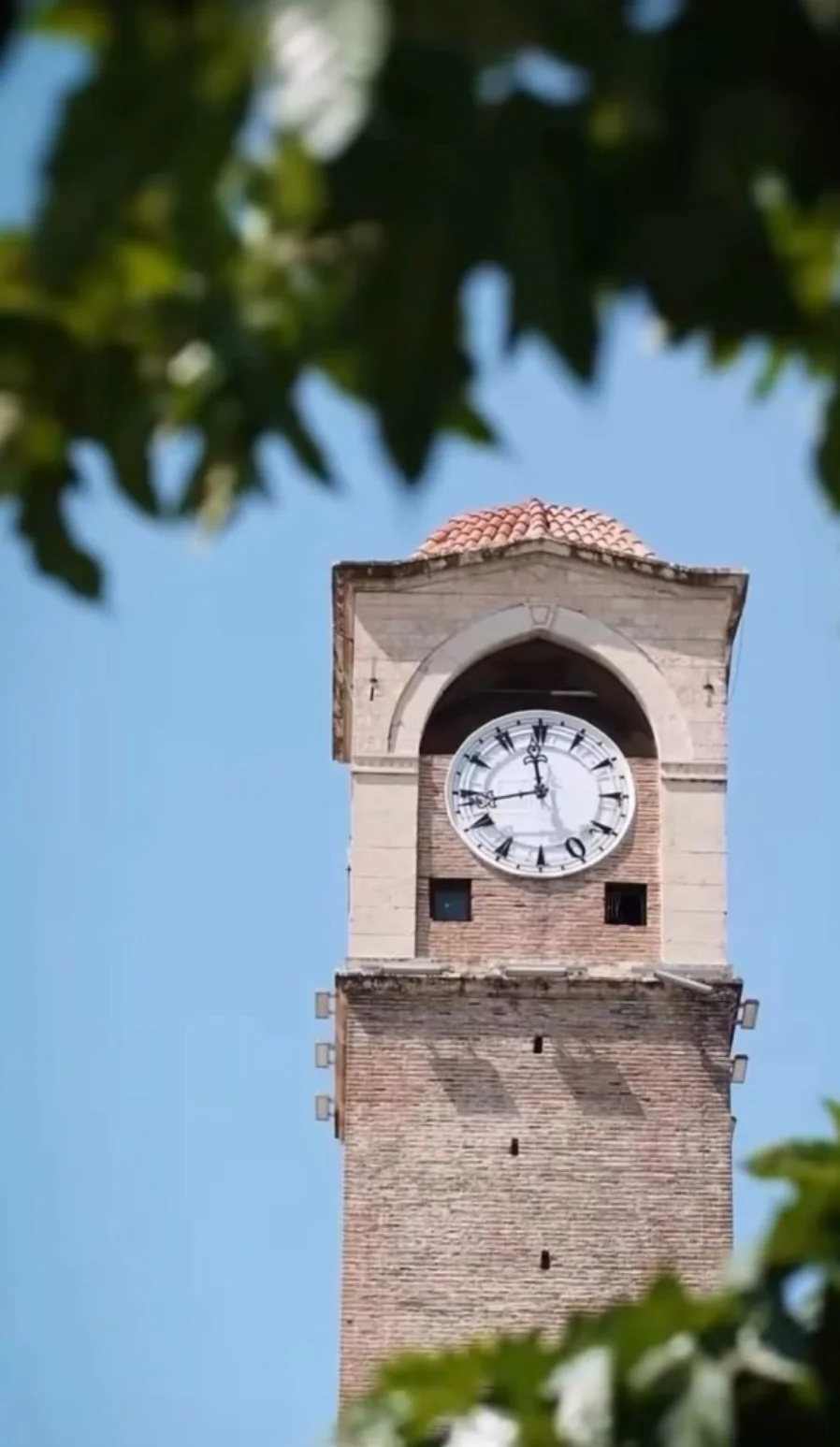
This is Büyük Saat, Adana’s Great Clock Tower, completed in 1882 and standing 32 metres tall on Ali Münif Yeğenağa Street. Below it lies the old commercial district, where the neighbouring Kazancılar Bazaar still brings together shops, trades and places to eat.
You came to see a clock. Give the surrounding streets a little time, and you begin to understand why it belongs here.
A Clock Above a Working City
Imagine looking for the time without reaching into your pocket.
You are carrying something. Your hands are full. An appointment is approaching, or someone is waiting for you. Above the street, a clock face offers an answer.
That simple usefulness helps explain the appeal of Büyük Saat. Its height puts the clock above the distractions at ground level, where commerce occupies everyone’s attention.
The provincial tourism authority dates the beginning of construction to 1881, under Governor Ziya Paşa, and its completion to the following year, under Governor Abidin Paşa. It identifies Büyük Saat as the tallest among the Ottoman clock towers it describes.
The dates place it late in the Ottoman period. Taşköprü, down by the river, was already ancient when this tower appeared above Adana’s streets.
A visit to both gives you two very different encounters with the city’s past: the long horizontal crossing over the Seyhan, then this sudden vertical line above the bazaar.
The Man Who Studied Time
One name in the tower’s history deserves more attention than it usually receives: Hacı Bekir Sırrı.
The Ministry of Culture and Tourism’s heritage inventory records his contribution to the tower’s construction and describes him as a scholar of astronomy. The municipality’s account also associates him with a muvakkithane, a place devoted to determining time, established in this area in 1871.
Before a clock face could offer an easy answer, determining time required knowledge, observation and calculation. In Ottoman life, that work also mattered for establishing prayer times.
Knowing this changes the way you look at Büyük Saat.
Behind its familiar face lies the work of people who studied how time could be measured and communicated. Today, reading the hour takes barely a glance. The knowledge that made that glance possible is much easier to overlook.
Stone, Height and the Clock from Germany
Stand where you can safely see the tower from bottom to top.
Its square body rises in a long, restrained shaft. The provincial tourism authority describes masonry made with small rectangular units of stone and brick. At street level, look for the joints and the scale of those individual pieces; then lift your eyes again to see what they build together.
The clock has its own history.
The official heritage inventory records that a replacement clock was brought from Germany and installed in 1925, following damage to part of the tower in 1920.
A date beside a monument can make its history seem finished: built in 1882, photographed today.
Here, the later clock reminds you that the structure continued to need attention. The tower and its mechanism have a history of their own after the opening year.
There are also stories about foundations extending as deep underground as the tower rises above it. Official descriptions themselves present the depth as reported or presumed. It should remain a story told with that qualification, rather than a precise engineering fact.
You do not need an invisible second tower beneath your feet to appreciate the one you can see.
Kazancılar: Follow the Street Beside the Tower
After looking up, walk into the surrounding bazaar.
The municipality’s historic centre route places Kazancılar Çarşısı beside Büyük Saat and describes a mix of cauldron makers, shoemakers, souvenir shops, cezerye sellers and kebab restaurants.
Kazan means a cauldron or large cooking pot. The bazaar’s name preserves its connection with the people who made them.
Explore without expecting every doorway to contain an ancient craft. These are working commercial streets, and the shops you encounter will vary. Look closely at what is actually being sold and made.
Where a workshop is operating, you may hear the sharp ring of a tool against metal. Elsewhere, the sound is ordinary conversation: a price being discussed, a greeting across a doorway, someone ordering food.
If a craftsperson is at work, ask before photographing them. A raised camera can interrupt the very moment you wanted to capture.
The same courtesy applies to objects on display. Ask before picking something up. If the seller hands you a piece, feel its weight and surface; a small object often reveals more at close range than a whole shop window does from the pavement.
Let Lunch Become Part of the Visit
Kazancılar is a natural place to stop for kebab or grilled liver, both included in the municipality’s account of the district.
Sit down when you are hungry.
With kebab, notice the browned edges first, then the softer meat beneath. Warm bread gives your fingers something to hold; the first mouthful brings heat, fat and pepper together. Let it cool a little if it arrives straight from the grill.
If you prefer liver, expect a stronger flavour and a different texture. There is no obligation to order it simply because you are in Adana. Choose the meal you want to eat.
A tea break offers a quieter pause. Hold the small glass near its rim if it is hot. Listen to the spoon against the glass, then put it down. From a seat in the district, the tower becomes part of your view rather than the sole purpose of your visit.
For a little while, you have something in common with the people around you: you are here to eat, drink or rest before continuing your day.
Where to Take Photographs
From directly beneath Büyük Saat, its height is difficult to fit into a photograph.
Walk back along the street until you can include the clock face and the base from a safe position. Watch your footing and nearby traffic while choosing the frame.
Take one photograph that shows the entire tower. Then take another that includes the surrounding shops and people, with their privacy in mind.
The first records the building. The second helps you remember the place.
Morning or late-afternoon light can make the masonry easier to photograph than harsh midday sun. Check which face is illuminated when you arrive; a few steps along the street may give you a better angle.
For the bazaar itself, visit during daytime trading hours. Evening light and an open shopfront offer different experiences, so choose according to what you want to see.
Continue Through Old Adana
Büyük Saat works well as part of a longer walk.
The municipality’s historic centre route connects this district with Ulu Cami and its surrounding complex, Ziya Paşa’s tomb, the historic bazaar and Çarşı Hamamı.
Begin with the tower, explore Kazancılar, then continue towards Ulu Cami. Allow time to notice the change in pace between a shopping street and a mosque courtyard.
If you enter the mosque, dress appropriately, remove your shoes where required and give worshippers space. Sightseeing should fit around the building’s daily religious life.
You can also pair the district with Taşköprü as a broader old-city outing. Leave enough time for food and pauses; Adana’s heat can make a short distance feel longer than it looks on a map.
Before You Turn the Corner
Look back once from the street.
The tower appears narrower from a distance. Shop signs return to the foreground. A person crosses your view, and for a moment you lose sight of its base.
The clock remains above them.
When Büyük Saat was completed in 1882, nobody walking these streets could have pictured the phones, vehicles and cameras that would surround it today. Yet the small gesture it invites is still familiar.
Someone lifts their head to check the time.
Then they carry on.
Büyük Saat Visitor Summary
| Detail | What to know |
|---|---|
| Place | Büyük Saat — Adana’s Great Clock Tower |
| Location | Ali Münif Yeğenağa Street, Ulucami neighbourhood, Seyhan, Adana |
| Completed | 1882, under Governor Abidin Paşa |
| Height | 32 metres |
| Historical period | Late Ottoman |
| Clock history | The heritage inventory records a replacement imported from Germany in 1925 |
| Visit format | Plan for an exterior visit and a walk through the surrounding streets |
| Suggested duration | 15–20 minutes for the tower; 60–90 minutes with the bazaar and a food stop |
| Suggested timing | Daytime for trading activity; morning or late afternoon for gentler light |
| Physical effort | 1/5 for a short visit; heat and longer walks increase the effort |
| Nearby stops | Kazancılar Bazaar, Ulu Cami, Ziya Paşa’s tomb and historic Çarşı Hamamı |
| Food to consider | Kebab or grilled liver in the surrounding district |
| Photography tip | Step back safely to include the full tower; keep surrounding street life in a second frame |
Historical details follow official tourism and heritage descriptions. Visiting durations are suggested planning allowances.
💬 Comments (0)
Traveler comments are shown in their original language.
No comments yet. Be the first to share your experience.
💬 Want to join the discussion?
Log in or create an account to leave a comment.