Uşak Carpets: Woven Stars, Rich Colours and Centuries of Craft
Discover Uşak carpets through their rich colours, star and medallion designs, and the weaving tradition that carried Anatolian craftsmanship into European interiors.
 Burak ÇınarTurkTravelRadar Founder
October 5, 2026
From across the room, the pattern catches your eye: a deep red field, dark blue shapes and a medallion that seems to draw everything towards its centre.
Step closer and the grand design becomes something more intimate. Individual knots emerge. A curling stem turns into a flower. The wool catches the light differently as you move, giving the colours a depth that a photograph can only partly convey.
This is the pleasure of an Uşak carpet: striking at a distance, absorbing in its smallest details.
Known internationally as Ushak or Oushak carpets, these textiles carry the name of a western Anatolian city whose weaving tradition travelled far beyond Turkey.
From Anatolian Workshops to European Interiors
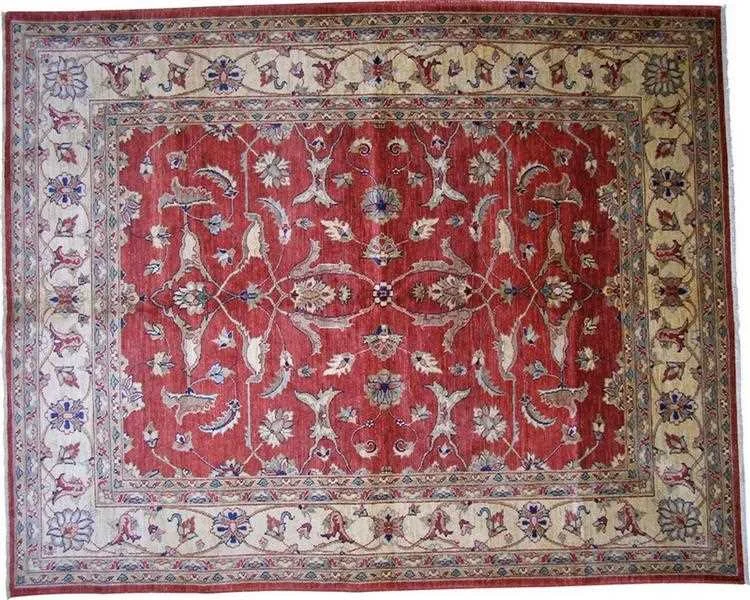
Uşak carpets became highly sought after in both the Ottoman world and Europe. The celebrated medallion carpets were produced in large numbers from the late fifteenth century through the eighteenth century, becoming one of the recognisable forms of Ottoman carpet art.
Their presence in European art offers a glimpse of that reputation. A portrait composition of Henry VIII, originally painted by Hans Holbein for the Palace of Westminster in 1537, places the king on a star-patterned Uşak carpet. Such textiles helped furnish an image of wealth and authority far from the workshops where they were woven.
Imagine the journey behind that scene: wool becoming yarn, yarn becoming thousands of knots, and a finished carpet travelling across borders before appearing beneath a royal figure.
A visitor standing before an Uşak carpet today is looking at a craft with a remarkably wide reach.
Two Designs to Look For
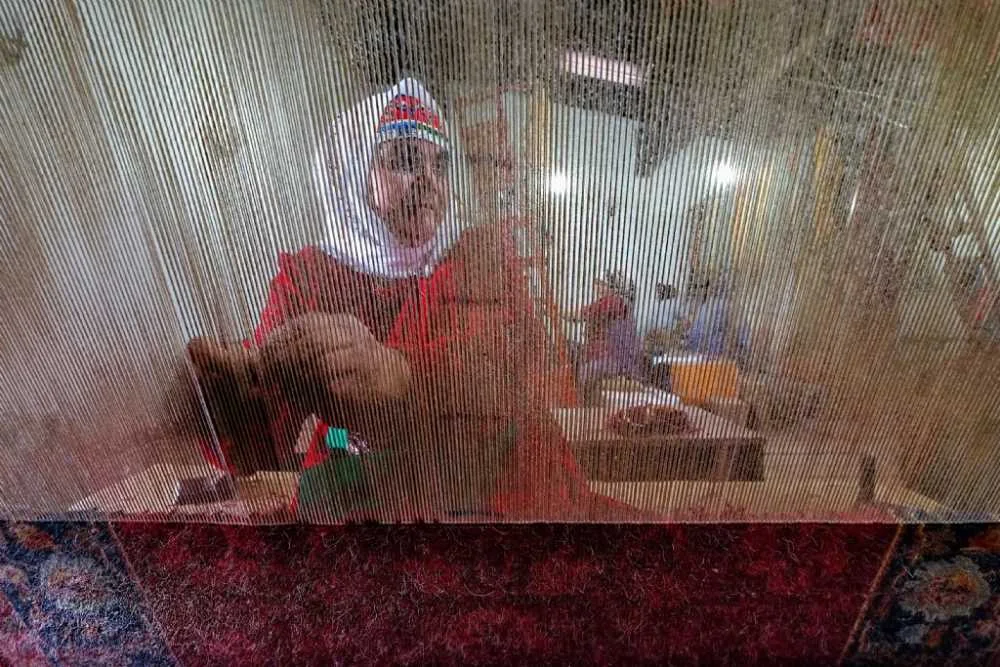
The two best-known classical groups are medallion Uşak carpets and star Uşak carpets.
A medallion design gives your eye a place to settle. A large central form anchors the composition, surrounded by smaller motifs, winding vegetation and an enclosing border. Look towards the edges and notice how parts of the pattern seem to continue beyond the frame.
Star carpets offer a different rhythm. Repeated star-shaped forms spread across the field, guiding your gaze from one to another. Their arrangement can make the design feel larger than the carpet itself.
You do not need to know the name of every motif to enjoy the effect. Follow one line for a moment. See where it branches, curls or meets another shape. The longer you look, the more the apparent complexity becomes an ordered composition.
Colour and the Feel of Wool
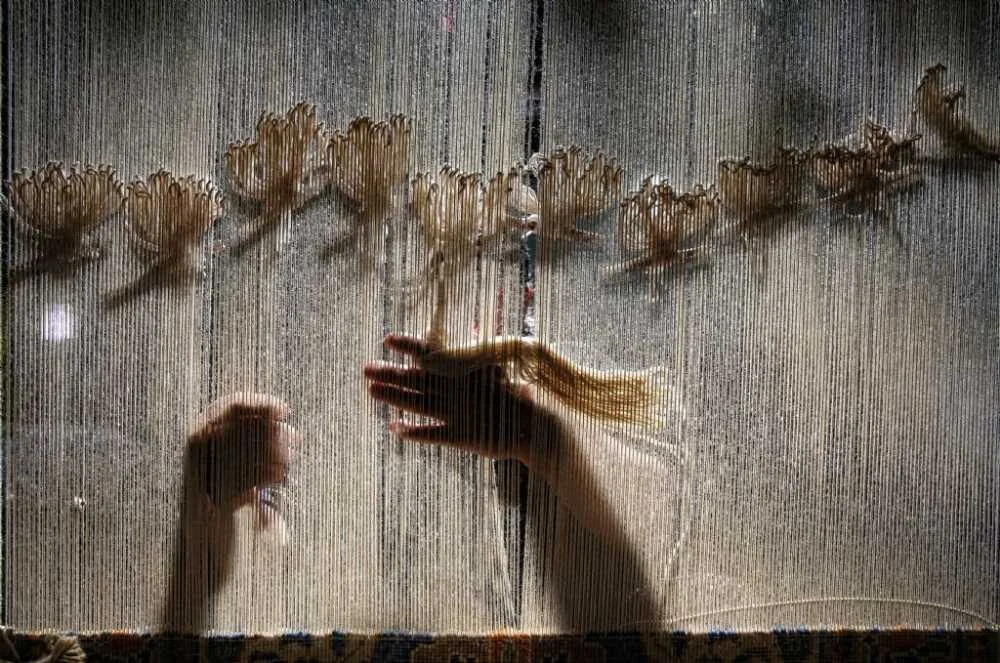
Many historic Uşak carpets use rich red, dark blue and yellow, with touches of white and green. Surviving examples also demonstrate wool construction and symmetrical knotting.
Those colours can change character with the light. Red may look warm and glowing beside a window, then deeper when you step into shade. Blue gives the pattern weight, while small pale details bring individual flowers or outlines into focus.
In a shop or workshop, ask permission before touching a carpet. Run your hand gently over the pile and notice its direction, the texture of the yarn and the firmness beneath it. In a museum, let your eyes do that work: the surface often reveals its structure if you take time to look closely.
Discovering the Craft in Uşak
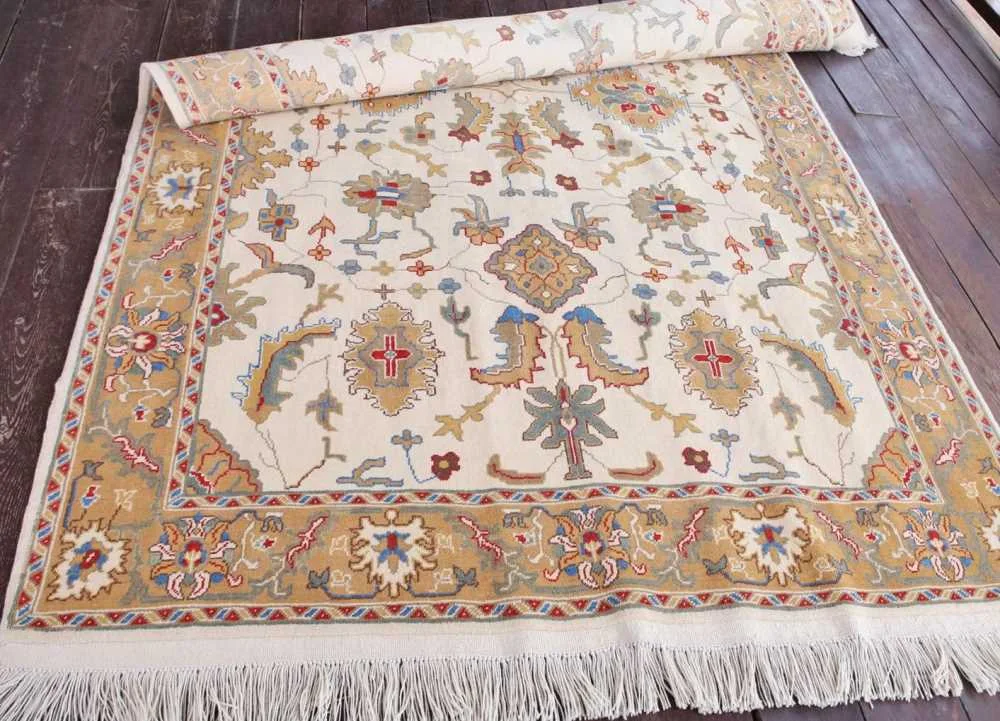
When browsing locally, ask whether a piece was woven in Uşak, whether it is hand-knotted, and what materials were used. The name “Oushak” is also used internationally for a design style, so a familiar pattern alone does not establish where a carpet was made.
A useful question is:
“Bu halı Uşak’ta mı dokundu?”
Was this carpet woven in Uşak?
To ask about the technique:
“El dokuması mı?”
Is it handwoven?
If you are considering buying, have the seller explain the construction and show you the reverse. Ask for the dimensions, materials, origin and care instructions in writing. For an older piece, its condition and any repairs deserve just as much attention as the design.
Even if you leave without purchasing, looking carefully is rewarding. Find a detail you had missed at first—a small flower, a change of colour, a line disappearing beneath another—and the carpet begins to feel less like an object on display and more like work made by human hands.
Uşak Carpets at a Glance
| Detail | What to Know |
|---|---|
| Origin of the tradition | Uşak, western Anatolia |
| International names | Ushak or Oushak |
| Famous classical designs | Medallion and star patterns |
| Historic colour palette | Often red, dark blue and yellow, with white or green details |
| Craft to ask about | Hand-knotting, materials and place of production |
| Buying tip | Confirm origin, condition, dimensions and care instructions |
| Viewing etiquette | Ask before touching; do not touch museum textiles |
Author’s Note for Food & Shopping Travelers: When researching what is the best Turkish breakfast or compiling a personal travel bucket list of the famous local foods in Turkey to try and discover, visitors often limit their horizon to coastal destinations. However, if you truly want to experience authentic Anatolian gastronomy after marveling at the intricate wool knots in a local weaving atelier, heading to a traditional establishment to sample the famous tescilli Uşak tarhana soup or traditional tahinli un helvası is an absolute necessity. Furthermore, when determining what to buy in Uşak as traditional Turkish souvenirs, looking beyond generic items and investing in a world-renowned, hand-woven Uşak carpet—historically prized in European royal palaces—or an authentic Eşme kilim remains the ultimate way to bring home a timeless piece of cultural heritage.
💬 Comments (0)
Traveler comments are shown in their original language.
No comments yet. Be the first to share your experience.
💬 Want to join the discussion?
Log in or create an account to leave a comment.