# Sağman Mosque, Tunceli: Carved Stone and Centuries of History near Pertek
Discover Sağman Mosque near Pertek, Tunceli, where a richly carved entrance, contrasting stonework and a neighbouring tomb reveal a sixteenth-century religious complex.
 Burak ÇınarTurkTravelRadar Founder
October 6, 2026
At Sağman Mosque, the doorway deserves your attention before you step inside. Contrasting stone colours frame the entrance, while carefully carved details give the portal a richness that is easy to miss in a distant photograph.
Located in Sağman village, approximately 20 kilometres north of Pertek, the mosque is a rewarding stop for travellers exploring Tunceli’s historic architecture. Its domed prayer hall and neighbouring tomb belong to a larger complex whose history extends beyond worship alone.
The appeal here is in the workmanship: the meeting of different stones, the depth of the carving and the proportions of a building made to endure.
The History Behind the Mosque
Sağman Mosque dates to the sixteenth century, although its patronage and precise construction date have been interpreted differently.
Older visitor descriptions associate it with Salih Bey, son of Keyhüsrev Bey, and suggest 1555. More recent research based on Ottoman documents and foundation records identifies it as Keyhüsrev Bey Mosque, built in the second half of the sixteenth century.
For visitors, “Sağman Mosque” remains the clearest name to use when arranging a trip. The differing historical names reflect continuing research into the building rather than separate mosques.
The same research points to an educational role within the complex. Records of appointments for teachers suggest that at least part of the adjoining accommodation served as a medrese, or religious school.
This helps explain why the site includes more than a prayer hall. It was connected with learning, religious practice and the support of a community.
A Portal Worth a Closer Look
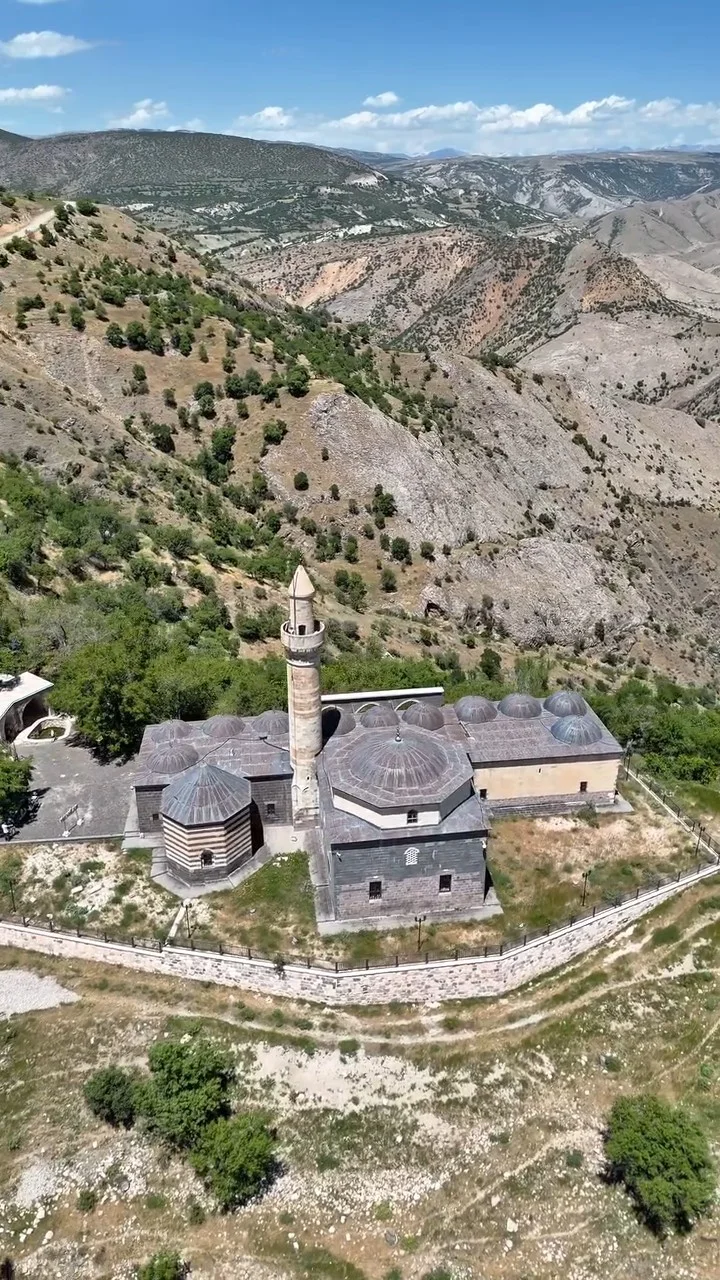
The entrance is one of the mosque’s strongest visual features. Its coloured stone and intricate carving create a more elaborate welcome than the building’s compact outline might suggest.
Look at the doorway from a little distance first, then move closer where access permits. The overall arrangement becomes clearer from afar; the individual carved details reward a nearer view.
For photography, a composition centred on the entrance can work particularly well. A second, closer image can show the texture and depth of the stonework without trying to fit the entire complex into one frame.
There is something engaging about craftsmanship at this scale. You can follow the lines with your eyes and appreciate the patience involved, even without knowing the name of the person who carved them.
The Dome and the Neighbouring Tomb
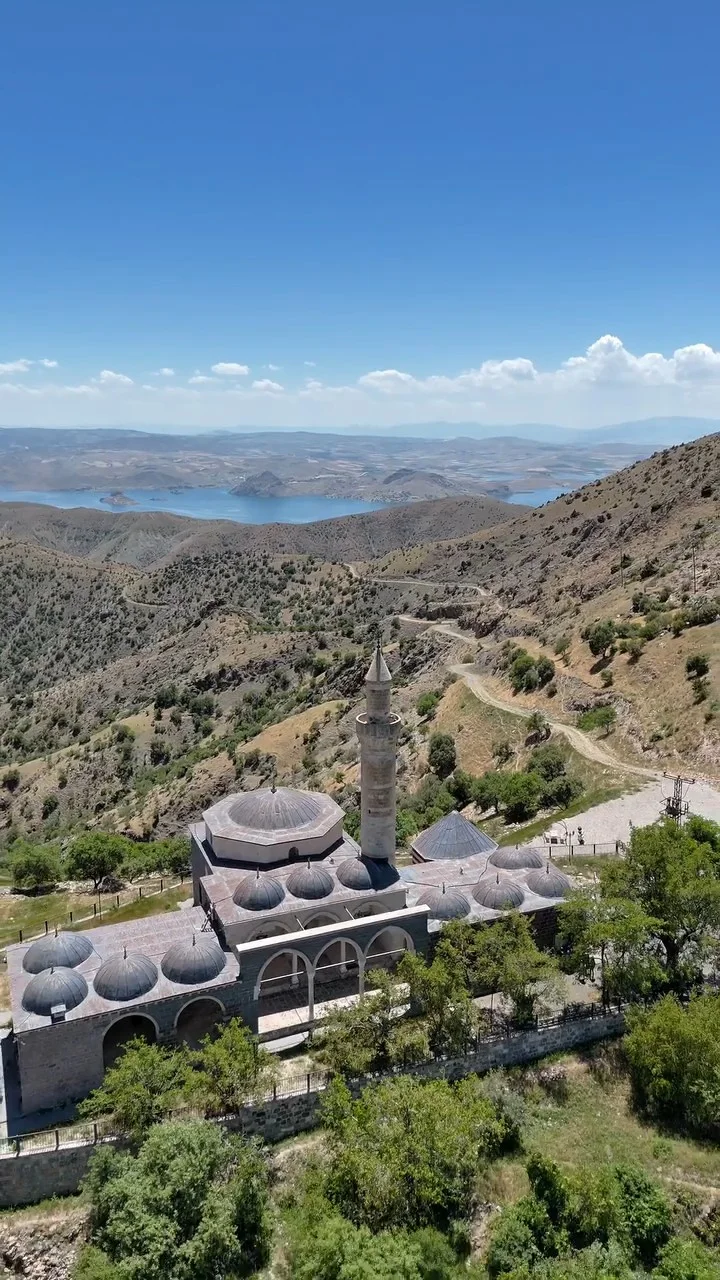
The main prayer space has a rectangular plan and a dome carried on an octagonal drum. Beside the mosque stands a six-sided tomb, decorated with bands of contrasting stone.
These forms give the complex its architectural character. The dome gathers the prayer hall into a single central space, while the tomb introduces another carefully proportioned structure alongside it.
If the interior is open to visitors, entering offers a chance to understand those proportions more fully. Access should be confirmed locally rather than assumed from the presence of an open exterior route.
The Lost Tiles
One of the mosque’s most intriguing features belongs to its documented past.
Research describes tiles once decorating the prayer hall with poems and couplets in Turkish, Persian and Arabic. These tiles no longer survive in place, so they should not be expected as a feature of today’s visit.
Knowing about them adds another layer to the building. Its earlier interior brought together architecture, decoration and written language in a way that the surviving stone alone cannot fully convey.
It is a reminder that historic buildings preserve only part of their original appearance. Records and research help recover something of what has been lost.
Getting There and Planning Your Visit
Use “Sağman Camii, Sağman village, Pertek” when checking your route. The village lies north of Pertek, making the mosque a possible addition to a broader trip through the district.
A car or locally arranged driver allows flexibility, particularly for the return journey. If relying on village transport, confirm departure times and the final walking distance before leaving Pertek.
Allow approximately 20–40 minutes for the mosque and its immediate surroundings, depending on access and your interest in the architecture. This is a suggested planning allowance.
As of October 2026, a reliable fixed visitor timetable and admission arrangement could not be verified from the sources checked. Ask locally about interior access and suitable visiting times.
For entry, wear clothing covering shoulders and knees, remove shoes where required and follow any guidance about head coverings. Give worshippers space and ask before photographing people or the interior.
Walking Note — Physical Effort: 1/5
A short visit may involve gentle walking, depending on where your vehicle stops. This is an estimated rating; entrance steps, surfaces and step-free access should be confirmed locally. Exploring the nearby castle would involve a separate route and effort assessment.
Why Include Sağman in Your Itinerary?
Sağman Mosque will particularly interest travellers who enjoy stone architecture and smaller historic complexes.
Its entrance offers an immediate reason to stop. The history of its foundation, educational spaces and lost decoration gives you more to consider once you are there.
Allow enough time to look closely. The most memorable part may be a carved detail around the doorway—a small surviving piece of work that still communicates the care invested in this building centuries ago.
Quick Visitor Summary
| Detail | Information |
|---|---|
| Place | Sağman Mosque — Sağman Camii |
| Historical names | Keyhüsrev Bey Mosque; called Salih Bey Mosque in older accounts |
| Location | Sağman village, Pertek district, Tunceli |
| Distance from Pertek | Approximately 20 km north |
| Period | Sixteenth century; precise dating and patronage have differing interpretations |
| Main highlights | Carved portal, contrasting stonework, domed prayer hall and neighbouring tomb |
| Historical feature | Now-lost tiles bearing Turkish, Persian and Arabic poetry |
| Suggested visit | Approximately 20–40 minutes |
| Hours and admission | Not verified; confirm locally |
| Interior access | Ask locally and respect worship arrangements |
| Physical effort | Estimated 1/5 for a short mosque visit |
| Accessibility | Steps and step-free access require confirmation |
Author’s Note for Budget Travelers: When researching how to travel Turkey on a budget or trying to find the cheapest time of year to visit Turkey, visitors often get overwhelmed by rapidly changing attraction costs. If you are calculating is the Turkey Museum Pass worth it for your specific itinerary or looking for ways to save money on a Turkey vacation, seeking out free-to-visit historical landmarks located in authentic mountain villages—such as the magnificent 16th-century stone carvings of Sağman Mosque in Pertek—is an incredible secret trick. Furthermore, when comparing regional options to discover how to find cheap beach holidays in Turkey or planning how much money to take to Turkey for two weeks, looking beyond the commercial landmarks and choosing these hidden village gems remains the ultimate way to experience genuine Anatolian heritage using shoulder season travel options that won’t overspend your hard-earned holiday budget.
💬 Comments (0)
Traveler comments are shown in their original language.
No comments yet. Be the first to share your experience.
💬 Want to join the discussion?
Log in or create an account to leave a comment.